


Georgian Sideboard Box
These georgian sideboard box pieces are traditional storage items that bring period dining elegance to any interior.
Georgian Sideboard Box
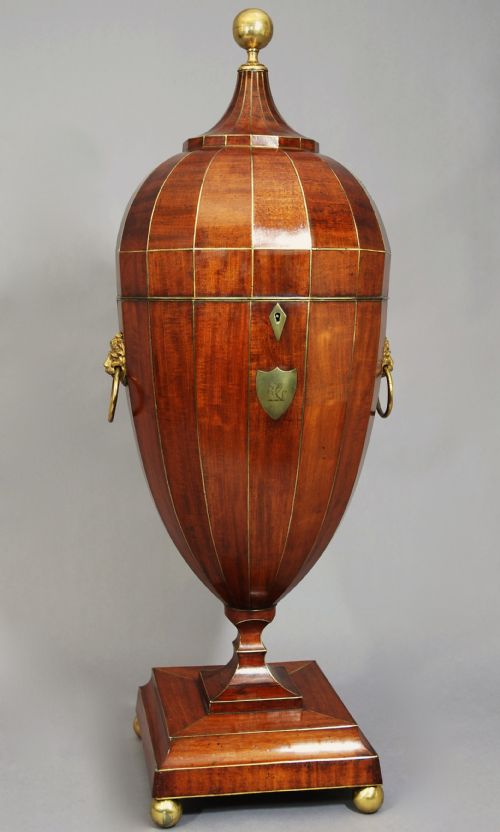
When searching for a georgian sideboard box, collectors encounter various forms including knife boxes, cutlery boxes, cutlery urns, and related miniature furniture. The examples seen on this page span the 18th century, Georgian, Regency, and Victorian periods.
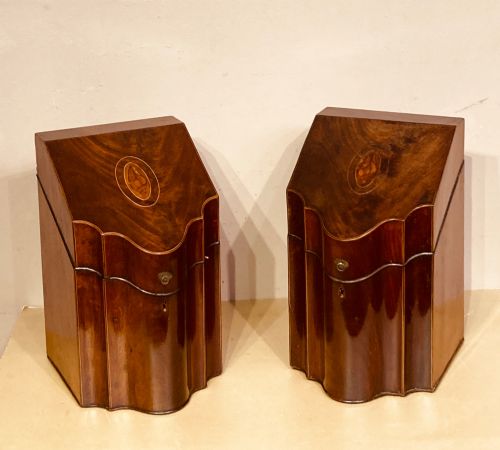
The most common forms are mahogany knife and cutlery boxes, often featuring serpentine or bow fronts designed to sit upon dining sideboards. These items served a practical function in wealthier households for storing silver cutlery and dining knives.
Other variations appearing in these listings include tea caddies, miniature chests of drawers, and oak cupboards. These smaller pieces reflect the fine cabinet-making skills of the 18th and 19th centuries.
How they were made
Cabinet-makers relied primarily on mahogany as the principal timber, supplemented by oak for internal secondary woods and structural elements. Artisans also utilised decorative veneers such as satinwood and boxwood inlay to create contrasting borders and geometric patterns.
Metalwork played a crucial role in both function and decoration, with brass handles, escutcheons, and hinges fitted to secure the lids and drawers. Certain high-status examples incorporated solid silver mounts to enhance their visual appeal.
Georgian diners trusted silver mounts and sturdy brass hinges to guard their steel knives, proving that even cutlery deserved a stately home.
What varies in quality
The distinction between standard items and exceptional pieces rests upon the choice of timber and the intricacy of the cabinet-making. Grain patterns with rich figuring and deep natural patina elevate an object's visual presence.
Proportions and decorative flourishes define the upper tier of these items, such as serpentine or bow fronts combined with delicate boxwood stringing and silver mounts. Matched pairs and items retaining their fitted interiors command greater interest among collectors.
The Georgian Sideboard Box Glossary
- Serpentine front
- A furniture front characterised by a gentle convex curve flanked by two concave curves. This contour requires advanced woodworking skill to shape accurately from solid timber.
- Bow front
- A convex, outward-curving front profile commonly found on 18th-century case furniture and knife boxes. It softens the rectangular appearance of the piece.
- Cutlery urn
- A vase-shaped wooden vessel designed during the Georgian period to store table cutlery on or beside a sideboard. These are often found in matched pairs.
- Boxwood inlay
- A decorative technique involving the insertion of contrasting pale boxwood into recesses carved into a darker primary wood. It creates fine lines and geometric borders.
- Patina
- The surface sheen and mellowing of colour developed by wood and metal over decades of handling and ageing. A desirable patina shows depth without heavy restoration.
Georgian Sideboard Box: Frequently Asked Questions
What was a knife box used for?
These boxes sat upon dining room sideboards to store dining knives and cutlery when not in use on the table. The fitted interiors kept sharp blades organised and protected.
Wealthy households displayed them as decorative accessories that showcased the craftsmanship of the period alongside their silver services.
How do I tell an 18th-century box from a later copy?
Examination of the secondary woods, such as oak or pine used internally, helps determine the age of the construction. Hand-cut dovetails and authentic timber shrinkage offer reliable clues to period manufacture.
Tool marks left by hand saws and chisels differ significantly from the uniform precision of later machinery.
Are these pieces usually found as pairs?
Many formal dining rooms of the Georgian and Regency periods utilised matched pairs of knife boxes or cutlery urns placed symmetrically on either side of a sideboard.
Finding a matched pair remains desirable for collectors seeking to recreate a traditional dining room arrangement.
How should I care for mahogany and inlaid surfaces?
Polishing with traditional beeswax helps preserve the natural moisture and rich colour of mahogany without sealing the grain under modern synthetics. Avoiding direct sunlight prevents the fading of delicate satinwood and boxwood inlay.
Gentle dusting with a soft cloth maintains the surface without disturbing the historic finish.