


Georgian Looking Glass
A georgian looking glass brings depth to a room through carved wood and gilded surfaces.
Georgian Looking Glass
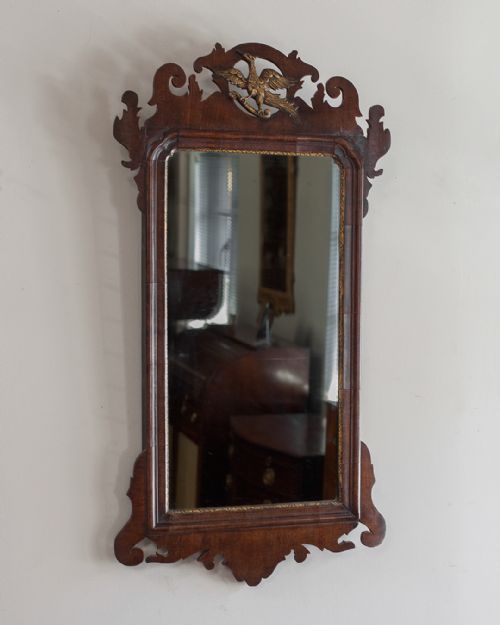
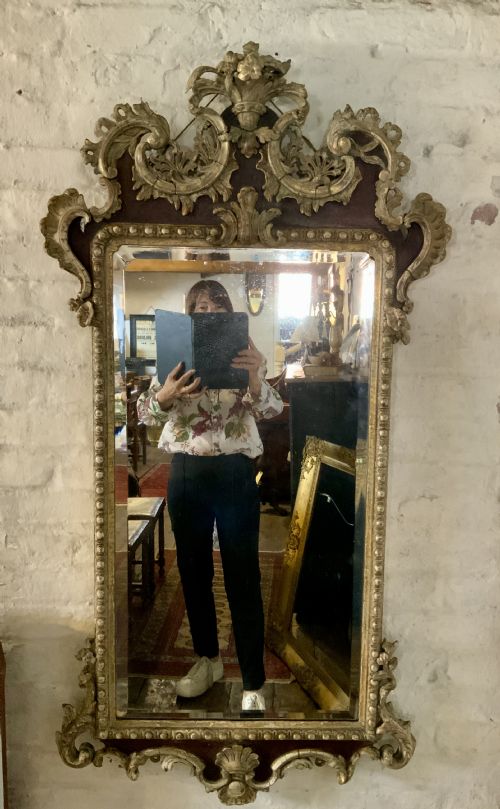
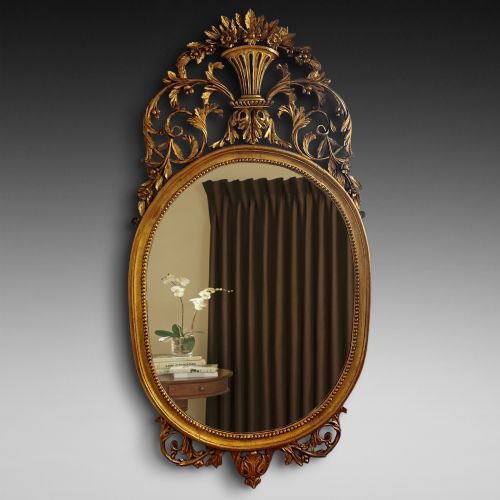
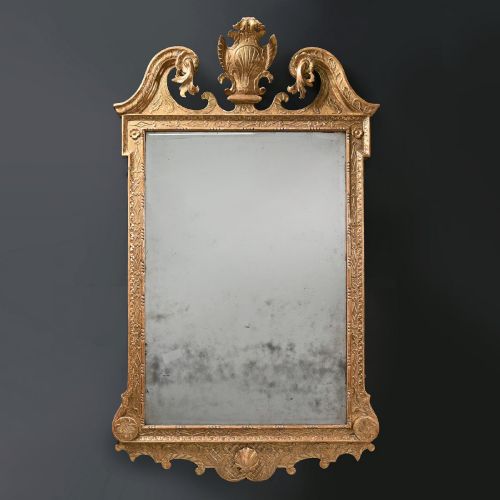
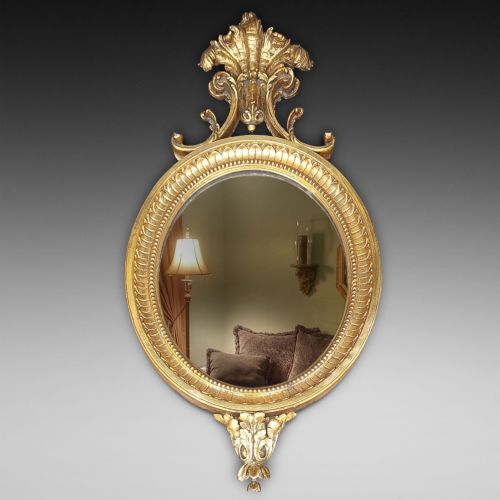
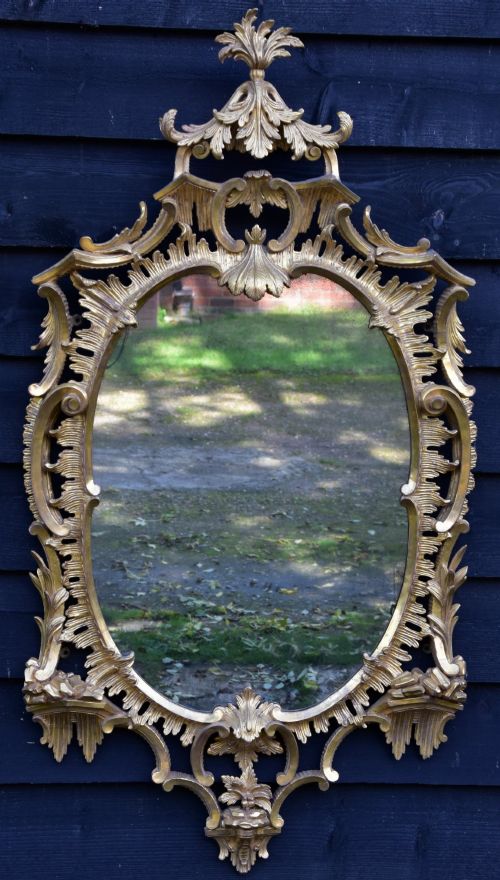
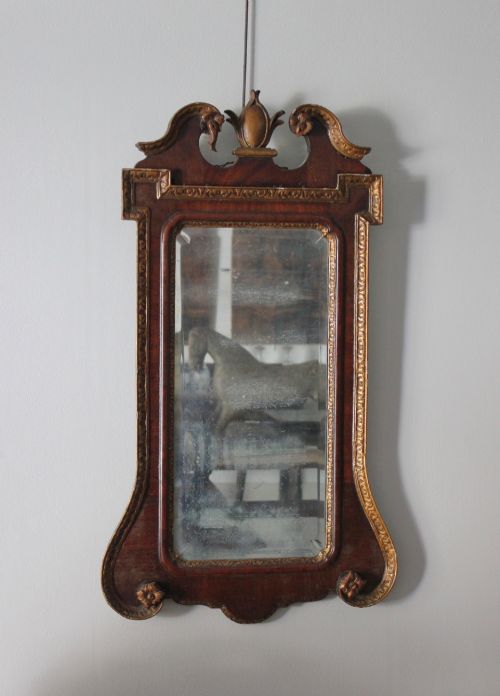
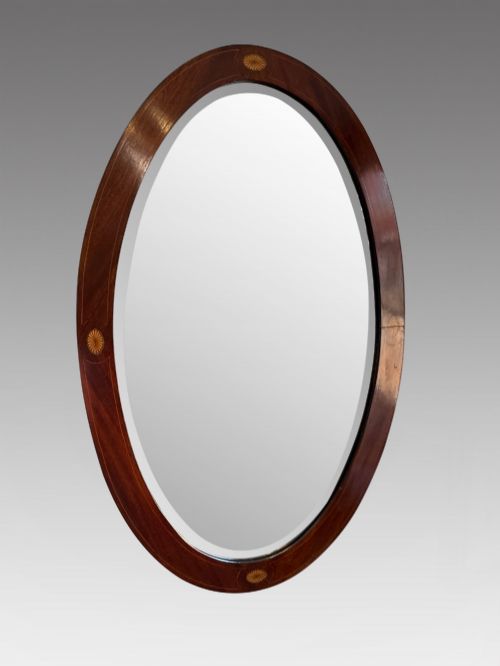
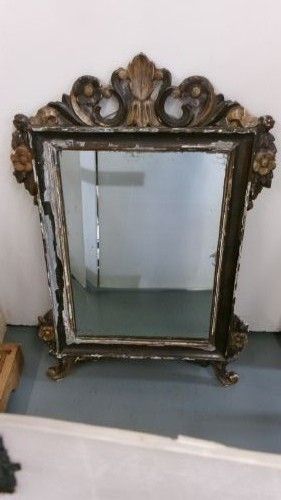
A georgian looking glass spans wall mirrors, pier mirrors, and dressing swing mirrors originating from the eighteenth century and the Regency era. Most examples encountered here are wall mirrors framed in mahogany, walnut, or carved giltwood.
Makers shaped these plates in rectangular fretwork formats, oval frames, and larger overmantle proportions intended to reflect light across a parlour. The selection ranges from plain walnut plates to ornate rococo carved designs.
Period pieces also include dressing table vanity glasses with oak-lined drawers and cheval frames designed for bedrooms. Each form retains the original character of eighteenth-century and early nineteenth-century domestic interiors.
Assessing Quality
Quality rests upon the depth and crispness of the hand-carved ornament, where sharp foliage and clean fretwork edges distinguish superior work from simpler production. The handling of parcel gilt details and the preservation of original mirror plates elevate a piece.
Proportions dictate visual balance, with finer mirrors displaying harmonious ratios between the frame width and the central glass plate. Superior execution involves robust timber construction, such as oak linings in drawers and sound underlying joinery.
Listings feature eighteenth-century and nineteenth-century pieces alongside revival styles from the Edwardian era and nineteen-twenty.
Benjamin Goodison·William Kent
The Georgian Looking Glass Glossary
- Giltwood
- Wood coated with gesso and gold leaf to create a gilded decorative surface. This finish defines many formal wall and pier mirrors.
- Fretwork
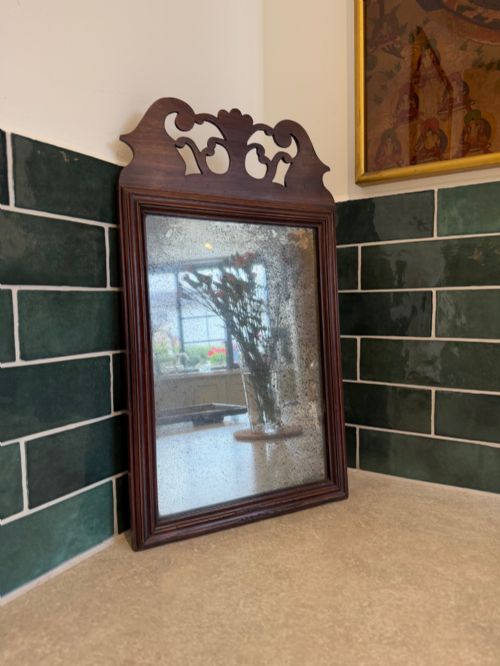
- Openwork patterns cut into thin boards using a fretsaw. This technique appears frequently on eighteenth-century mahogany frames.
- Gesso
- A plaster mixture applied to wood surfaces to prepare them for gilding. It allows craftsmen to model crisp relief decoration beneath gold leaf.
- Parcel Gilt
- Partially gilded woodwork where specific carved details receive gold leaf while the underlying timber grain remains visible.
- Pier Mirror
- A tall mirror designed to hang on the wall space between windows. These pieces often match console tables in formal rooms.
- Vauxhall Plate
- Early mirror glass characterised by slight bevels and subtle imperfections in the glass. It denotes eighteenth-century manufacture.
Georgian Looking Glass: Frequently Asked Questions
Where should I hang a looking glass?
These mirrors suit placement above a mantelpiece, sideboard, or console table to reflect light and expand the visual space of a room. Wall hung options require secure fixings into structural walls to support the weight of timber and glass.
Smaller swing and dressing mirrors function best on top of period chests of drawers or dressing tables in bedrooms.
How do I date a mirror?
Dating relies on examining the timber species, construction methods, and the characteristics of the mirror plate itself. Eighteenth-century examples often feature pine or hardwood backs with hand-bevelled glass.
Later nineteenth-century revivals and Edwardian pieces show machine-cut elements and different framing techniques that separate them from earlier periods.
Are original mirror plates common?
Many surviving pieces retain their original glass plates, which often display light foxing, minor oxidation, and charming surface distortions. These natural signs of age confirm the long history of the object.
Replacement glass does occur in older frames when the original plate suffered breakage over centuries of domestic use.
How do I care for giltwood frames?
Giltwood surfaces require gentle dusting with a soft, dry brush to prevent damage to the delicate gold leaf and gesso layers. Moisture and harsh cleaning agents must be avoided entirely.
Placing the glass away from direct sunlight and damp environments preserves both the timber structure and the metallic finish.