
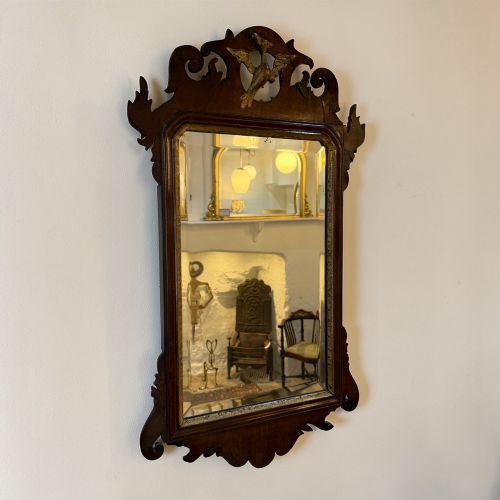
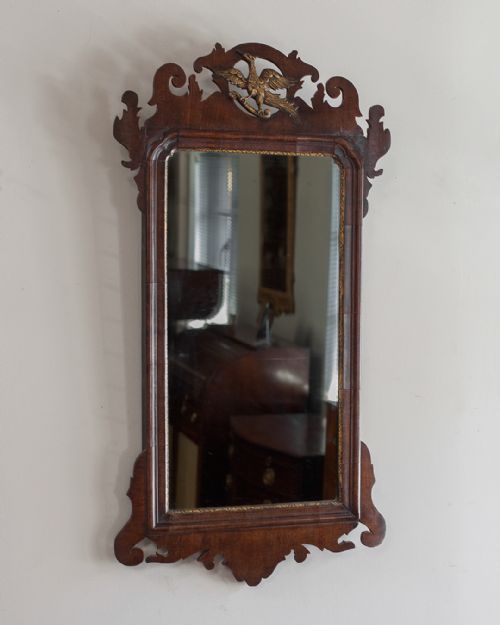
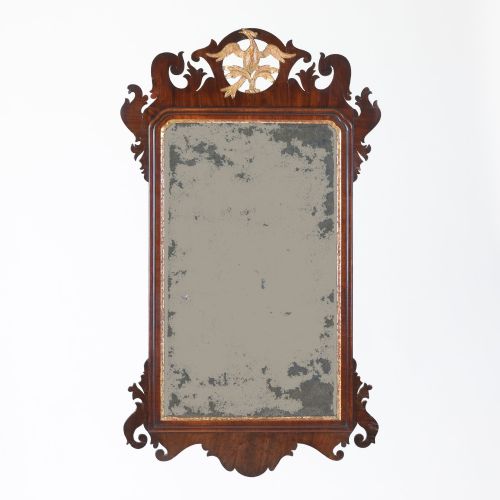
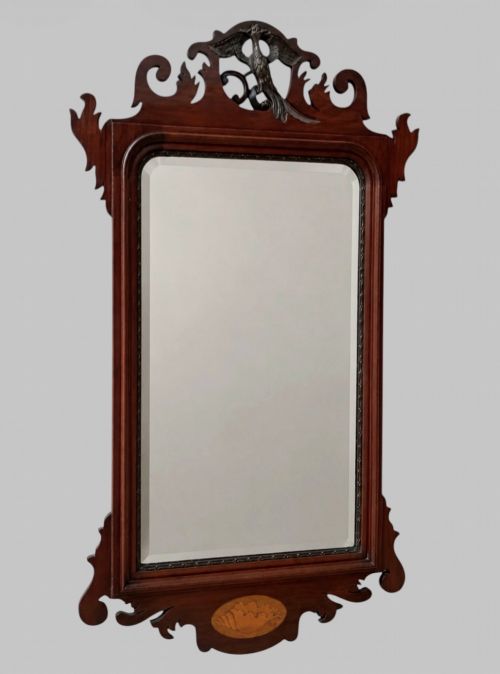

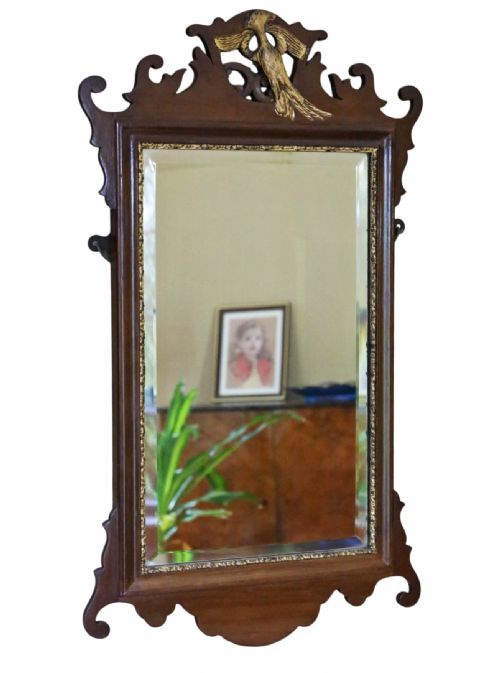


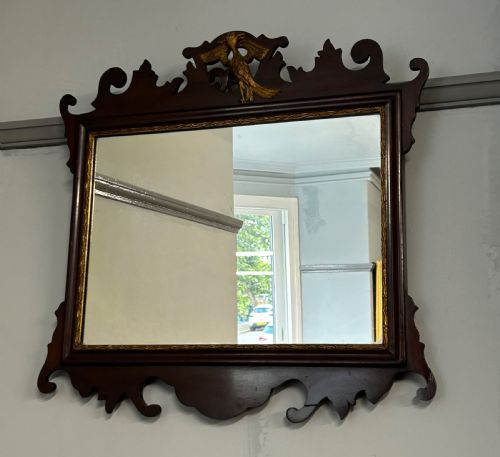

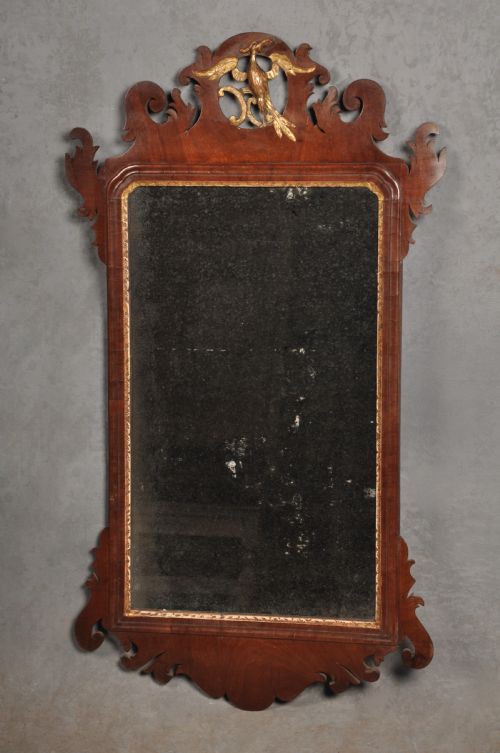


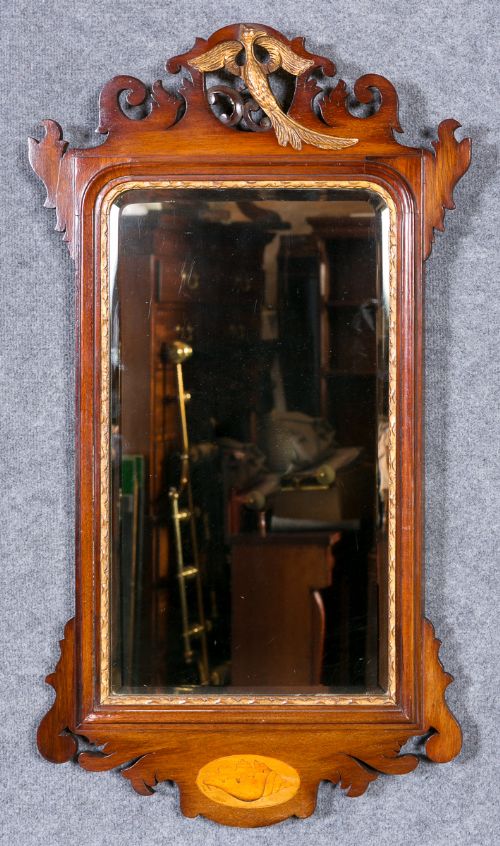
Phoenix Crest Wall Mirror
These phoenix crest wall mirror selections bring architectural precision and carved avian motifs to your interior walls.
Phoenix Crest Wall Mirror
A phoenix crest wall mirror is an framed looking glass topped by a carved avian crest, frequently associated with the Georgian, Regency, and Victorian periods. You will most commonly encounter mahogany, walnut, and giltwood frames featuring fret-cut silhouettes and bevelled glass.
The listings span 18th century originals through to Chippendale revival pieces from around 1900. These mirrors combine classical proportions with decorative woodwork designed to draw the eye upwards.
Materials and construction
Craftsmen built these frames using solid hardwoods like mahogany and walnut, alongside gesso and giltwood for gilded highlights. Fret-cut outlines were pierced with fine saws to create intricate symmetrical patterns around the central plate.
Mirrors utilise traditional glass plates, occasionally bevel-edged, held within rebated wooden frames beneath the characteristic bird crest. Paint finishes and carved details complete the construction.
Listings span the 18th century to 1900, uniting George III, Regency, and Victorian revivals.
Assessing quality in carved mirrors
Quality rests upon the crispness of the fret-cut carving and the depth of the relief work on the phoenix crest. Finer examples display lively feather detailing and balanced proportions rather than flat or mechanical sawing.
The choice of timber grain and the preservation of original gilding or polish dictate the distinction between standard revival pieces and superior period examples.
The Phoenix Crest Wall Mirror Glossary
- Fret-cut
- Woodwork pierced with decorative patterns using a fine scroll saw. This technique creates the distinctive silhouette characteristic of these frames.
- Giltwood
- Timber coated with fine gold leaf over a prepared gesso ground. It provides a bright reflective surface for the carved crests.
- Vauxhall mirror
- A term historically used for mirrors featuring bevelled plates or specific glass types. They represent an earlier tradition of glass production.
- Gesso
- A plaster-like mixture applied to wood as a base for gilding or paint. It allows artisans to carve fine details before applying gold leaf.
Phoenix Crest Wall Mirror: Frequently Asked Questions
Where should I hang a phoenix crest wall mirror?
These mirrors suit principal reception rooms, hallways, or above a mantelpiece where their vertical proportions can be fully appreciated.
Ensure the wall fixings can support the combined weight of the hardwood frame and glass plate safely.
How do I date a fret mirror?
Examine the timber species, the quality of the fretwork, and the construction methods used at the back of the frame. Eighteenth-century pieces typically show hand-cut joinery and older secondary woods.
Revival pieces from around 1900 often feature machine assistance and cleaner, more uniform backing boards.
What is a Ho-ho bird?
The Ho-ho bird is an Asian-inspired mythical phoenix often found perched atop the crest of 18th-century and revival mirrors. It reflects the 18th-century taste for Chinoiserie design.
Carvers rendered this creature with stylized plumage and an expressive head turned to the side.
Are these mirrors fragile?
The protruding fret-cut edges and carved crests require careful handling during moving and cleaning. Regular dusting with a soft brush keeps the intricate woodwork clean without damaging the finish.
Keep them away from direct heat sources to prevent the timber from warping over time.