


Egg and Dart Mirror
These egg and dart mirror designs bring classical moulding into domestic spaces, offering a refined focal point for period interiors.
What an egg and dart mirror is
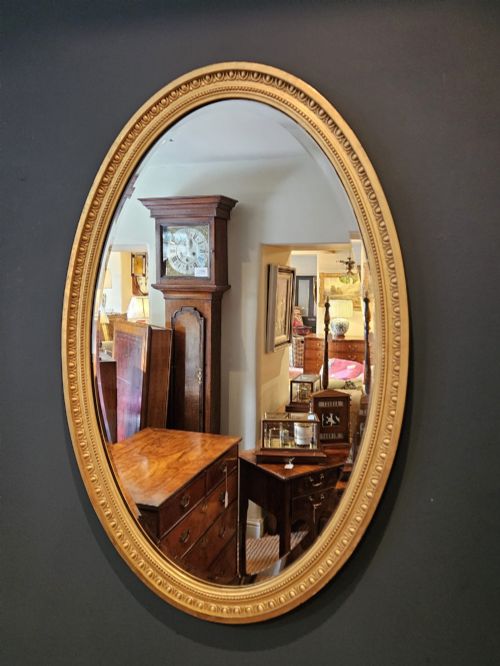
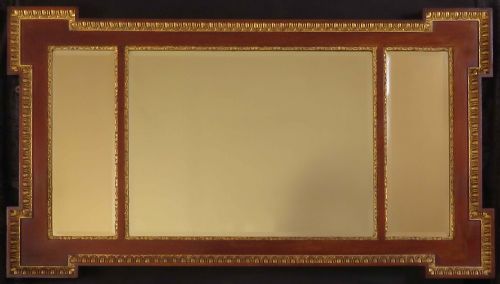
The version most commonly met on this page is the Victorian wall mirror, frequently constructed in wood or plaster with gilt finishes. These pieces range from substantial overmantel formats down to smaller oval wall hangings.
Materials extend beyond standard timber frames to include oak, mahogany, painted wood, and simulated wood finishes. Such variety demonstrates how nineteenth-century and early twentieth-century makers adapted classical vocabulary to diverse domestic settings.
How they were made
Frames combine structural timber carcasses with applied decorative surfaces, utilising woods such as oak and mahogany alongside softer bases. Plaster and gesso layers form the raised egg and dart patterns, applied over wooden foundations before receiving surface treatments.
Gilding techniques employ gold leaf to create reflective brilliance on the moulded ornaments. Alternatively, makers applied paint or simulated wood finishes to achieve distinct visual textures.
Retail Price Guide 2026
Typical UK retail prices for egg and dart mirror, calculated from the Sellingantiques database of over a million retail prices indexed since 2003. This retail price guide relies exclusively on Sellingantiques data; no external sources or auction records are used, so the figures do not describe the wider market.
Current listings demonstrate a material palette spanning glass, plaster, gesso, gold leaf, painted wood, oak, and mahogany across three distinct periods.
What varies in quality
Quality rests in the crispness of the carved or moulded ornament and the depth of the finish. Sharply defined egg and dart motifs demonstrate superior craftsmanship, whereas worn or softened plaster details suggest simpler production methods.
The choice of primary material sets the baseline for the piece, with solid mahogany and oak frames offering greater substance than painted softwood or plaster equivalents. The application of gold leaf versus flat paint further separates standard decorative items from finer examples.
The Egg and Dart Mirror Glossary
- Egg and dart
- A classical ornamental moulding pattern consisting of an egg-shaped motif alternating with an arrow-like dart. It frequently borders the perimeter of mirror frames.
- Gesso
- A plaster-like mixture applied to wood surfaces to create a smooth base for gilding or painting. It holds fine decorative details with great precision.
- Gold leaf
- Extremely thin sheets of beaten gold applied to frames to create a rich metallic finish. It reflects light and enhances the classical appearance of the moulding.
- Overmantel mirror
- A large horizontal mirror designed to sit directly above a fireplace mantelpiece. These pieces often feature substantial frames matching the room architecture.
- Regency Revival
- A later nineteenth-century style that reinterprets the classical elegance of the early nineteenth century. It influences the clean lines and formal symmetry seen in these mirrors.
Frequently Asked Questions
What periods do these mirrors come from?
The available selection primarily encompasses Victorian pieces alongside examples from around nineteen-twenty. These dates reflect both nineteenth-century manufacturing and later revival periods.
Stylistic cues such as oak construction or painted finishes help distinguish between mid-Victorian craftsmanship and early twentieth-century interpretations.
How should I clean a gilded frame?
Dust gilded plaster surfaces gently with a soft, dry brush to avoid disturbing the delicate gold leaf layer. Moisture can damage underlying gesso, so liquid cleaners must be avoided.
For the glass plate, apply standard glass cleaner to a cloth rather than spraying directly onto the mirror. This prevents liquid from seeping into the antique frame edges.
Where should I place an oval mirror?
Oval mirrors work well in narrower wall spaces, hallways, or above smaller pieces of furniture where a rectangular frame might overwhelm the proportion. Their curved outlines soften rigid architectural lines in a room.
Placing them opposite a light source helps amplify brightness and creates a sense of greater spatial depth.