
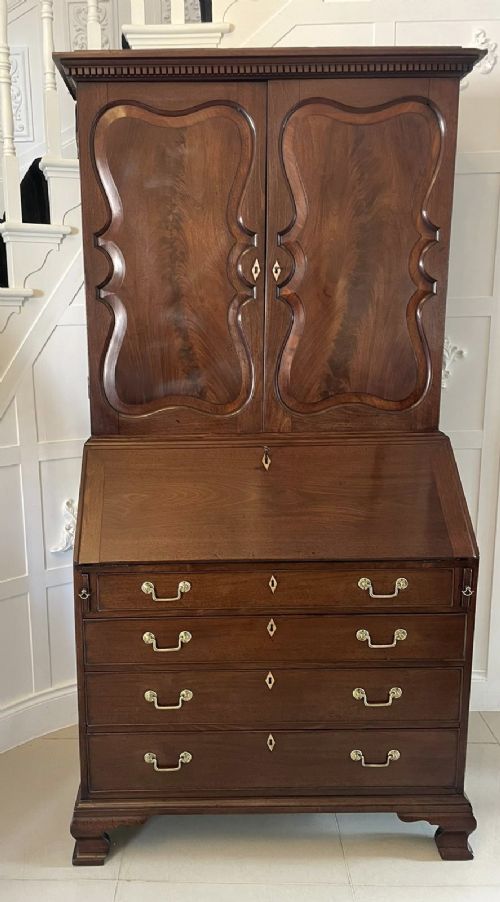
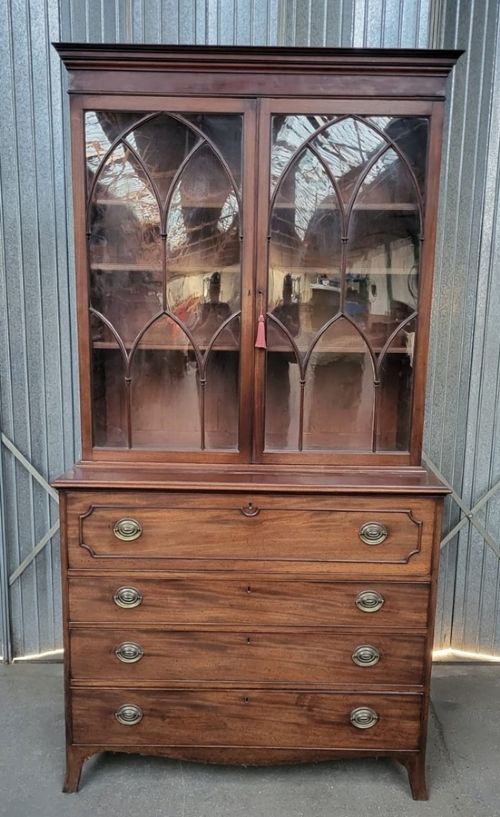
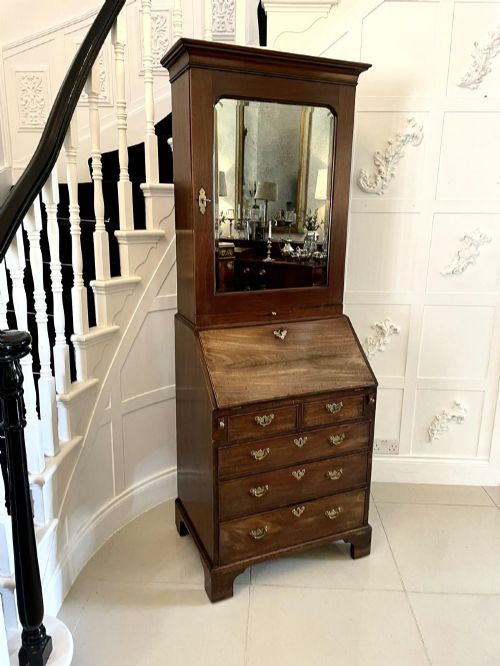
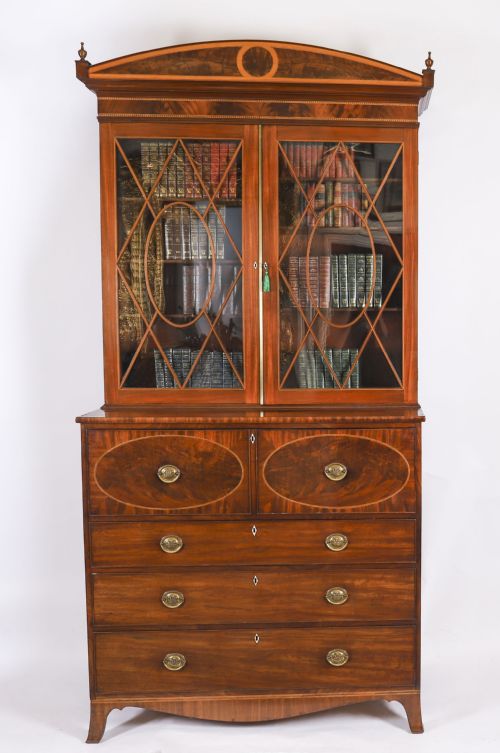

Georgian Desk Bookcase
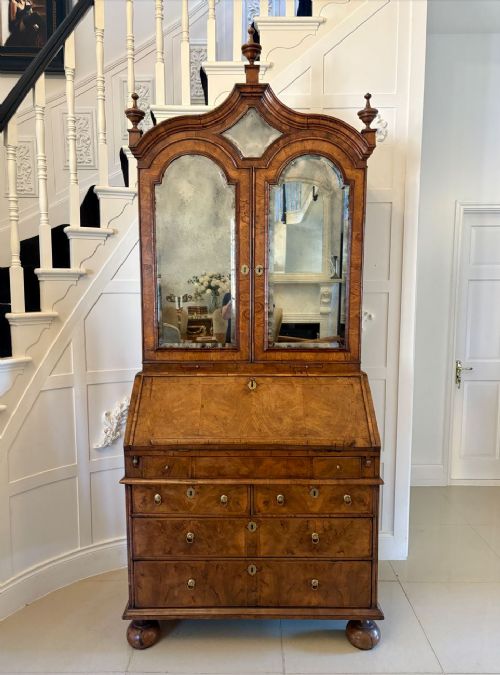
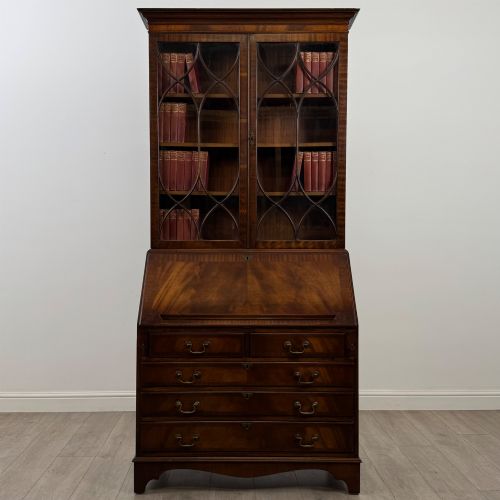
A georgian desk bookcase combines a shelved upper cabinet with a fall-front writing surface, offering both display space and a functional workspace.
Georgian Desk Bookcase
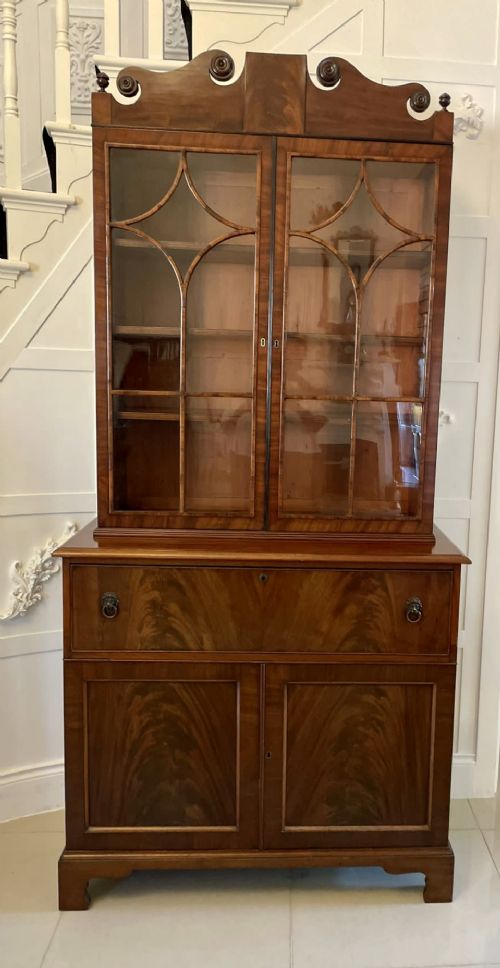
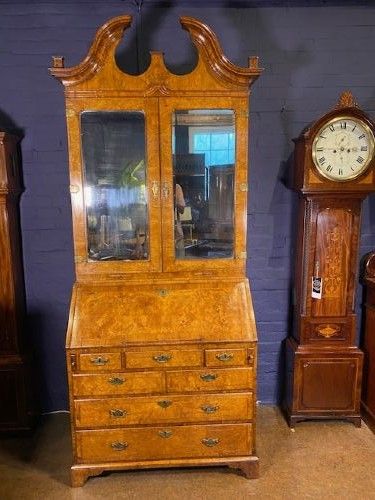
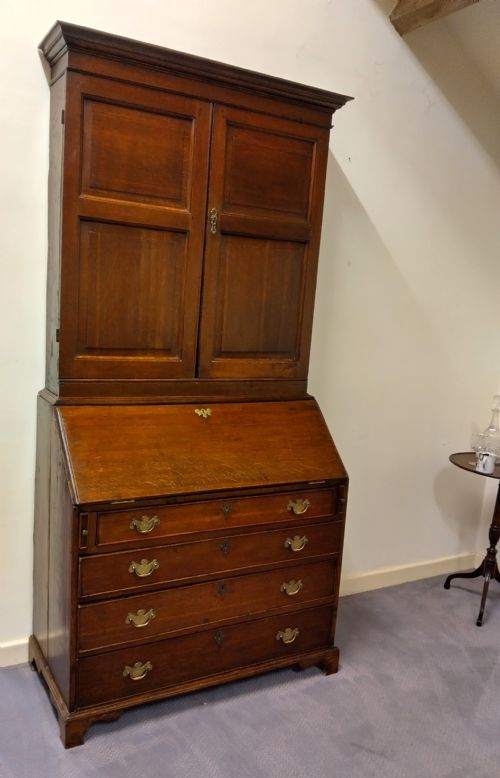
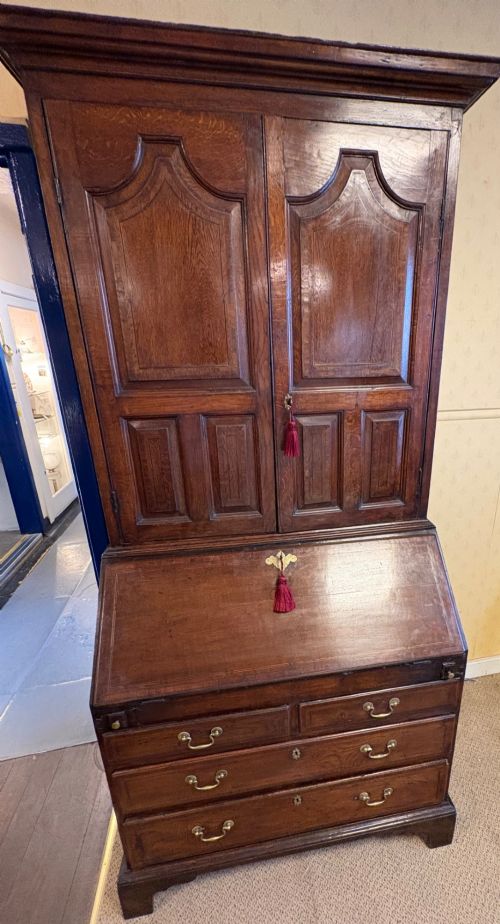
Mahogany and burr walnut dominate the examples, often enhanced with featherbanding, inlay, or flame veneers. Oak and yew wood also appear, providing heavier timber grains in both early and later revived styles.
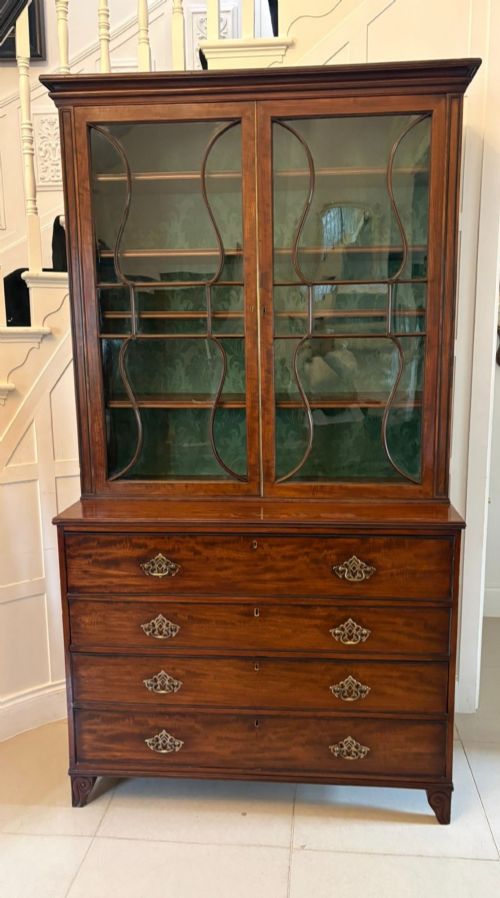
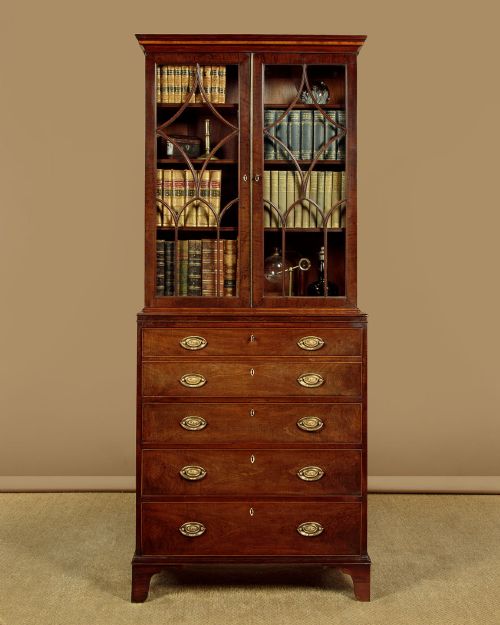
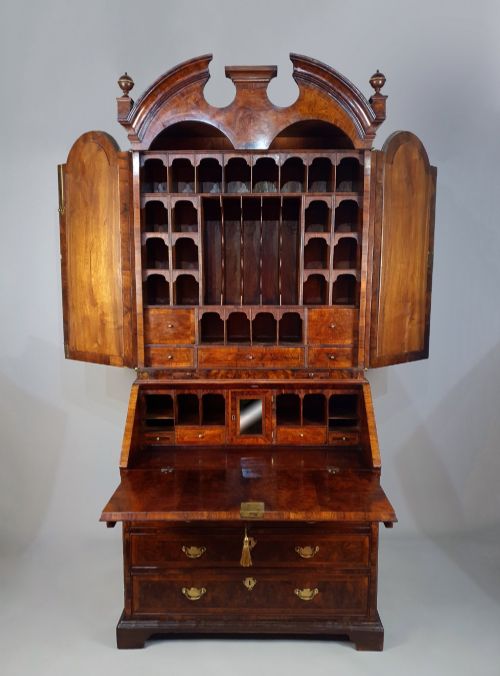
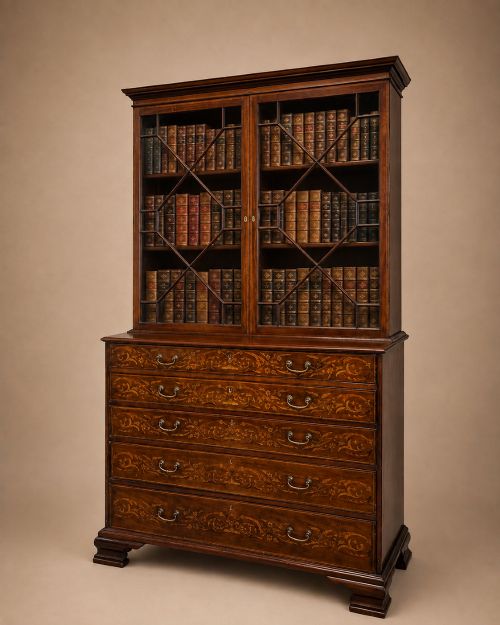
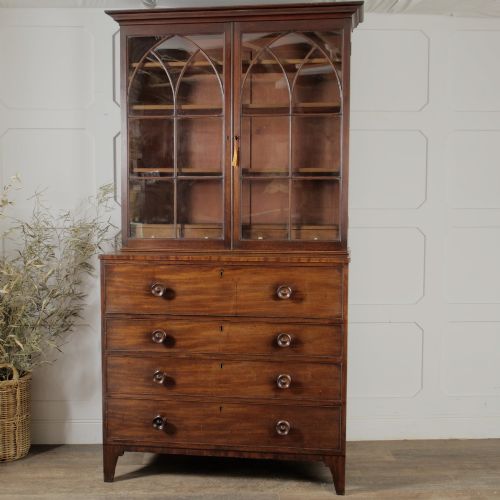
The upper sections typically utilise glazed doors to house libraries, while the lower portions contain fitted interiors with small drawers and pigeonholes for correspondence.
Assessment of Quality
Superior examples distinguish themselves through the selection of highly figured timbers, such as matched flame mahogany or intricate burr walnut. The depth of grain and the precision of veneer alignment indicate the skill of the original workshop.
Internal complexity sets finer pieces apart, visible in stepped stationery drawers, secret compartments, and finely carved astragal glazing bars. The integration of solid brass fittings and untouched structural joinery further marks the upper tier of the range.
Georgian Desk Bookcase Retail Price Guide 2026
Typical asking prices for georgian desk bookcase among the pieces listed under this phrase on Sellingantiques today, from the lower quarter to the upper quarter. They describe what is for sale here now, not the wider market.
One early oak bureau bookcase has been adapted for television use, proving old cabinets can learn new tricks.
Gillows of Lancaster·Tudor and Burrey Shrewsbury
The Georgian Desk Bookcase Glossary
- Secretaire
- A cabinet or desk featuring a pull-down writing drawer that conceals a fitted interior of small drawers and pigeonholes.
- Astragal
- Moulding profiles used to hold glass panes within the glazed doors of the upper bookcase sections.
- Featherbanding
- Decorative bandings of veneer arranged in a herringbone pattern to frame drawer fronts and panel borders.
- Candle slide
- Pull-out wooden boards positioned beneath the upper cabinet to hold lighting sources while working at the desk.
Georgian Desk Bookcase: Frequently Asked Questions
How do I use a bureau bookcase?
The fall-front flap opens downward to create a flat writing surface supported by internal arms, revealing pigeonholes and small drawers for storage.
The upper glazed section provides shelving to display books and porcelain, keeping volumes visible yet protected behind glass doors.
What is the difference between a bureau and a secretaire?
A bureau typically uses a slanted, hinged writing flap that pulls down from the front of the lower section.
A secretaire incorporates the writing space inside a drawer that pulls straight out horizontally, dropping its front face to form the desk surface.
How do I date an oak versus walnut piece?
Oak pieces generally point to earlier vernacular construction methods from the seventeenth and early eighteenth centuries, displaying heavy grain and simpler lines.
Walnut and burr walnut gain popularity into the eighteenth century, frequently accompanied by intricate veneers and featherbanded borders.
Where should I place a large bookcase desk?
These tall cabinets require stable wall placement in rooms with adequate ceiling height, avoiding direct sunlight to protect fragile wood veneers.
Ensure sufficient clearance in front of the piece for the fall-front flap or pull-out secretaire drawer to open fully.