

Brown Mahogany Secretary Desk
A brown mahogany secretary desk brings together practical writing space and fitted shelving, offering a substantial piece of period furniture built for everyday use.
Brown Mahogany Secretary Desk
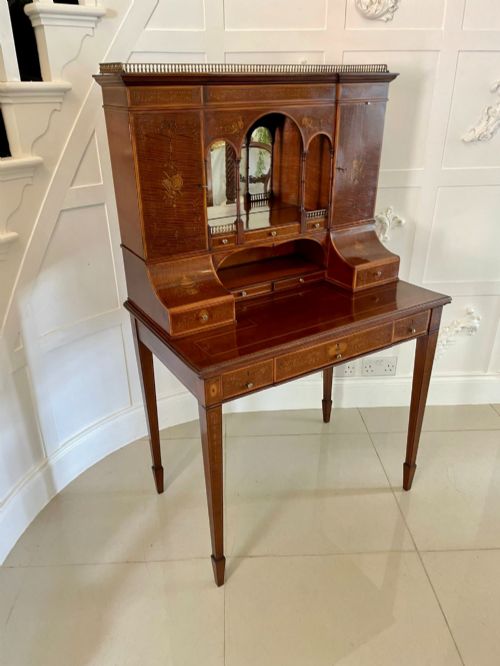
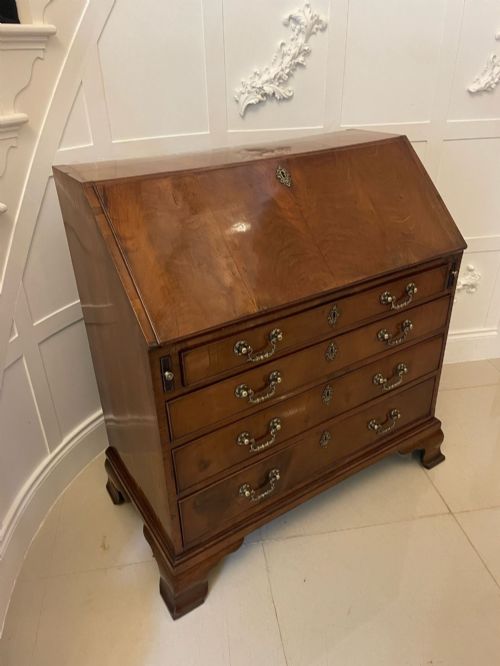
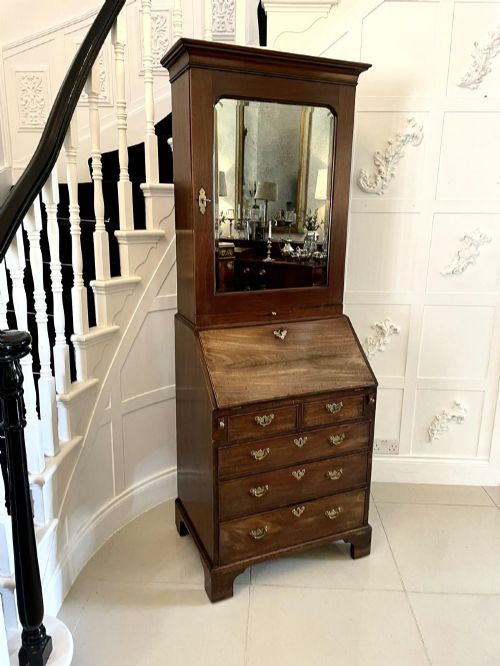
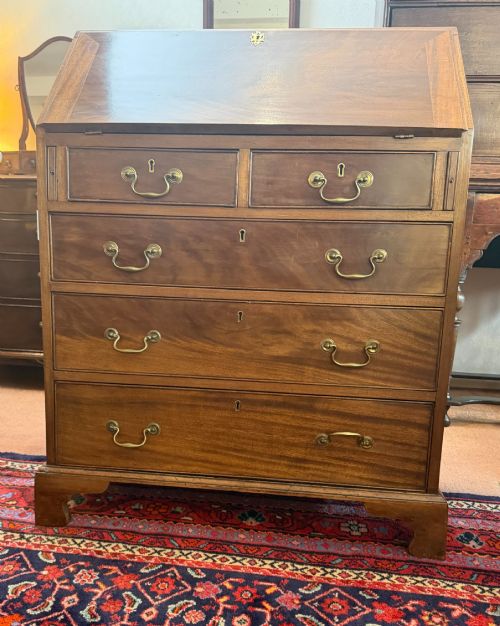
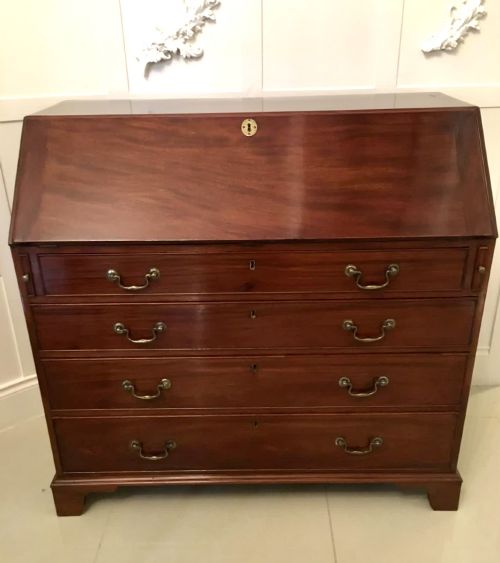
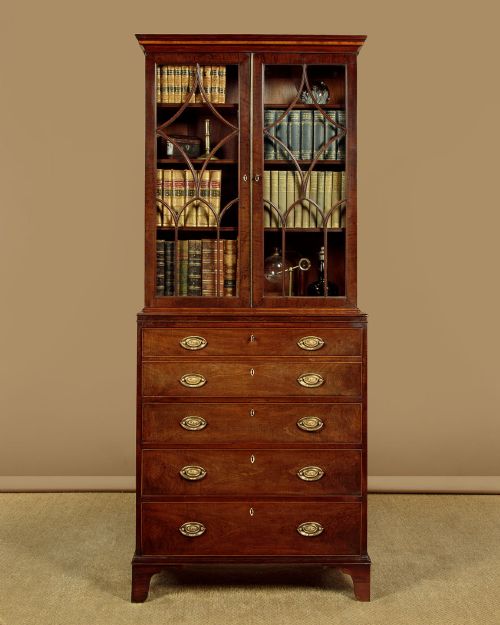
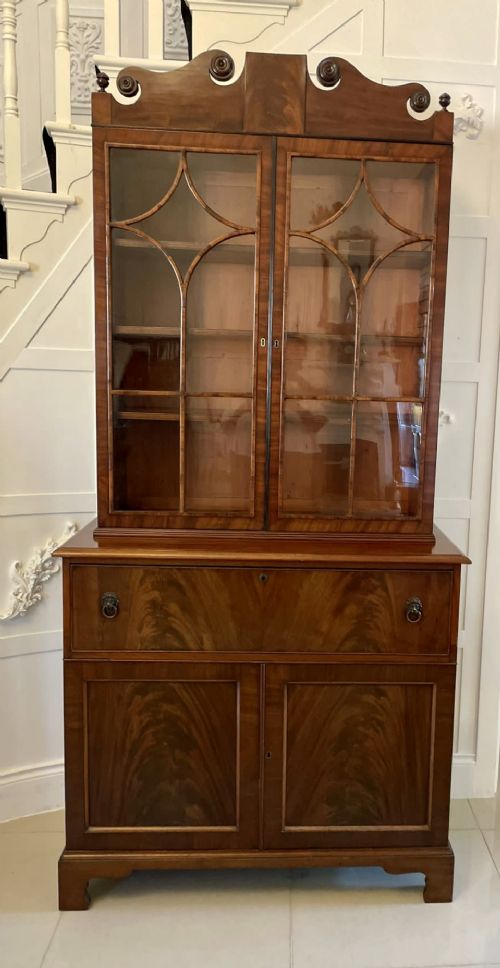
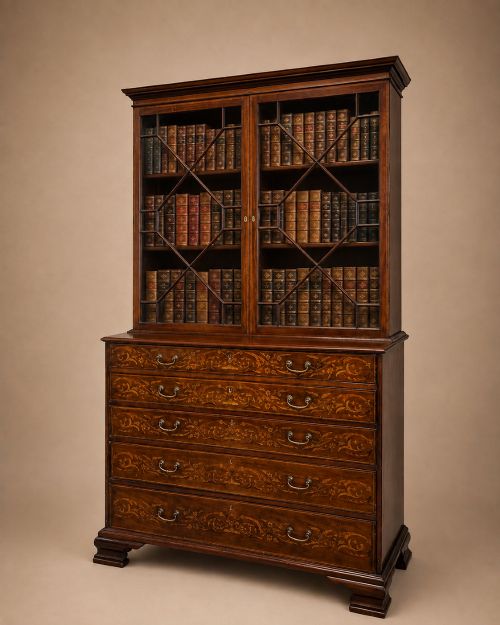
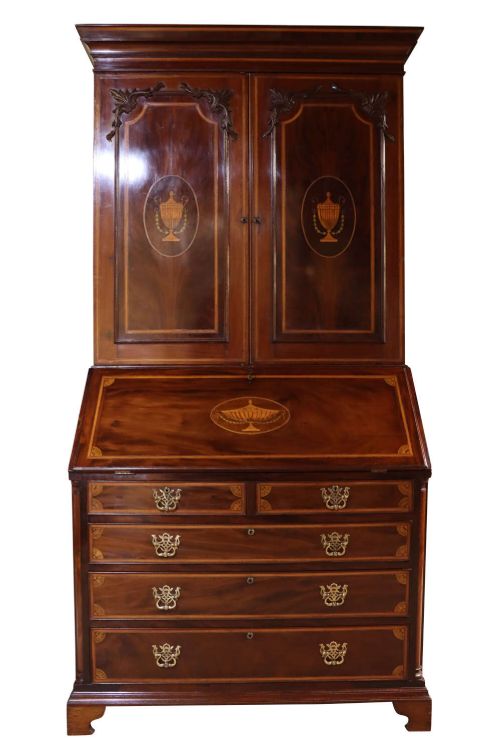
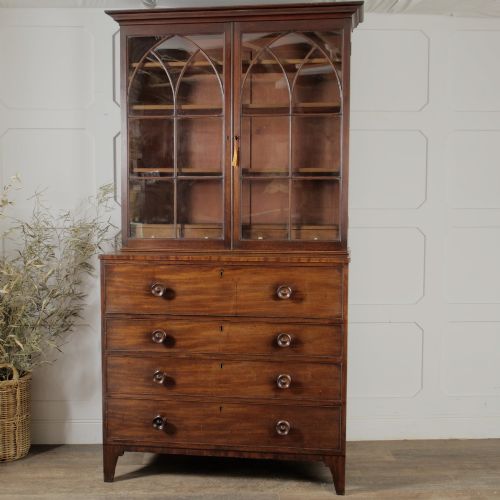
A brown mahogany secretary desk combines a writing surface with enclosed storage, appearing primarily in formats such as bureau bookcases, secretaire bookcases, and drop-front bureaux. These pieces originate across the eighteenth, nineteenth, and early twentieth centuries, spanning Georgian, Regency, Victorian, and Edwardian periods.
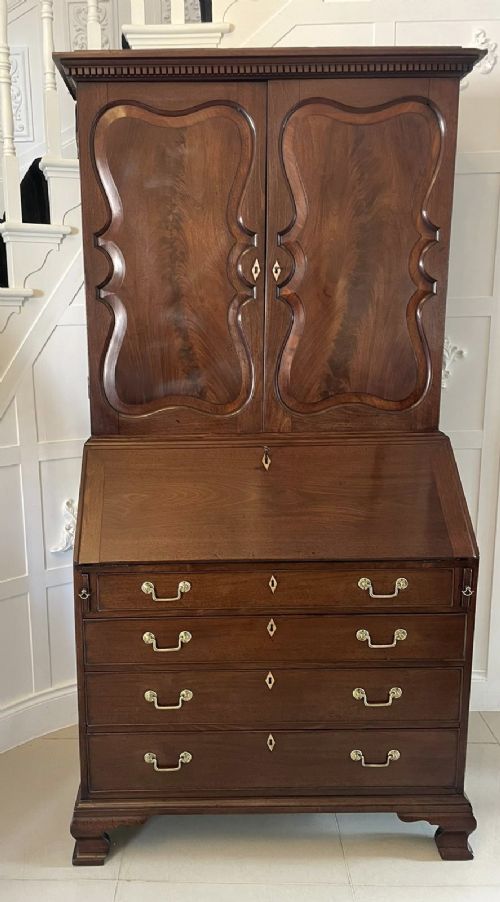
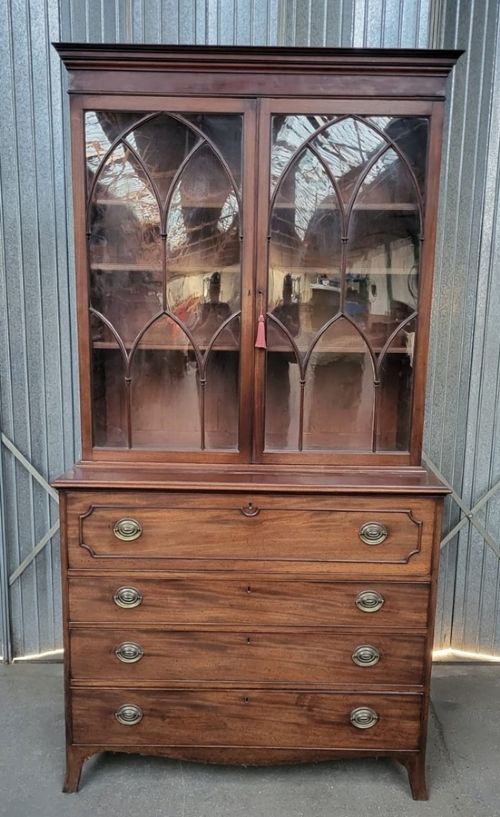
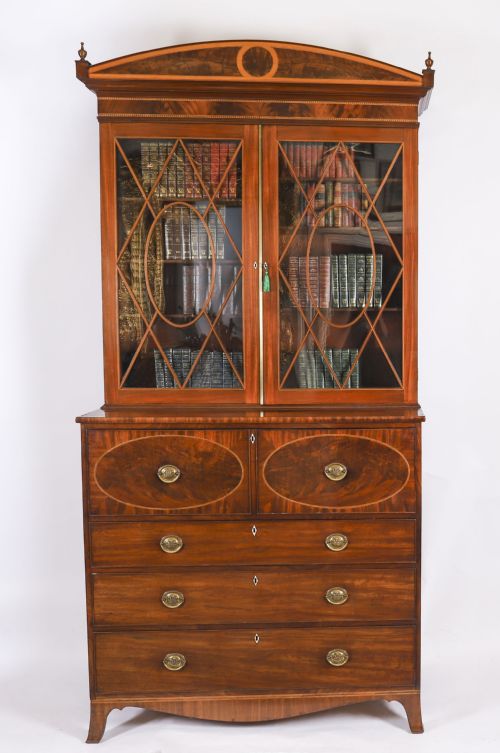
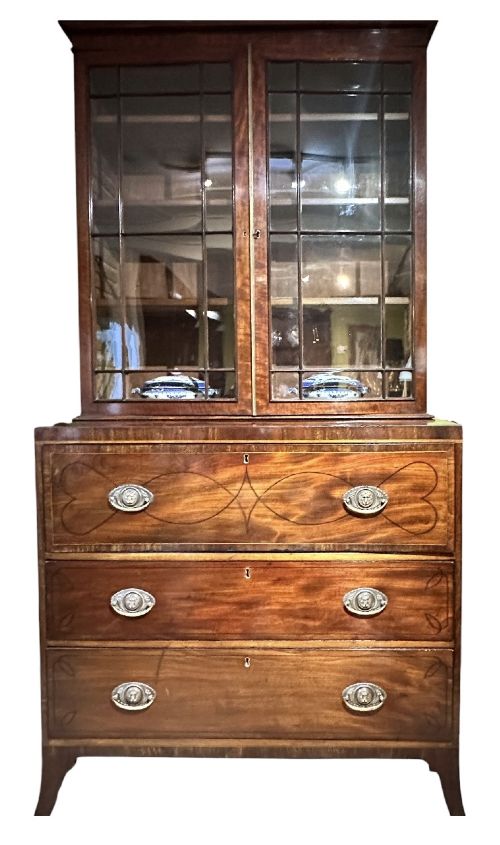
The most common form encountered on this page is the tall bureau bookcase, which pairs a lower writing cabinet containing fitted drawers and pigeonholes with upper glass-fronted shelving. Simpler standalone desks and fall-front bureaux also appear frequently among the listings.
Makers utilised rich timbers and fitted interiors to create functional furniture for studies, libraries, and parlours. Surviving examples reflect the shifting stylistic preferences of their respective decades, from austere eighteenth-century proportions to more heavily inlaid Edwardian adaptations.
Materials and construction methods
Cabinet makers built these desks primarily using solid mahogany and flame mahogany veneers, often incorporating secondary timbers such as oak for drawer linings. Figures selected the timber for its deep grain patterns, laying veneers across primary surfaces to create visual contrast.
Detailed interiors integrated satinwood for smaller drawer fronts, while brass handles, key escutcheons, and glass panes completed the upper cabinet doors. Leather inserts frequently lined the drop-front writing surfaces to provide a durable writing plane.
Joinery relied on traditional dovetail construction for drawers and secure hinge mechanisms for fall-front desks and secretaire drawers. These structural choices ensured the heavy upper bookcases remained stable above the working compartments.
Secret compartments hidden behind dummy book spines wait inside several of these desks to surprise anyone curious enough to pull the right spring.
Distinctions in construction and material standard
Quality separates pieces through the selection of timber figures, such as highly figured flame mahogany veneer, compared against plainer grain stocks. The crispness of inlaid details and the depth of the natural polish further distinguish finer workshops.
Internal organisation reveals the maker's hand, where finely fitted small drawers, concealed compartments, and well-executed satinwood secondary woods denote superior craftsmanship. Simpler variations rely on standard pine or oak interiors without decorative stringing.
Proportion and scale dictate the visual success of the piece, with taller bureau bookcases requiring balanced heights to avoid looking top-heavy. Untouched surfaces retaining appropriate patination hold greater integrity than heavily stripped or over-restored examples.
Tudor and Burrey Shrewsbury
The Brown Mahogany Secretary Desk Glossary
- Bureau bookcase
- A combination furniture piece featuring a lower writing bureau and an upper shelving cabinet enclosed by doors. Glass panels frequently protect the books stored above.
- Secretaire
- A dedicated writing drawer or compartment concealed behind a drop-down front or within a larger chest of drawers. This mechanism allows a chest to function as a desk.
- Flame mahogany
- A distinct wood veneer cut from timber branches where they join the main trunk, creating a fiery, undulating grain pattern. Cabinet makers used it on prominent exterior surfaces.
- Fall front
- A hinged writing flap that drops from a vertical position to form a horizontal desk surface. It conceals internal pigeonholes and small drawers when closed.
- Satinwood
- A pale, lustrous exotic timber utilised for contrasting inlay work and small internal drawer fronts. Its bright tone stands out against dark mahogany.
Brown Mahogany Secretary Desk: Frequently Asked Questions
What is the difference between a bureau and a secretaire bookcase?
A bureau typically uses a sloping fall-front flap that opens directly to reveal the writing surface and interior compartments. A secretaire bookcase conceals its writing drawer behind a wider drawer front that pulls out and drops down.
Both forms provide upper shelving for books, but the mechanical execution of the writing compartment defines the exterior silhouette.
How do I identify a Georgian secretary desk?
Georgian examples generally display restrained classical proportions, solid brasses, and fine cockbeading around the drawer edges. The timber tends toward rich, dark mahogany with minimal exterior inlay on earlier pieces.
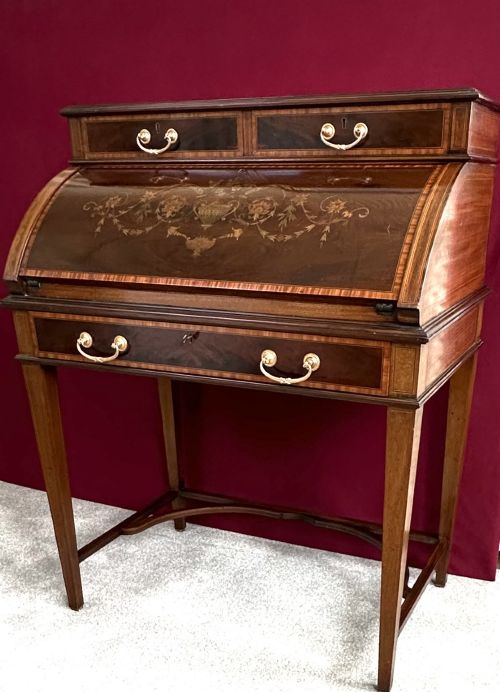
Later Victorian and Edwardian adaptations often introduce lighter satinwood stringing, cylinder fronts, or more prominent decorative crests on the upper bookcase.
Can I use the writing flap for daily work?
The drop-front or pull-out writing surface supports moderate writing tasks, though antique leather inserts require careful treatment to prevent wear. Most flaps rely on internal support laths or the closed drawer sides for weight distribution.
Opening the desk reveals dedicated compartments for stationery, keeping modern writing essentials organised within historic cabinetry.
Are the upper bookcase doors always glazed?
Most surviving secretary desks from the eighteenth and nineteenth centuries feature glazed upper doors with wooden astragals dividing the glass panes. Some alternative configurations utilise solid panelled wooden doors instead.
Glazing allowed owners to display leather-bound volumes while protecting them from dust in period libraries and drawing rooms.