
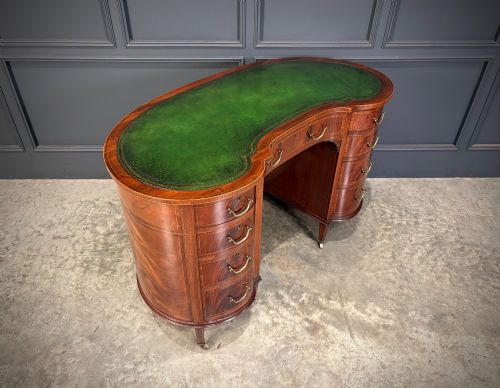
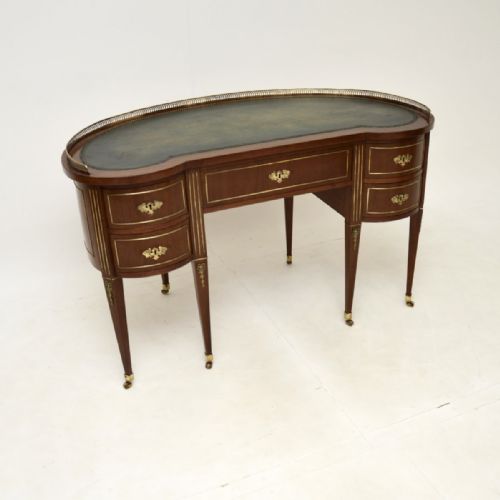
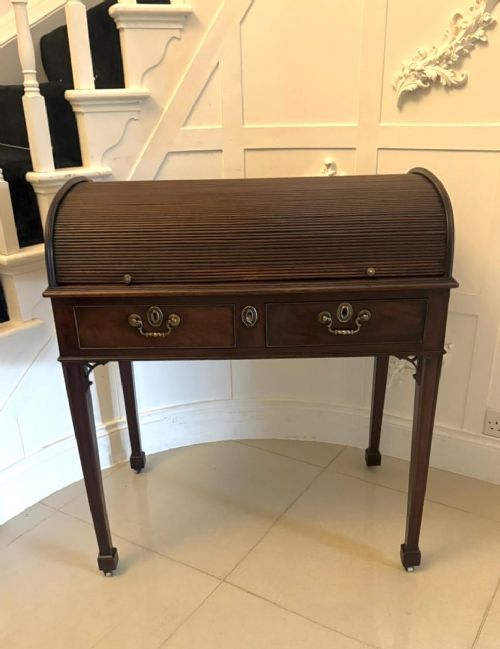
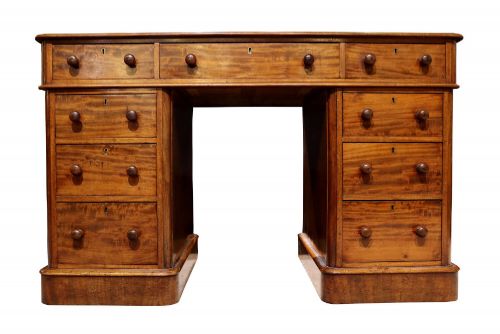
Traditional Mahogany Writing Bureau
Traditional mahogany writing bureaus combine fitted drop-front writing surfaces with deep timber drawers, offering compact workspace and concealed storage.
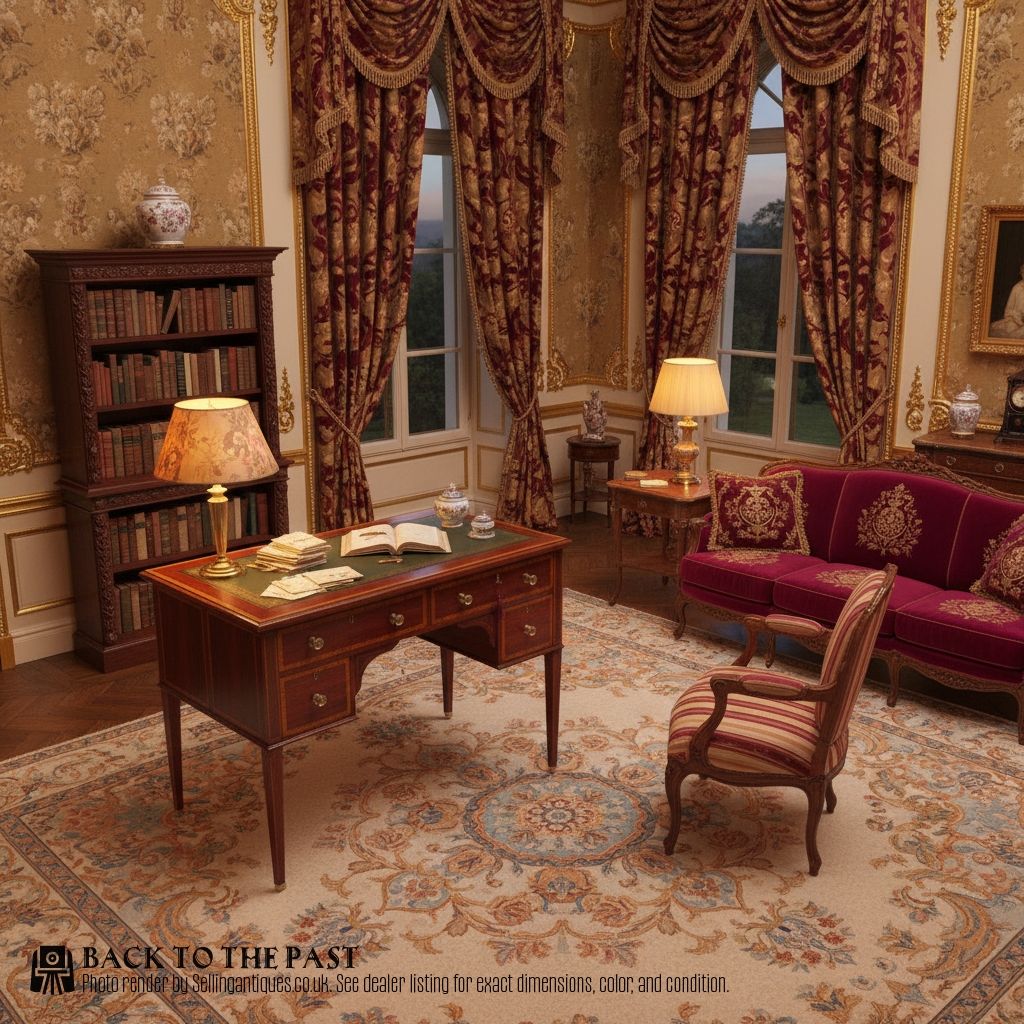
Traditional Mahogany Writing Bureau
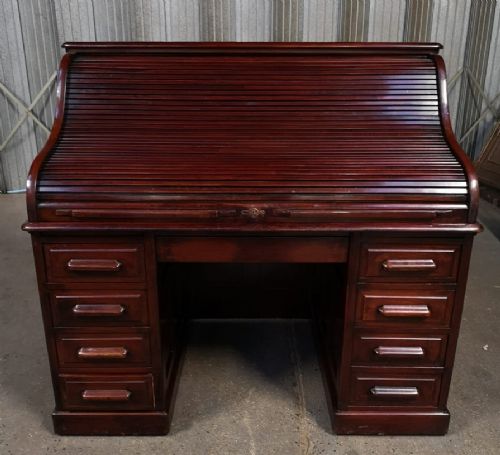
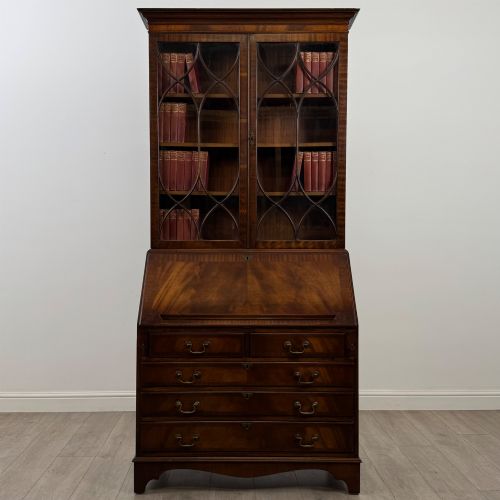
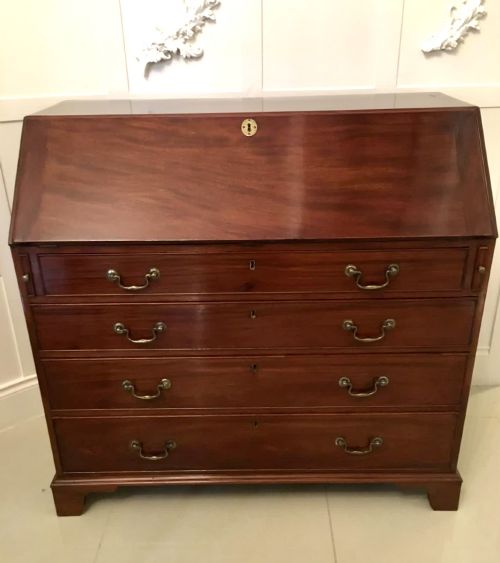
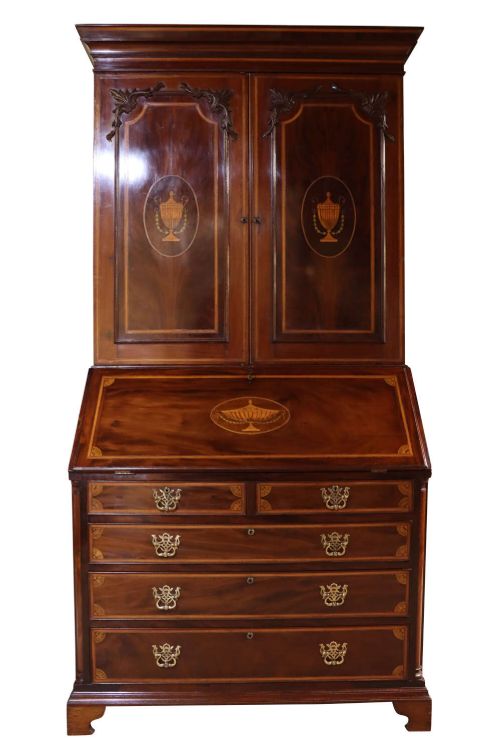
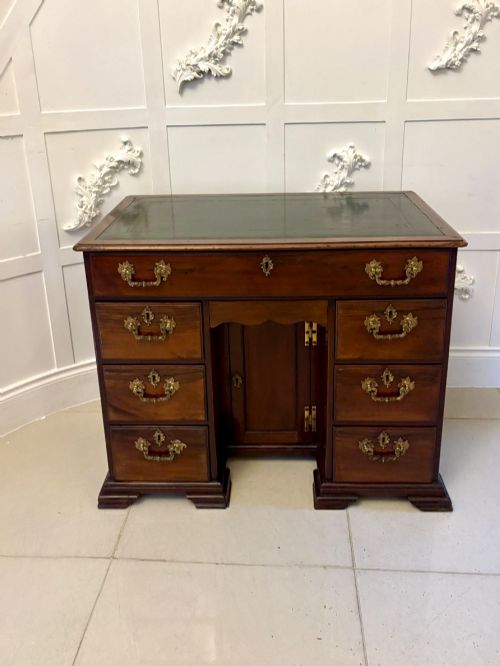
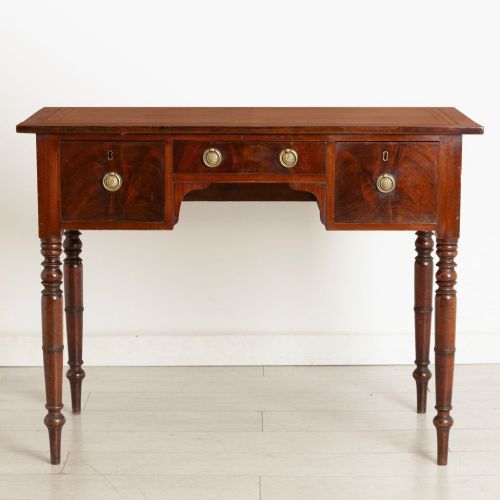
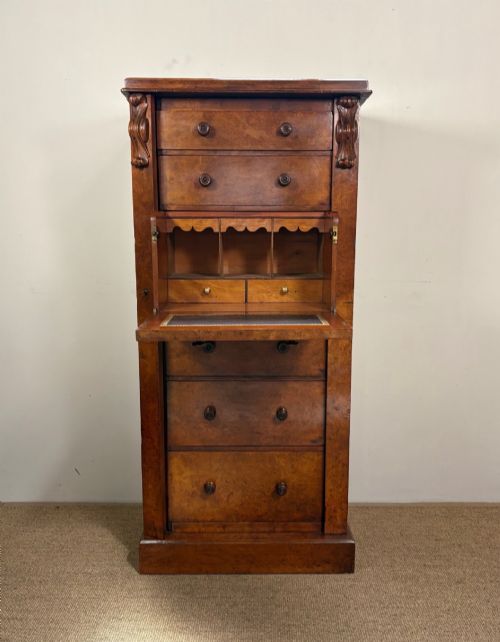
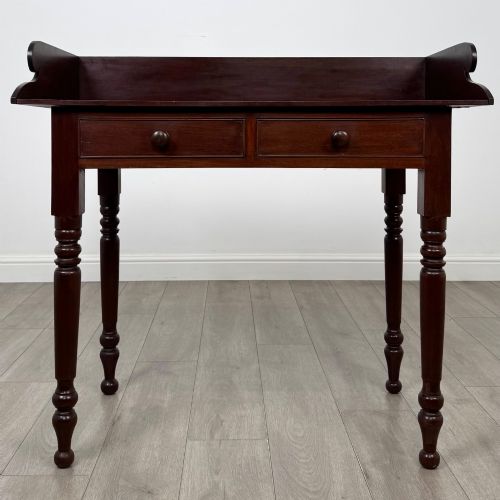
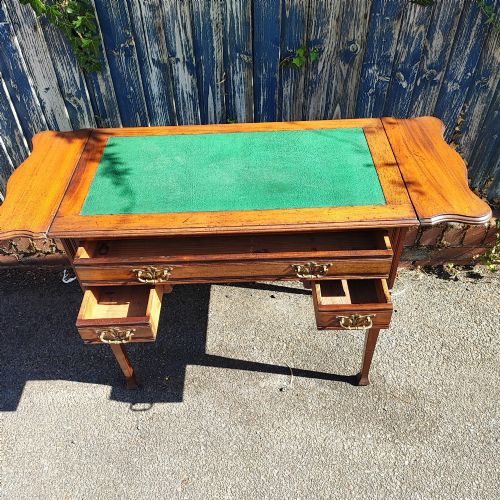
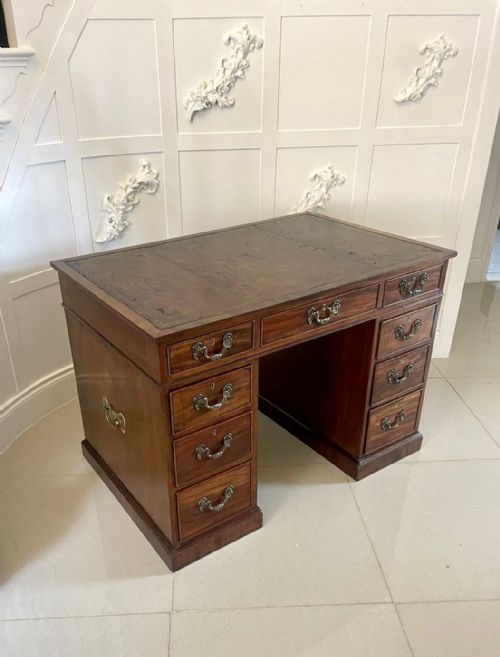
A traditional mahogany writing bureau is a fitted desk form designed for correspondence and storage, appearing in variations across the Georgian, Victorian and Edwardian periods. Buyers encounter standard drop-front bureaux alongside taller bureau bookcases and compact kneehole writing tables.
The selection ranges from George III and William IV iterations to later Edwardian revivals, utilising rich timber grains and brass handles. These pieces serve as functional writing spaces while housing internal pigeonholes and small drawers behind the sloping fall.
What varies in quality
Quality rests upon the selection of timber figures, the crispness of any inlaid woodwork, and the retention of original brass hardware. Pieces originating from prominent cabinet makers display finer internal joinery and more balanced proportions in the fitted pigeonholes.
The integrity of the fall-front hinges and the smoothness of the drawer actions distinguish superior examples from standard workshop production. Surviving original leather inserts and intact glazing add to the integrity of the piece.
Many antique writing desks conceal secret miniature drawers behind dummy pigeonholes, designed for hiding private correspondence from prying eyes.
Maple and Co·Gillows·Rumney and Love
The Traditional Mahogany Writing Bureau Glossary
- Bureau
- A sloping desk with a hinged lid that opens to reveal compartments for writing materials and small drawers. This form frequently sits atop a chest of drawers.
- Tambour
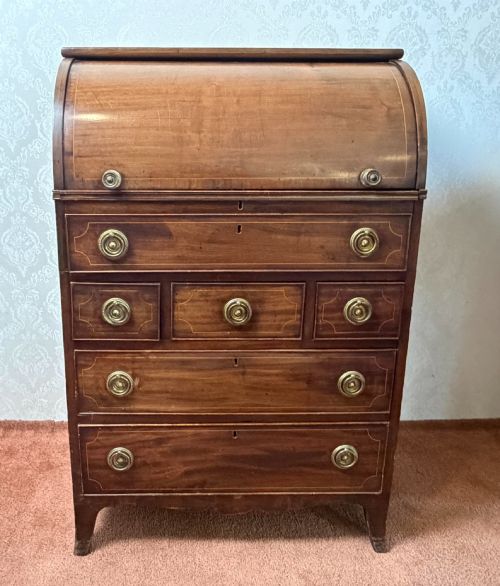
- A sliding shutter formed of narrow strips of wood glued to a canvas backing, used to enclose the writing surface on cylinder desks.
- Secretaire
- A piece of furniture containing a concealed writing drawer or fold-down writing flap, often integrated into a bookcase or tall chest.
- Satinwood
- A yellowish or reddish-brown hardwood sourced from tropical trees, utilised for contrasting inlay and stringing on mahogany furniture.
Traditional Mahogany Writing Bureau: Frequently Asked Questions
How do I date a mahogany bureau?
Dating relies on examining the construction methods of the drawers, the style of the brass handles, and the overall timber characteristics. Georgian pieces typically show hand-cut dovetails and simpler internal layouts compared to later Victorian and Edwardian iterations.
Cabinet-making trends shifted across the centuries, moving from solid timber proportions in the eighteenth century to revival styles and machine-sawn elements in the late nineteenth and twentieth centuries.
What is a bureau bookcase?
A bureau bookcase combines a sloping drop-front desk at the base with a glazed or panelled shelving cabinet fixed on top. This dual-purpose furniture stored writing supplies below and library volumes above.
These taller pieces were built during the Georgian and Victorian eras to maximise storage within formal parlours and studies.
How should I care for mahogany timber?
Mahogany surfaces require dusting with a soft, dry cloth and protection from direct sunlight and extreme temperature fluctuations. Avoid using silicone-based polishes that build up residue over time.
Maintaining stable indoor humidity prevents the timber and veneer from splitting or warping across seasonal changes.
Are writing bureau interiors fitted?
The interior of a traditional bureau contains an arrangement of pigeonholes, small drawers, and occasionally a central locked cupboard door. These compartments organised letters, inkwells, and personal documents.
More elaborate examples incorporate secret compartments accessed by sliding panels or hidden spring mechanisms.