

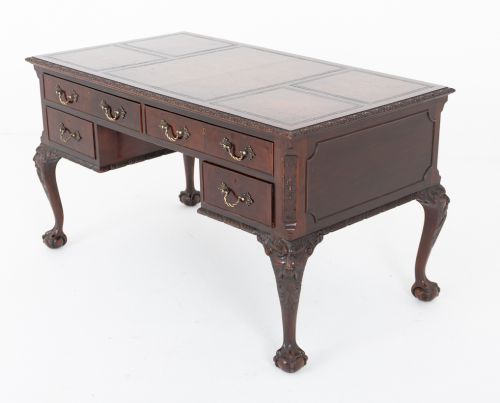
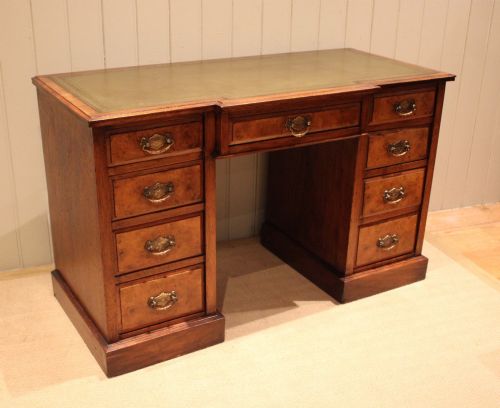
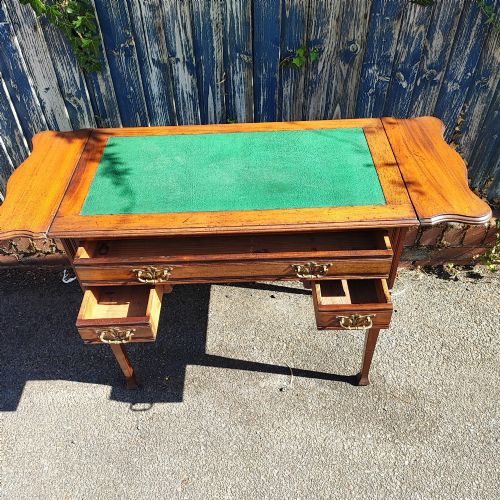
Edwardian Leather Writing Table
When you search for an edwardian leather writing table, you seek a finely proportioned workspace defined by supple hide and period craftsmanship.
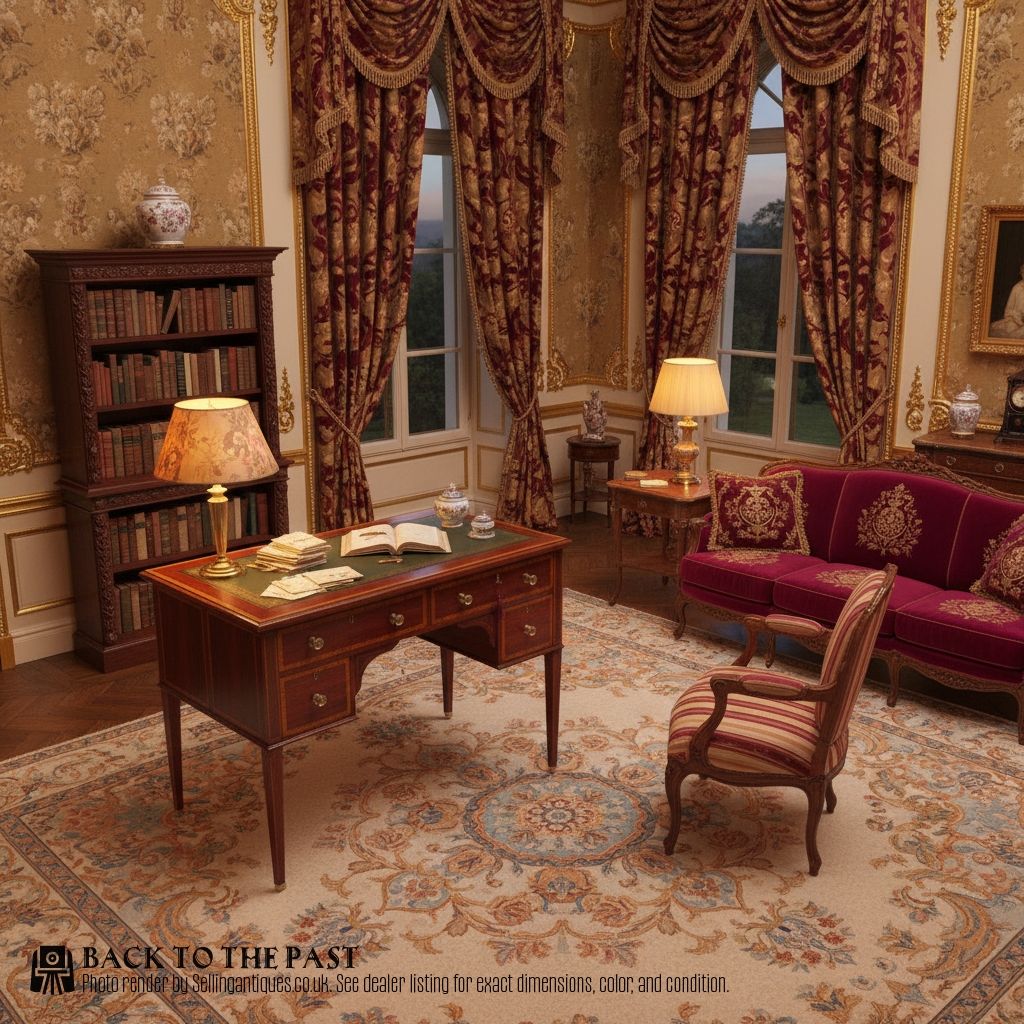
Edwardian Leather Writing Table
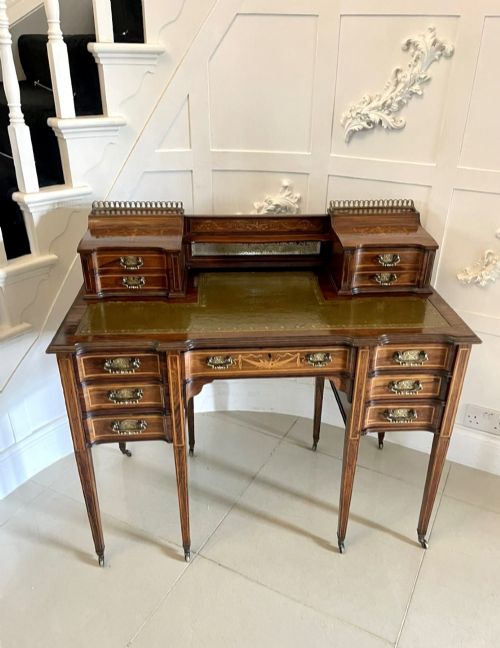
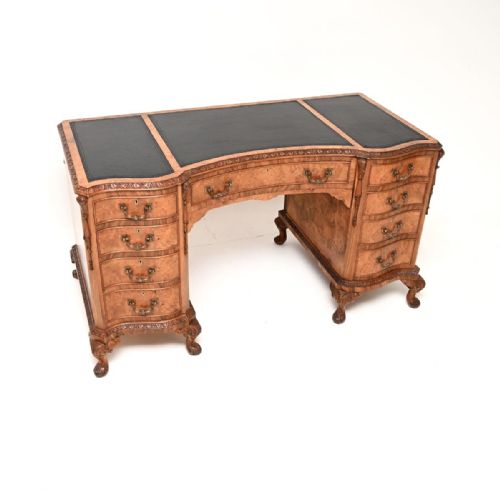
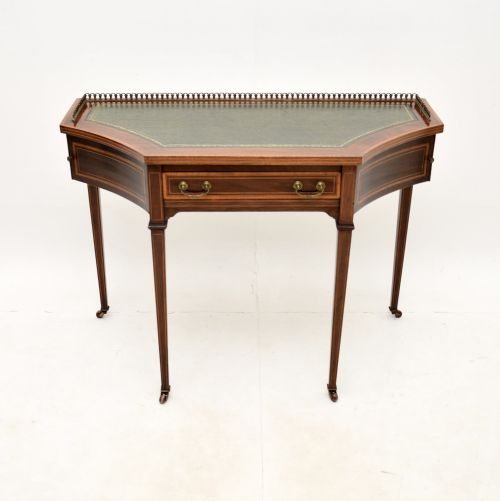
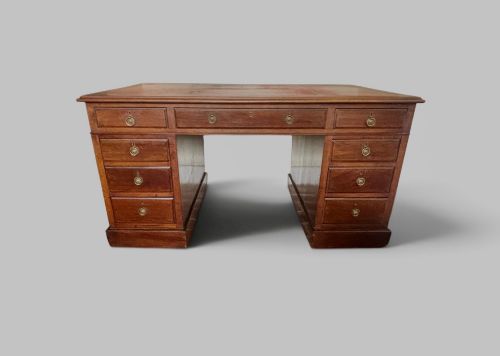
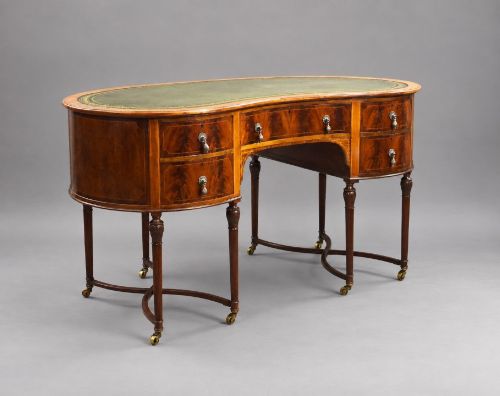
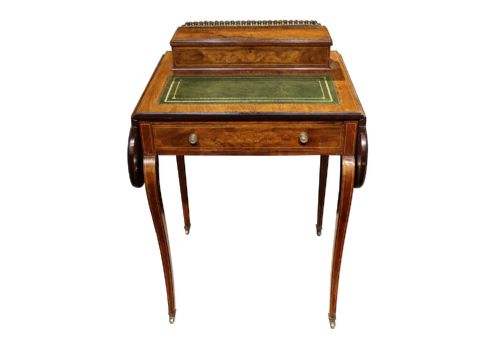
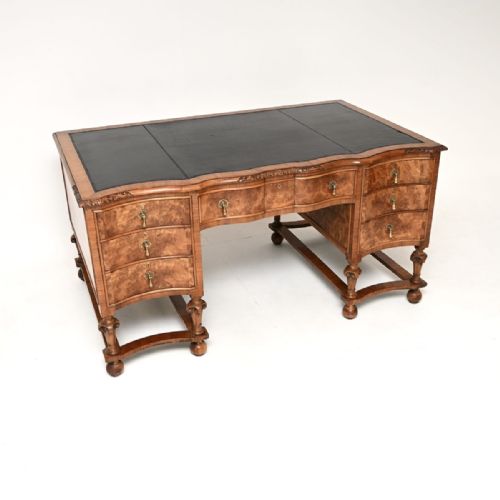
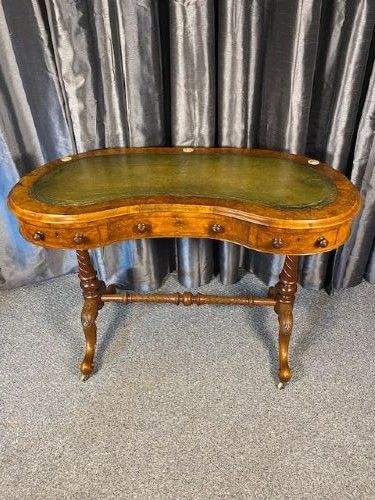
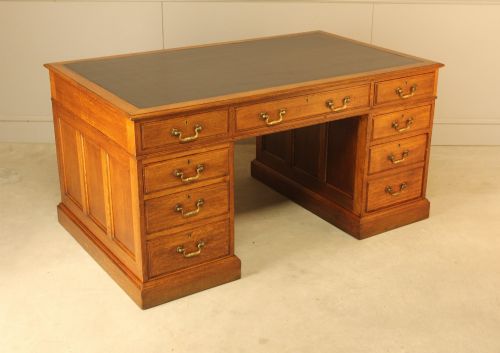
An edwardian leather writing table brings together the refined forms of the early twentieth century and the practical needs of domestic correspondence. Buyers searching this phrase encounter versatile freestanding writing tables, elegant lady's desks with bow fronts, and substantial pedestal variants.
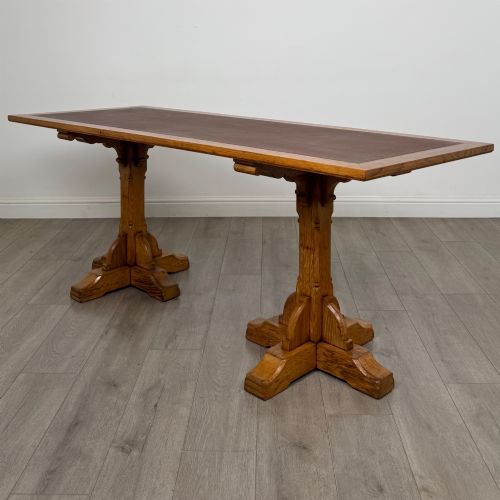
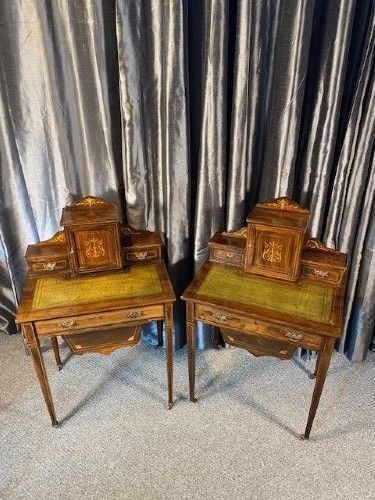
The pieces on this page span the Edwardian era alongside late nineteenth and early twentieth-century interpretations in mahogany, walnut, and satinwood. Many examples incorporate leather inserts in tones of tan or green, often complemented by inlaid woodwork and fitted interiors with small drawers.
Whether designed as compact side tables for a boudoir or expansive library desks for a study, these furnishings combine traditional utility with decorative marquetry and fine timber framing.
How They Were Made
Cabinet makers constructed these desks using solid timbers and select veneers such as mahogany, walnut, satinwood, and rosewood. Tops were typically inset with panels of tooled leather, providing a smooth, durable writing surface.
Decorative detailing relied on precision inlay, marquetry, and crossbanding, often incorporating contrasting woods like boxwood and ebony. Structural integrity was maintained through traditional joinery, brass drawer pulls, and fitted internal compartments.
Listings feature woods including mahogany, walnut, satinwood, oak, and rosewood, alongside tooled leather writing surfaces.
What Varies in Quality
The distinction between standard examples and exceptional pieces rests upon the selection of timber veneers and the intricacy of the cabinet work. Finely figured flame mahogany or burr walnut paired with delicate marquetry inlay elevates a piece significantly.
Attention to detail in the secondary woods, the execution of the tooled leather insert, and the presence of fully finished drawer linings and original brass hardware further separate workshop standards.
Maple and Co·Trollope and Sons·Wylie and Lochhead Glasgow·Edwards and Roberts·James Shoolbred and Co·S and H Jewell·Ray and Miles
The Edwardian Leather Writing Table Glossary
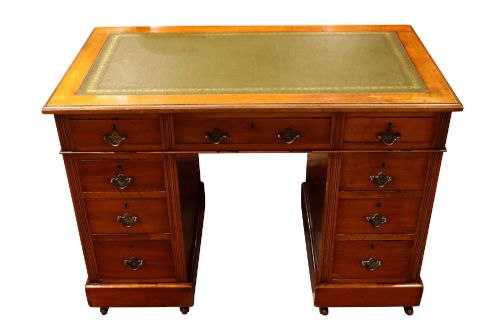
- Pedestal desk
- A heavy freestanding desk featuring two banks of drawers supporting the main writing surface. These are frequently finished on all sides for central room placement.
- Marquetry
- The art of applying decorative veneer pieces in various woods to form geometric or pictorial patterns. This technique is common on Edwardian revival furniture.
- Satinwood
- A lustrous, yellow-toned timber utilised extensively for fine cabinet work and decorative banding during the late nineteenth and early twentieth centuries.
- Crossbanding
- A strip of veneer laid around the border of a table top or drawer front with the grain running perpendicular to the centre panel.
- Leather insert
- A panel of cattle hide set into the writing surface, traditionally tooled around the perimeter with gold leaf patterns.
Edwardian Leather Writing Table: Frequently Asked Questions
Where should I place a writing table?
These tables adapt well to studies, living rooms, and bedrooms, particularly freestanding versions that look finished from every angle.
Ensure adequate natural light falls across the leather surface without exposing the timber to direct sunlight.
How do I care for the leather top?
The leather inset benefits from occasional dusting with a dry cloth and gentle treatment with appropriate leather dressings to prevent drying.
Avoid using abrasive household cleaners or excessive moisture on the gilded tooling.
Were these desks used for correspondence?
Writing tables served primarily for letter writing, record keeping, and managing household accounts before the widespread use of typewriters.
Fitted interiors and small drawers provided storage for stationery, inkwells, and stamps.
How do I distinguish Edwardian pieces from Victorian ones?
Edwardian furniture generally exhibits lighter proportions, brighter satinwood or mahogany tones, and a preference for Sheraton Revival and neoclassical motifs.
Victorian pieces tend to be heavier in build with darker finishes and denser ornamentation.