
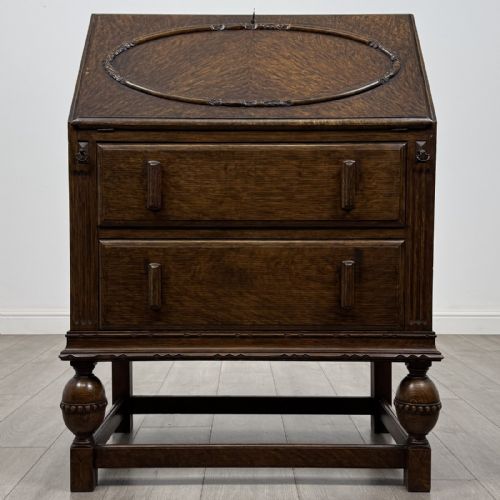
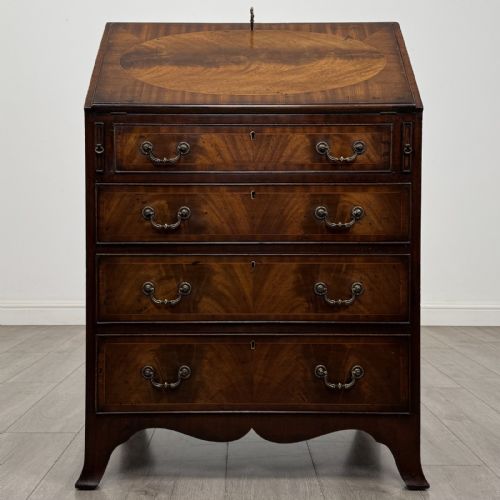
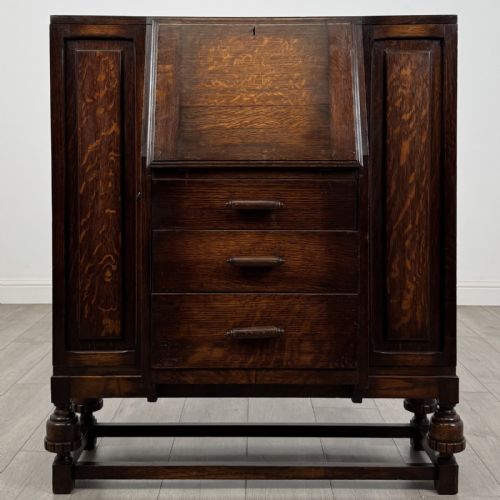
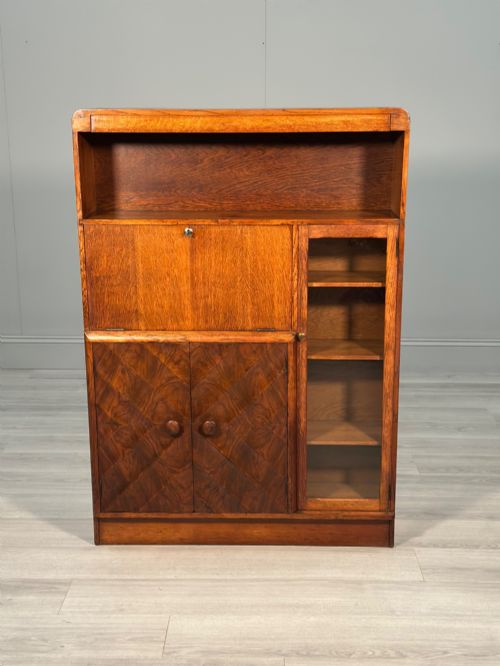


Vintage Fall Front Secretary
These vintage fall front secretary desks combine a hinged writing flap with fitted drawers, offering a practical workspace that conceals correspondence.
Vintage Fall Front Secretary
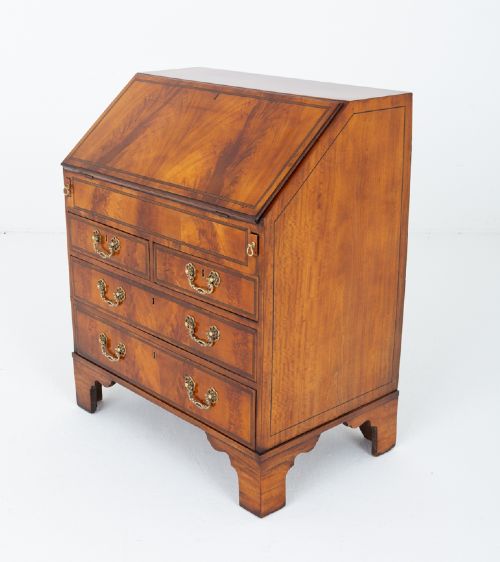
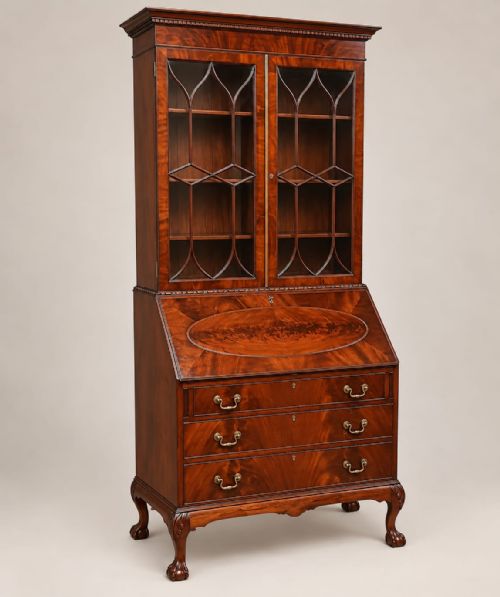
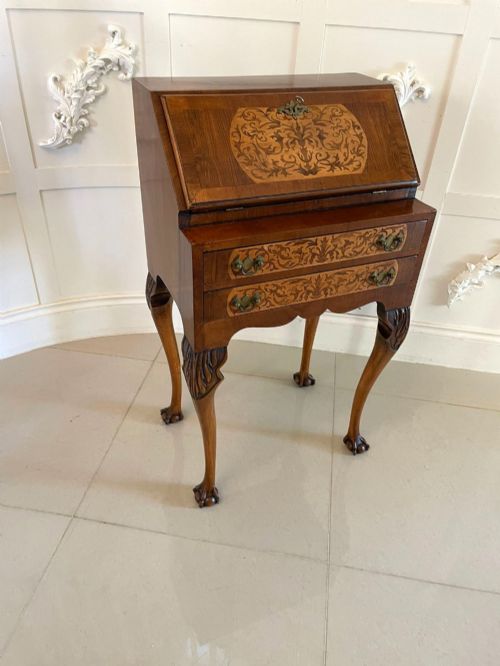
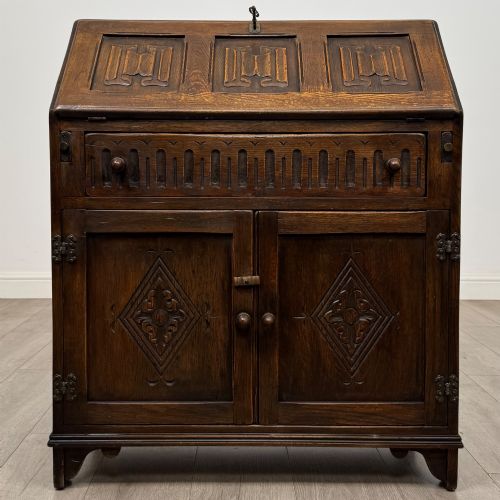
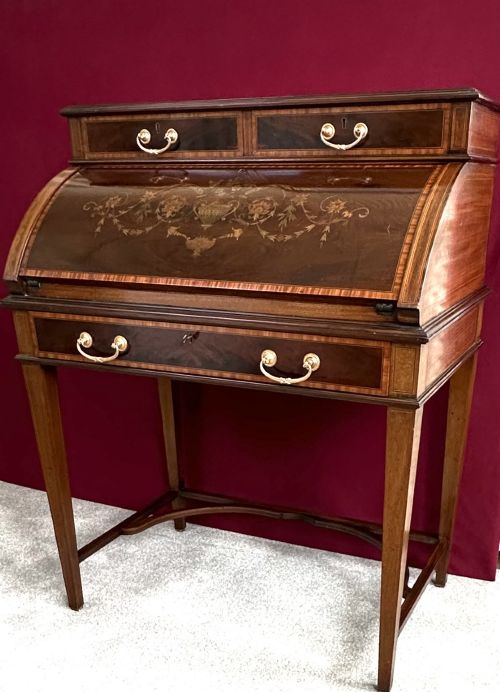
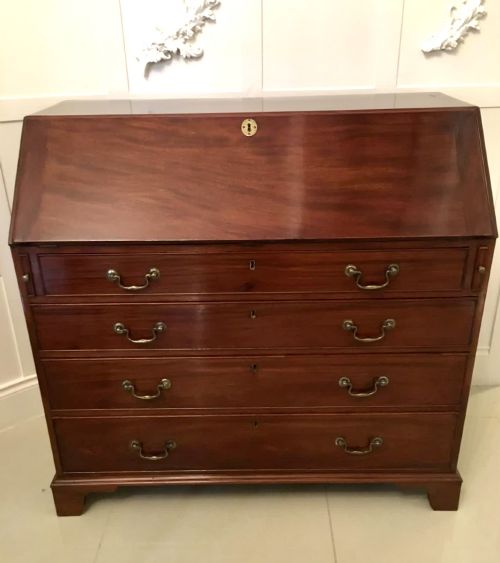
A vintage fall front secretary provides a concealed writing surface by lowering a hinged flap, which rests horizontally to form a desk. Behind this drop-front panel, makers arranged small drawers, pigeonholes, and compartments for stationery and letters.
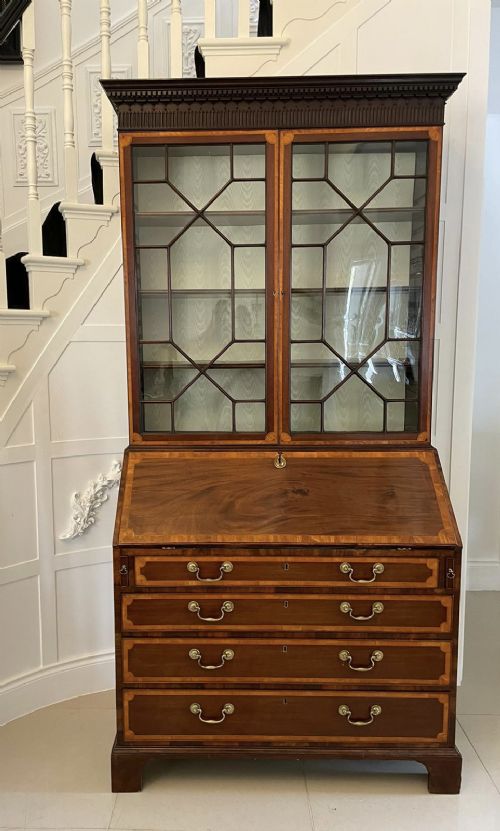
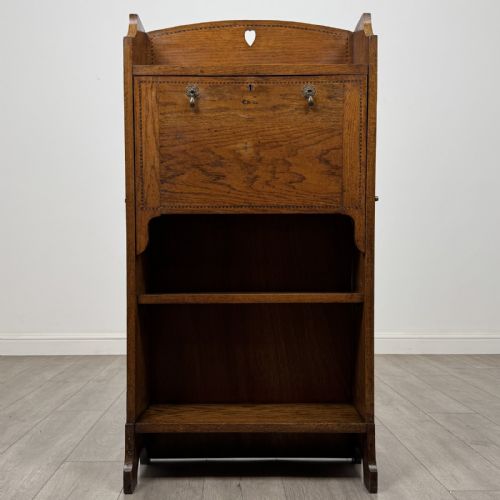
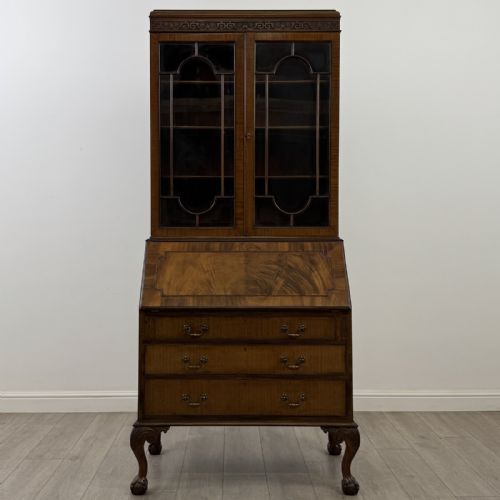
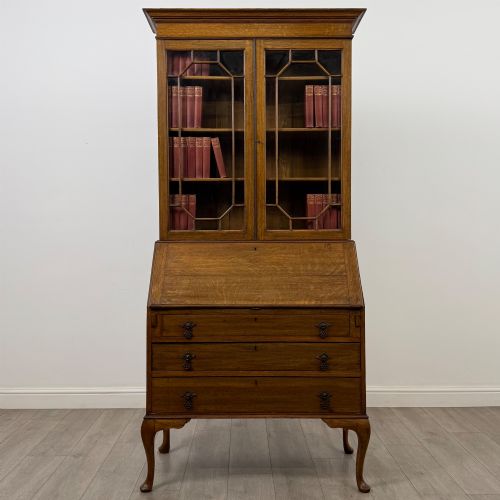
The pieces appearing on this page span several centuries and styles, ranging from Georgian and 18th-century designs to Edwardian oak models and Art Deco walnut interpretations. Bureau bookcases and desks with upper shelving units also feature regularly alongside standalone writing cabinets.
Makers utilised various regional woods, producing walnut, mahogany, oak, and yew wood variations. Buyers encounter pieces influenced by Queen Anne, George III, and Arts and Crafts aesthetics, demonstrating both simple domestic utility and refined cabinetry.
Materials and construction
Cabinetmakers constructed these writing desks using solid timbers and decorative veneers such as burr walnut, flame mahogany, and elm. Workshops applied these choice veneers over stable secondary woods to create rich grain patterns on the fall front panels.
Traditional joinery methods secured the internal pigeonholes, drawer dividers, and heavy writing flaps. Brass hardware, including drop handles and key escutcheons, was fitted to secure the numerous drawers and drop-front compartments.
Many vintage bureaus retain secret internal compartments hidden behind the main pigeonholes for storing private letters and hidden treasures.
Judging quality and craftsmanship
Quality reveals itself in the selection of timber veneers and the precise alignment of internal small drawers within the writing compartment. Finer examples display continuous grain across the fall front panel and careful dovetail joinery in the drawer construction.
The integration of upper bookcase sections or specialised interior compartments distinguishes standard domestic furniture from more ambitious cabinet work. Structural integrity in the hinged writing support arms determines how well the piece handles daily use.
Heals of London·Arthur Basil Reynolds·Larkin·F.H. Marshall and Co Glasgow
The Vintage Fall Front Secretary Glossary
- Fall front
- A hinged writing flap that pulls down to form a horizontal desk surface. When closed, it conceals the interior pigeonholes and small drawers.
- Bureau bookcase
- A combination piece featuring a lower writing bureau with a fall front and an upper enclosed shelving or cabinet section.
- Pigeonhole
- A small compartment built into the interior of a desk for sorting letters and documents. These compartments often sit behind the main fall front panel.
- Escritoire
- A writing cabinet or desk featuring a fall front writing flap. The term often describes French or continental forms of secretary desks.
- Dovetail
- A joint used in drawer construction formed by interlocking wedge-shaped fingers. This interlocking joint provides durable resistance to pulling forces.
Vintage Fall Front Secretary: Frequently Asked Questions
What is a fall front secretary?
A fall front secretary is a writing desk with a hinged panel that drops down to create a flat writing surface. It typically conceals a fitted interior of small drawers and pigeonholes.
These pieces function as compact writing desks while keeping correspondence neatly hidden away behind the closed wooden panel.
How do I use a bureau desk?
To use the desk, you unlock and lower the fall front panel so it rests level on support brackets or pull-out slides. This reveals the internal writing area and stationery compartments.
When writing is finished, you simply gather your papers into the internal compartments and lift the panel back to its vertical position.
How do I tell Edwardian from Georgian pieces?
Georgian pieces typically date from the eighteenth or early nineteenth century and feature solid mahogany or oak construction with hand-cut dovetails. Edwardian examples often date from around nineteen hundred to nineteen twenty and frequently incorporate lighter satinwood inlay or golden oak.
Examining the internal drawer construction and timber choice helps clarify the manufacturing period.
Where were bureau bookcases placed?
Bureau bookcases were traditionally placed in parlours, studies, or libraries where household accounts and correspondence were managed. The upper section stored books while the lower desk provided a private writing space.
Today, they serve similar organizational functions in home offices and living rooms.