


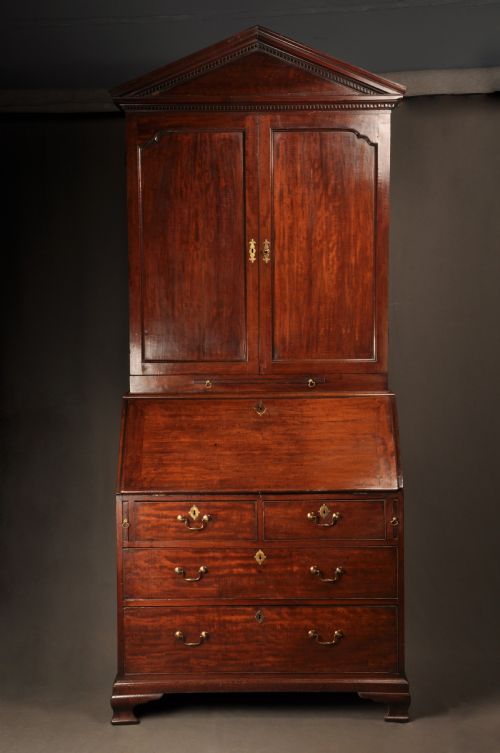

Dark Wood Slant Desk
A dark wood slant desk brings centuries of cabinet-making skill into the room, offering a private writing surface that folds away neatly.
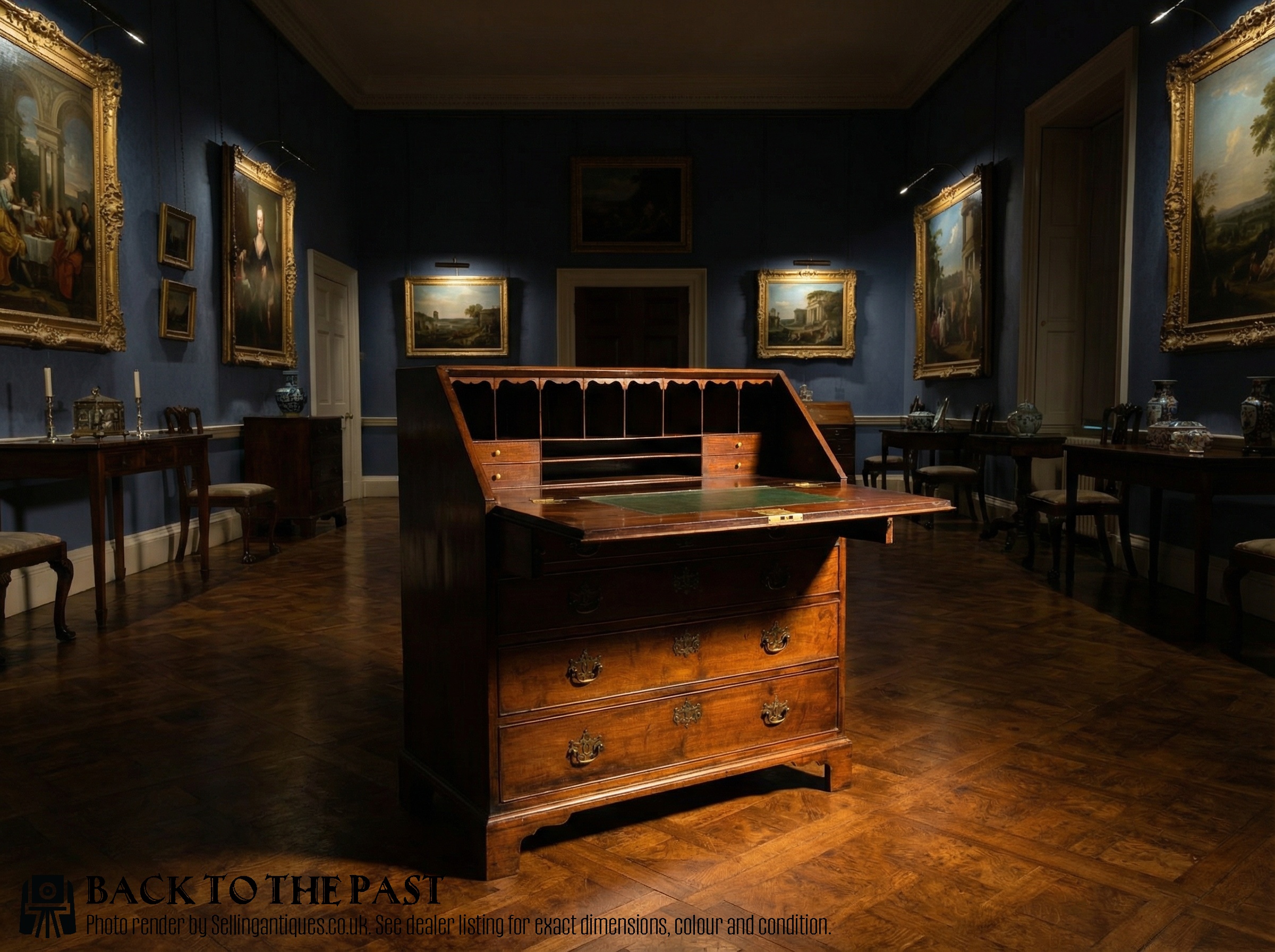
Dark Wood Slant Desk
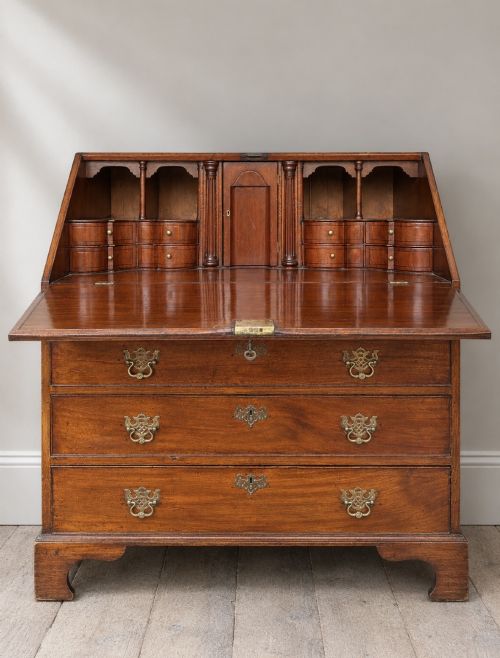
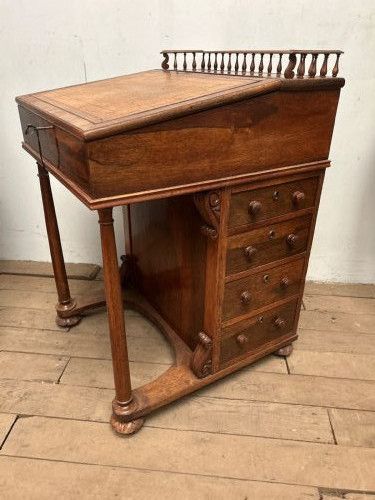
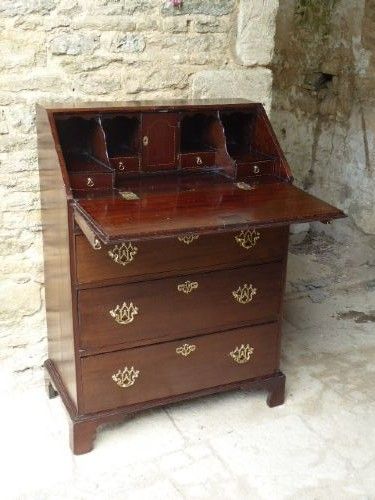
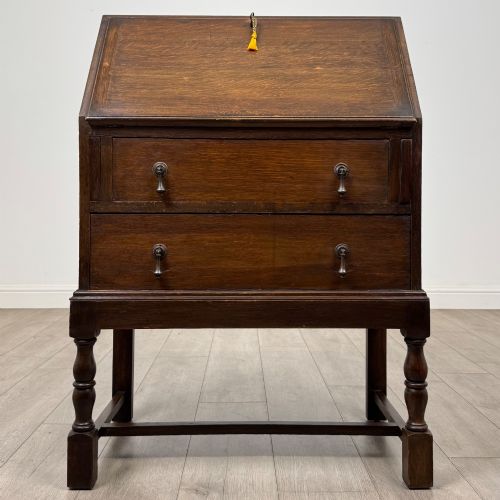
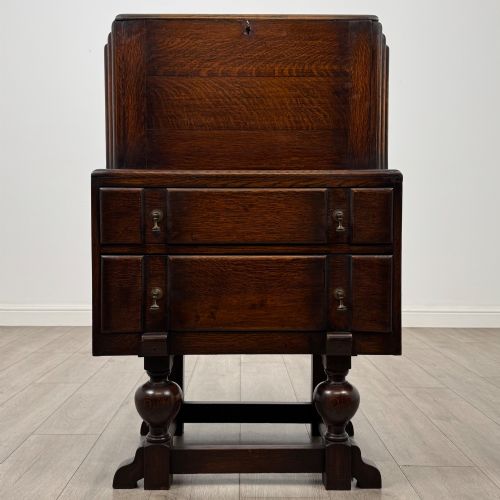
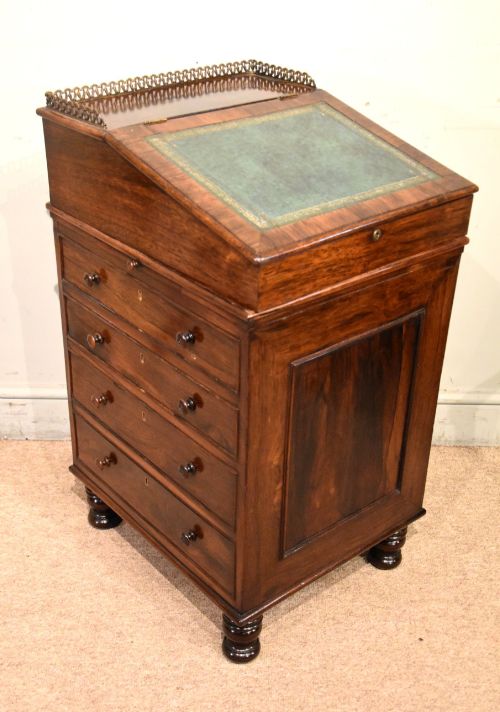
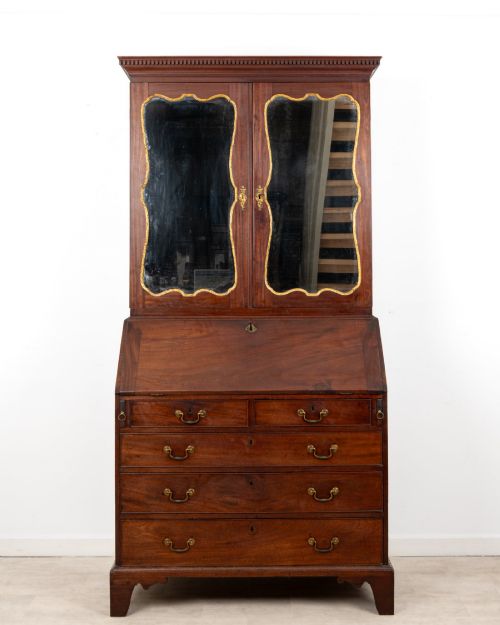
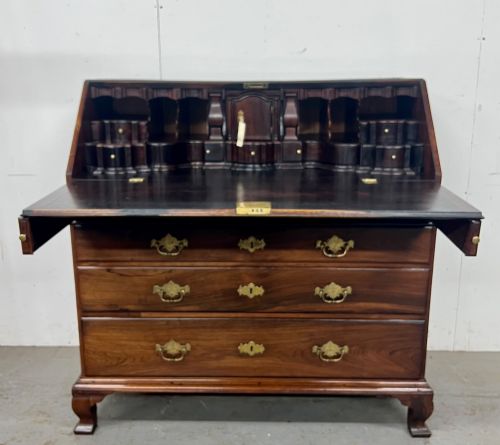
When searching for a dark wood slant desk, buyers encounter forms traditionally known as bureaux, bureau bookcases, and davenports spanning the Georgian, Victorian, and Edwardian eras. These pieces combine a sloping fall-front writing flap with internal pigeonholes and drawers, resting atop chest bases or fitted pedestals.
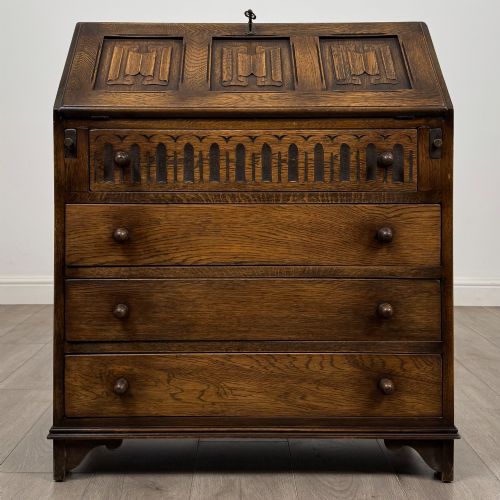
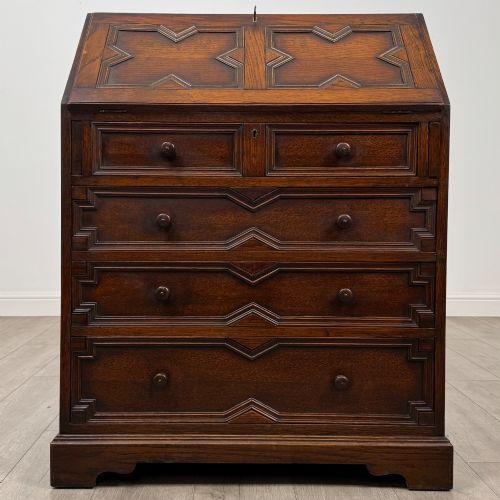
Mahogany, oak, and rosewood dominate the listings, frequently appearing in 18th-century Georgian formats alongside later revival styles such as Jacobean, Tudor, and Sheraton. The slant desk serves as a compact workspace that conceals correspondence while anchoring a room with deep timber tones.
Materials and construction
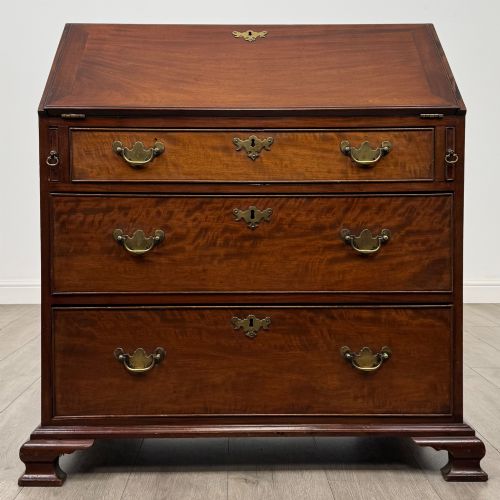
Cabinet makers utilised solid timbers and selected veneers, notably Cuban and Brazilian mahogany, oak, and rosewood, supported by secondary woods like elm. Surfaces frequently display intricate satinwood inlay, floral marquetry, and moulded bracket feet.
Interiors reveal small drawers and pigeonholes constructed with traditional dovetail joints. Brass handles, escutcheons, and occasional leather writing inserts complete the fabrication of these desks.
Dark Wood Slant Desk Retail Price Guide 2026
Typical asking prices for dark wood slant desk among the pieces listed under this phrase on Sellingantiques today, from the lower quarter to the upper quarter. They describe what is for sale here now, not the wider market.
Listings feature woods such as mahogany, oak, rosewood, and walnut across Georgian, Victorian, and Edwardian periods.
Judging quality and character
Quality rests upon the choice of timber figure, the crispness of carved details such as linenfold or bracket feet, and the balance of proportions. Finer examples display well-matched grain patterns across the fall front and drawer fronts.
The sophistication of the internal compartments separates standard utility pieces from exceptional cabinet work. Secret compartments, harmonious proportions, and untouched timber surfaces elevate a desk's standing.
The Dark Wood Slant Desk Glossary
- Bureau
- A writing desk featuring a sloping lid that opens to reveal fitted drawers and pigeonholes. It forms the core shape of most slant desks.
- Davenport
- A compact pedestal desk with a sloping writing surface, originating in the Regency period. Drawers typically open to one side.
- Bureau bookcase
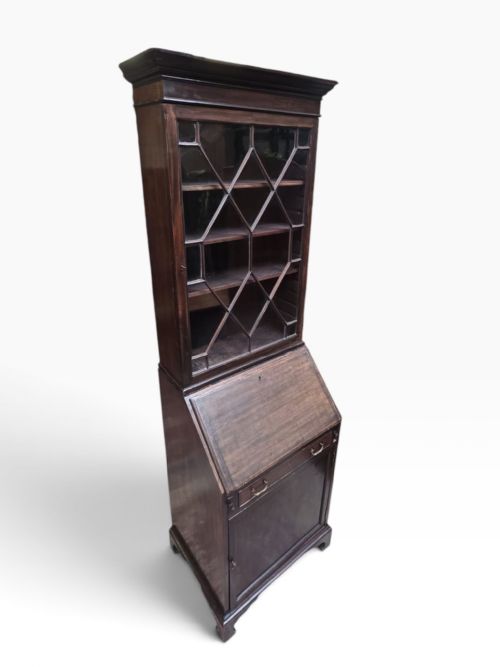
- A taller cabinet combining a slant desk base with upper shelving enclosed by glazed or solid wooden doors. These pieces maximise storage verticality.
- Fall front
- The hinged sloping panel that opens downward to create the writing surface. It conceals the internal compartments when closed.
- Bracket foot
- A simple foot shape resembling a bracket, supporting the corners of Georgian and later case furniture. It lifts the desk body slightly off the floor.
Dark Wood Slant Desk: Frequently Asked Questions
How do I use a slant desk today?
The sloping fall front provides a compact surface for laptop work or handwritten correspondence. Internal compartments help organise stationery and small items.
Closing the lid conceals paperwork entirely, allowing the desk to function as a refined cabinet when not in active use.
How do I date a dark wood desk?
Dating relies on timber choices, handle styles, and construction methods. Earlier 18th-century pieces often use solid oak or Cuban mahogany with hand-cut dovetails.
Later Victorian and Edwardian examples show machine-sawn elements, revival styling, and different secondary woods inside the drawers.
Are these desks suitable for small rooms?
Many slant desks feature modest footprints compared to modern partner desks, making them practical for tighter spaces. Their vertical storage options utilise wall height efficiently.
Bureau bookcases add upper shelving without demanding extra floor area, combining storage and writing space in one footprint.