
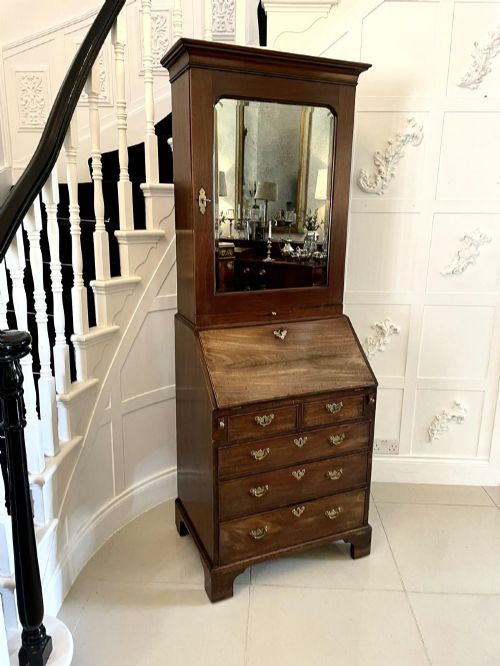


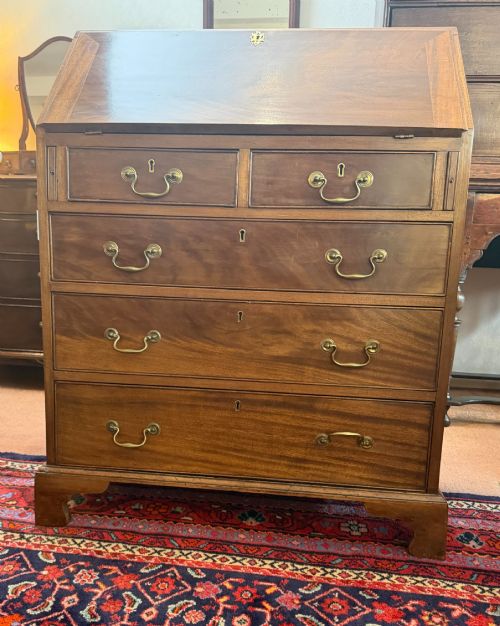
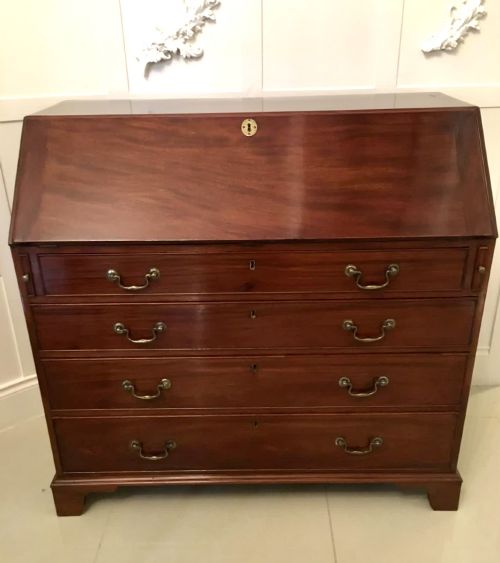
18th Century Mahogany Bureau
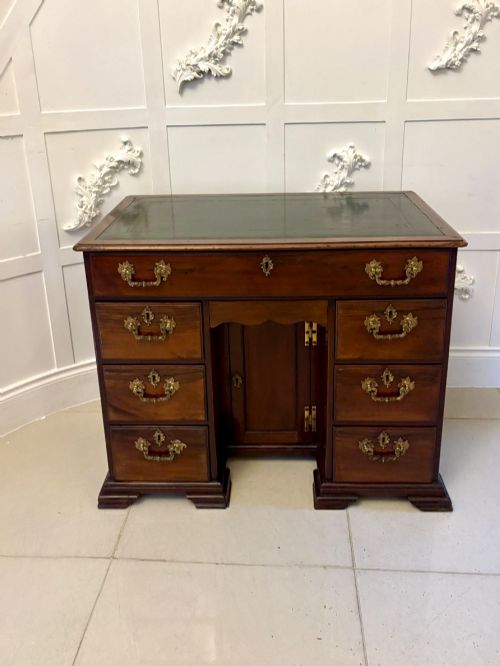
An 18th century mahogany bureau brings tangible Georgian craftsmanship and clever internal pigeonholes into a modern study.
Defining the 18th Century Mahogany Bureau
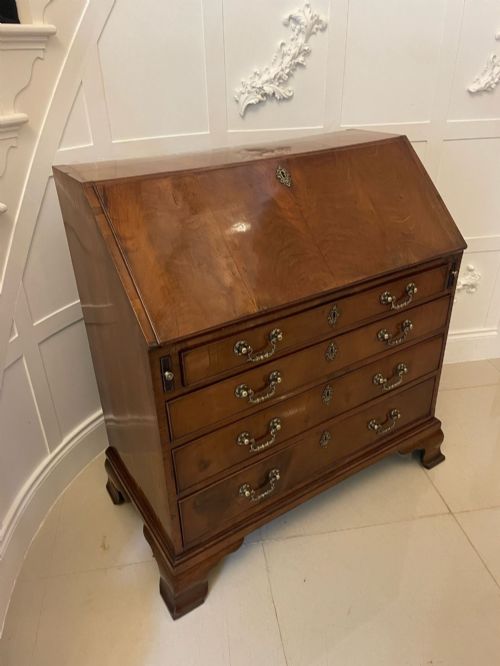
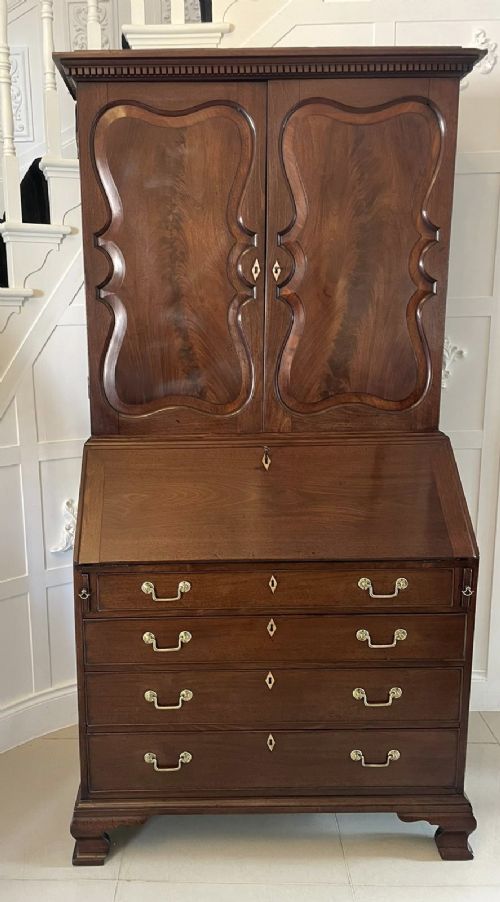
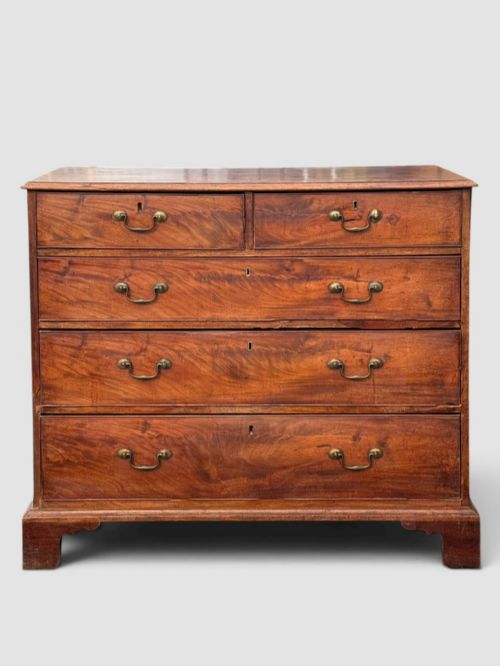
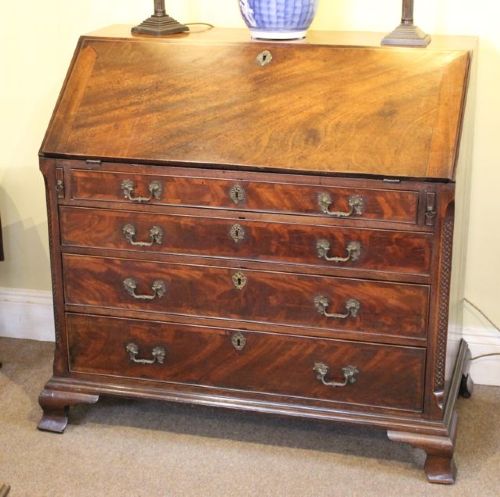
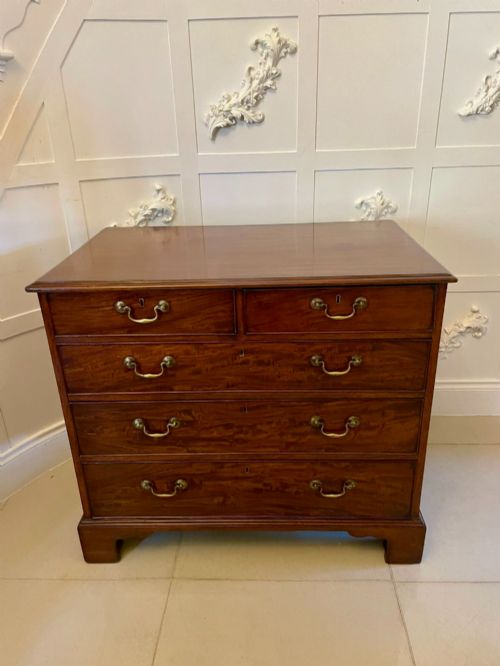
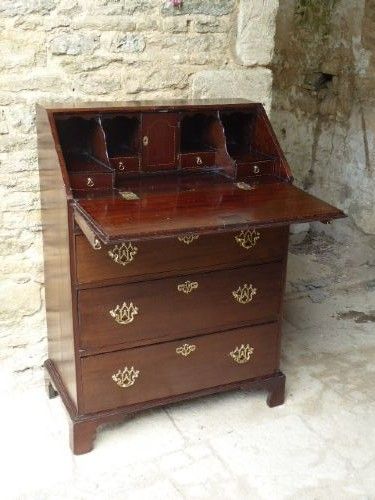
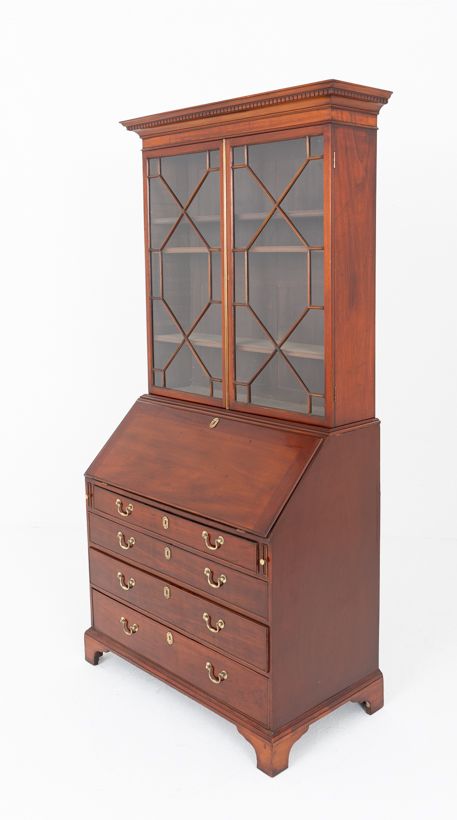
An 18th century mahogany bureau is a writing cabinet featuring a sloping fall-front that opens to reveal a fitted interior of small drawers and pigeonholes. The form frequently sits above a chest of drawers or appears elevated on a stand, offering functional workspace combined with concealed storage. Variants range from compact table models to grand bureau bookcases crowned with upper shelving.
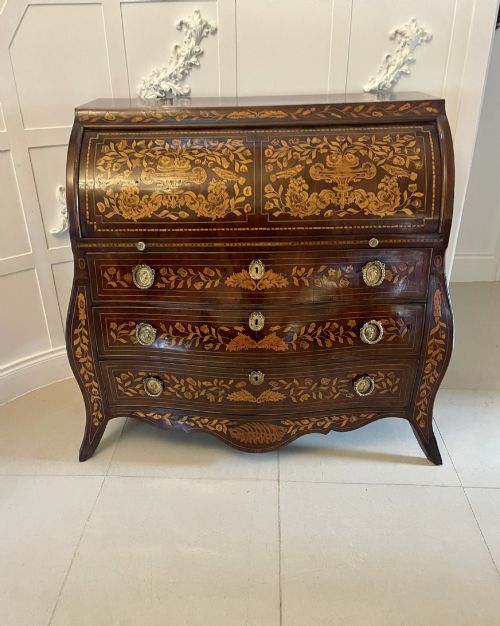
Pieces originating from this period belong to the Georgian era, specifically spanning the mid to late eighteenth century around seventeen-fifty to seventeen-eighty. Buyers frequently encounter standard bureau formats alongside secretaire chest of drawers and cylinder bureau variants featuring tambour tops. Proportions vary from diminutive small-scale examples to substantial architectural desk bookcases.
Makers utilised resilient timbers to construct these writing desks, pairing sturdy exterior woods with secondary interior framing. Pieces appear in plain timber finishes as well as highly figured veneers enhanced by contrasting inlay work. The overall design prioritises domestic utility alongside orderly compartment architecture.
Construction and Materials
Cabinet makers built these desks primarily using solid mahogany and figured mahogany veneers, occasionally incorporating Cuban mahogany for dense grain patterns. Secondary structural elements inside drawers and backing boards typically rely on oak or pine timbers. Brass hardware, including handles and escutcheons, secures the operational components.
Surfaces frequently display decorative detailing such as satinwood inlay and floral marquetry, adding visual contrast to the dark timber ground. Cylinder desks and tambour-topped variants employ flexible slat mechanisms that slide smoothly within integrated tracks. Dovetail joinery secures the drawer boxes while internal partitions organise the writing compartment.
Retail Price Guide 2026
Typical UK retail prices for 18th century mahogany bureau, calculated from the Sellingantiques database of over a million retail prices indexed since 2003. This retail price guide relies exclusively on Sellingantiques data; no external sources or auction records are used, so the figures do not describe the wider market.
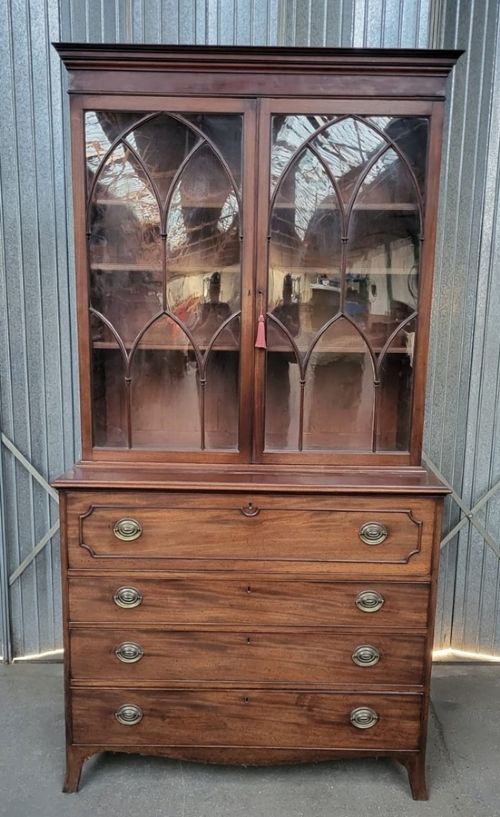
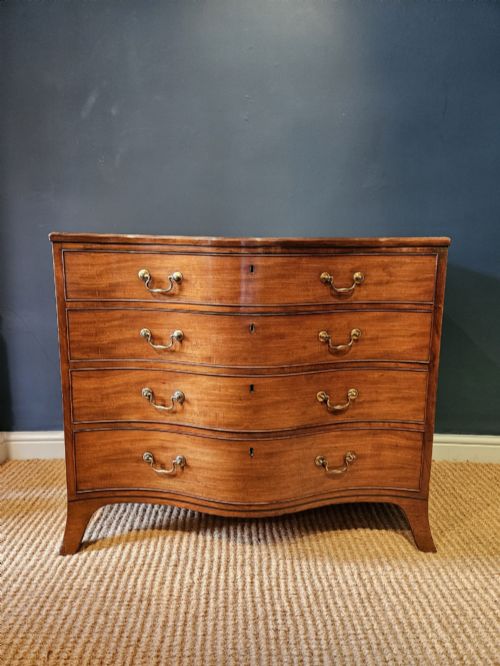
Form variations recorded on this page include standard chests of drawers, secretaire chests, and bureau bookcases.
Distinctions in Quality
The degree of refinement separates standard utility desks from exceptional cabinet work, seen in the selection of richly figured timber and intricate satinwood inlay. Superior examples demonstrate careful attention to internal joinery within the small writing drawers and pigeonhole compartments. Finer proportioning, such as small-scale dimensions or diminutive table formats, alters the desirability of a piece.
Structural integrity and the retention of original brass hardware influence the standing of an item within the range. Pieces exhibiting crisp floral marquetry or sophisticated cylinder and tambour mechanisms reflect higher levels of period craftsmanship. The harmony between primary mahogany surfaces and secondary oak or pine framing dictates the overall execution.
Thomas Shearer·Gillows
The 18th Century Mahogany Bureau Glossary
- Bureau
- A sloping desk used for writing, typically enclosing small drawers and pigeonholes behind a hinged fall-front. This form often combines a writing surface with lower storage drawers.
- Fall-front
- The sloping hinged panel of a desk that folds down to create a horizontal writing platform. It conceals the internal compartments when closed.
- Secretaire
- A piece of furniture designed for writing, frequently incorporating a fitted fall-front or a pull-out drawer mechanism. It merges desk functionality with conventional chest of drawers storage.
- Tambour
- A sliding door or top constructed from narrow vertical strips of wood glued to a fabric backing. This flexible mechanism rolls smoothly along a grooved track.
- Marquetry
- Decorative patterns formed by inlaying small pieces of coloured wood and veneer into a solid timber background. Floral motifs often appear on superior eighteenth-century examples.
Frequently Asked Questions
How do I use a bureau desk?
Lower the sloping fall-front panel to reveal the internal writing surface, small drawers, and letter pigeonholes. This creates a compact workspace suitable for correspondence while keeping papers neatly contained.
When finished writing, simply lift the fall-front upward to close and lock the compartment, instantly concealing your stationery and work.
How do I spot an 18th century bureau?
Examine the secondary woods inside the drawers, such as oak or pine, and check the hand-cut dovetail joinery. Eighteenth-century pieces display period construction methods distinct from later machine-made reproductions.
Look for Georgian design proportions, patinated solid mahogany or figured veneer surfaces, and traditional brass hardware configurations.
Where should I place a mahogany bureau?
Position the desk in a study, library, or living room away from direct sunlight and strong heat sources to protect the mahogany timber. Adequate clearance is necessary to allow the fall-front to lower fully.
Ensure the room maintains stable humidity levels to preserve the stability of the wood and the integrity of the internal pigeonhole fittings.