
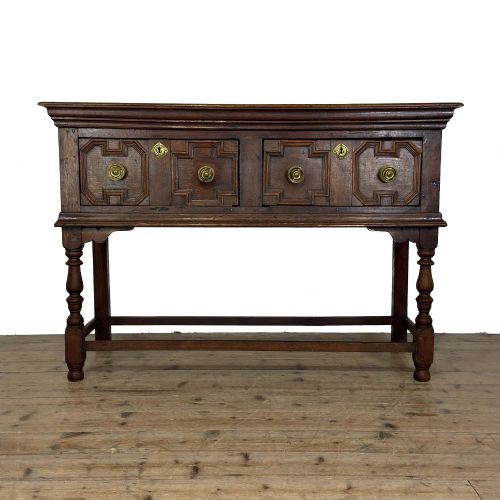
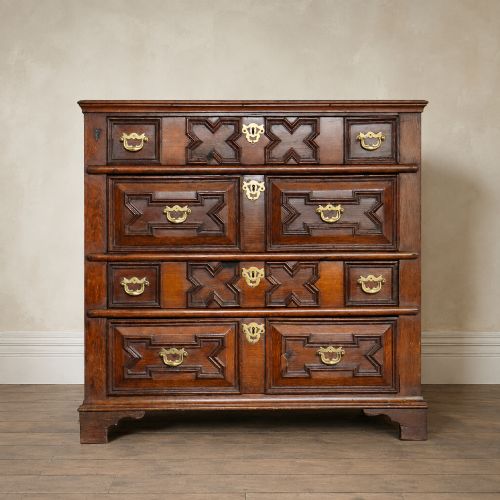
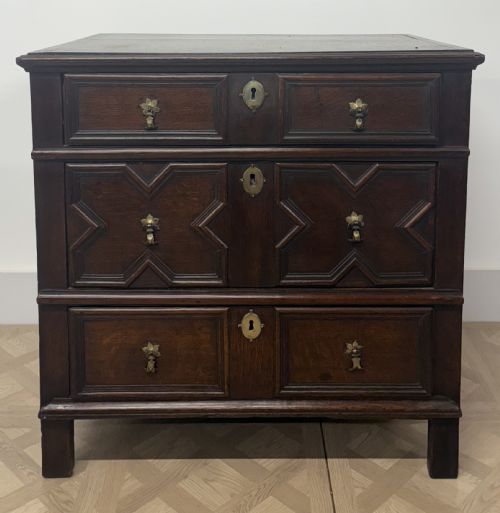
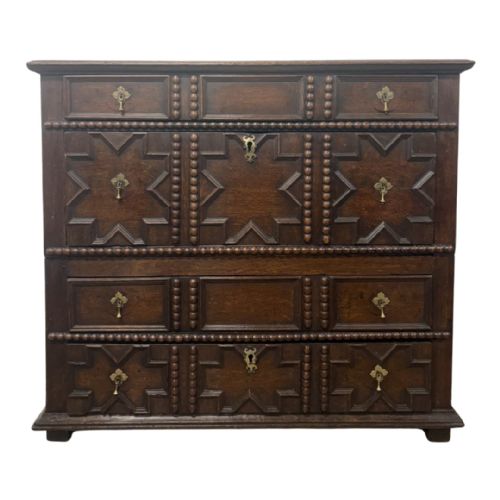
Geometric Oak Dresser
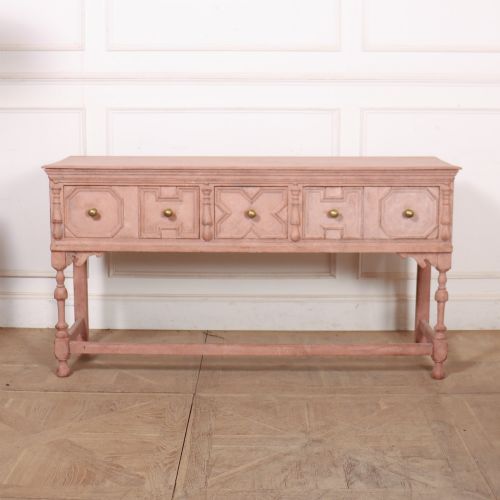
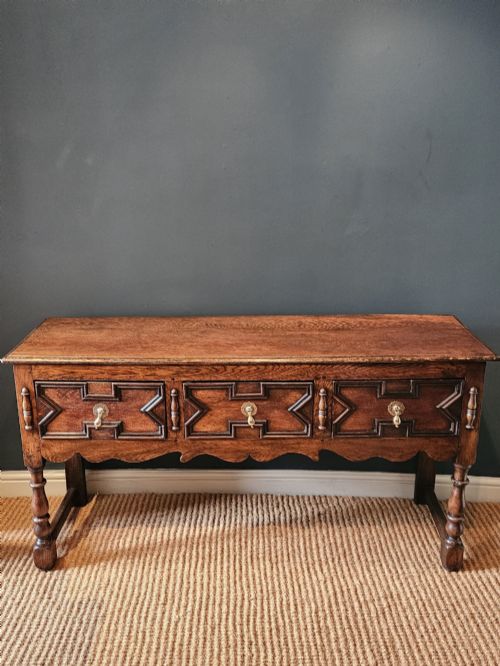
A geometric oak dresser brings foundational 17th-century craft into modern rooms through robust timber and disciplined applied mouldings.

Geometric Oak Dresser
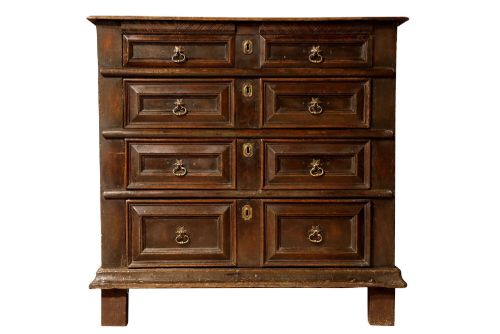
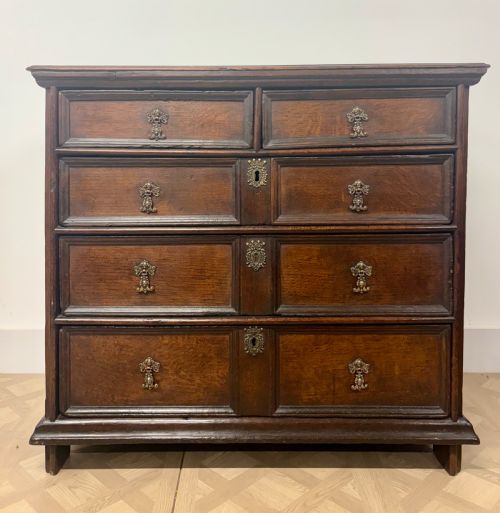
A geometric oak dresser unites early utilitarian storage with the decorative strapwork and panel moulding characteristic of the 17th century and its subsequent revivals.
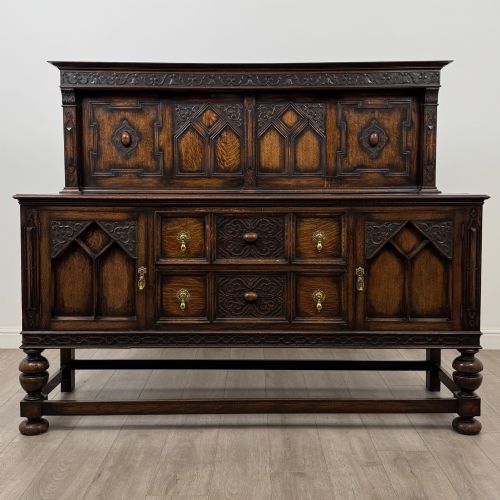
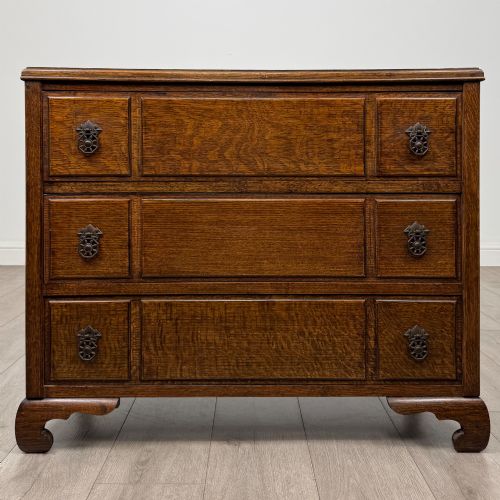
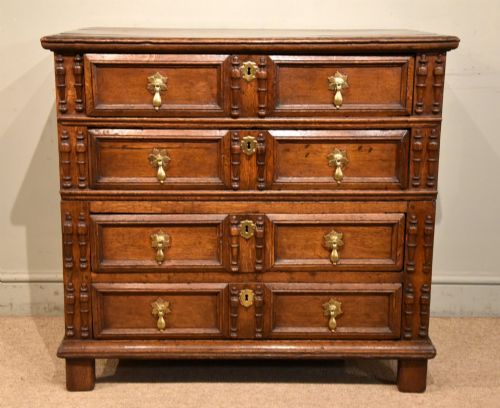
Buyers browsing this selection encounter pieces ranging from authentic seventeenth-century Charles II drawer bases to later Victorian and Edwardian interpretations built in the Jacobean style.
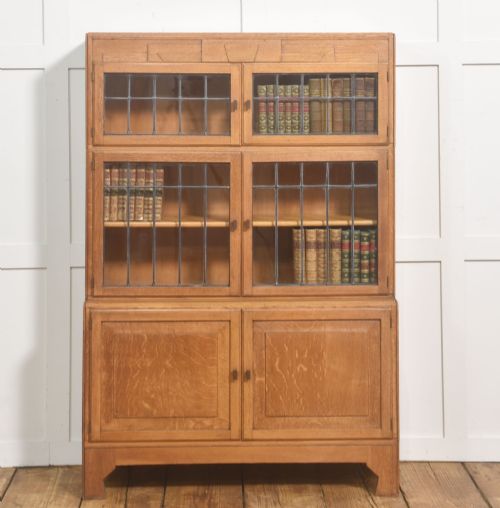
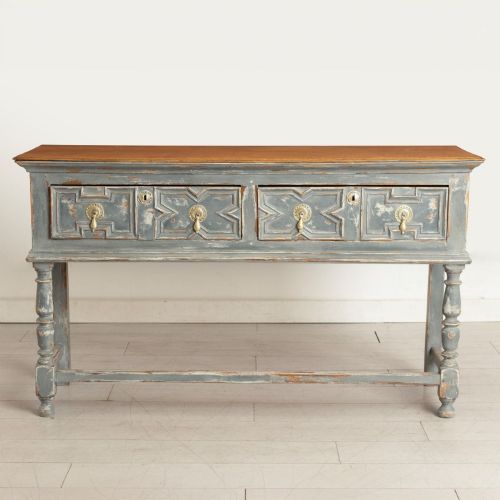
The primary forms on this page include low dresser bases, serving pieces, and partitioned cupboards designed with structured geometric drawer fronts.

Materials and construction
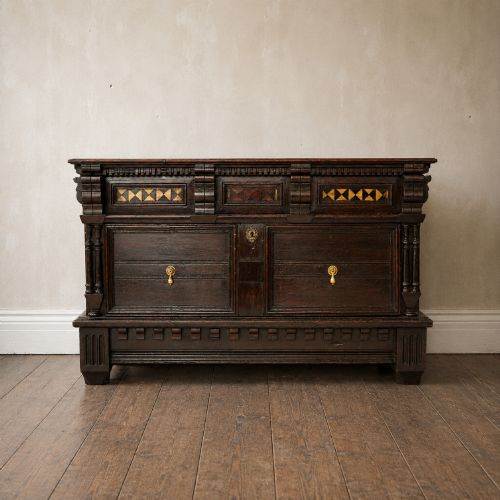
Makers relied primarily on native timber framed with pegged joints, incorporating secondary woods like walnut and occasionally paint or lead details.
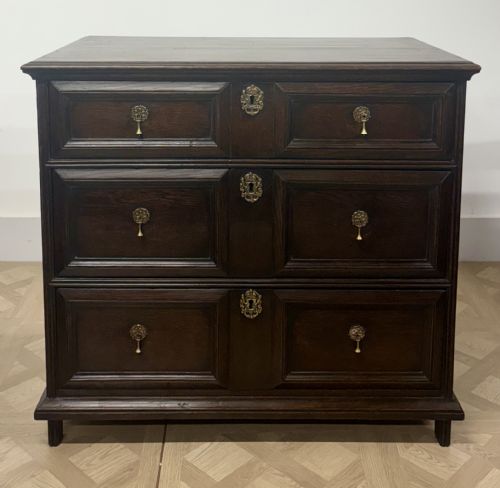
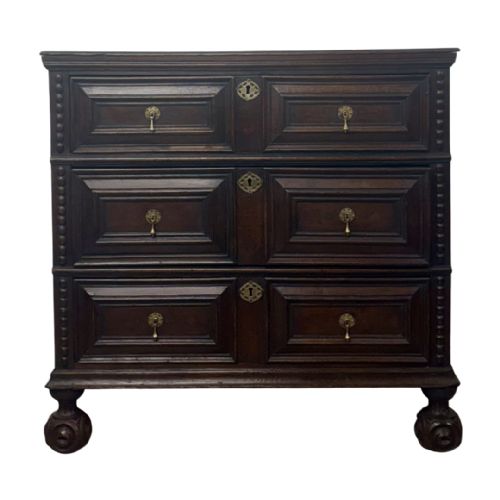
Applied geometric mouldings on drawer fronts created depth and rhythm, using mitred strips glued and pinned to flat panels.
Hardware such as brass handles and iron hinges finish pieces that often span multiple structural sections, including two-part chests and dresser bases.
The listings span multiple centuries, uniting authentic 17th-century Charles II examples with 19th-century Jacobean revivals and 1920s interpretations.
Assessing the craftsmanship
Quality rests in the crispness of the applied geometric mouldings and the integrity of the timber joints rather than surface embellishment alone.
Early period examples show hand-riven grain and natural patination, whereas revival pieces from the Victorian or Edwardian eras display machine-planed consistency.
The survival of original brass pulls, uncompromised drawer linings, and stable carcase construction separate superior specimens from heavily altered equivalents.
Heals of London
The Geometric Oak Dresser Glossary
- Geometric moulding
- Applied wooden strips arranged in repeating rectilinear or polygonal patterns on drawer fronts and panels. This technique defines the visual language of the period.
- Dresser base
- A low sideboard or serving table featuring rows of drawers above a potboard or cupboard space. These items formed the utilitarian backbone of early English domestic kitchens and halls.
- Charles II period
- The reign spanning the mid to late seventeenth century that fostered rich surface ornamentation and architectural joinery. Pieces from this era establish the benchmark for the style.
- Jacobean style
- An aesthetic marked by heavy proportions, panelled construction, and strapwork ornamentation. Revival versions of this style appeared frequently during the Victorian and Edwardian epochs.
- Oyster veneering
- The practice of slicing branch wood transversely to reveal circular, ringed grain patterns resembling oysters. This decorative surface treatment appears on select high-status carcases.
Geometric Oak Dresser: Frequently Asked Questions
How do I spot a genuine seventeenth-century piece?
Examine the construction methods behind the timber framing, looking for hand-cut joints, pegged tenons, and natural wear patterns accumulated over centuries.
Compare the timber density and tool marks on the interior linings against known examples from the same era to confirm authenticity.
Where were these dressers used historically?
These pieces originated in the principal rooms and halls of English homes, functioning primarily to store textiles, tableware, and domestic provisions.
Over time, their sturdy timber construction allowed them to transition through various utilitarian roles before entering the collector market.
Can I place a heavy television on an oak dresser base?
The robust solid oak carcase easily supports modern media equipment without structural strain or surface sagging.
Ensure the depth of the top board accommodates the base of your appliance safely while preserving the historic moulding along the edges.
What is the difference between original and revival pieces?
Original pieces from the seventeen-hundreds display period-specific tool marks, timber shrinkage, and historic patina unique to early workshop practices.
Revival furniture manufactured during the Victorian, Edwardian, or 1920s eras replicates these historic forms utilising contemporary machinery and standardised fixings.