



Moulded Front Chest Drawers
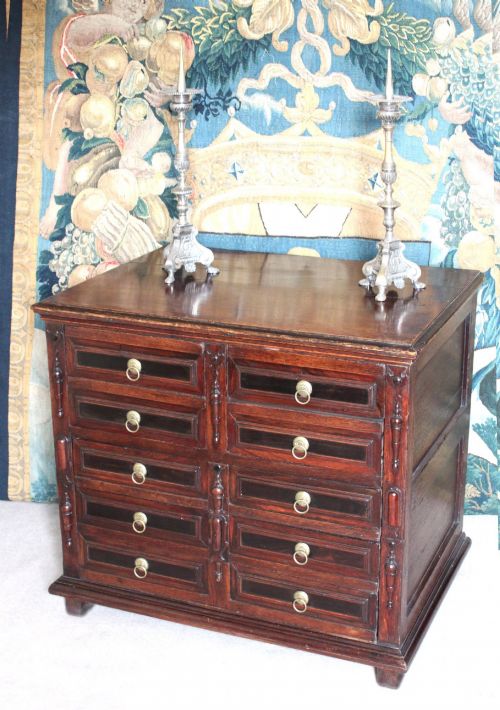
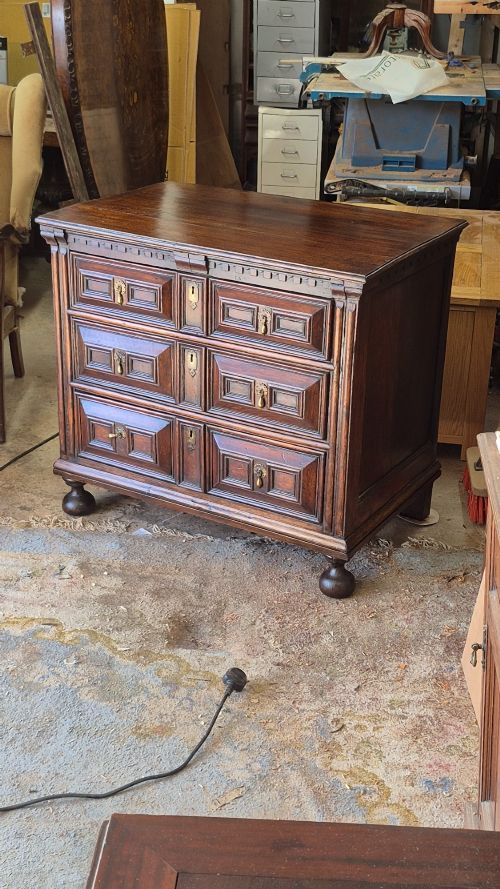
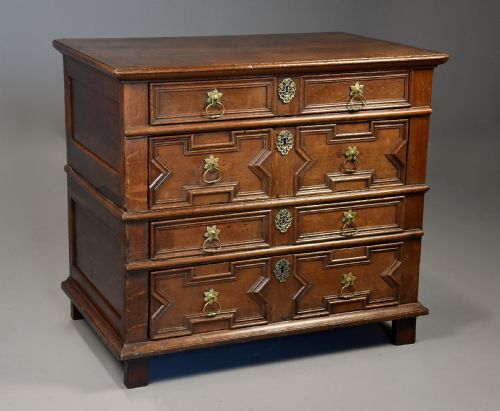
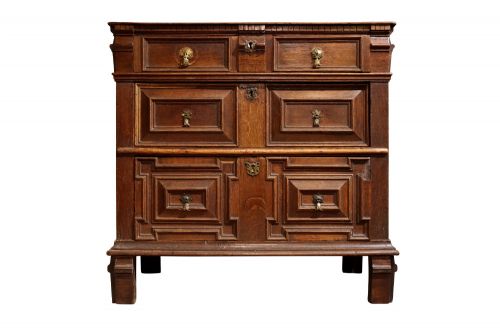
Moulded front chest drawers are substantial seventeenth and eighteenth century pieces defined by geometric drawer framing, sought after for their rugged timber grain and historical presence.

Moulded Front Chest Drawers
When searching for moulded front chest drawers, collectors encounter sturdy timber furniture principally dating from the seventeenth and eighteenth centuries, with occasional revival pieces appearing from later decades. These items are predominantly chests of drawers constructed in oak, though examples also incorporate fruitwood, elm and snakewood decoration to enhance their surface appearance.
The defining characteristic of these pieces is the geometric moulding applied to the drawer fronts, a technique that creates deep shadow lines and architectural relief. Pieces frequently align with Jacobean, Charles II, Stuart and French Provincial styles, reflecting the robust cabinetmaking traditions of their respective periods.
While the majority of pieces follow standard chest of drawers formats, variations include writing bureaux and smaller scaled chests suited to more compact domestic spaces. The survival of these early items demonstrates the enduring appeal of seventeenth century joinery in contemporary interiors.
What varies in quality
Quality in these pieces is dictated by the crispness of the geometric mouldings and the integrity of the original timber surfaces. Sharp, well-defined relief work demonstrates superior hand-tool proficiency by the original maker.
The presence of patination also influences the character of each piece, with natural fading and undisturbed surfaces indicating age and gentle use over centuries. Alterations to hardware, replacement timber sections or simplified joinery distinguish standard utilitarian items from finer examples of period cabinetmaking.
Listings demonstrate a strong concentration of seventeenth century oak pieces alongside occasional eighteenth century French Provincial serpentine chests and twentieth century Jacobean revival bureaux.
The Moulded Front Chest Drawers Glossary
- Moulding
- A strip of material with a profiled cross section used to create decorative relief on furniture surfaces. On these chests, they form geometric patterns across the drawer fronts.
- Patina
- The surface sheen and colour acquired by wood and metal over centuries through handling, light exposure and polishing. A faded patina is prized by collectors for showing genuine age.
- Geometric
- A style of ornamentation based on squares, rectangles and repeating angles. Seventeenth century cabinetmakers applied this layout to break up flat drawer surfaces.
- Bureau
- A desk fitted with a sloping writing flap that opens to reveal internal compartments and pigeon holes. Some examples incorporate moulded front drawers beneath the writing surface.
- Escutcheon
- A protective plate surrounding a keyhole, usually fashioned from brass or iron. They are functional details that often help date the period of manufacture.
Moulded Front Chest Drawers: Frequently Asked Questions
How do I date a moulded front chest?
Dating relies on examining the construction methods, timber species and specific moulding profiles used on the piece. Seventeenth century examples often feature oak framing and hand-riven boards.
Later revival items from the twentieth century utilise machine-cut elements and standardised fixings that contrast sharply with seventeenth and eighteenth century hand tools.
Are these chests suitable for daily use?
These pieces were built for domestic storage and remain robust enough to function as everyday furniture in modern homes. The deep drawers accommodate modern clothing and household items.
Care should be taken to place them away from direct heat sources and dramatic humidity changes to protect the historic timber and applied mouldings.
What is geometric moulding?
Geometric moulding involves attaching small wooden strips in rectilinear patterns onto flat drawer fronts to create architectural depth. This decorative approach became prominent during the Stuart and Charles II periods.
Carpenters cut and mitered each piece by hand, meaning true period examples display slight variations in symmetry that reveal their handmade origin.
How should I care for historic oak furniture?
Maintaining these surfaces requires minimal intervention using dry cloths and occasional application of traditional beeswax to nourish the dry timber. Avoid modern silicone sprays or harsh chemical cleaners.
Keeping the piece in a stable environment prevents the solid oak and decorative fruitwood veneers from splitting or warping over time.