



Carolean Oak Drawers
Carolean oak drawers bring the solid weight of the seventeenth century into a room, offering deep timber storage with geometric fronts.

Carolean Oak Drawers
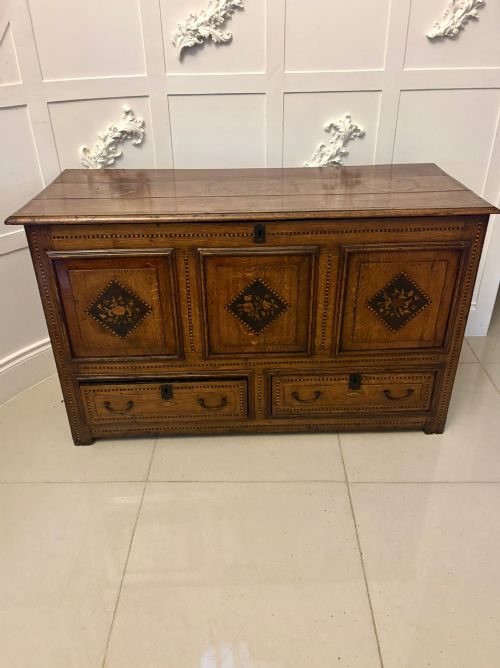
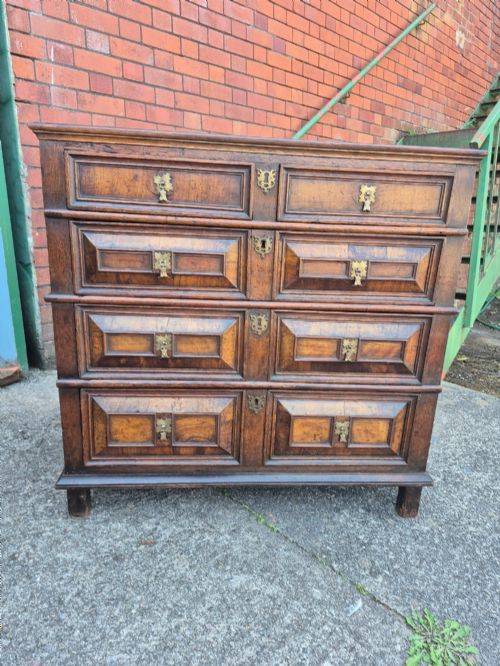
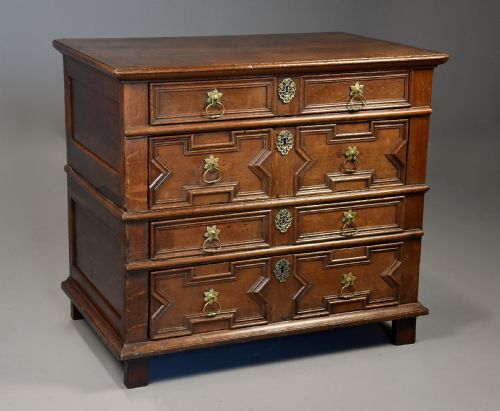
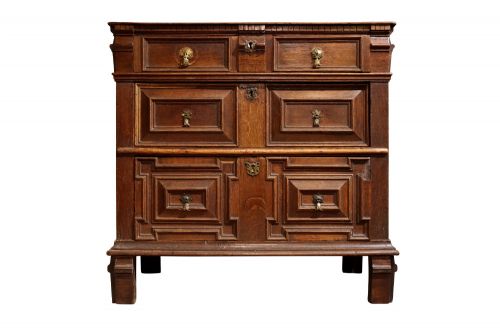
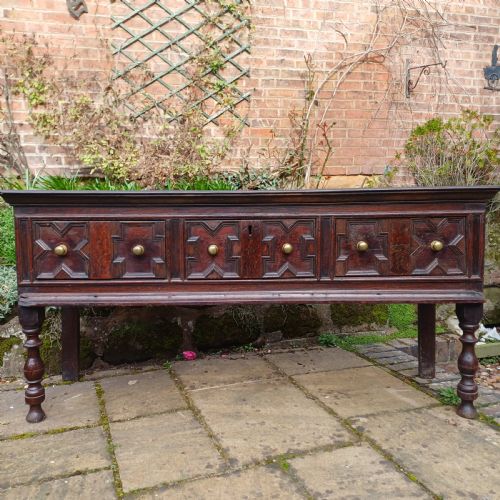
When buyers search for carolean oak drawers, they look at heavy seventeenth century storage pieces built primarily as chests of drawers, mule chests, and low dresser bases. These items originate predominantly from the late seventeenth century, specifically the Charles II period, though later revivals also appear.
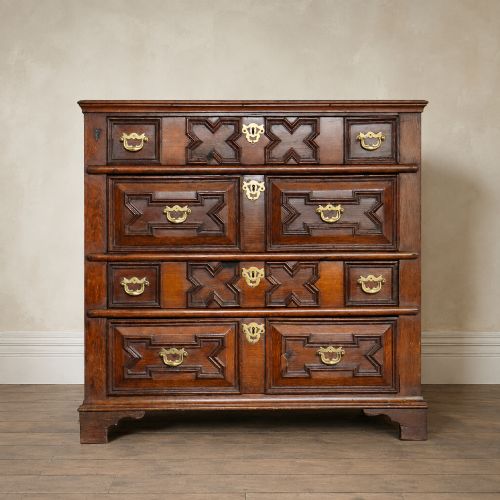
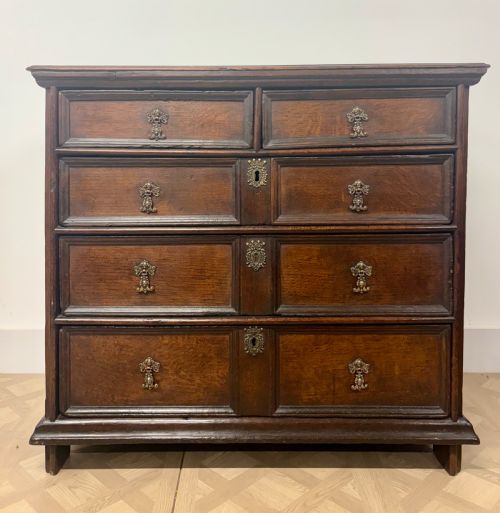
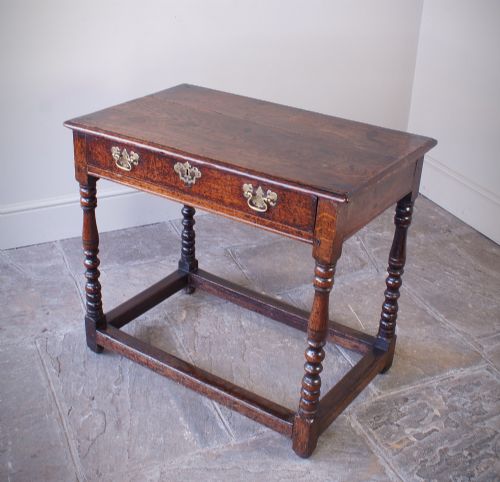
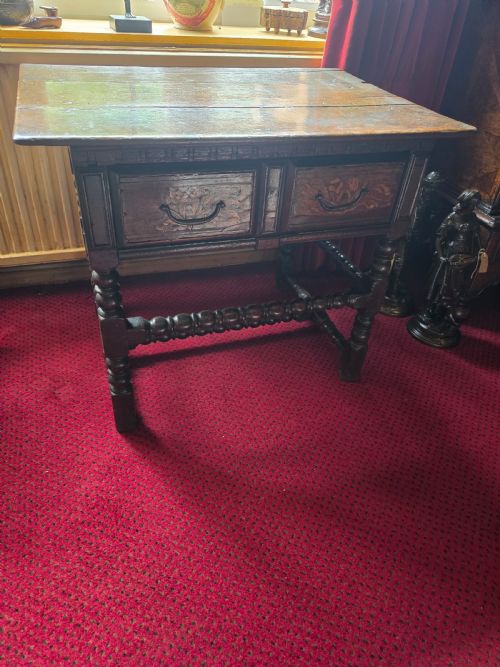
The chests of drawers commonly present a two-part construction with geometric moulded drawer fronts, often accented by paneling or applied decoration. Side tables and servers with drawers also fall into this category, showing the same robust vernacular joinery.
Most examples rely on native oak as the primary timber, sometimes paired with walnut, fruitwood, or yew wood. Buyers encounter both austere utilitarian pieces and richly decorated surfaces featuring marquetry inlay or oyster veneer.
Separating the ordinary from the exceptional
Quality rests heavily on the integrity of the timber surfaces and the complexity of the applied geometric mouldings. Pieces retaining their original drawer linings, brass hardware, and untouched patination command greater attention.
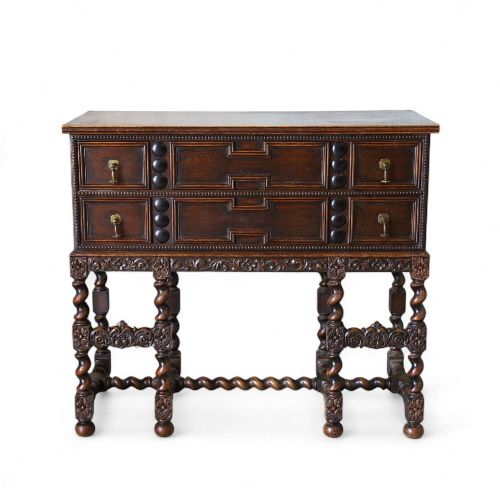
The sophistication of the decorative work distinguishes individual examples, ranging from simple raised panels to elaborate oyster veneers, marquetry inlay, and finely carved bobbin or barley-twist supports.
Materials recorded across the inventory include oak, walnut, yew wood, brass, iron, and oyster veneer.
The Carolean Oak Drawers Glossary
- Geometric moulded
- Drawer fronts decorated with raised symmetrical patterns created by applied wooden strips. This technique defines much of the late seventeenth century aesthetic.
- Oyster veneer
- Thin slices of branch wood cut across the grain to produce circular or oval patterns resembling oyster shells. Craftsmen arranged these closely across drawer fronts and tabletops.
- Mule chest
- A storage chest fitted with one or more drawers at the base beneath the main compartment. They bridge the gap between traditional blanket chests and modern drawer units.
- Dresser base
- A low side table or server featuring drawers beneath the main surface, originally used in kitchens or dining rooms for food preparation and storage.
- Bobbin turned
- Turned wooden legs or stretchers shaped on a lathe to resemble a series of bobbins or reels. This decorative turning appears frequently on seventeenth century stands and tables.
Carolean Oak Drawers: Frequently Asked Questions
How do I date carolean oak drawers?
Dating relies on construction methods, timber choice, and decorative motifs like geometric mouldings and bobbin turnings. Seventeenth century pieces typically show pegged frame construction and hand- split oak linings.
Later revival pieces from the twentieth century utilise machine-sawn timber and different joint tightening methods while copying the earlier Charles II style.
What is a two part chest?
A two part chest consists of an upper and a lower cabinet section stacked together to form a tall chest of drawers. This method helped owners transport heavy furniture more easily.
Such construction appears frequently in late seventeenth century examples and helps distinguish them from single-frame designs.
Where should I place these in a modern home?
These sturdy wooden pieces fit well in hallways, living rooms, or bedrooms where heavy storage and a strong historic presence are desired. Their flat tops also serve well for displaying lamps or ceramics.
Keep them away from direct heat sources and rapid humidity changes to protect the old oak and delicate veneers.
What is the difference between a chest and a dresser base?
A chest of drawers is stacked vertically to provide enclosed storage drawers from top to bottom. A dresser base sits lower to the floor as a horizontal sideboard or server with drawers.
Both utilise similar oak construction and geometric mouldings from the same seventeenth century period.