




Jacobean Style Tallboy
These jacobean style tallboy pieces combine heavy timber construction with period revival character, offering substantial storage and historic presence for the home.

Jacobean Style Tallboy
Buyers seeking a jacobean style tallboy encounter a range of sturdy storage furniture primarily comprising chests of drawers, alongside bureau bookcases and linen presses. The selection spans authentic seventeenth-century examples up to Edwardian and early twentieth-century revivals.
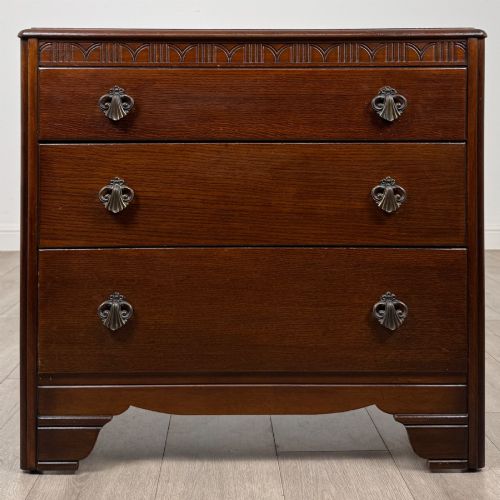
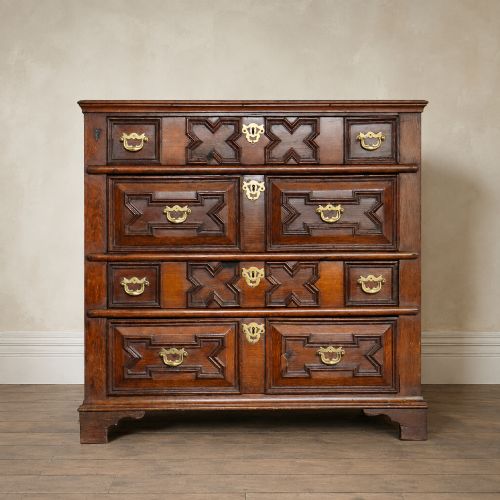
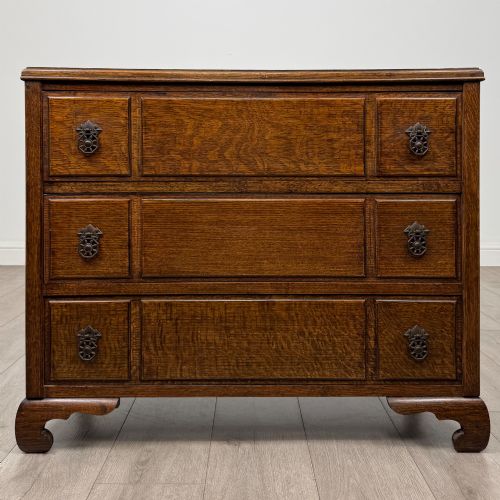
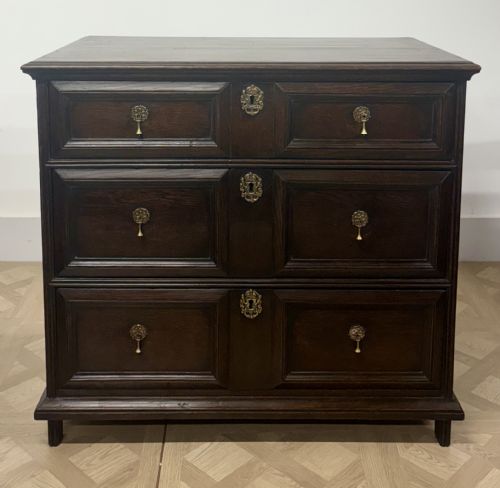
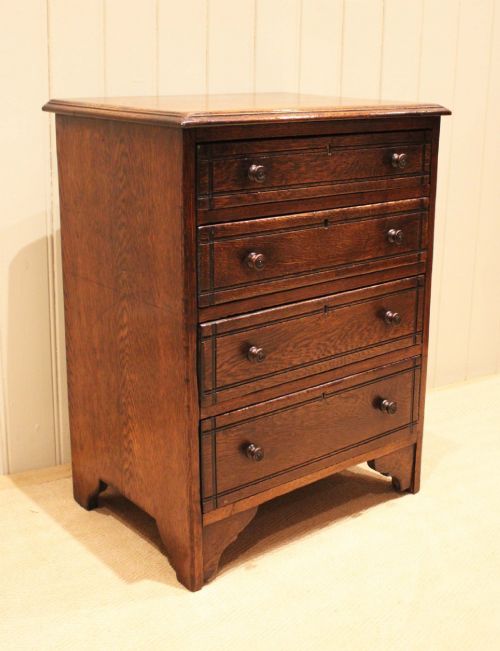
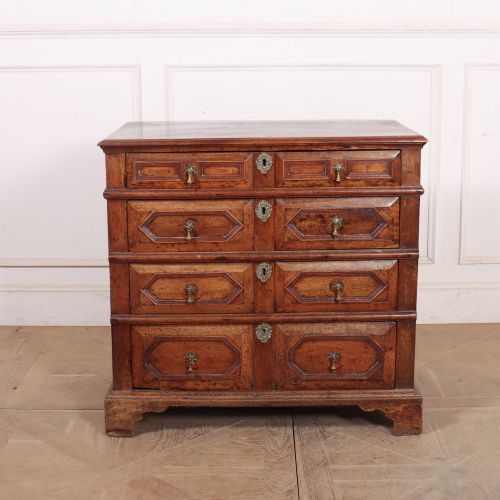
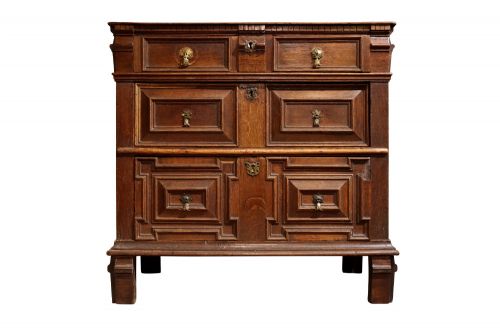
Most pieces met here are oak chests of drawers shaped by regional craftsmanship, featuring geometric mouldings and panelled drawer fronts. Surviving examples demonstrate how later makers replicated seventeenth-century proportions and joinery methods.
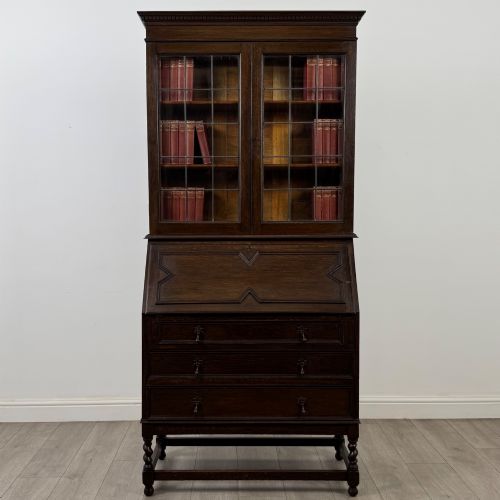
Forms vary from modest proportions to taller arrangements incorporating bureau desks or upper bookcase sections. These variations reflect both original domestic requirements and later revival tastes.
Materials and construction
Constructed predominantly from solid oak, walnut and fruitwood, these pieces rely on traditional timber framing and panel-and-frame assembly. The natural grain of the wood provides the primary decorative surface, complemented occasionally by geometric mouldings.
Brass drop handles and keyplates provide functional metal accents alongside iron fixings. Surface finishes range from waxed polishes to painted treatments applied during later revival periods.
Listings span from the 17th century through the 18th century and Edwardian period to the 1920s, using oak, walnut, brass and iron.
Assessing quality and craftsmanship
Quality rests in the crispness of the geometric mouldings and the integrity of the timber framing. Early seventeenth-century joinery displays hand-planed surfaces and pegged joints that differ from twentieth-century mechanical production.
The choice of primary wood and secondary timbers dictates the weight and structural stability of each piece. Superior examples maintain original drawer linings and period brassware without modern replacement parts.
The Jacobean Style Tallboy Glossary
- Geometric moulded
- A decorative front featuring raised polygonal panels arranged in geometric patterns. This technique defined many seventeenth-century drawer designs.
- Linenfold
- A carved wood panel motif resembling folded linen cloth. It appears frequently on Edwardian interpretations of earlier styles.
- Bureau bookcase
- A combination of a sloping desk compartment with shelving above and drawers below. This form accommodated writing and storage in one item.
- Charles II
- A seventeenth-century period associated with ornate woodcarving and rich walnut furniture. Pieces from this era show deep patination.
Jacobean Style Tallboy: Frequently Asked Questions
How old are these pieces?
The selection includes genuine seventeenth-century examples alongside Edwardian and 1920s revival pieces.
Craftsmanship and timber characteristics help distinguish the original period items from later interpretations.
What wood was used?
Oak is the predominant timber found across these listings, accompanied by walnut, fruitwood and general mixed woods.
Solid construction methods ensure durability regardless of the specific decade of manufacture.
Where were they made?
These items reflect British cabinet-making traditions spanning the seventeenth, eighteenth and early twentieth centuries.
Regional workshops produced most of these storage chests using locally sourced hardwoods.
How do I care for oak?
Maintain the timber by applying a traditional beeswax polish and avoiding direct heat sources.
Regular dusting preserves the natural grain and historic patination of the wood surface.