


Full Length Cheval Mirror
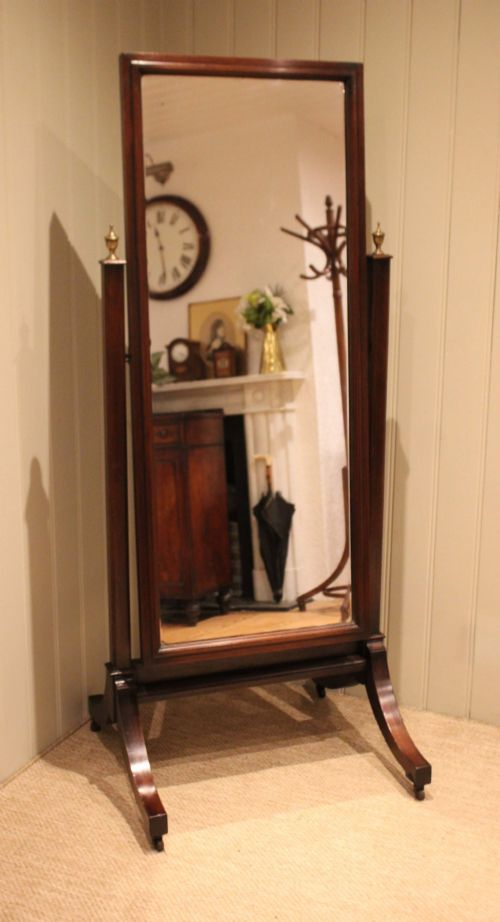
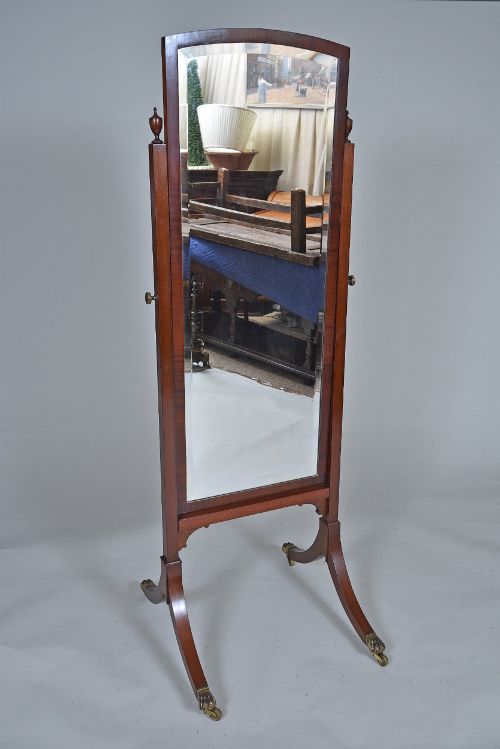
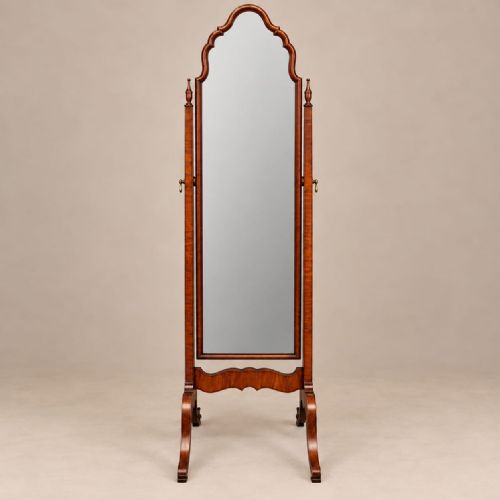
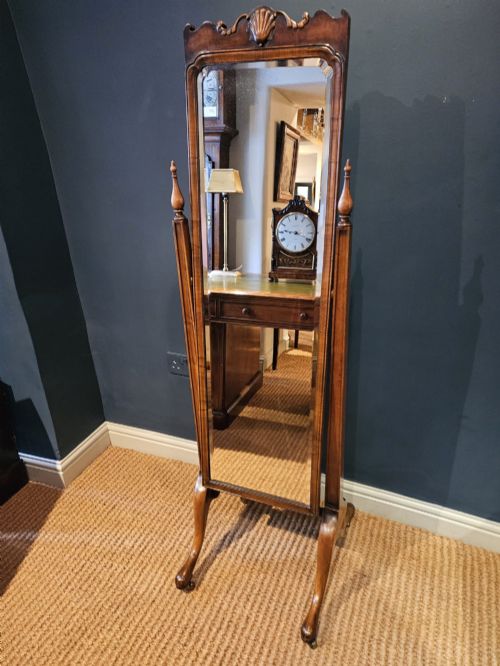
A full length cheval mirror is a freestanding glass plate on a pivoting frame that lets you check your entire outfit from head to toe.
Full Length Cheval Mirror
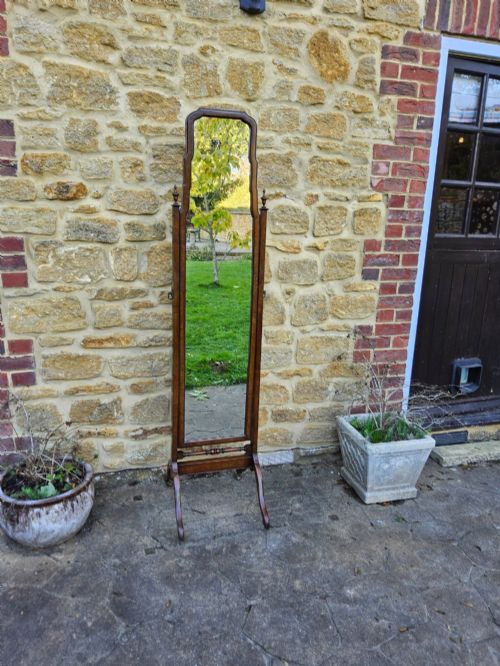
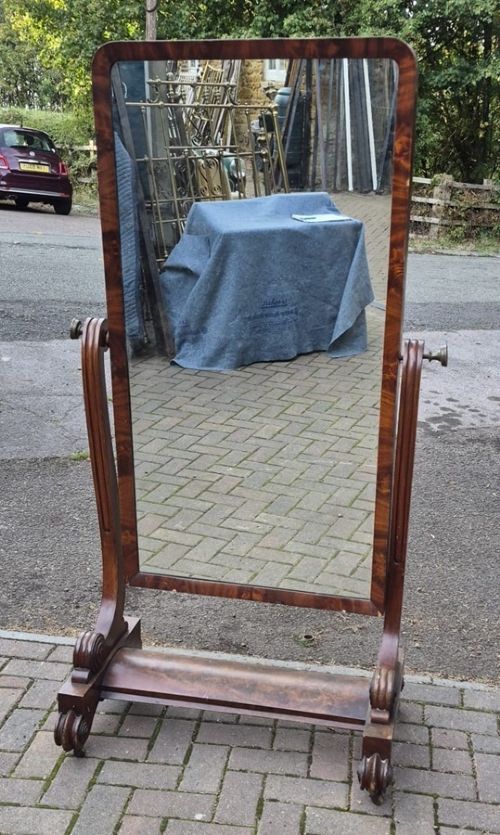
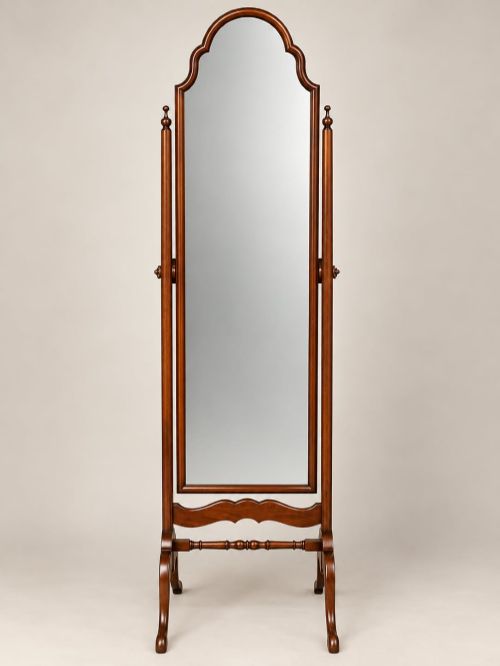
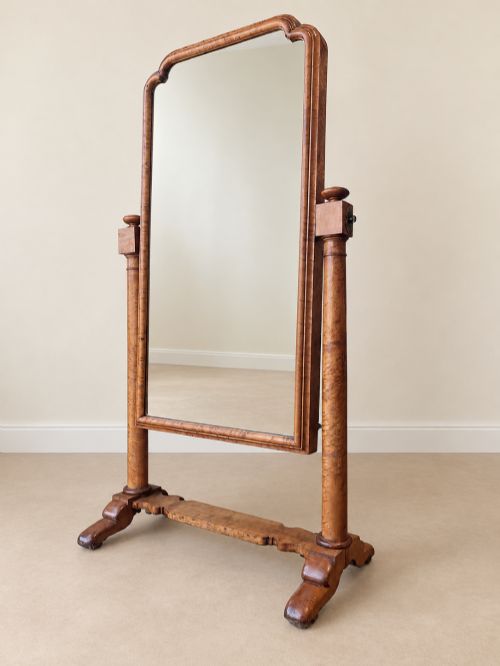
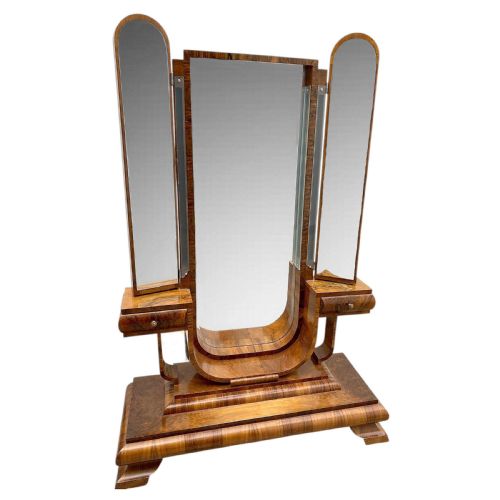
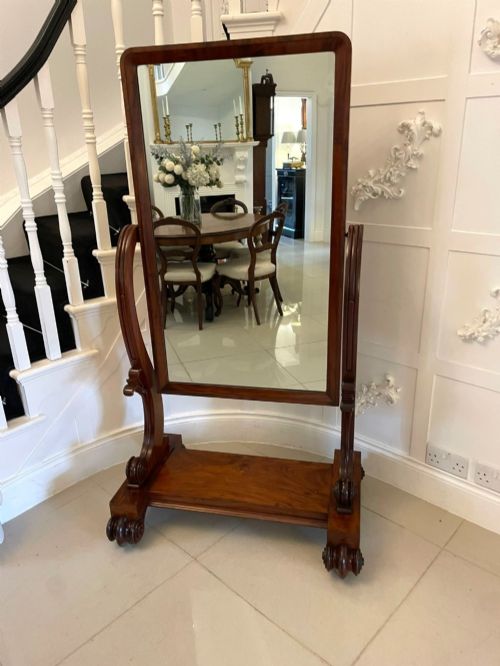
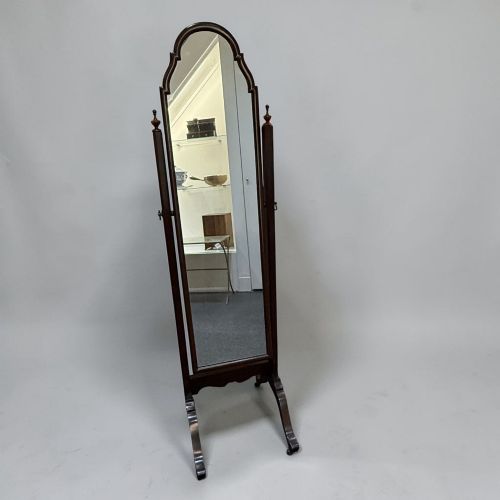
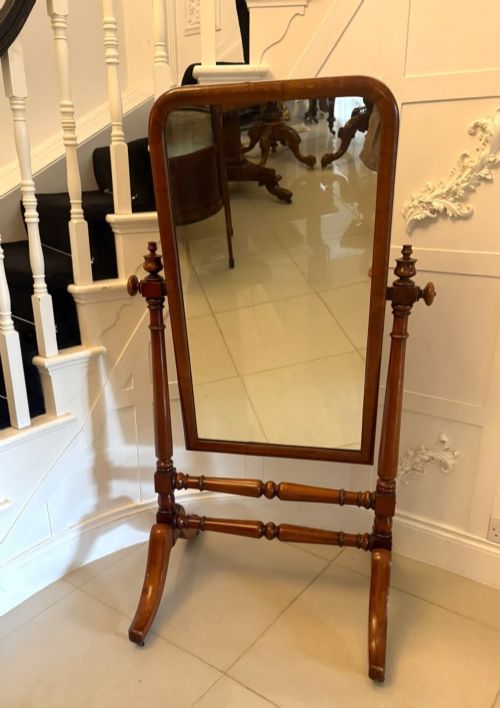
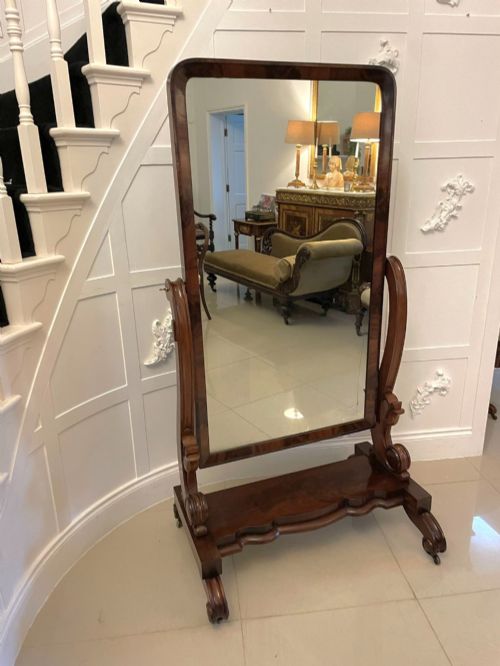
A full length cheval mirror stands upright on a floor-based frame, using side pivots to tilt the glass plate to any angle you require. You will most frequently encounter nineteenth-century and early twentieth-century examples on this page, dominated by timber frames and pivoting uprights.
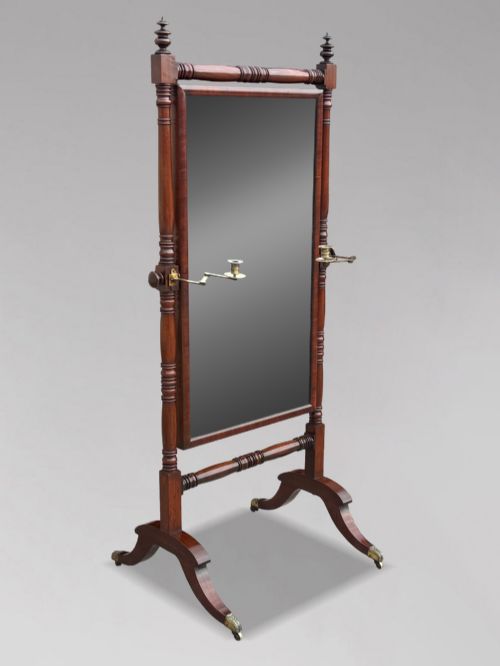
The prevailing form throughout the inventory is the mahogany dressing glass, originating in periods from Regency and William IV through to Victorian and Edwardian decades. Makers also utilised walnut, burr walnut, satin birch, and giltwood to build these substantial freestanding pieces.
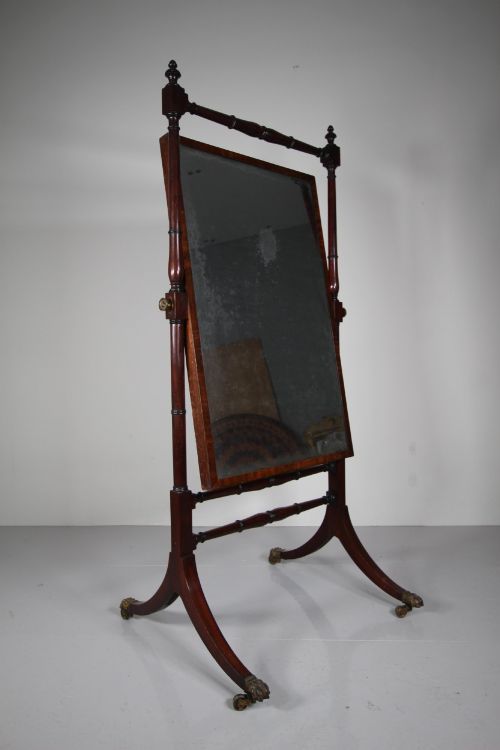
Beyond standard British Victorian and Edwardian furniture, you find regional pieces alongside French Empire, French Chateau, Chinoiserie, and Queen Anne style interpretations. Most versions rely on sturdy floor supports, ranging from simple sabre legs with brass castors to ornate barley twist uprights.
How they were made
Cabinet makers constructed the primary frames using dense hardwoods like mahogany and walnut, frequently selecting flame mahogany or burr walnut veneers for visual depth. These timbers provided the structural integrity required to support a tall, heavy swinging glass plate without warping.
The pivoting mechanism relied on brass hardware, including adjustable screw pins set into upright posts and decorative sabots fitted over the feet. Metal castors allowed the heavy floor-standing units to be repositioned easily across carpets and wooden floorboards.
Full Length Cheval Mirror Retail Price Guide 2026
Typical asking prices for full length cheval mirror among the pieces listed under this phrase on Sellingantiques today, from the lower quarter to the upper quarter. They describe what is for sale here now, not the wider market.
Listings feature mahogany, walnut, burr walnut, satin birch, and giltwood frames spanning the nineteenth and early twentieth centuries.
What varies in quality
Quality rests in the architectural proportion of the frame and the joinery hidden within the upright supports and base trestles. Superior examples display thoughtful timber selection, such as matched flame mahogany or rich burr walnut, rather than plain secondary woods.
Heavier casting in the brass hardware, refined turned details like barley twist columns, and crisp carving distinguish finer workshop output from simpler utility pieces. The clarity and preservation of the original mirror glass plate also mark the distinction between tiers of craftsmanship.
Gillow·Gillows
The Full Length Cheval Mirror Glossary
- Cheval mirror
- A freestanding mirror mounted on a frame with side pivots allowing the glass to tilt. The word derives from the French for horse, referring to the four-legged frame.
- Sabots
- Metal sleeves fitted over the feet of furniture legs. They protect the timber ends and frequently house rolling castors.
- Barley twist
- A spiral turning technique shaped into furniture columns and upright supports. It gained popularity during the seventeenth century and returned in later Victorian revivals.
- Flame mahogany
- A timber veneer cut from the fork where a branch meets the trunk. It creates a distinctive rippled, flame-like pattern across large flat surfaces.
Full Length Cheval Mirror: Frequently Asked Questions
How do I use a full length cheval mirror?
Stand before the pivoting glass plate and tilt it gently backward or forward on its side axis to angle the reflection. This adjustment accommodates different user heights for a complete view from head to toe.
Position the heavy floor-standing base on a level surface away from direct moisture to protect the timber frame and the pivoting hardware over time.
Where should I place a cheval mirror?
Place the freestanding mirror in a bedroom, dressing room, or hallway where you need an unobstructed full-length view for daily attire. Ensure the floor supports sit firmly without wobbling on uneven floorboards.
Position the glass opposite a window or light source to bounce natural illumination deeper into the room while maintaining clear sightlines for dressing.
How do I tell Victorian from Edwardian mirrors?
Victorian models often feature denser mahogany timbers, deep carved scrolls, or barley twist supports with heavy brass fittings. These pieces typically project a heavier visual weight and darker polished finish.
Edwardian and later twentieth-century iterations generally display lighter mahogany tones, simpler satin birch frames, or decorative elements drawn from earlier Queen Anne and Chinoiserie revivals.
How do the pivots work?
Side pivots consist of metal threaded pins or screws passing through the upright posts into metal sockets set into the sides of the mirror frame. Tightening these threaded components holds the glass plate securely at your chosen angle.
Over decades of use, these brass fittings may require gentle adjustment to maintain tension so the heavy glass plate stays in place without slipping forward.