

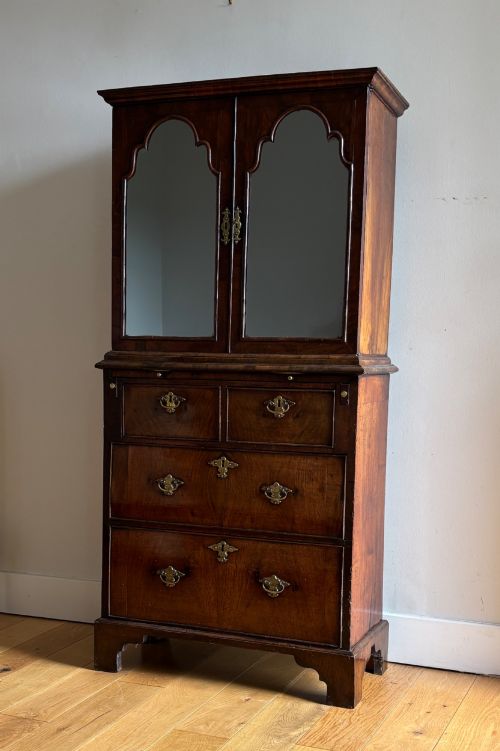
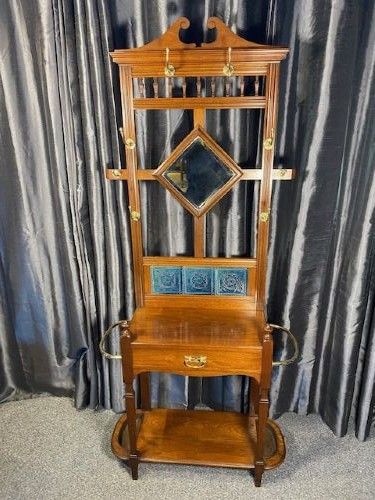


Walnut Standing Mirror
A walnut standing mirror brings warmth and depth to a room, offering a functional glass plate set within rich timber frames.
Walnut Standing Mirror
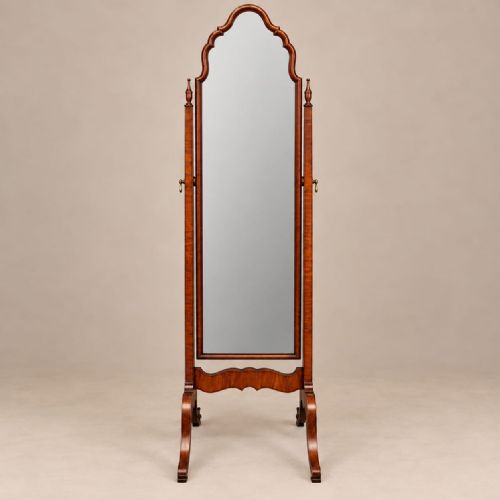
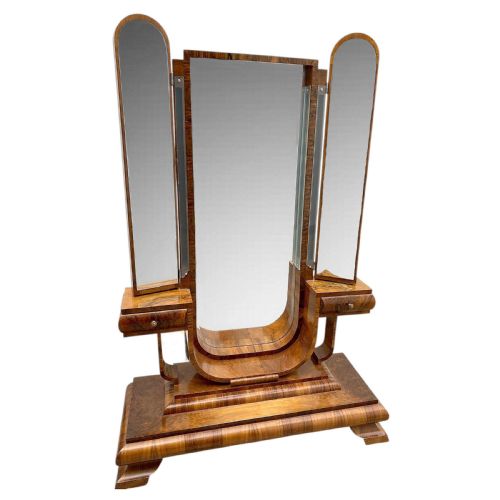
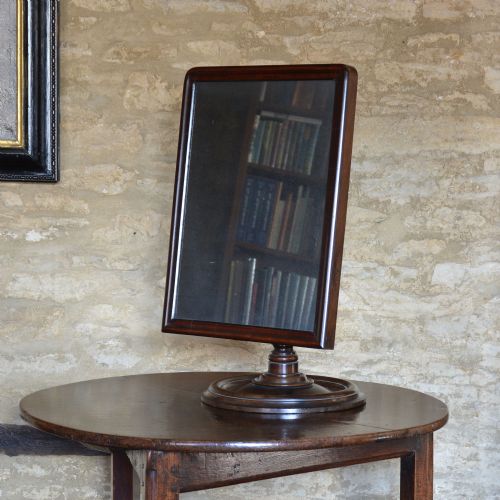
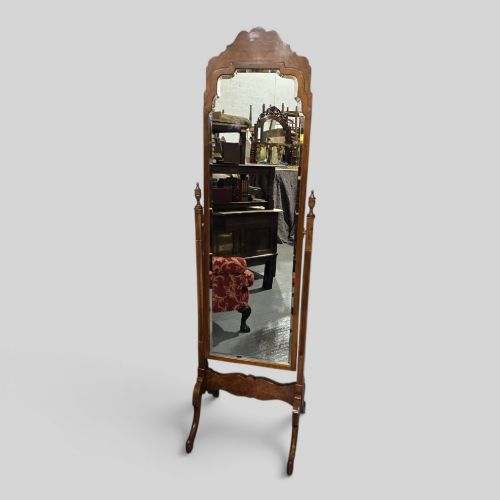
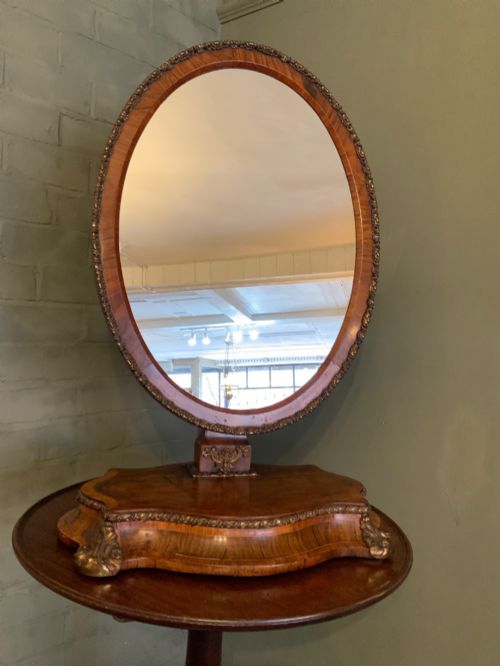
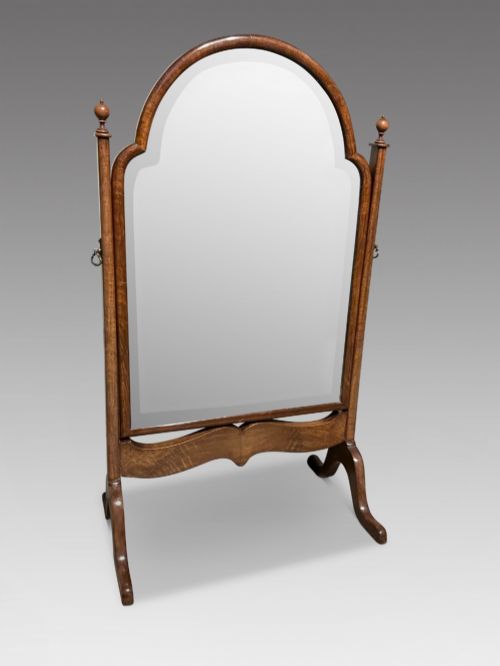
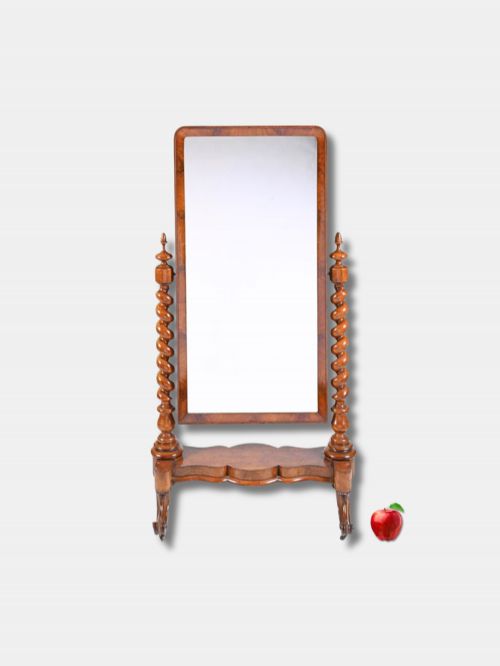
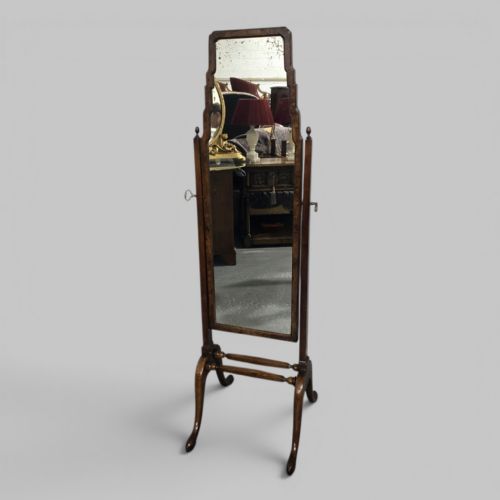
When you search for a walnut standing mirror, you encounter tall floor-standing cheval mirrors, adjustable dressing glasses, and compact toilet mirrors designed for tabletops. The pieces span periods from the eighteenth century through the Victorian era into the art deco years, reflecting changing domestic habits.
The floor-standing versions provide a full-length reflection supported by pivoting frames, while smaller table-top formats rest on neat stands or drawers. Surviving examples demonstrate how walnut remained a favoured medium across Georgian, Victorian, and later revival movements.
Many of these items originate from British workshops, though continental influences appear in styles ranging from Queen Anne revivals to French art deco designs. Buyers select them for their combination of useful optics and the decorative grain of the wood.
How they were made
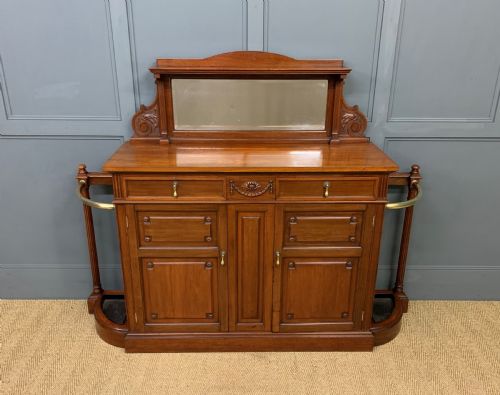
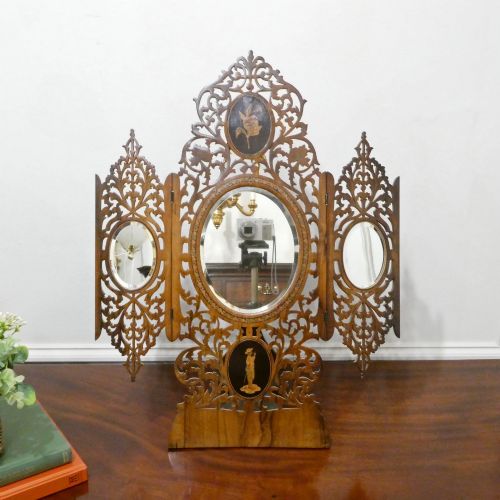
Cabinet makers utilised solid walnut and decorative burr walnut veneers applied to secondary timbers, creating rich patterns across the frame surfaces. Boxwood stringing and marquetry inlay occasionally add fine linear detail to the surrounds.
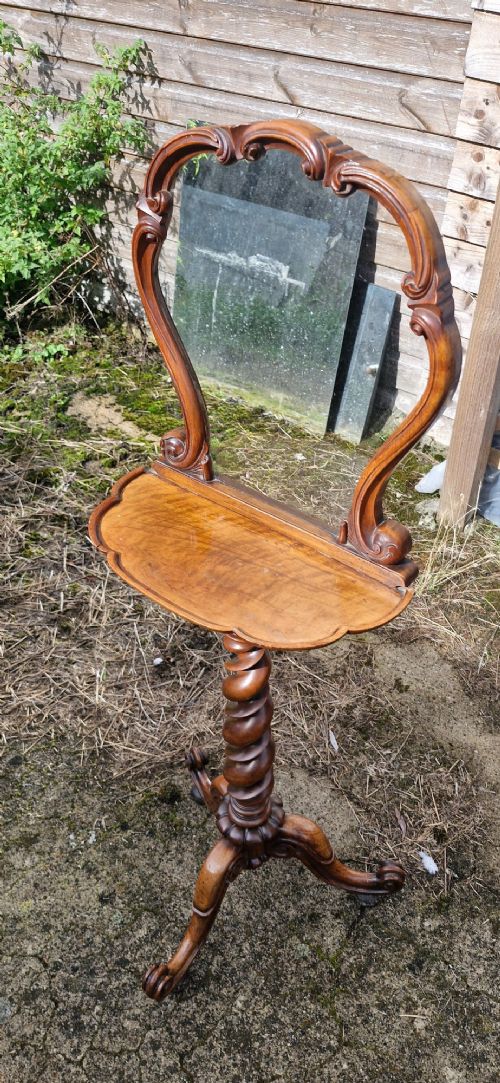
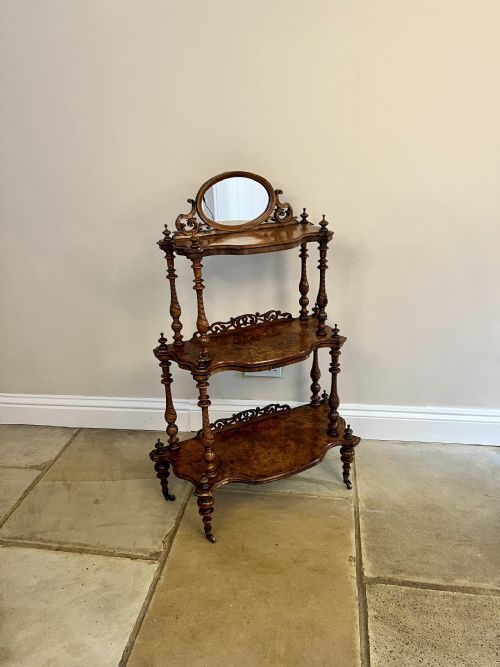
Support structures frequently incorporate turned elements such as barley twist columns, alongside brass fittings and ormolu mounts that secure the pivoting mirror glass. These structural joints permit the glass to tilt at various angles while maintaining stability.
Walnut Standing Mirror Retail Price Guide 2026
Typical asking prices for walnut standing mirror among the pieces listed under this phrase on Sellingantiques today, from the lower quarter to the upper quarter. They describe what is for sale here now, not the wider market.
One unexpected mirror frame arrived straight from a gents outfitters, ready to check the fit of a sharp collar.
What varies in quality
The distinction between ordinary and superior pieces rests on the choice of timber and the complexity of the grain figure, particularly where burr walnut veneers wrap around the frame. Finely matched veneers and crisp carving separate exceptional cabinet work from standard production.
Originality of the glass plate and the retention of period brass hardware influence the standing of a piece within the range. Subtle details in the turning of upright supports and the weight of the timber base dictate overall balance and longevity.
Shoolbred & Co.
The Walnut Standing Mirror Glossary
- Cheval mirror
- A large standing mirror mounted on a frame with pivots that allow it to swing. This form became popular for dressing rooms during the eighteenth and nineteenth centuries.
- Burr walnut
- A veneer taken from the knotted growth of a walnut tree, yielding intricate swirling patterns. Cabinet makers prized this timber for high-status furniture fronts and mirror frames.
- Toilet mirror
- A smaller mirror designed to sit upon a dressing table or chest, often featuring small drawers in the base. They provided a close-up reflection for grooming.
- Ormolu
- Gilded bronze mounts applied to furniture and mirror frames for decorative effect. It adds metallic contrast to the dark timber.
Walnut Standing Mirror: Frequently Asked Questions
Where should I place a standing mirror?
Position the piece in a bedroom or hallway where natural light reflects across the room, enhancing both the illumination and the appearance of the timber.
Ensure the floor surface is level so the pivoting frame operates smoothly without straining the side supports.
How do I adjust the mirror angle?
Most floor-standing designs use threaded brass thumbscrews or pivot pins set into the upright columns to control movement. Turn these fittings gently to find the desired tilt without stripping the older threads.
Support the glass with one hand while adjusting the fixings to prevent sudden shifts.
Can these mirrors stand on carpet?
Thick carpets can destabilise tall standing frames, so placement on a flat wooden floor or a low-pile rug is preferable. Using small discreet anchors can prevent movement on uneven surfaces.
Check that the base makes firm contact across all four points to maintain proper balance.
How do I clean walnut frames?
Dust the timber regularly with a soft, dry cloth to prevent a buildup of particles in the carved details or veneer seams. Avoid modern silicone sprays that can damage older French polish.
Apply a traditional beeswax polish sparingly once or twice a year to nourish the grain and preserve the lustre.