

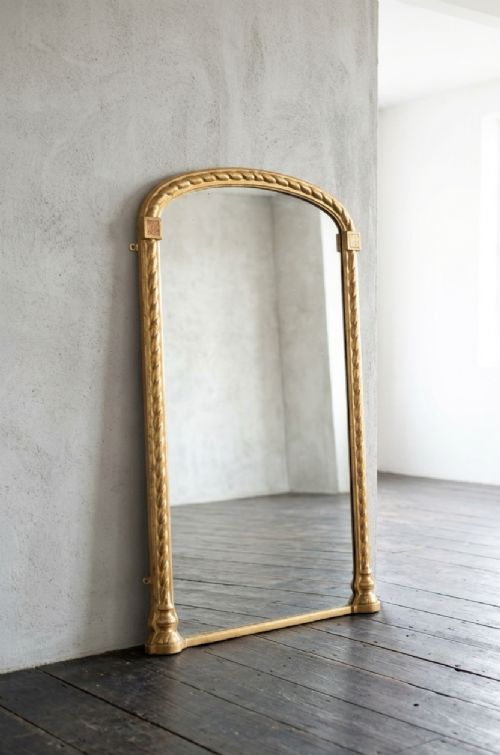
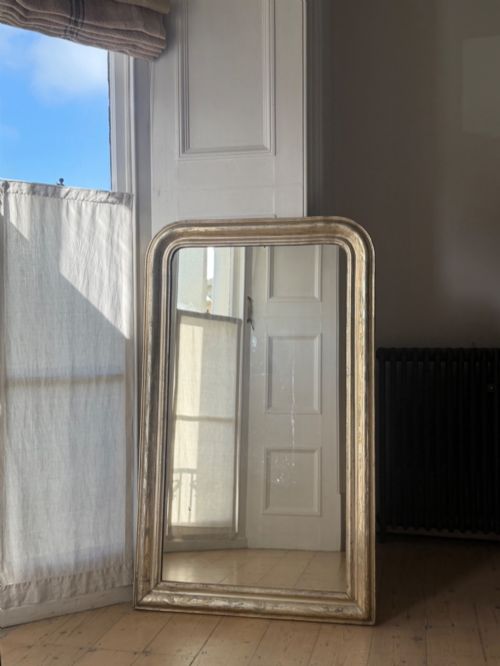
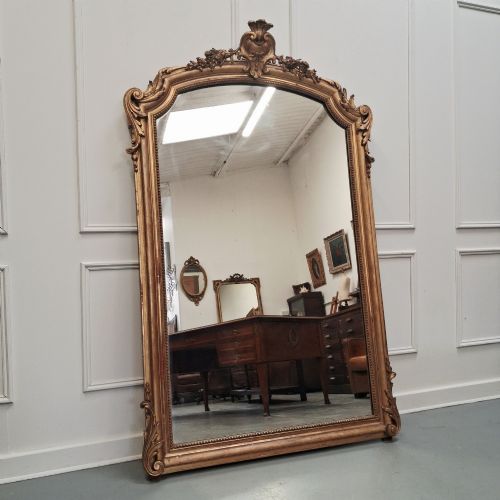
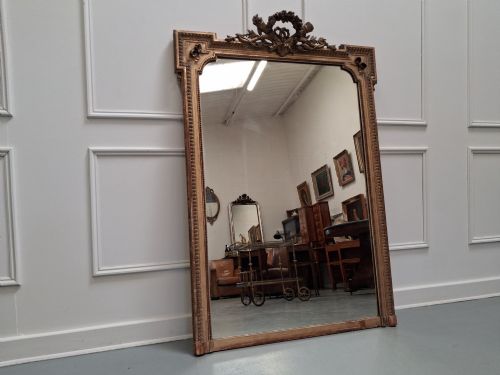


Nineteenth Century Floor Mirror
A nineteenth century floor mirror brings grand scale and considerable presence to a room, offering both practical reflection and decorative depth.
Nineteenth Century Floor Mirror
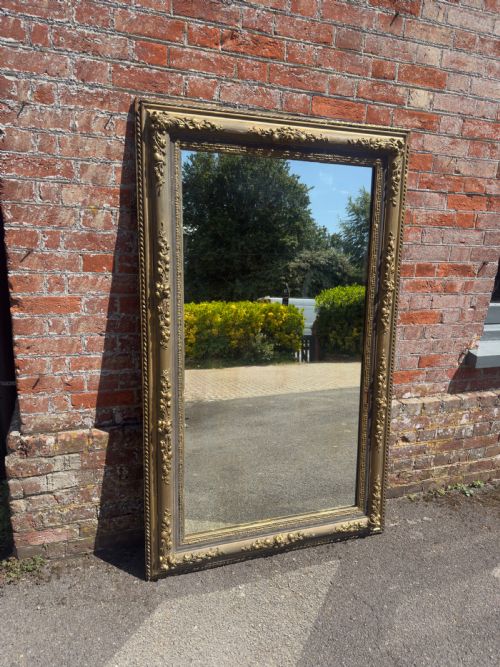
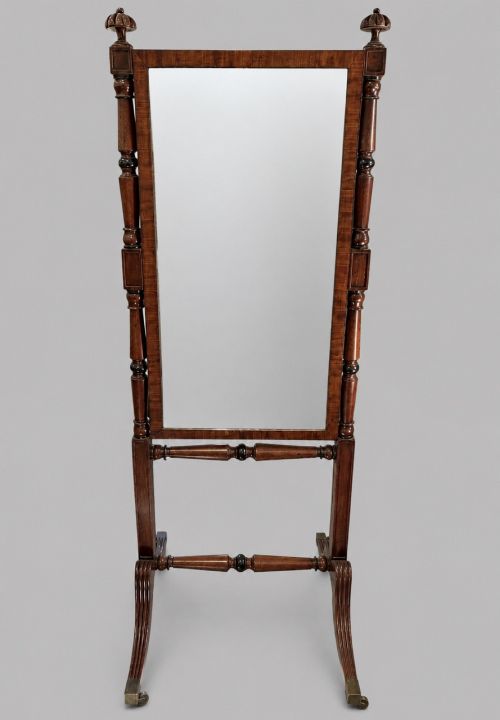
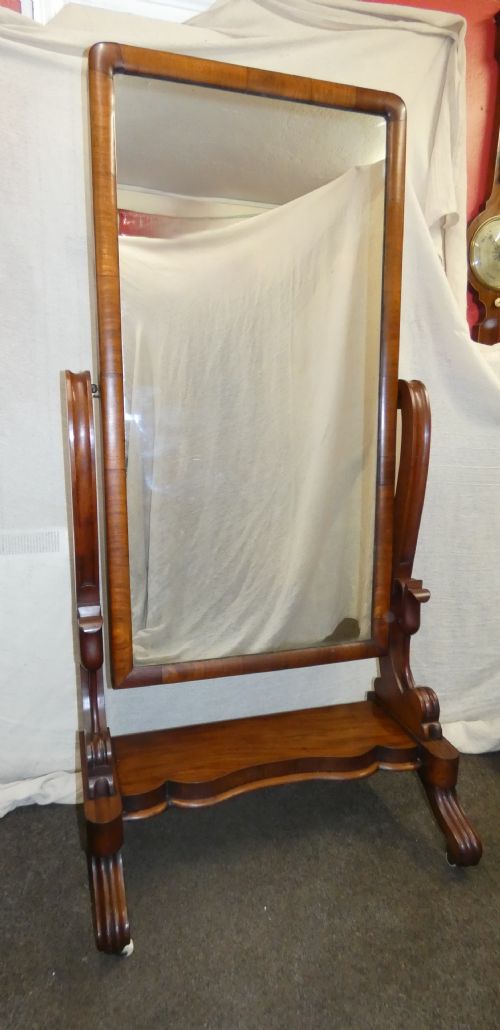
When searching for a nineteenth century floor mirror, you are looking at substantial freestanding and pivot-mounted looking glasses designed to show the full figure. The most frequent form on this page is the cheval mirror, a tall glass swinging within a stable standing frame.
These pieces emerge across the 19th Century, drawing on Regency, Victorian, William IV, and French styles including Louis XVI Revival and French Empire. Makers positioned them in bedrooms, dressing rooms, and halls to bounce light around deep spaces.
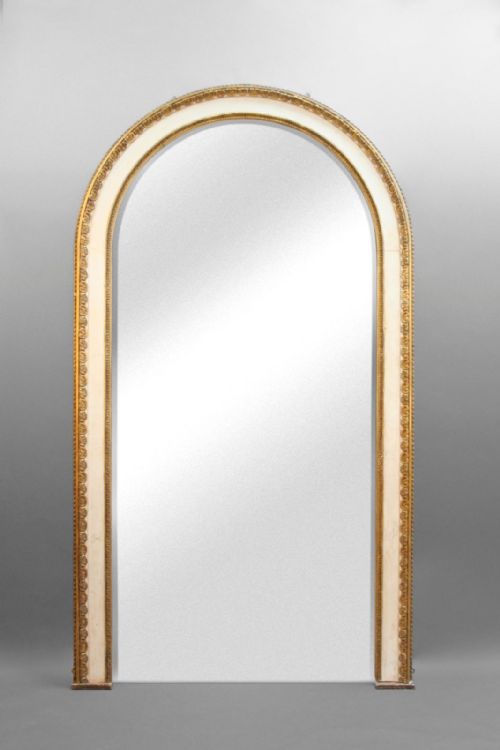
Beyond the standard cheval, related forms such as shaving stands with adjustable mirrors and large pier or overmantle glasses appear within the selection. Materials span mahogany, walnut, carved wood, and gesso finished in giltwood or paint.
How They Were Made
Frames rely heavily on timbers like mahogany and walnut, chosen for structural strength and rich grain. Carpenters shaped these woods into sturdy uprights and trestle bases capable of supporting heavy glass panels.
Decorative surfaces frequently utilise carved wood and gesso layers applied before gilding with gold leaf or applying paint finishes. Brass components appear in the pivots and adjustments that allow the glass to tilt smoothly.
Nineteenth Century Floor Mirror Retail Price Guide 2026
Typical asking prices for nineteenth century floor mirror among the pieces listed under this phrase on Sellingantiques today, from the lower quarter to the upper quarter. They describe what is for sale here now, not the wider market.
Listings feature mahogany, walnut, gesso, and giltwood applied across Regency, Victorian, and French design traditions.
What Varies in Quality
Quality rests on the crispness of the hand-carved ornament and the depth of the gilding or paint layers on the wood and gesso. Superior examples show refined proportions and joinery that remains rigid despite the weight of the glass.
The sophistication of the timber figure and the original integrity of the brass pivot hardware distinguish finer pieces from simpler utilitarian versions.
Gillows
The Nineteenth Century Floor Mirror Glossary
- Cheval mirror
- A large standing mirror supported in a frame that allows it to swing on vertical pivots. This design became popular in the 19th Century for dressing rooms.
- Gesso
- A plaster-like mixture applied to wood frames to create a smooth surface for gilding or painting. Artisans carved intricate relief patterns directly into this layer.
- Giltwood
- Wood that has been coated with gold leaf or metallic powder. It catches candlelight and natural illumination in period interiors.
- Pier mirror
- A tall mirror specifically designed to hang on the wall space between two windows. They often sit above low console tables.
- Overmantle mirror
- A large mirror designed to sit directly above a fireplace mantelpiece. They frequently feature arched tops and elaborate frames.
Nineteenth Century Floor Mirror: Frequently Asked Questions
What is a cheval mirror?
A cheval mirror is a freestanding floor glass mounted on vertical pivots within a supportive wooden frame. This allows the user to tilt the glass angle to view their entire outfit.
Such pieces served as essential dressing room furniture throughout the 19th Century, combining practical utility with substantial decorative presence.
Where should I place a floor mirror?
These mirrors suit bedrooms, dressing areas, and spacious hallways where their height and reflection open up the room. Positioning them opposite a window maximises natural light.
Ensure the floor is level so the frame stands securely without putting undue strain on the pivot hardware.
How do I date a 19th-century mirror?
Dating relies on stylistic clues, timber choices, and construction methods. Regency and William IV pieces often display clean mahogany lines, while later Victorian and French examples lean towards heavy carved gesso and gilt finishes.
Hardware details like brass pivots and the condition of the backing boards also offer chronological hints.
Are these mirrors heavy?
Nineteenth-century floor mirrors are substantial objects constructed from dense hardwoods like mahogany and thick glass panels. Their weight provides the stability needed for freestanding pivot frames.
Moving them requires care and usually two people to handle the heavy base and delicate glass safely.