




Mahogany Tilting Floor Mirror
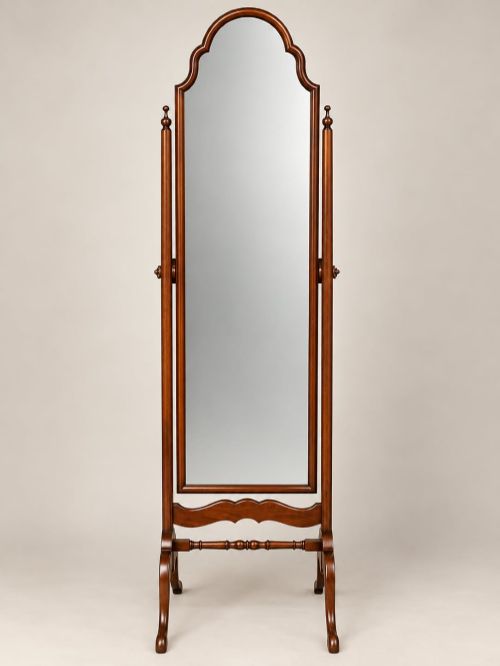
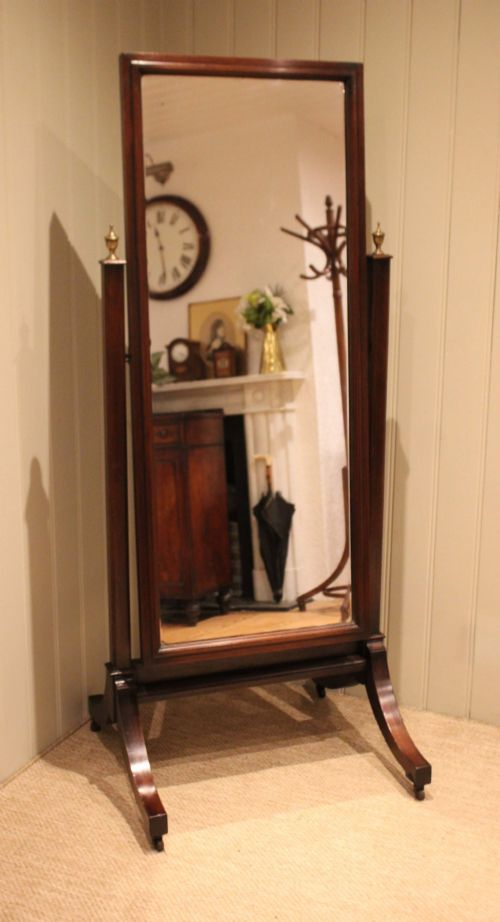
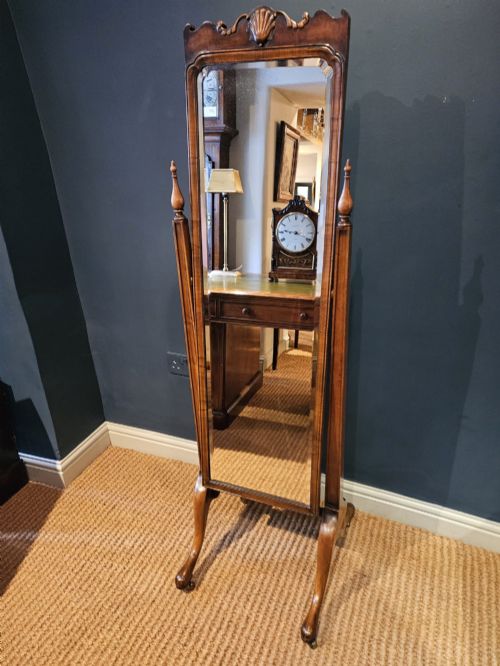
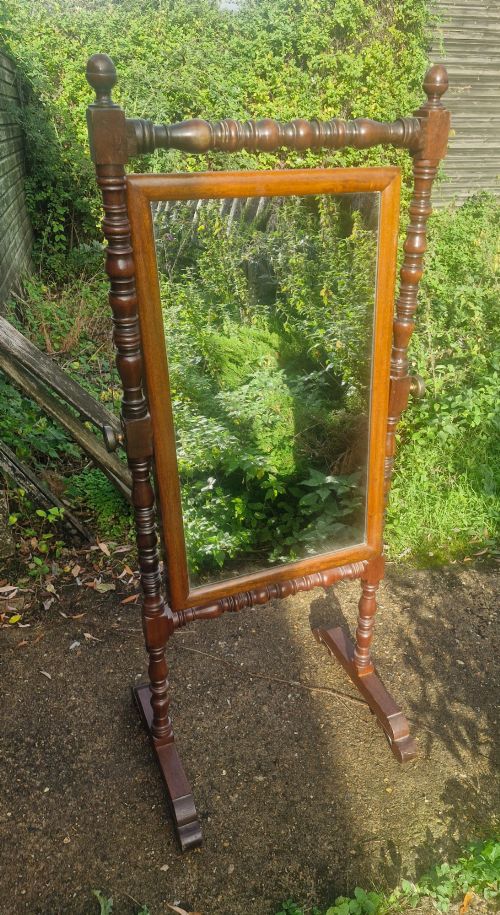
A mahogany tilting floor mirror brings elegance and practical full-length reflection to a dressing room, anchored by a sturdy freestanding frame.
Mahogany Tilting Floor Mirror
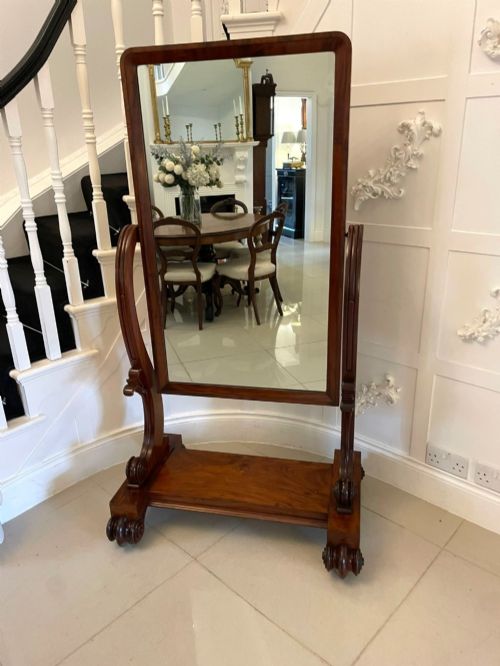
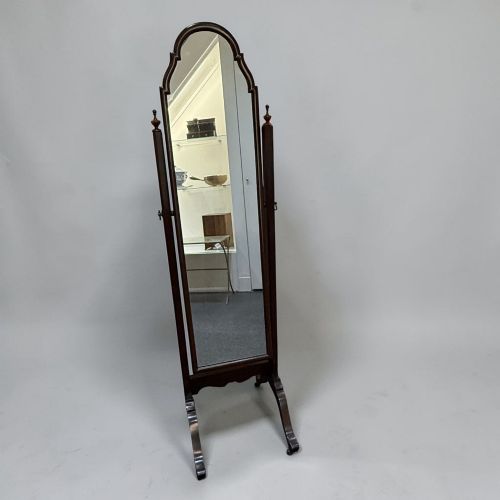
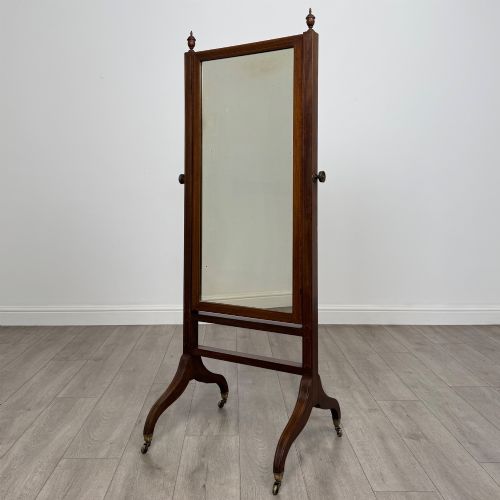
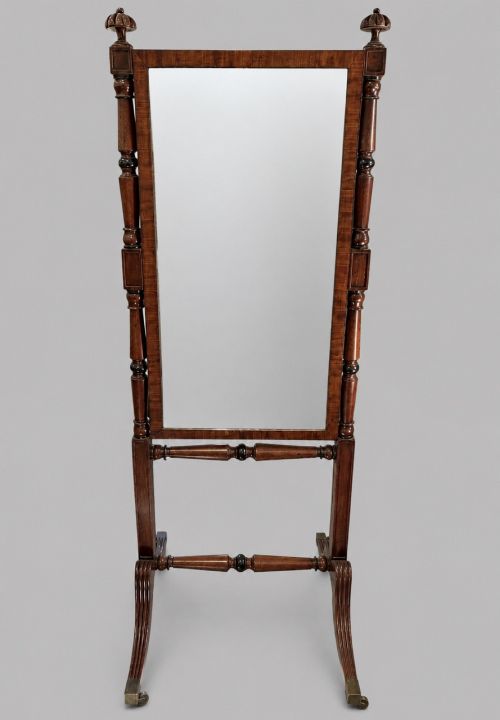
A mahogany tilting floor mirror, also known as a cheval mirror, provides a full-length reflection supported by a vertical frame and side pivots that allow the glass to angle. Buyers searching for a mahogany tilting floor mirror encounter substantial floor-standing pieces dating from the Georgian, Regency, William IV, and Victorian periods, alongside later Edwardian and 1920s interpretations.
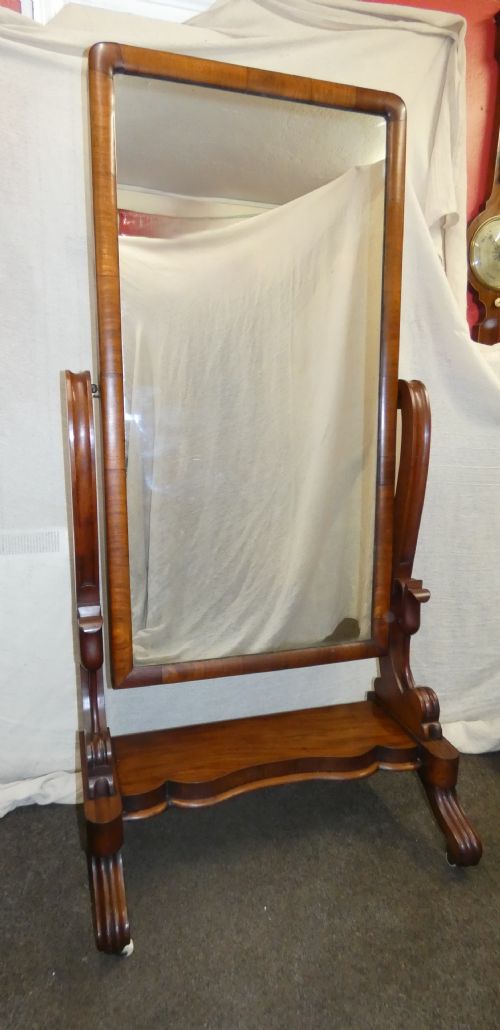
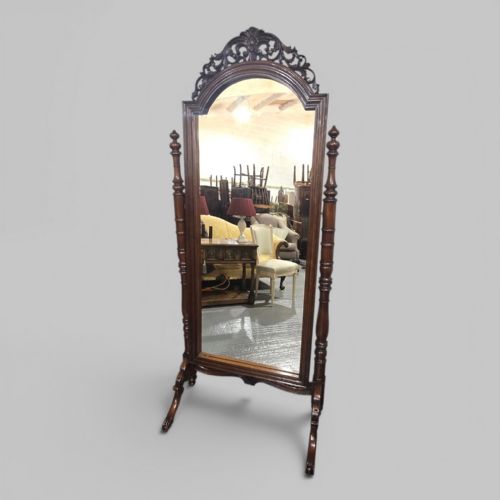
The dominant forms on this page include classical Regency designs, substantial Victorian examples, and inlaid Edwardian variations. These pieces serve both a functional dressing purpose and a decorative role in a bedroom or hallway, combining large pivoting glass plates with substantial wooden supports.
Distinctions in quality
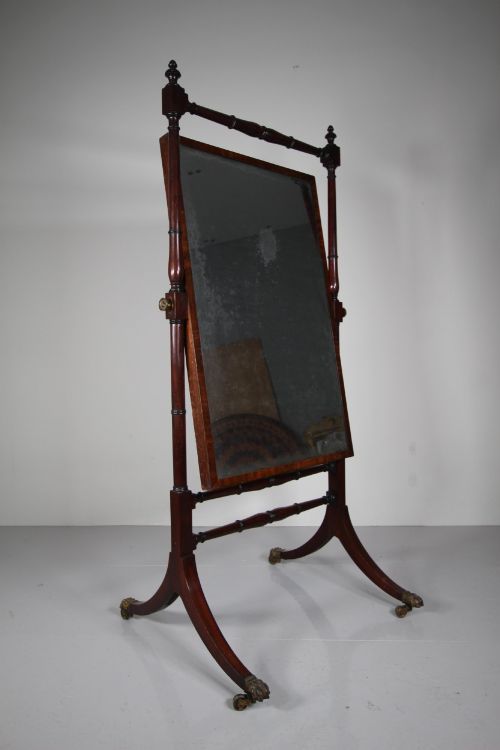
Quality rests in the proportion of the frame, the depth of the mahogany timber, and the refinement of the brass mountings such as sabots and castors. Superior examples show careful joinery on the sabre legs or supporting pillars, ensuring stability when the heavy glass tilts.
The clarity and originality of the mirror glass alongside the precision of the turning on the upright supports separate standard production from finer cabinet work. Balance in the tilting mechanism indicates thoughtful engineering in the original workshop.
Mahogany Tilting Floor Mirror Retail Price Guide 2026
Typical asking prices for mahogany tilting floor mirror among the pieces listed under this phrase on Sellingantiques today, from the lower quarter to the upper quarter. They describe what is for sale here now, not the wider market.
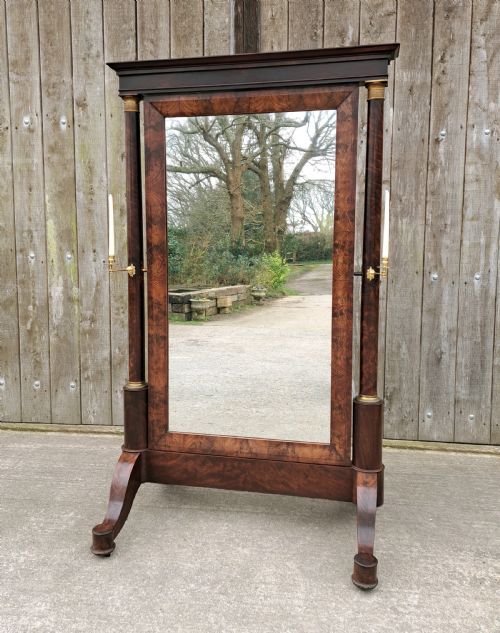
Current listings span the Georgian, Regency, Victorian, Edwardian, and 1920s periods, executed in mahogany, glass, brass, and ormolu.
The Mahogany Tilting Floor Mirror Glossary
- Cheval mirror
- A freestanding full-length mirror mounted on a frame with pivots that allow it to tilt. The name derives from the French word for horse.
- Sabots
- Metal fittings, typically made of brass, attached to the feet of furniture to protect the wood from wear and dampness.
- Castors
- Small wheels attached to the legs of furniture to enable easy movement across floors. They frequently appear on Regency and Victorian standing pieces.
- Ormolu
- Gilded bronze or brass applied as a decorative mount on furniture. This technique is often seen on French Empire pieces.
Mahogany Tilting Floor Mirror: Frequently Asked Questions
How do I use a tilting floor mirror?
Adjust the angle of the glass using the brass side pivots to achieve a full-length reflection from various distances in the room.
Ensure the floor is level so the castors and supporting legs bear the weight evenly without straining the pivot mechanism.
Where should I place a cheval mirror?
Position the piece in a bedroom, dressing room, or large hallway where natural light can bounce across the glass.
Keep the frame away from direct heat sources to prevent the mahogany timber from drying out or warping over time.
How do I identify a Regency mirror?
Look for classical proportions, sabre legs, and neat brass details that reflect the early nineteenth-century aesthetic.
These pieces often feature restrained woodwork and clean lines compared to the heavier ornamentation found on later Victorian designs.
What is the difference between Georgian and Edwardian mirrors?
Georgian and Regency versions tend to use dense, dark mahogany with restrained classical mounts and sabre legs.
Edwardian interpretations frequently incorporate lighter Edwardian mahogany frames, sometimes finished with delicate satinwood inlay.