
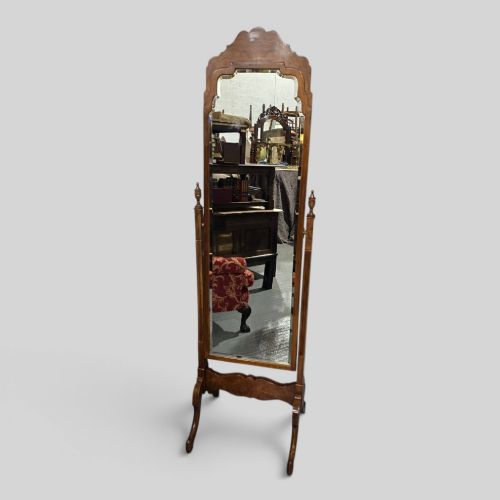
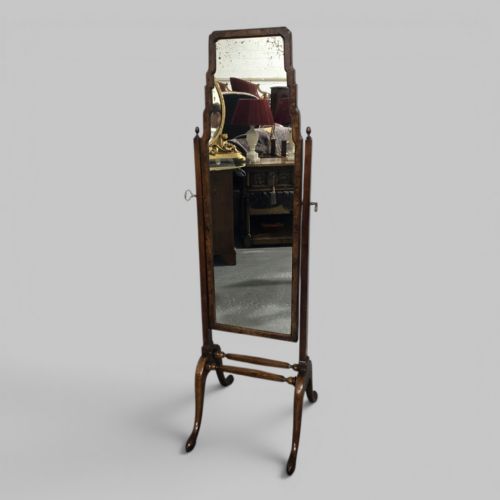


Freestanding Walnut Mirror
These freestanding walnut mirror pieces offer practical reflection and rich timber grain, bringing warmth and period elegance to any dressing room or bedroom.
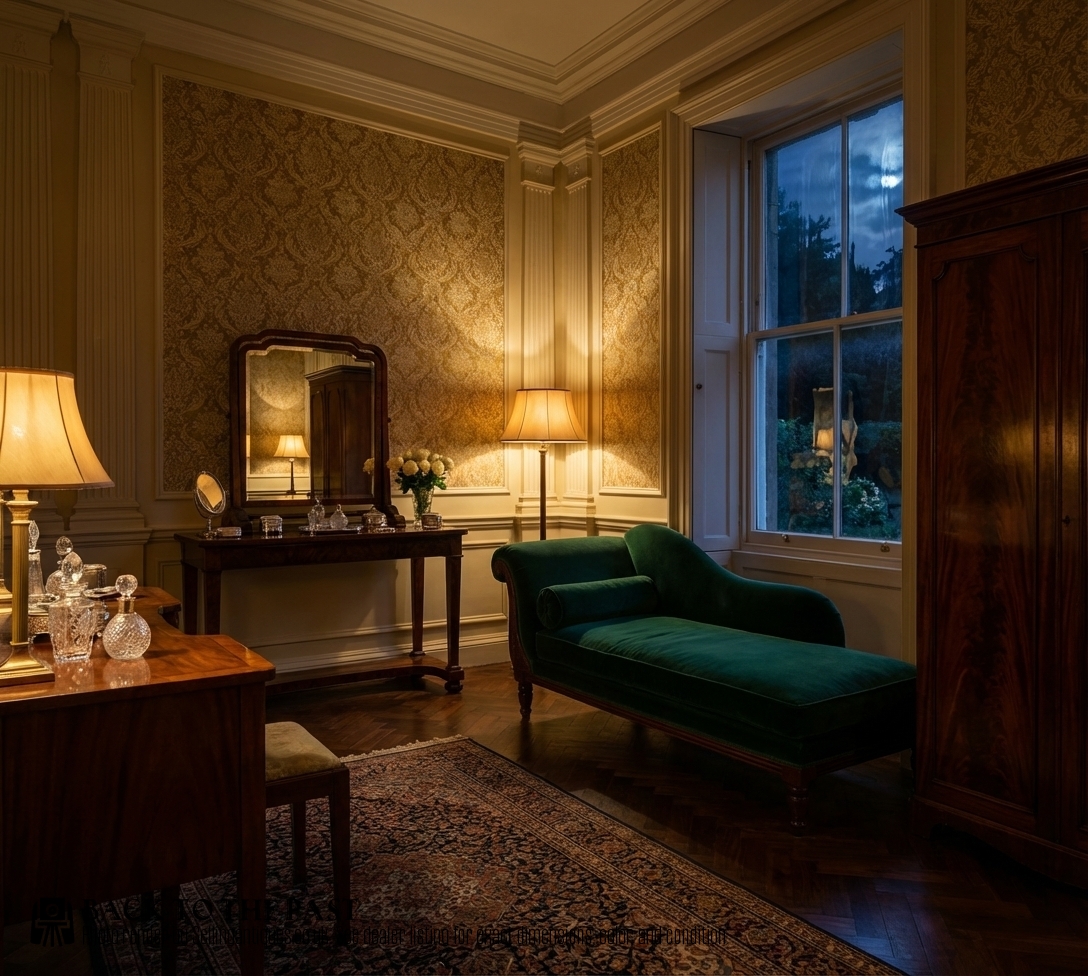
Freestanding Walnut Mirror
A freestanding walnut mirror brings together figured timber frames and pivoting glass plates designed to stand independently on floors or furniture surfaces. When you search for a freestanding walnut mirror, you encounter forms ranging from full-length cheval designs to compact dressing table boxes and adjustable shaving glasses.
Makers and workshops utilised various styles such as Queen Anne, French Rococo, and Art Deco to shape these wooden frames. Each surviving object demonstrates how earlier cabinet-making traditions persisted or were reinterpreted across different decades.
How they were made
Cabinet-makers selected solid walnut and burr walnut veneers to construct the frames, often applying them over secondary woods to showcase rich natural grain patterns. Brass fittings, including adjustable screws, brackets, and knobs, secured the pivoting plates and allowed users to alter the angle of reflection.
Giltwood accents occasionally complemented the walnut structure, adding bright decorative contrast to the darker timber surfaces. Glass mirror plates were bevelled or flat-set into rebated frames, supported by sturdy floor stands, trestle bases, or enclosed box compartments.
The current selection spans seven distinct periods, ranging from the 18th Century through Regency, Victorian, Edwardian, and into the 1920 and 1930 decades.
What varies in quality
The depth and figuring of the walnut veneer dictate much of the visual merit, with burr walnut sections offering richer patterns than plain timber boards. Superior examples exhibit precise joinery, well-turned uprights, and original brass hardware that moves smoothly without excessive play.
Proportion and structural integrity define the higher tiers of these pieces, ensuring the frame supports the weight of the glass safely. Refined carving, tidy dovetailing on box bases, and intact period mirror plates elevate an individual mirror above standard utility items.
Whytock and Reid
The Freestanding Walnut Mirror Glossary
- Cheval mirror
- A large standing mirror mounted in a frame that allows the glass plate to swing vertically. These tall pieces typically rest on four legs or supportive trestle feet.
- Burr walnut
- Wood taken from the abnormal growth of a walnut tree, producing swirling, highly decorative grain patterns. Cabinet-makers prized this veneer for front-facing surfaces and prominent panels.
- Dressing mirror
- A smaller mirror designed to sit atop a dressing table, chest of drawers, or washstand. Many incorporate small drawers or compartments within their base stands.
- Giltwood
- Wood that has been treated with gold leaf or metallic paint to simulate solid gold decoration. It frequently highlights carved details on frames from revival periods.
- Adjustable shaving mirror
- A compact glass plate mounted on pivots, often featuring telescopic or tilting mechanisms. These were traditionally used for close personal grooming in bedrooms or dressing rooms.
Freestanding Walnut Mirror: Frequently Asked Questions
How do I date a walnut mirror?
Dating relies on observing construction methods, timber choice, and stylistic cues present in the frame and base. Earlier 18th Century box mirrors feature different dovetailing and plate thickness compared to 1920 revival pieces.
Hardware details like brass screws and candle sockets also help place an object in a specific era, alongside the distinct design language of periods like Regency or Art Deco.
Where should I place a cheval mirror?
Cheval mirrors work best in bedrooms, dressing rooms, or hallways where their full-length glass provides practical utility. Placing them near a natural light source helps illuminate the figured walnut frame and brightens the surrounding space.
Because they stand independently on the floor, ensure they rest on a level surface so the pivoting mechanism functions correctly without straining the side supports.
What is a box mirror?
A box mirror consists of a pivoting glass plate attached to a small wooden base fitted with drawers or compartments. These compact units were designed for tabletops to store small personal items.
The enclosed base adds weight and stability while offering hidden storage beneath the glass.
Are these mirrors adjustable?
Many of the listed mirrors feature pivoting side pins or brass brackets that allow the glass to tilt. This adjustability let users alter the angle for dressing or grooming.
Over time, brass thumb screws and hinge fittings may require gentle tightening to hold the glass firmly in the desired position.