



Walnut Full Length Mirror
A walnut full length mirror brings warmth and height to a room, offering the classic floor-standing or wall-hung glass a dressing space needs.
Walnut Full Length Mirror
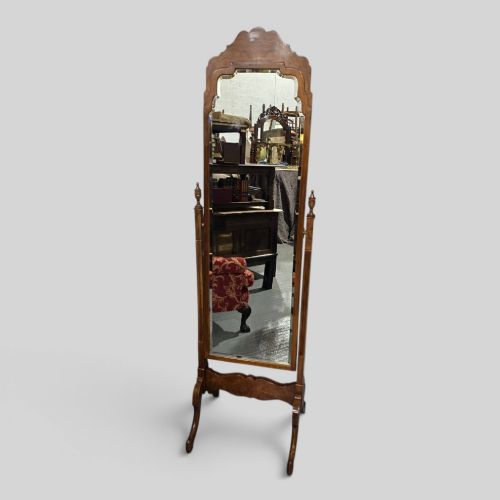
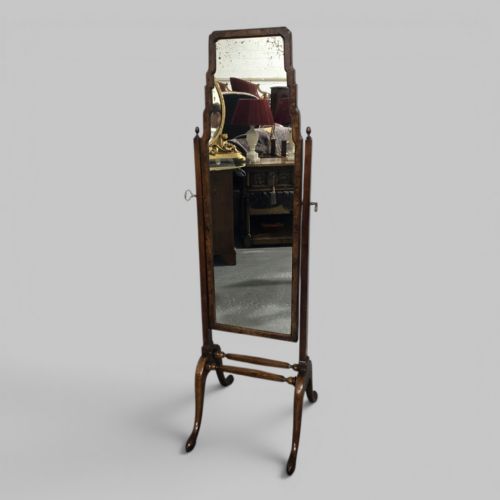
A walnut full length mirror appears primarily as a cheval mirror mounted on a frame for adjusting tilt, alongside occasional wall-hanging formats. These pieces emerge from the nineteenth and early twentieth centuries, spanning Victorian, Regency, and Art Deco periods.
The prevailing form on this page is the cheval mirror, supported by uprights with origins in Queen Anne revival styles and 1920s workshops. Buyers also encounter occasional tall pier mirrors and wall mirrors designed for dressing rooms and halls.
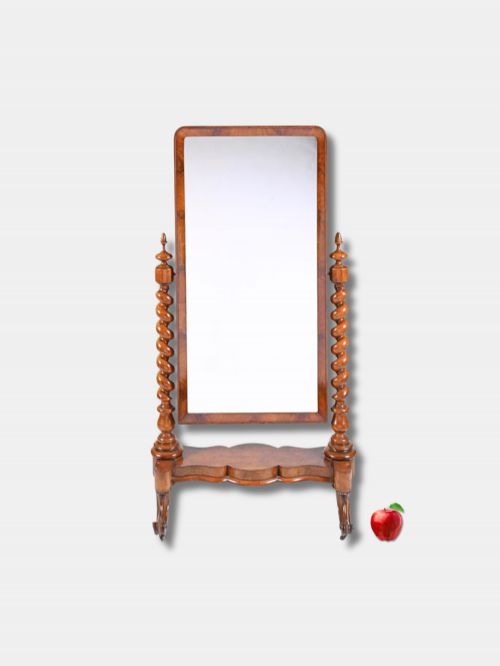
English and French origins dominate the selection, combining traditional cabinetmaking with decorative crests, barley twist supports, and carved details. The timber ranges from straight-grained walnut to highly figured burr walnut veneers.
Materials and construction
Makers utilised solid walnut and applied burr walnut veneers over secondary timbers such as mahogany or oak to create rich, figured surfaces. Brass hardware, including pivoting pins and castors, often supports the tilting action of cheval frames.
Glass is set within sturdy rebated frames, sometimes accompanied by gilt bronze mounts, ebonised details, or carved crestings. Structural integrity relies on traditional joinery, floor trestles, and upright supports such as barley twist columns.
One early twentieth-century cheval mirror originated directly from a gentlemen's outfitters shop.
Judging quality in walnut full length mirrors
Quality rests in the choice of timber and the dexterity of the cabinetmaker, particularly where burr walnut veneers are matched across large surfaces. Finer examples display crisp carving on crests and frames rather than soft or cast ornament.
The stability of the cheval stand and the smoothness of the tilting mechanism indicate superior workshop practice. Original mirror glass and well-preserved brass fittings distinguish better-surviving items from heavily restored pieces.
The Walnut Full Length Mirror Glossary
- Cheval mirror
- A freestanding full-length mirror hung in a frame that allows it to tilt back and forth on pivots. The name derives from the French word for horse, referencing the four-legged frame.
- Burr walnut
- A prized wood veneer taken from the wart-like growth on a walnut tree, showing intricate and swirling grain patterns. Cabinetmakers use it on prominent surfaces for decorative impact.
- Pier mirror
- A tall, narrow mirror designed to hang on the wall between two windows, often placed above a console table. They maximise light in nineteenth-century rooms.
- Barley twist
- A carved wooden support resembling a twisted column or rope, popular in Victorian furniture. It adds vertical texture to the uprights of dressing mirrors.
- Gilt bronze
- Copper alloy finished with a thin layer of gold, used for decorative mounts and accents on French-influenced frames. It contrasts with the dark tones of the walnut.
Walnut Full Length Mirror: Frequently Asked Questions
Where should I place a cheval mirror?
A cheval mirror requires enough floor space to stand securely away from heavy traffic while allowing clearance for the frame to tilt. Bedrooms, dressing rooms, and wide hallways offer suitable placement where natural light can reflect off the glass.
Positioning the glass opposite a window helps brighten darker corners and creates an open sense of space in smaller rooms.
How do I care for antique walnut wood?
Antique walnut benefits from regular dusting with a soft, dry cloth to prevent dirt accumulation on the polished surface. Keeping the timber away from direct sunlight and radiators preserves the finish and prevents the wood from drying out.
Applying a traditional beeswax polish occasionally helps nourish the grain without building up heavy chemical layers.
Are these mirrors heavy to move?
Freestanding cheval mirrors carry considerable weight due to the combination of solid timber frames, supporting stands, and large glass panels. Many include brass castors on the feet to assist with gentle repositioning across flat floors.
Lifting requires two people to protect the frame joints and prevent the pivoting mirror plate from swinging unexpectedly.
How can I tell a Victorian mirror from a 1920s piece?
Victorian examples often feature heavier proportions, hand-carved details, and rich dark walnut or barley twist supports. Pieces from the 1920s frequently reflect Queen Anne revival tastes or geometric Art Deco lines with lighter veneer work.
Examining the backboards, fixings, and construction methods helps clarify the period of manufacture.