
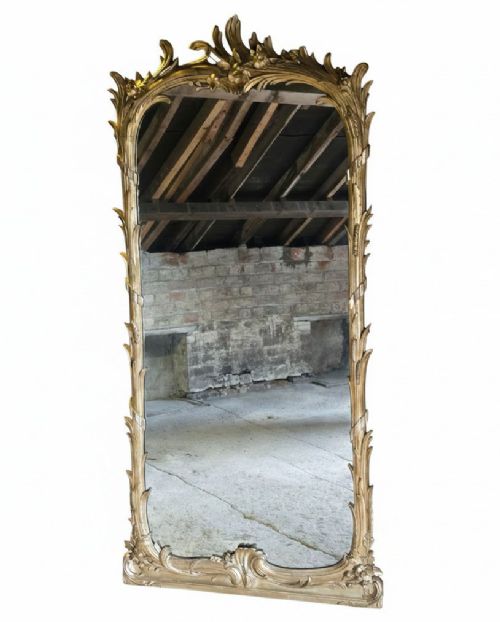
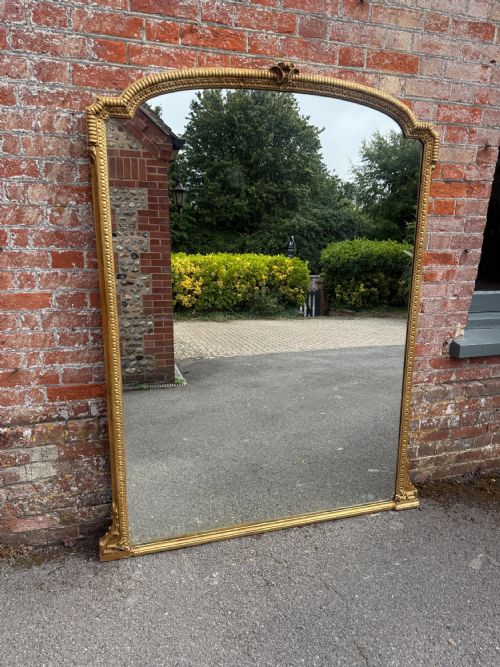
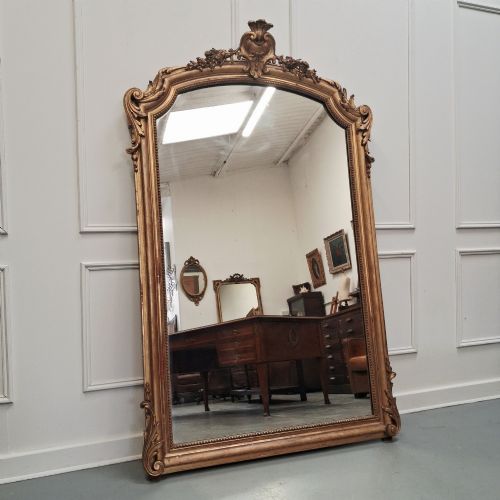
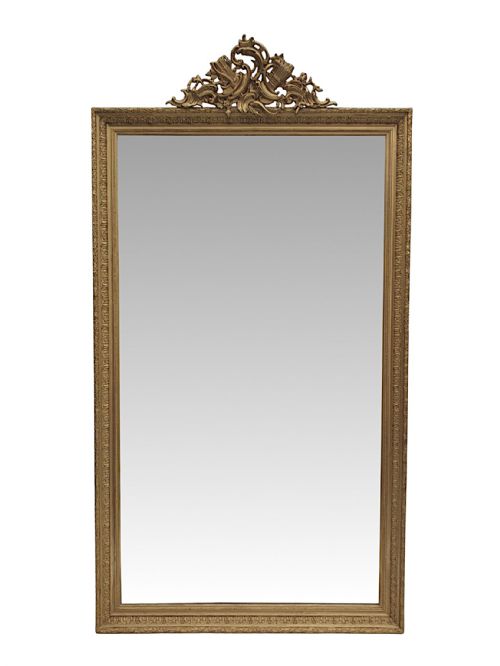
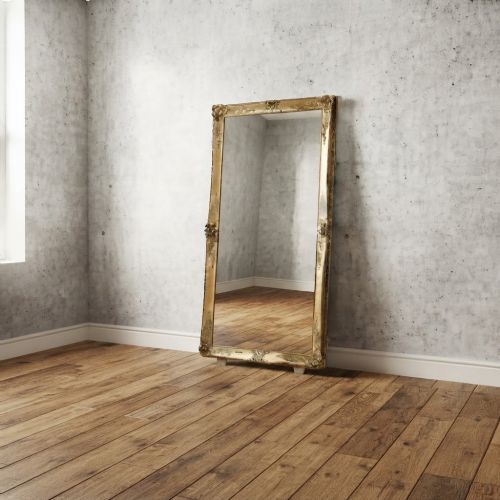
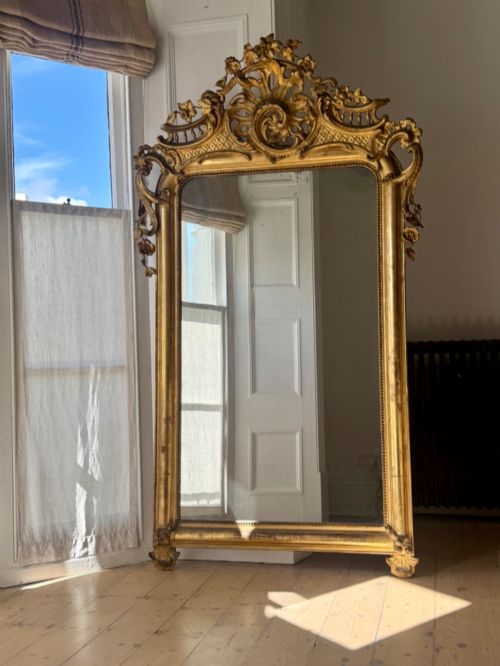
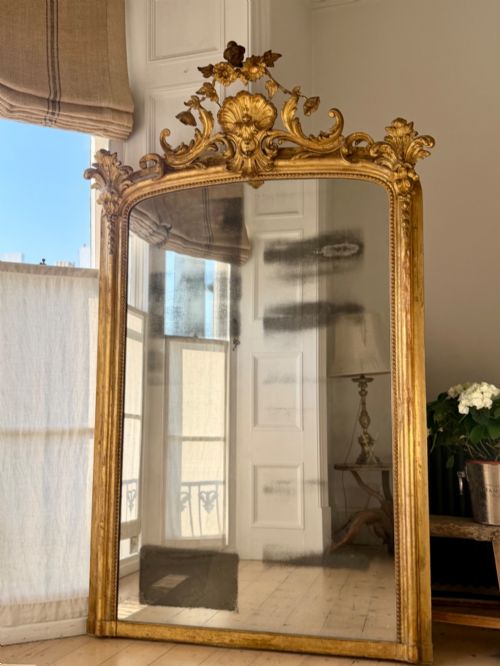
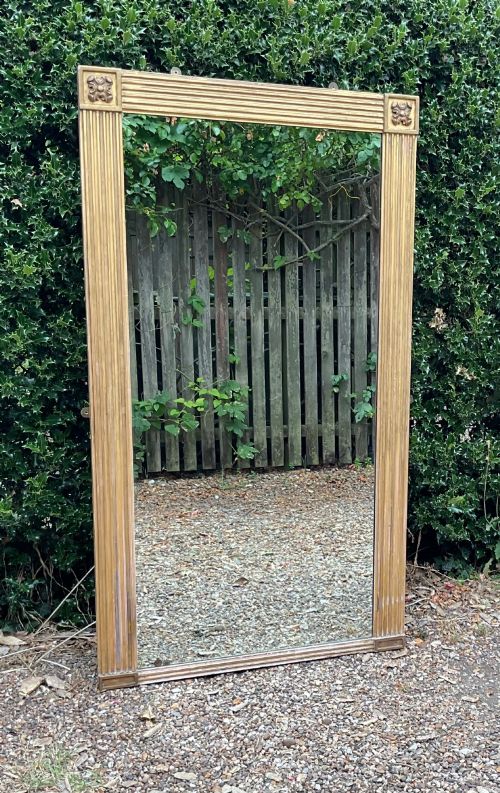
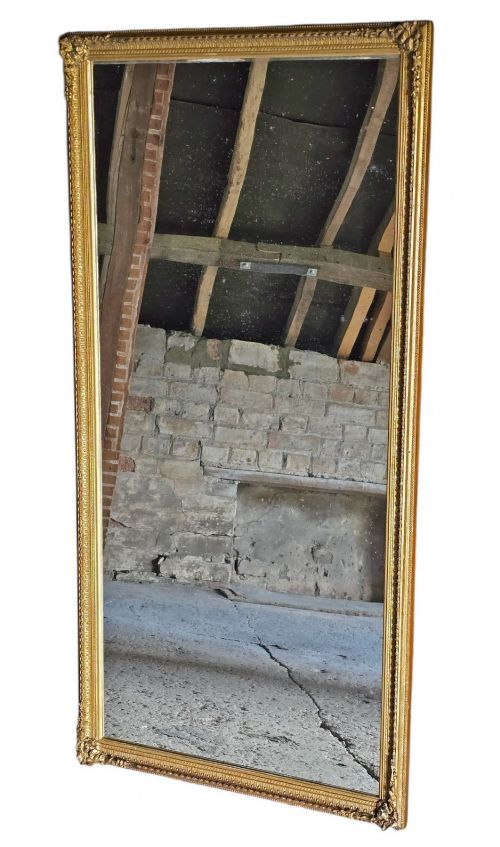
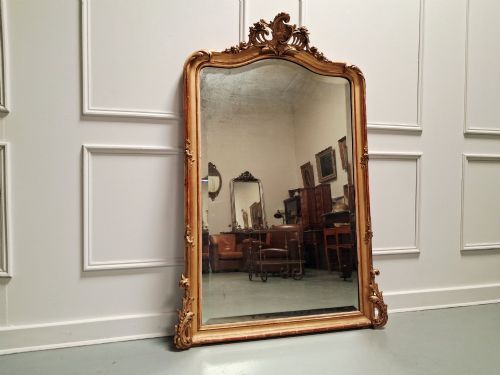
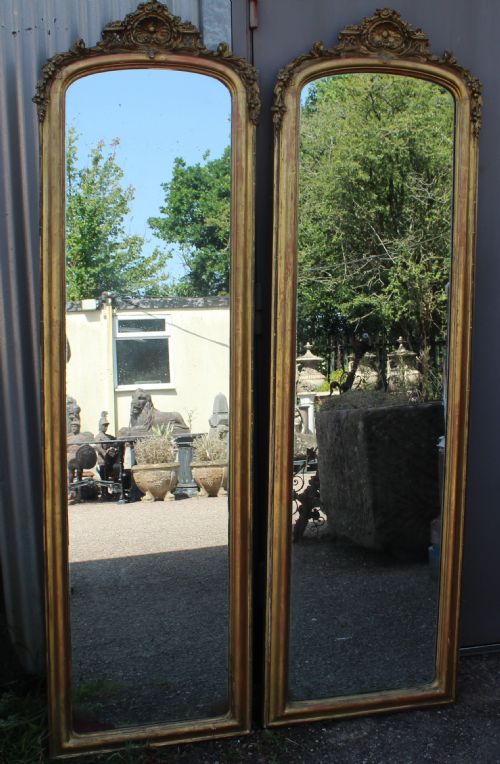
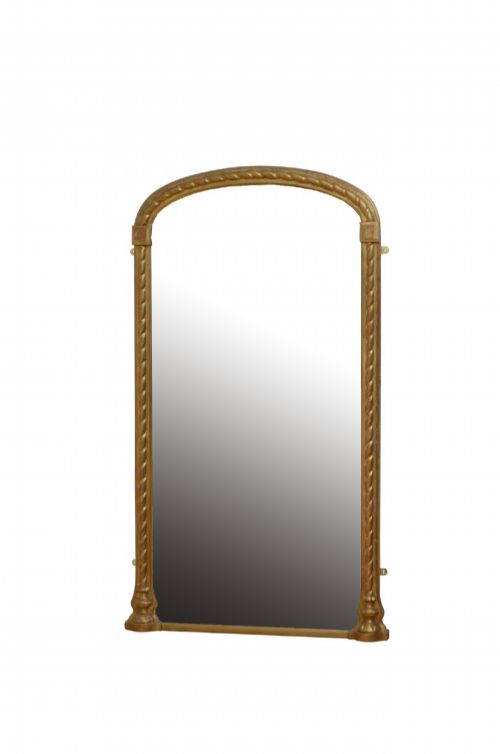
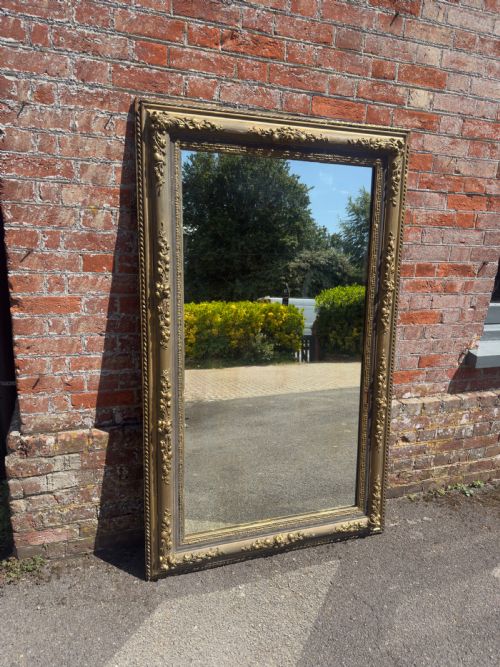


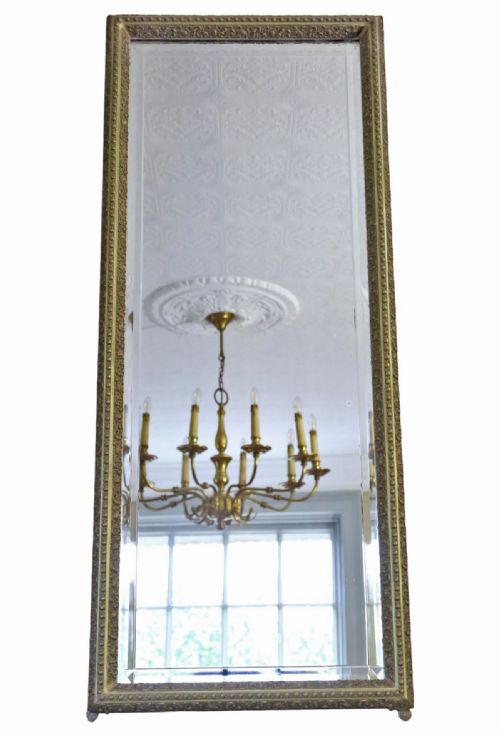
Gilded Floor Mirror
These gilded floor mirror pieces bring height and reflected light to a room, offering the grand scale that collectors want.
What They Are
A gilded floor mirror stands tall to give a full-length reflection, appearing as leaner mirrors, wall dressing mirrors, pier mirrors and cheval mirrors. These pieces span the Victorian and Edwardian eras, reaching back into Georgian revival forms and French Rococo or Neoclassical styles.
The version most commonly met on this page is the full-length Victorian dressing mirror or leaner mirror, often finished with giltwood and gesso. Such tall mirrors serve to brighten dark corners and create an illusion of greater depth in interior spaces.
How They Were Made
Craftsmen built the structural frames using timber such as walnut and applied layers of gesso to create smooth surfaces for gilding. Composition ornament was frequently moulded and affixed to the wood to form intricate scrolling details and relief work.
Mirrors incorporated heavy glass plates, sometimes with bevelled edges to catch the light at oblique angles. The gilding process involved laying thin sheets of gold leaf over a prepared bole base, which was then burnished to a high shine.
Retail Price Guide 2026
Typical UK retail prices for gilded floor mirror, calculated from the Sellingantiques database of over a million retail prices indexed since 2003. This retail price guide relies exclusively on Sellingantiques data; no external sources or auction records are used, so the figures do not describe the wider market.
Some tall mirrors spent generations reflecting morning tea before being painted and regilded for a fresh century.
What Varies in Quality
The distinction between ordinary and exceptional pieces lies in the crispness of the gesso mouldings and the depth of the hand-applied gilding. Superior examples display finely chased ornamentation where the relief work remains sharp and clean.
Glass quality also separates the tiers, with thicker plates providing truer reflections, alongside sturdier frame joinery that supports the substantial weight of tall glass without sagging.
The Gilded Floor Mirror Glossary
- Giltwood
- Timber that has been gilded with gold leaf. This material forms the primary decorative surface of many grand period frames.
- Gesso
- A plaster mixture applied to wood frames to create a smooth surface for gilding. It allows for intricate relief carving and moulding.
- Cheval Mirror
- A freestanding full-length mirror hung in a frame that allows it to swing. These often pivot on vertical pins between sturdy upright posts.
- Pier Mirror
- A tall mirror designed to hang on the wall between windows, or to stand above a low pier table. They maximise light in narrow wall spaces.
- Composition
- A moulded mixture of whiting, linseed oil and resin used to form decorative details on frames. It provides a cheaper alternative to hand carving while holding fine detail.
Frequently Asked Questions
How do I secure a floor standing mirror?
Leaner mirrors require wall attachment brackets to prevent accidental tipping, especially given their heavy glass and wooden frames.
Securing the top edge to wall studs ensures stability while allowing the base to rest safely on the floor.
What is a cheval mirror used for?
A cheval mirror is a freestanding glass designed for bedroom dressing, allowing the user to tilt the frame for different angles.
The pivoting mechanism provides a full-length view without needing permanent wall mounting.
How do I tell Victorian from Edwardian mirrors?
Victorian mirrors often feature heavier, ornate French Rococo or revival detailing with deep gesso relief work.
Edwardian pieces tend toward lighter proportions and simpler framing styles that reflect changing domestic tastes.
Can these mirrors be used as wall mirrors?
Many large floor mirrors are built with fixings that allow them to be hung securely on walls as well as leaned.
Checking the reverse of the frame reveals original hanging loops or reinforcement designed for vertical wall mounting.