

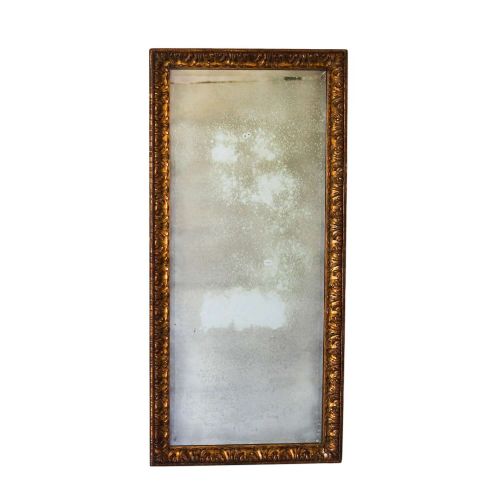
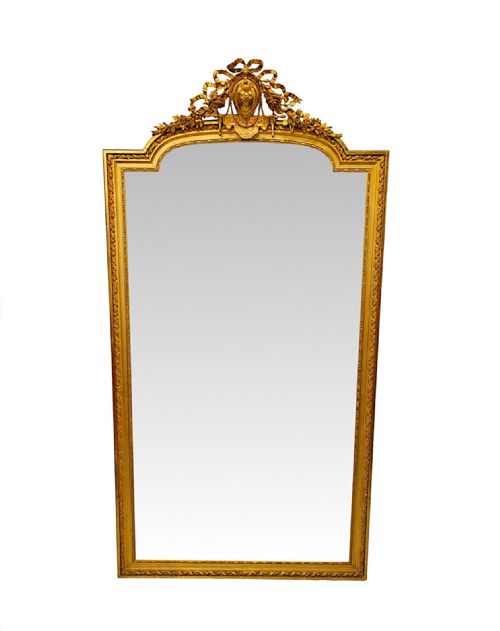


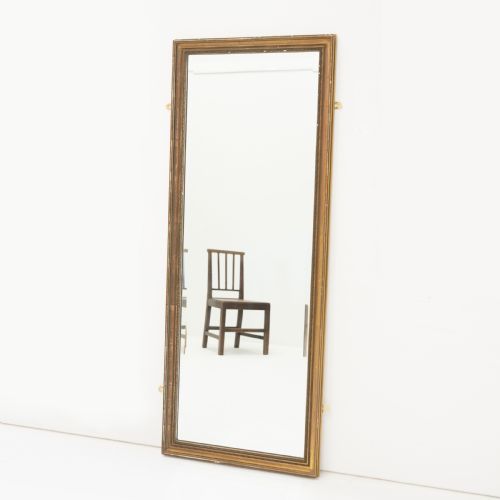


Gold Leaf Dressing Mirror
A gold leaf dressing mirror brings unmistakable warmth and reflective depth to a room, drawing on centuries of European craftsmanship.
Gold Leaf Dressing Mirror
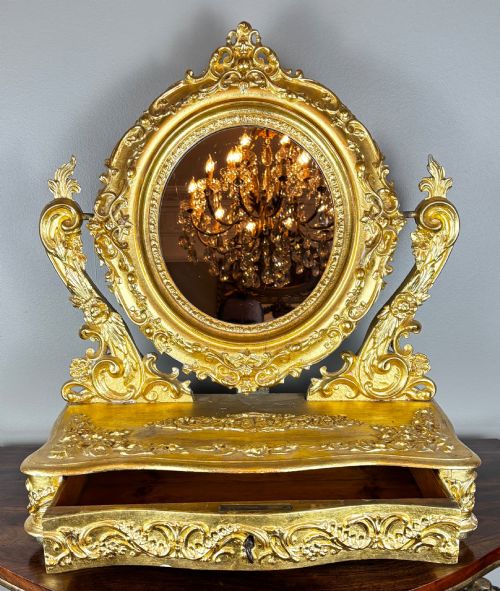
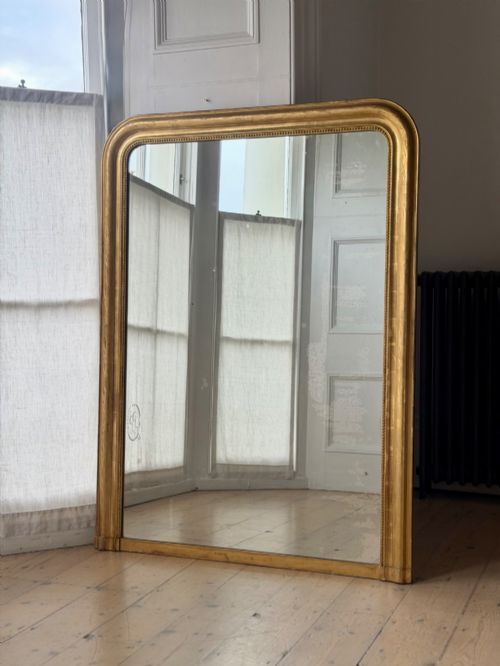
A gold leaf dressing mirror is a functional and decorative piece designed for personal grooming or interior enhancement, appearing across styles such as Victorian, Regency, and Rococo Revival. When exploring this selection, buyers encounter various formats including tall cheval mirrors, table-top toilet mirrors, and large wall-mounted dressing glasses.
The pieces on this page span the nineteenth and early twentieth centuries, reflecting diverse origins including English and French workshops. Examples range from compact table mirrors with brass frames to monumental carved giltwood pier mirrors intended for full-length reflection.
Makers and artisans of the period utilised traditional forms, applying rich gilding to timber and gesso substrates. These mirrors served both practical daily routines and grand decorative schemes in historic interiors.
Materials and construction
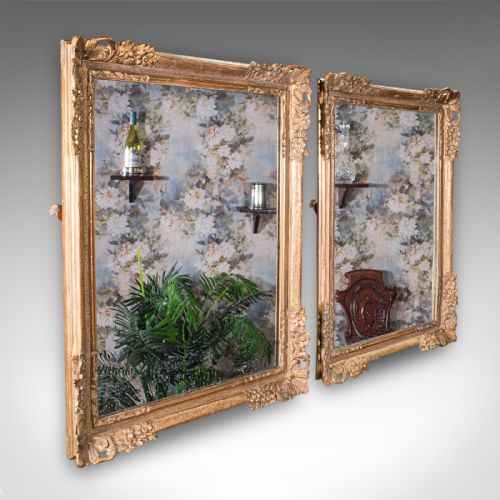
Craftsmen built the frames of these mirrors using timber, gesso, and composition ornament, which provided a stable base for the application of delicate gold leaf. Carved wooden elements and moulded composition details created elaborate surface relief characteristic of nineteenth-century design.
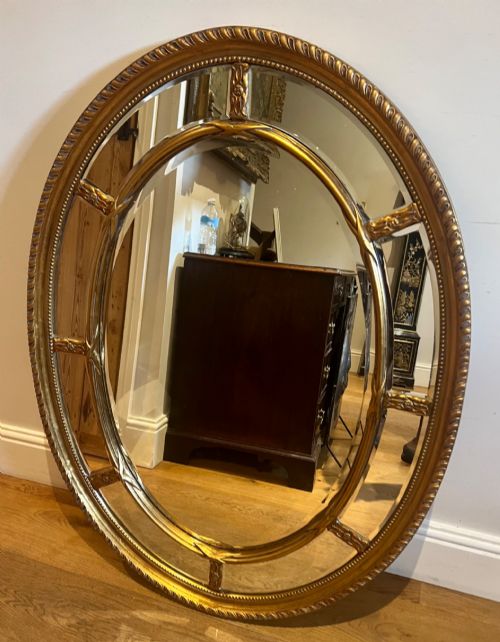
Mirrored glass plates, sometimes featuring original bevels, were set within these ornate gilt frames. The finish was achieved through the meticulous application of gold leaf or gilding over prepared grounds, often complemented by brass fittings on smaller table and easel variants.
Gold Leaf Dressing Mirror Retail Price Guide 2026
Typical asking prices for gold leaf dressing mirror among the pieces listed under this phrase on Sellingantiques today, from the lower quarter to the upper quarter. They describe what is for sale here now, not the wider market.
Listings feature pieces spanning the nineteenth and early twentieth centuries, utilising giltwood, gesso, brass, and mirrored glass across French and English designs.
Evaluating quality and execution
The distinction between tiers of quality lies in the depth and crispness of the carved woodwork and gesso ornaments rather than surface additions. Superior examples display sharply defined hand-carved details and harmonious proportions that retain their structural integrity over time.
The integrity of the original gilding and the clarity of the mirrored glass significantly influence the character of each piece. Retaining original bevelled glass plates and undisturbed historic gilt surfaces separates standard production from exceptional survival.
The Gold Leaf Dressing Mirror Glossary
- Giltwood
- Timber carved and coated with gold leaf or metallic powder over a prepared ground. This material defines the luxurious finish seen on many antique wall and dressing mirrors.
- Gesso
- A plaster-like mixture applied to wood frames to create a smooth surface for carving and gilding. Artisans used it to build up ornate relief decoration.
- Cheval mirror
- A freestanding full-length mirror hung on a frame with pivots, allowing the glass to tilt. These pieces often served in nineteenth-century bedrooms and dressing rooms.
- Pier glass
- A tall mirror designed to hang on the wall space between windows. They frequently matched the height of surrounding architectural joinery.
- Composition
- A moulded material made from whiting, resin, glue, and linseed oil pressed into decorative ornaments. It provided a cost-effective alternative to hand-carved wood details.
Gold Leaf Dressing Mirror: Frequently Asked Questions
Where should I place a dressing mirror?
These mirrors suit bedrooms, hallways, and living spaces where they reflect light and amplify interior dimensions. Wall-mounted and leaner versions work effectively opposite windows or above mantelpieces.
Freestanding cheval mirrors offer flexibility in dressing areas, allowing full-length viewing without permanent wall installation.
How do I identify the period of a mirror?
Dating relies on stylistic clues, framing materials, and the characteristics of the glass plate. Nineteenth-century pieces often exhibit distinct revival styles like Rococo or Neoclassical, paired with heavy giltwood or gesso frames.
Examining the backboards, fixings, and edge work of the glass provides further context for the manufacturing era.
Are these mirrors heavy to hang?
Large giltwood and framed mirrors constructed from solid timber and gesso possess substantial weight. Proper wall fixings into structural studs or masonry are essential for secure installation.
Leaner formats and table mirrors require minimal hardware, while wall mirrors demand professional hanging support.
How should I clean a gilt frame?
Gilt surfaces require gentle dusting with a soft, dry brush to prevent damage to the delicate gold leaf or composition details. Moisture and harsh chemical cleaners must be avoided entirely.
Glass panels can be wiped with a mild glass cleaner applied to a cloth rather than sprayed directly onto the frame.