

Gilt Pier Mirror
A gilt pier mirror brings classical elegance and a sense of light to any reception room, designed specifically to hang between windows.
Understanding gilt pier mirrors
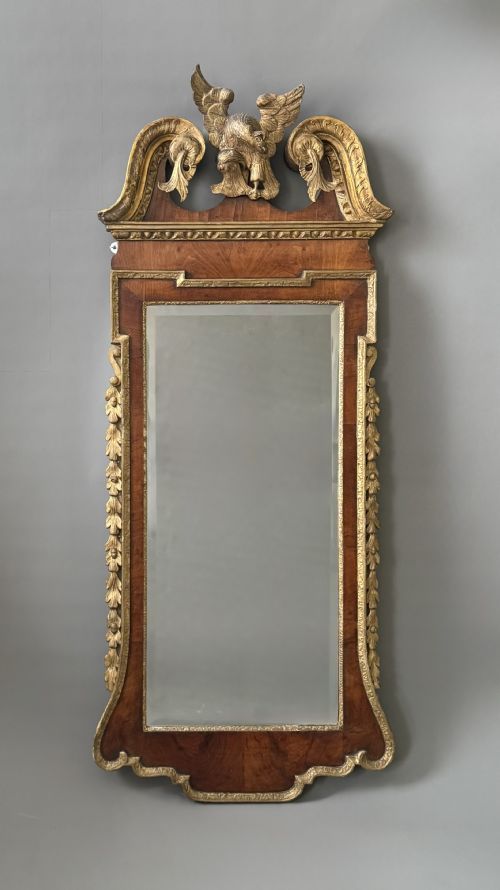
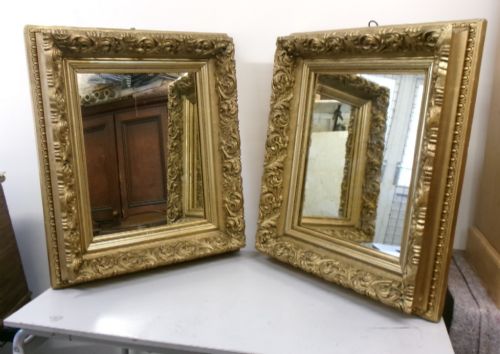
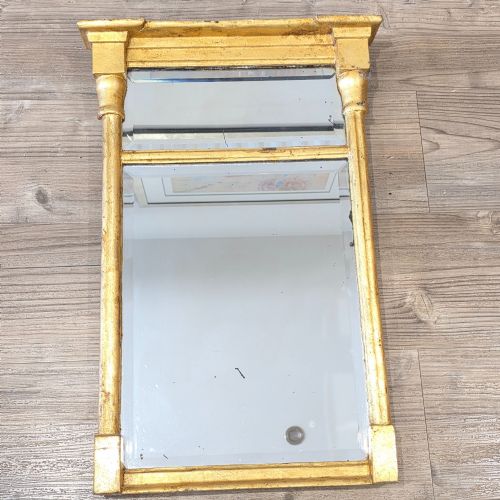
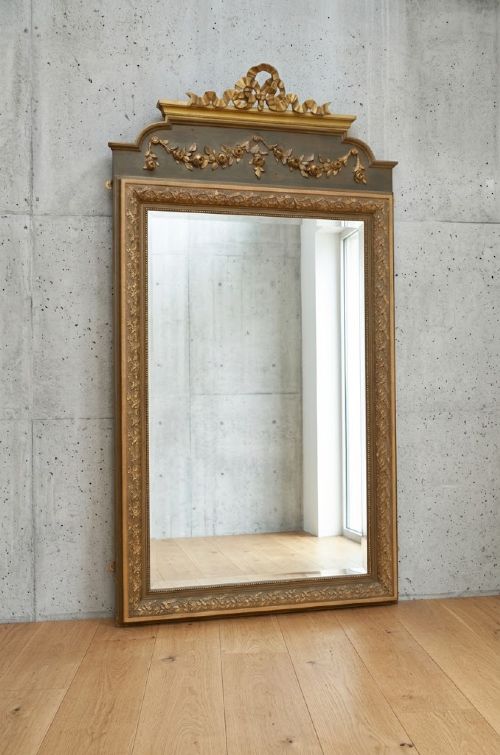
A gilt pier mirror is a tall wall mirror designed historically to hang on the wall space, or pier, between two windows. These pieces appear frequently in nineteenth-century interpretations, alongside earlier George III, Regency, and French Louis style examples recorded in past and present collections.
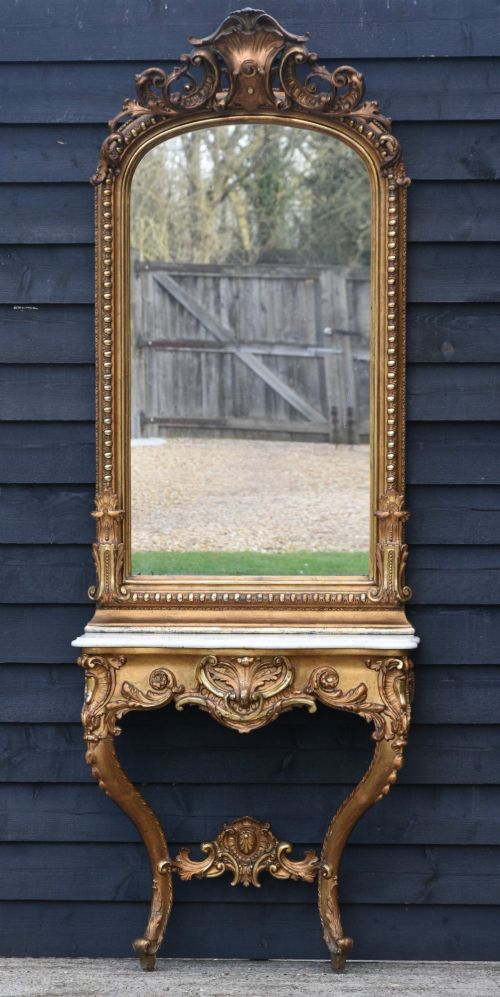
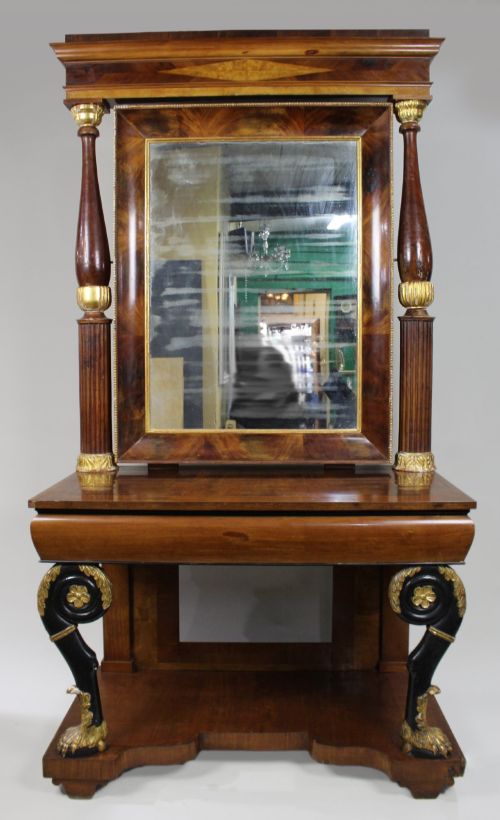
The form often includes associated console tables or stands, merging mirror glass with supporting furniture beneath. Variations span simple reeded frames and architectural neoclassical designs to elaborate rococo revival shapes with carved crestings.
Materials and construction
Frames rely on timber foundations such as mahogany, walnut, or pine, built to support heavy glass plates. Artisans applied layers of gesso over the wood base to create smooth surfaces for gilding.
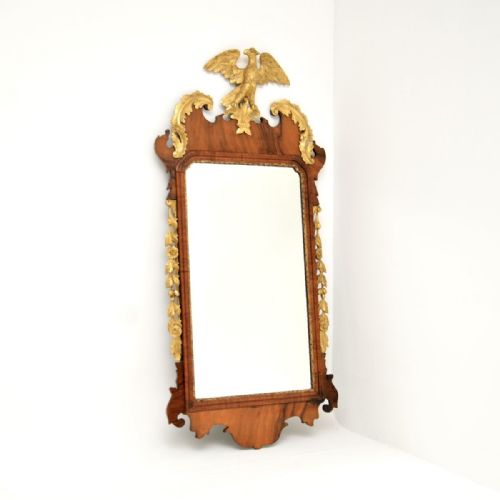
Decoration is achieved through carved giltwood, parcel-gilt detailing, paint, and occasional verre eglomise panels. Surviving pieces frequently retain original glass plates alongside traditional carved motifs like eagle heads and lion masks.
Retail Price Guide 2026
Typical UK retail prices for gilt pier mirror, calculated from the Sellingantiques database of over a million retail prices indexed since 2003. This retail price guide relies exclusively on Sellingantiques data; no external sources or auction records are used, so the figures do not describe the wider market.
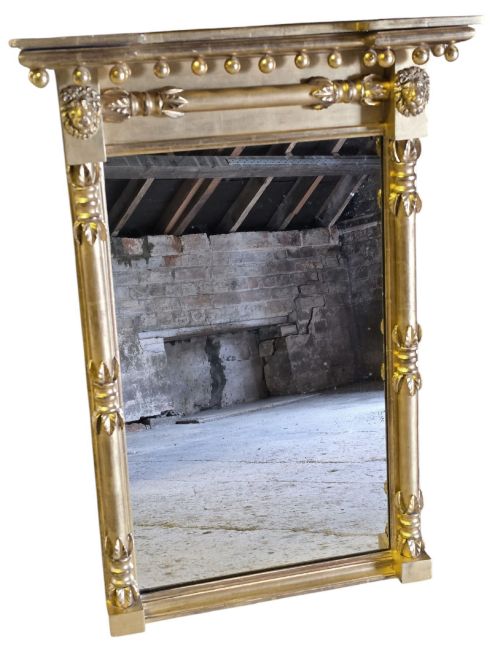
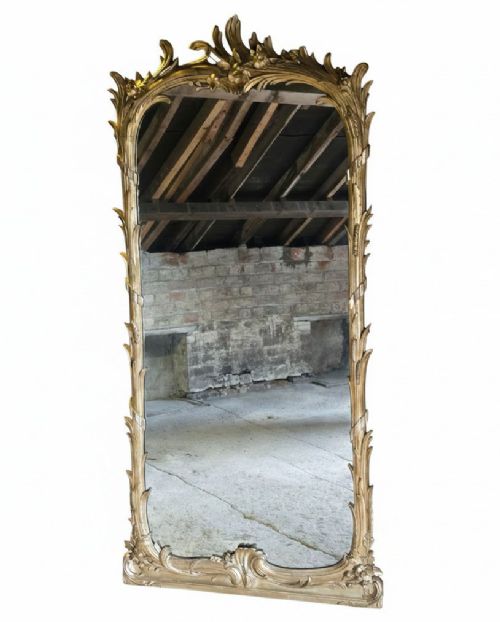
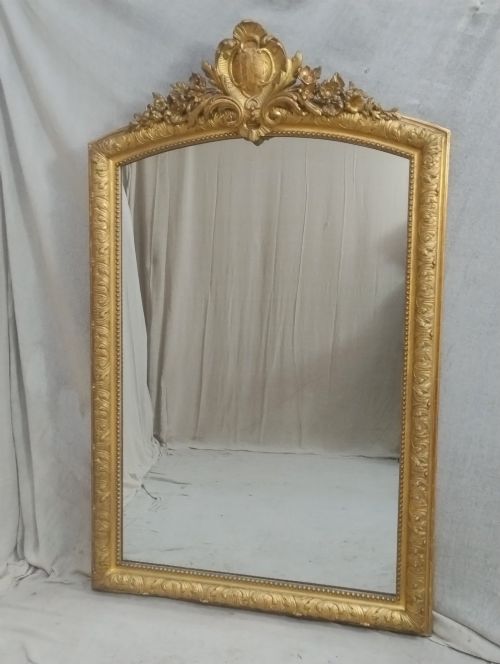
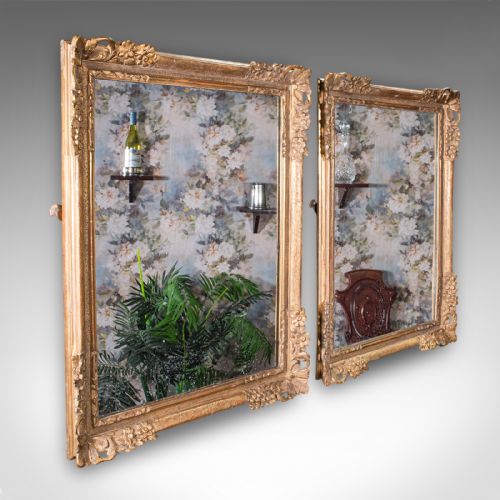
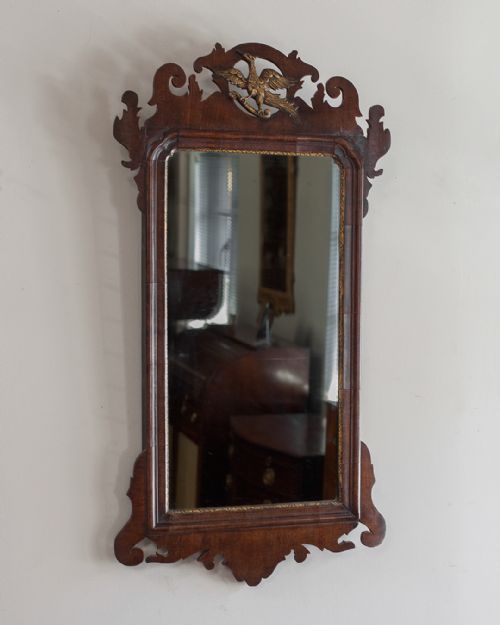
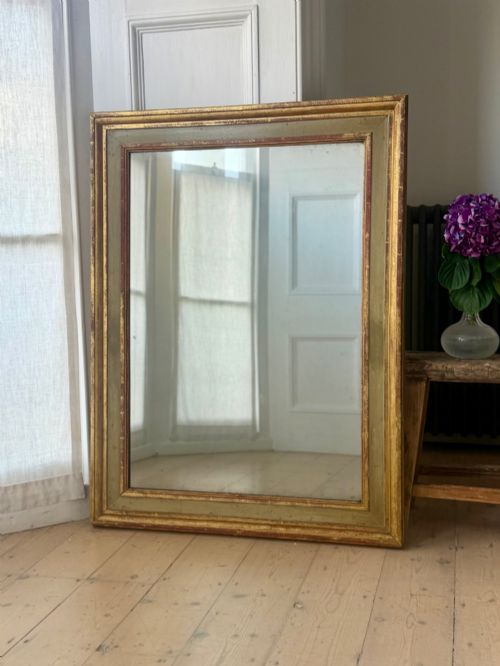
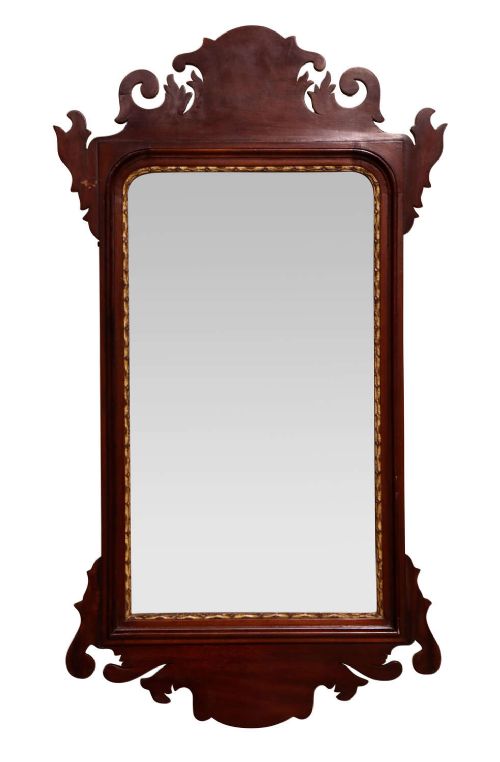
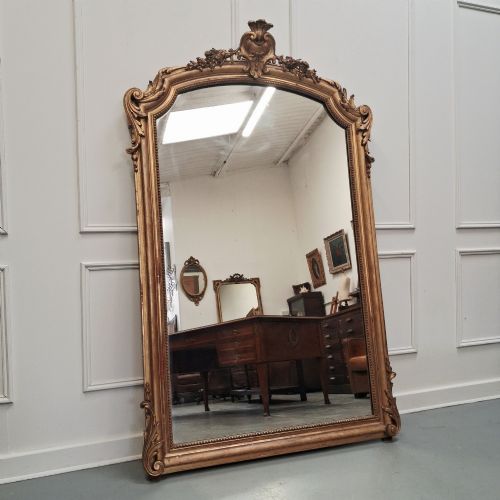
The listings demonstrate diverse stylistic influences, ranging from Regency and Neoclassical forms to French Louis and Rococo revival designs.
Distinctions in quality
Quality rests upon the crispness of the carved wood and gesso ornamentation, distinguishing sharp architectural or figurative details from softer, worn mouldings. Superior examples show careful proportion in their fretwork, crests, and gilded surfaces.
The Gilt Pier Mirror Glossary
- Giltwood
- Timber carved and coated with a thin layer of gold leaf or metal leaf. This finish gives the frame its characteristic metallic sheen.
- Gesso
- A plaster mixture applied to wood frames to create a smooth surface for gilding and carving fine details. It allows intricate relief work on the mirror border.
- Parcel Gilt
- A finish where only specific parts of the wooden frame are gilded while other areas show the natural walnut or mahogany grain. This technique highlights particular mouldings or fretwork.
- Verre Eglomise
- A process of cold painting and gilding on the reverse side of glass panels. It frequently appears as a decorative frieze section above the main mirror plate in regency pieces.
- Pier Glass
- An alternative term for a tall mirror designed for the wall space between windows. These glasses often reflect natural light deeper into period rooms.
Frequently Asked Questions
Where should I hang a pier mirror?
Traditionally, these mirrors were hung on the narrow wall space between two windows to maximise light and create a sense of symmetry in a reception room.
Today, they work effectively above console tables, mantelpieces, or in high-ceilinged hallways where their vertical proportions can be fully appreciated.
How do I identify a nineteenth-century mirror?
Nineteenth-century mirrors often display revival styles such as French Louis, Rococo, or Neoclassical taste, constructed with heavy gesso and carved giltwood frames.
Examination of the timber backing, mirror plate silvering, and construction techniques helps separate these nineteenth-century interpretations from earlier eighteenth-century originals.
Are original mirror plates important?
Original glass plates retain the slight distortions, foxing, and depth characteristic of historic manufacturing methods.
While replacement plates offer clearer reflections, original glass contributes significantly to the authenticity and visual character of a period piece.
What is parcel gilding?
Parcel gilding is a decorative method where gold leaf is applied selectively to highlighted parts of a wooden frame, leaving the underlying mahogany or walnut exposed.
This creates a balanced contrast between the warm wood grain and the bright gilded ornament.