
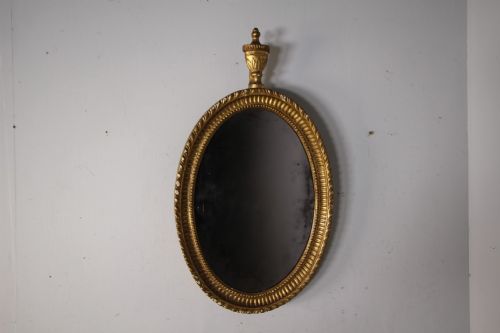
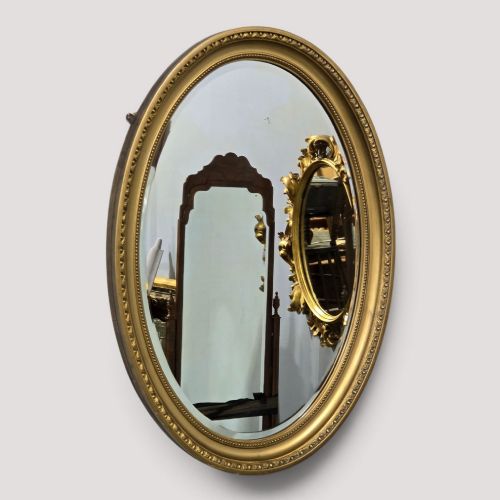

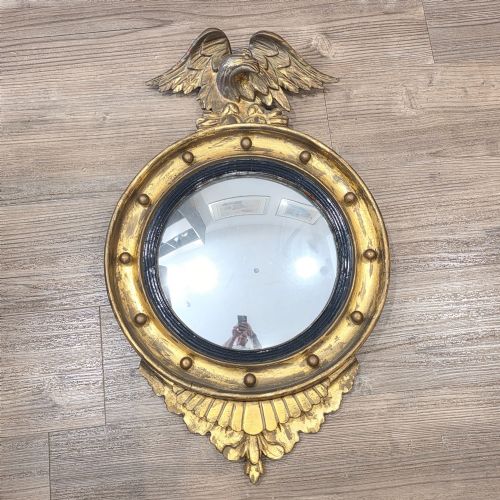
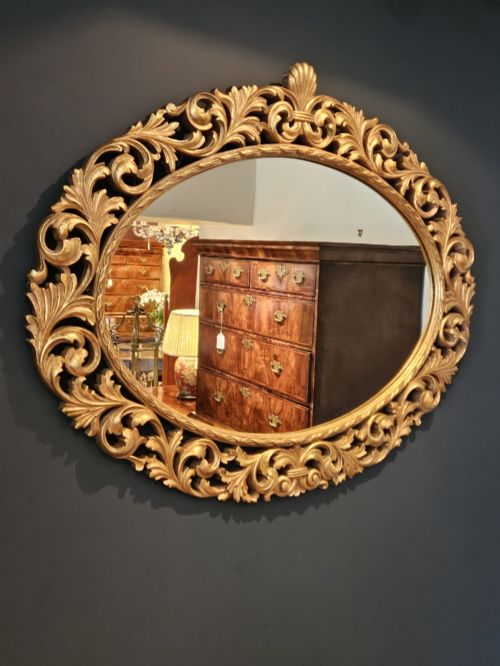
Vintage Giltwood Mirror
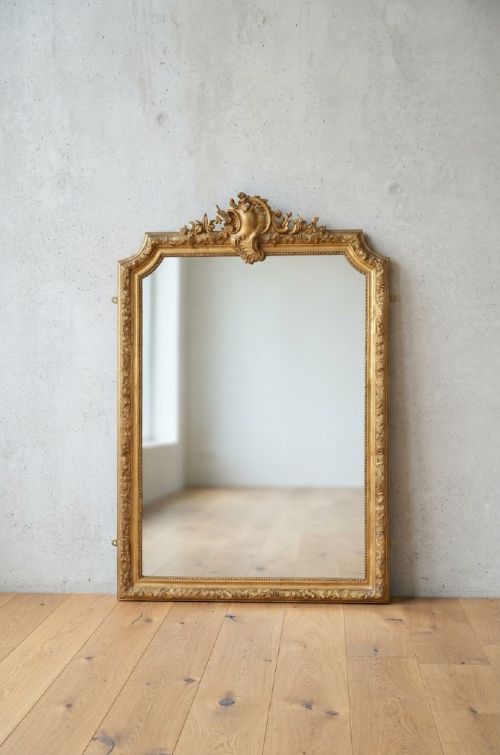
A vintage giltwood mirror brings warmth and reflective depth to a room through its carved surface and time-softened metallic finish.
Vintage Giltwood Mirror
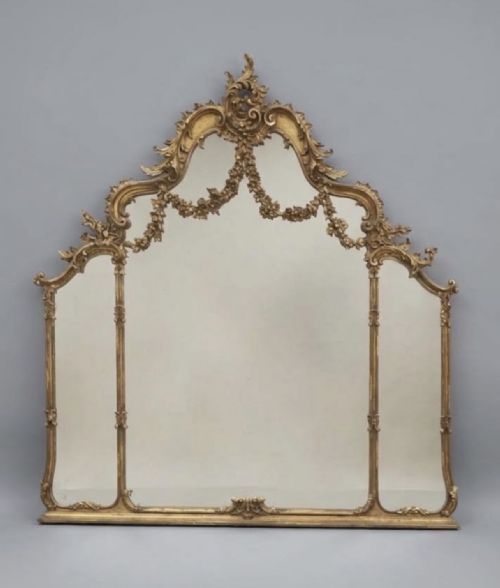
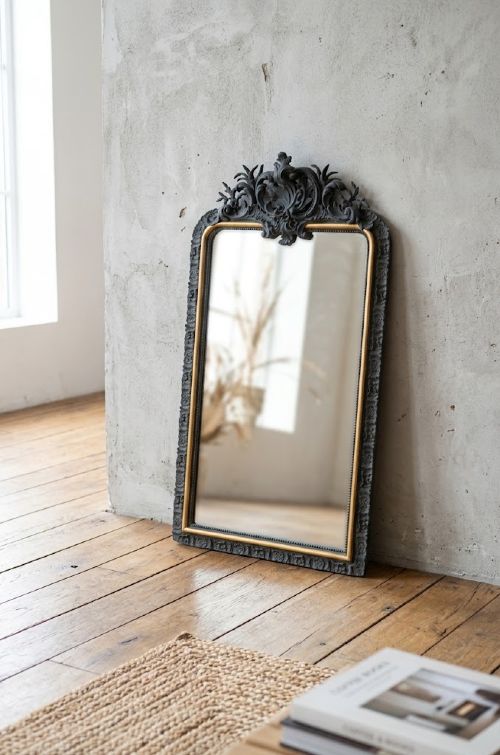
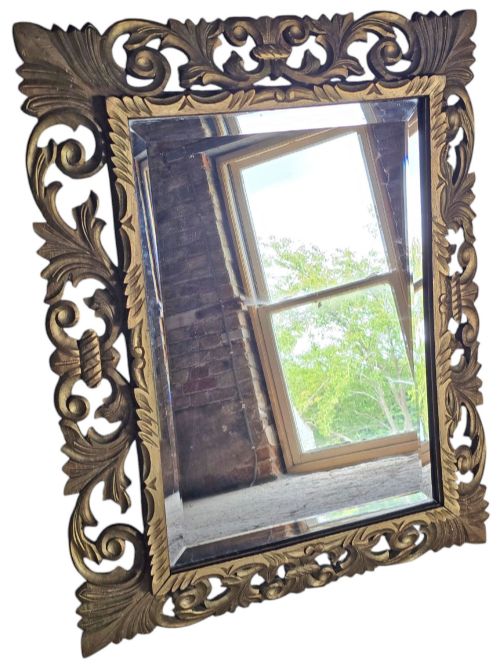
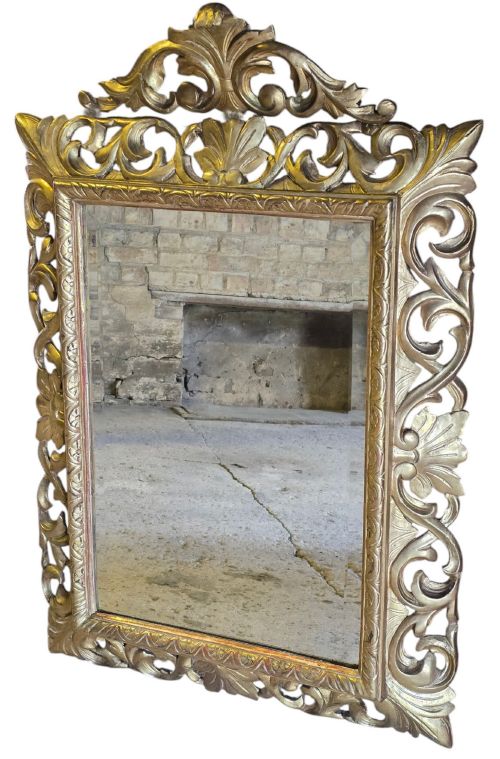
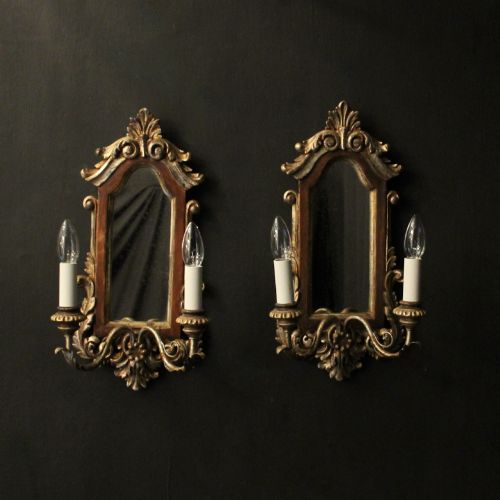
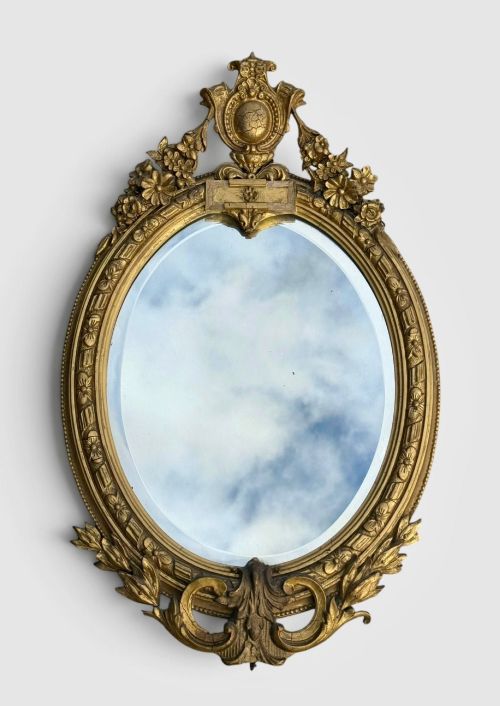
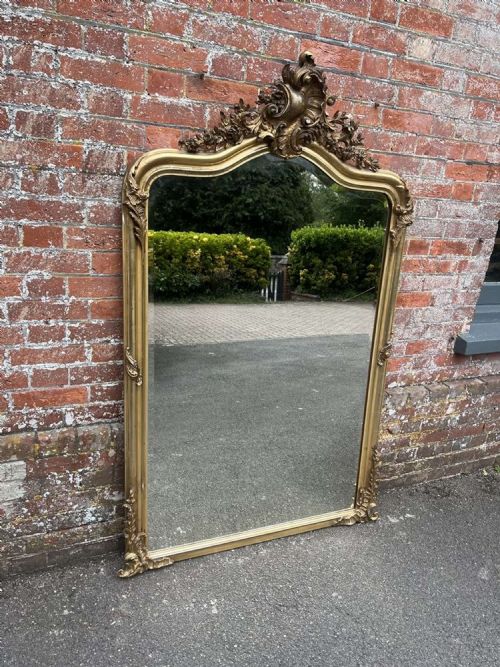
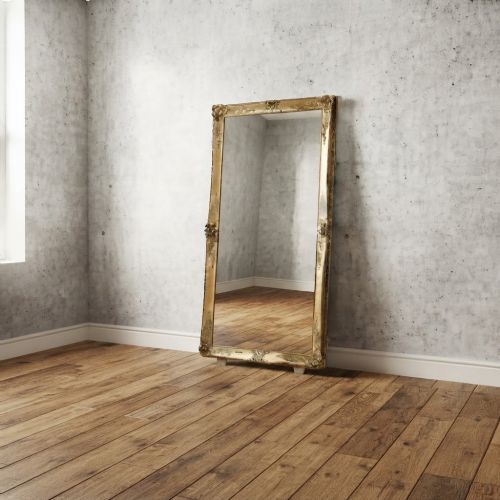
A vintage giltwood mirror encompasses wall-hanging plates, grand overmantels, convex convexities, and twin-arm girandoles designed for interior spaces. These objects appear in styles ranging from Rococo Revival and Louis Philippe to Florentine and French Chateau, spanning the eighteenth, nineteenth, and early twentieth centuries.
The selections encountered most frequently on this page are nineteenth-century and Victorian wall or overmantel mirrors. These pieces often display ornate carved decoration, gesso mouldings, or shaped tops suited for placement above fireplaces and console tables.
Materials and construction
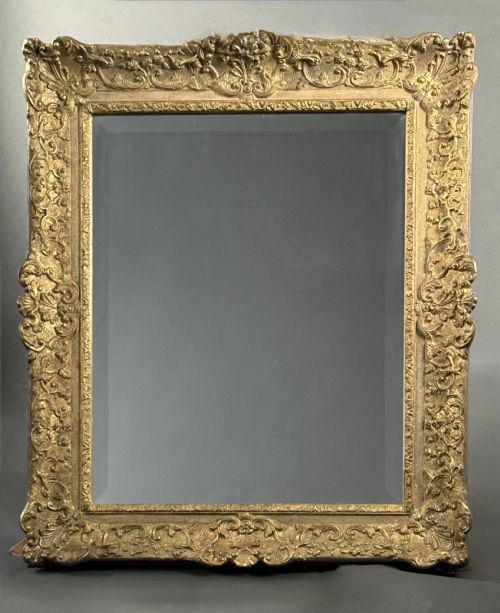
Makers constructed these frames using timber, carved wood, and composition ornament built up over a base substrate. Artisans applied layers of gesso to the carved wooden foundation to create smooth surfaces for subsequent gilding.
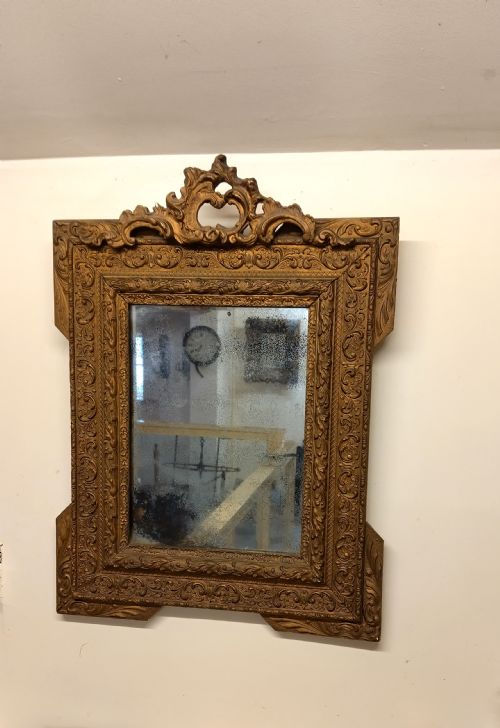
Gilding was achieved using gold leaf or painted gold finishes, sometimes paired with painted wood or walnut elements. Reflective plates included bevelled glass and early mercury glass with characteristic foxing.
Listings feature eighteenth-century walnut frames alongside nineteenth-century gesso wall mirrors and early twentieth-century Florentine pieces.
The markers of distinction
Depth and precision in the hand-carved woodwork distinguish finer examples from simpler moulded pieces. Crisp floral, scroll, or mythological motifs indicate superior craftsmanship by the workshop.
The survival of original gilding and untouched mirror plates, such as foxed mercury glass, preserves the integrity of the object. Heavier overmantels and large architectural frames demonstrate structural ambition alongside decorative refinement.
The Vintage Giltwood Mirror Glossary
- Giltwood
- Wood covered with a thin layer of gold leaf or gold paint. This finish creates a luminous metallic surface that catches interior light.
- Gesso
- A plaster-like mixture applied to wood frames and carved to form detailed relief ornamentation before gilding. It provides a smooth base for the gold leaf.
- Overmantel mirror
- A large horizontal mirror designed specifically to hang above a fireplace mantelpiece. These frames often anchor the decorative scheme of a room.
- Girandole
- A decorative wall mirror fitted with one or more candle arms or sconces attached to the frame. The reflective glass amplifies the candlelight.
- Foxing
- Small dark spots and speckling that develop within antique mirror plates over time. This chemical ageing process alters the reflective quality of the glass.
Vintage Giltwood Mirror: Frequently Asked Questions
How do I hang a heavy overmantel mirror?
Heavy overmantel mirrors require secure wall fixing into structural studs or masonry using appropriate brackets and fixings. Weight distribution across the frame structure must be carefully managed.
Professional installation is recommended for large nineteenth-century pieces to ensure the safety and stability of the wall-hanging assembly.
What is mercury glass?
Mercury glass refers to antique mirror plates produced using a tin and mercury amalgam poured behind the glass pane. This historical technique creates a distinct mottled appearance.
Modern replacement plates use silver nitrate, making original mercury glass plates desirable for historical authenticity.
How should I clean giltwood?
Giltwood surfaces require gentle dusting with a soft, dry brush to remove particles without disturbing the delicate gold leaf. Moisture and chemical cleaners can strip the historical finish.
Preserving the original gesso and gilding relies on minimal intervention and careful handling during routine maintenance.
Are these mirrors French or English?
The inventory includes both English and French regional styles, identifiable through distinct carving traditions and frame proportions. French pieces often feature Louis Philippe or Rococo Revival characteristics.
Examining the underlying timber species and construction methods helps clarify the geographic origin of an individual mirror.