
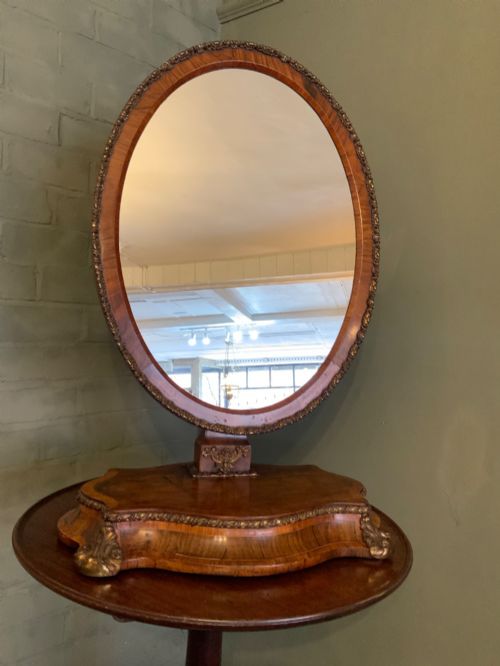
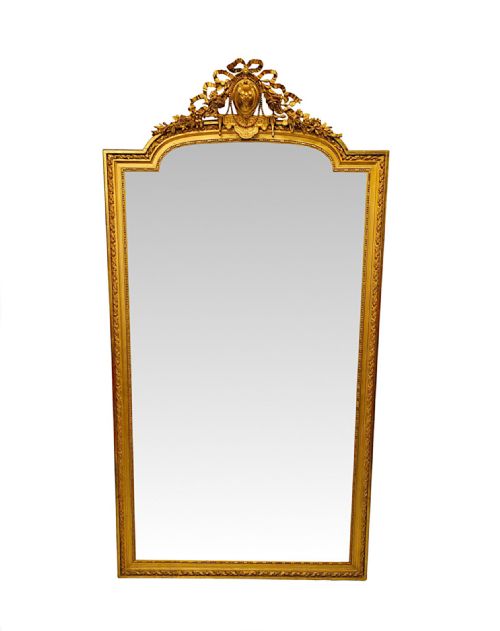
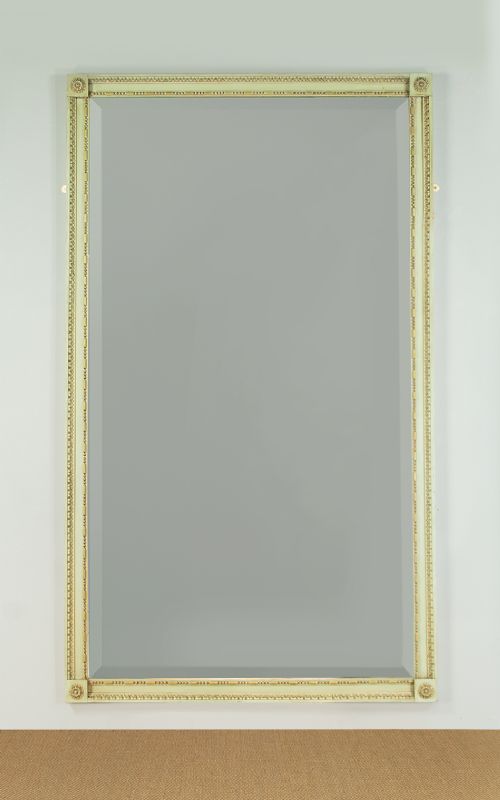
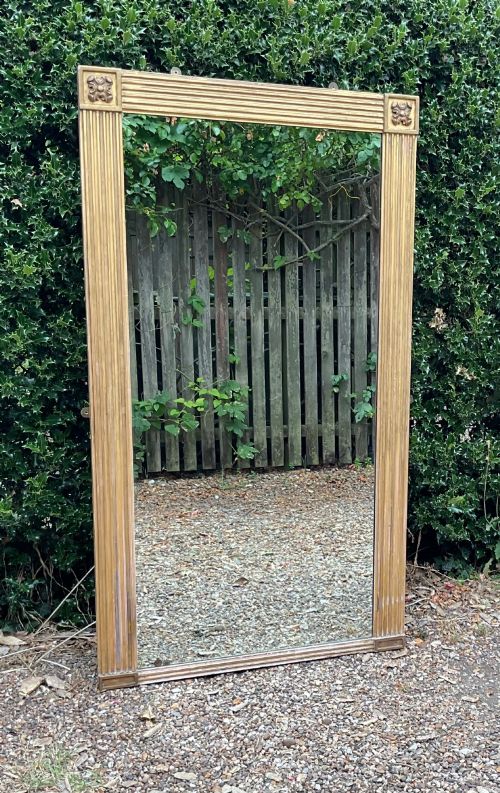

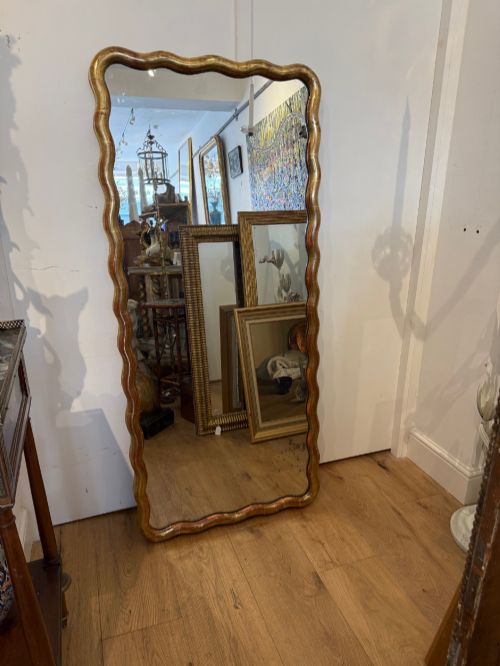


Large Gilt Dressing Mirror
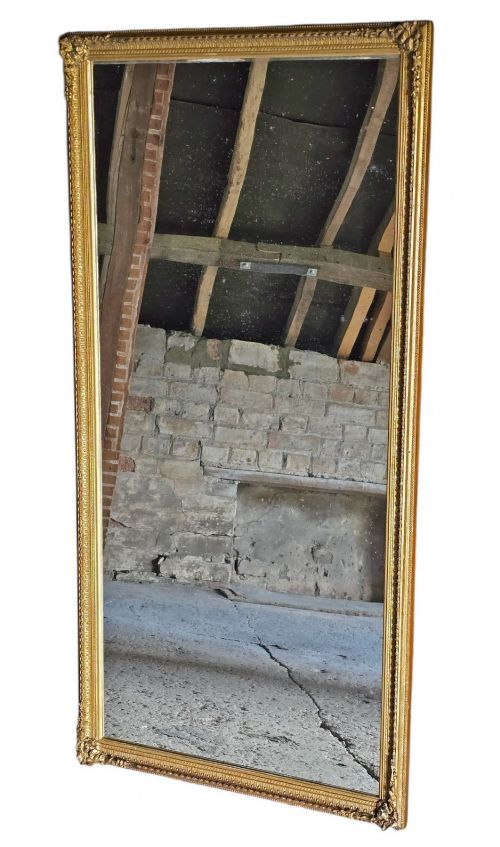
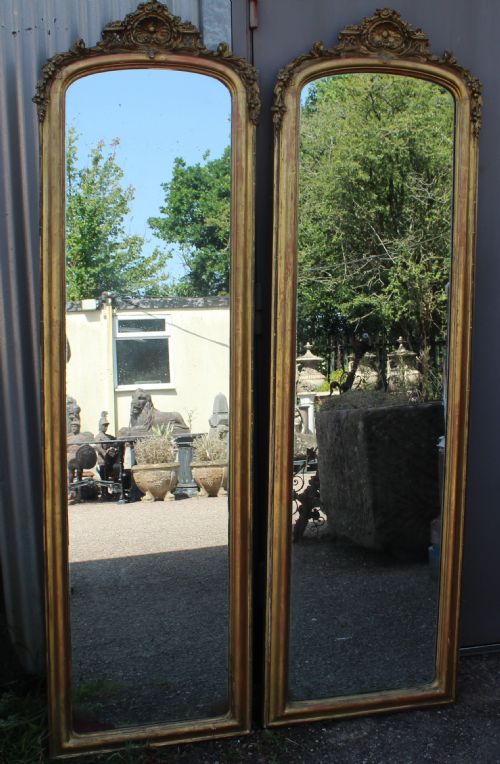
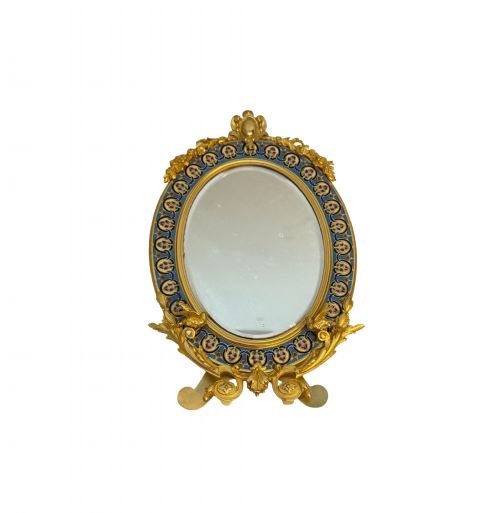
A large gilt dressing mirror brings scale and bright reflection into a room, spanning nineteenth-century revival styles and twentieth-century floor-standing designs.
Large Gilt Dressing Mirror
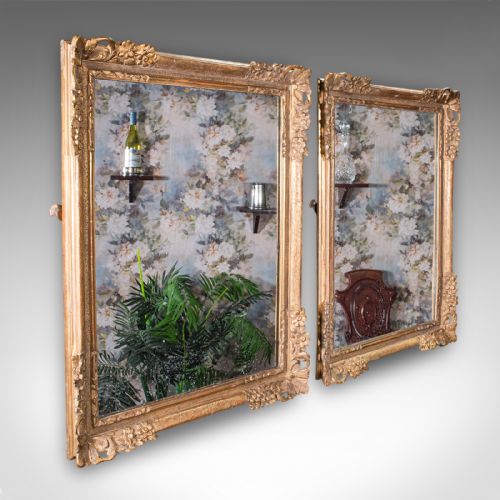
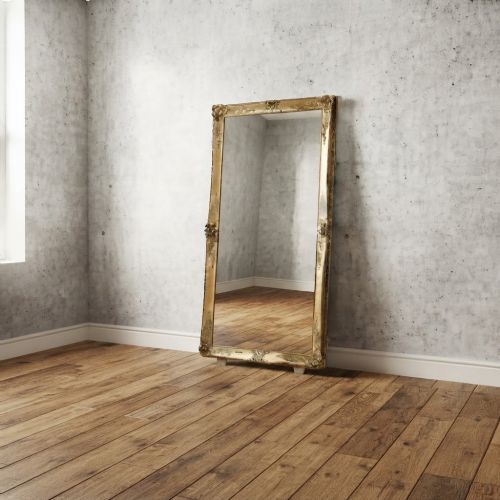
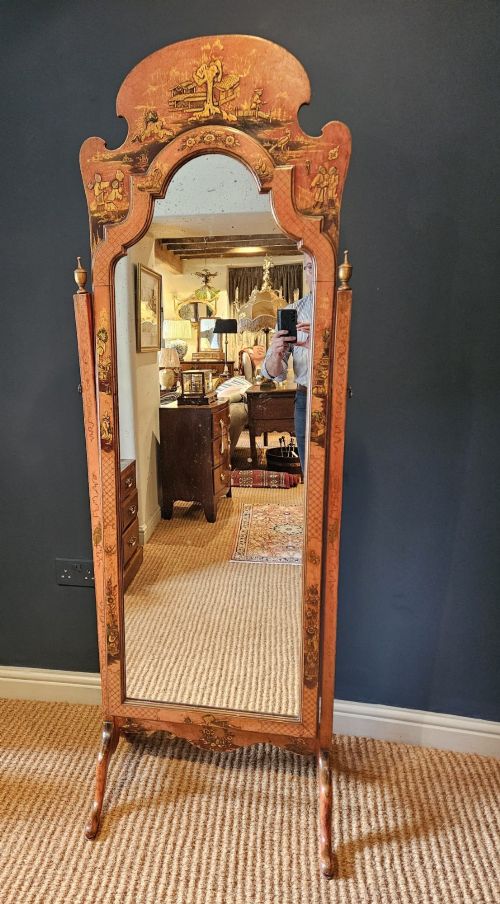
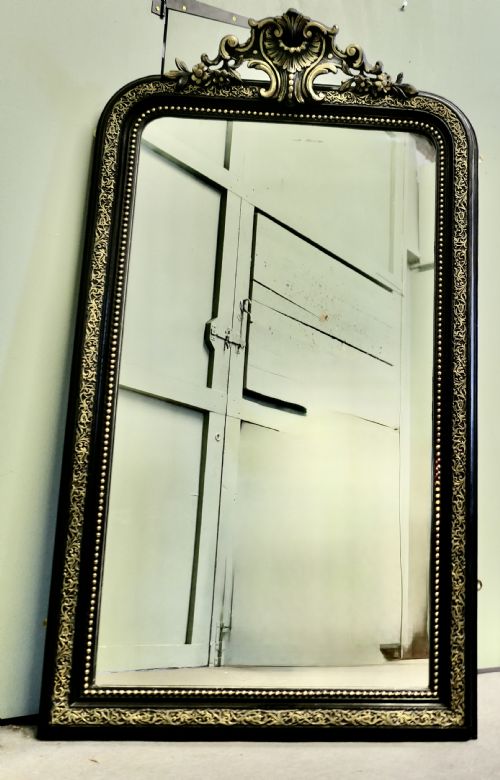
A large gilt dressing mirror combines functional reflection with substantial decorative presence, appearing across nineteenth-century and early twentieth-century periods. Buyers searching for a large gilt dressing mirror encounter formats ranging from tall cheval frames to wall-mounted dressing glasses and full-height leaner mirrors.
The selections span English and Continental workshops, drawing on French Rococo, Regency, and Edwardian design vocabularies. These pieces function as architectural anchors in bedrooms and dressing rooms, utilising gold leaf, gesso, and carved wood to catch the light.
How they were made
Frames are constructed primarily from carved wood, often built up with gesso layers to receive gold leaf or composition ornament. Artisans carved intricate floral, scroll, and architectural motifs by hand before applying gilding or paint finishes.
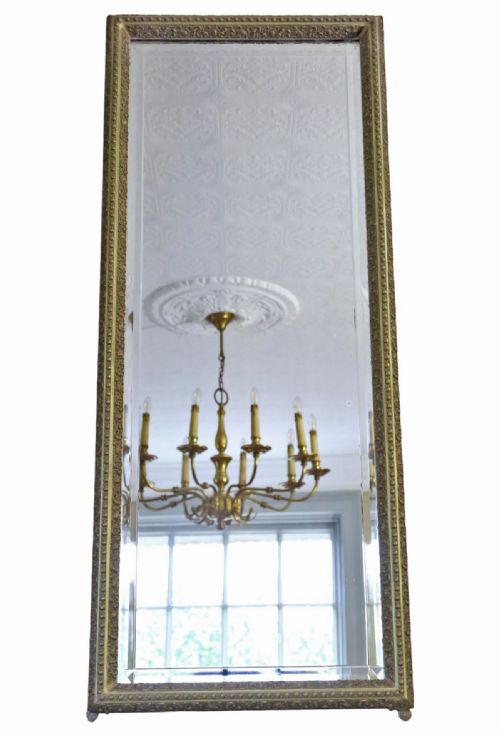
Mirrors utilise glass plates, frequently featuring bevelled edges that refract light at the margins. Older examples retain original silvered glass, showing the subtle foxing and depth characteristic of nineteenth-century manufacture.
Listings feature pieces spanning the nineteenth century, the Regency period, and early twentieth-century decades up to 1920.
What varies in quality
The distinction between tiers rests upon the crispness of the carved ornament and the integrity of the original surface finish. Hand-carved wooden frames with layered gold leaf display sharper relief and deeper warmth than later composition-heavy castings.
Proportion and glass preservation also divide the standard of pieces, where surviving original bevelled plates and uncompromised structural joints elevate the overall coherence of the mirror.
The Large Gilt Dressing Mirror Glossary
- Giltwood
- Wood carved and coated with gold leaf. This surface treatment provides the bright, metallic finish characteristic of period frames.
- Gesso
- A plaster-like mixture applied to wood frames. Artisans carve and mould this material to create raised decorative details before gilding.
- Cheval mirror
- A freestanding full-length mirror hung on a central pivot between two upright posts. This design allows the glass to tilt at various angles.
- Bevelled glass
- A mirror glass pane with edges cut and polished at an angle. This technique creates a framed border effect that catches ambient light.
- Pier glass
- A tall mirror designed to hang on the wall between windows. These pieces often sit above low console tables to maximise room illumination.
Large Gilt Dressing Mirror: Frequently Asked Questions
Where should I place a large dressing mirror?
These mirrors suit bedrooms, dressing rooms, and hallways where height and reflected light expand the sense of space.
Leaner versions rest securely against walls, while cheval formats stand independently on their own frames.
How do I identify a nineteenth-century frame?
Nineteenth-century examples typically show hand-carved wooden construction beneath gesso and gold leaf layers, often with heavier proportions.
Look at the reverse for older timber construction boards and traditional fixings that indicate period assembly.
What is the difference between a wall and cheval mirror?
Wall mirrors mount directly onto vertical surfaces, functioning as permanent fixtures in a room scheme.
Cheval mirrors feature a pivoting frame supported by floor stands, allowing the user to adjust the viewing angle.
Are the mirror plates original?
Many period pieces retain their original glass, which can exhibit light oxidation or foxing spots.
Original plates offer a softer, deeper reflection compared to modern replacement mirror glass.