
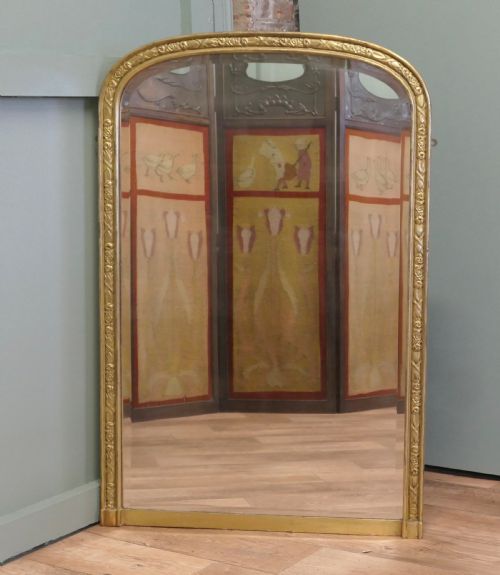
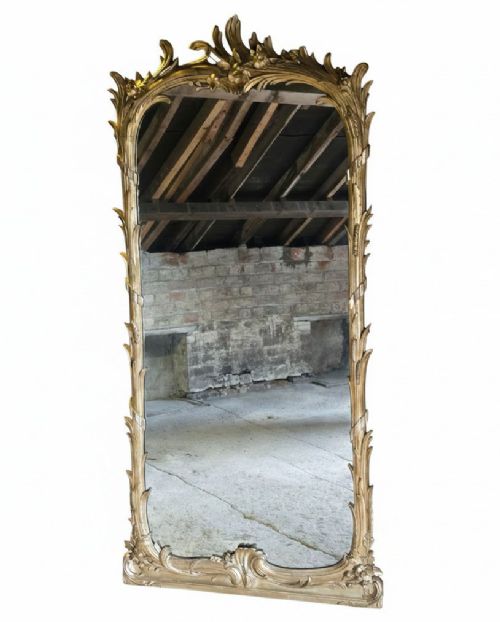
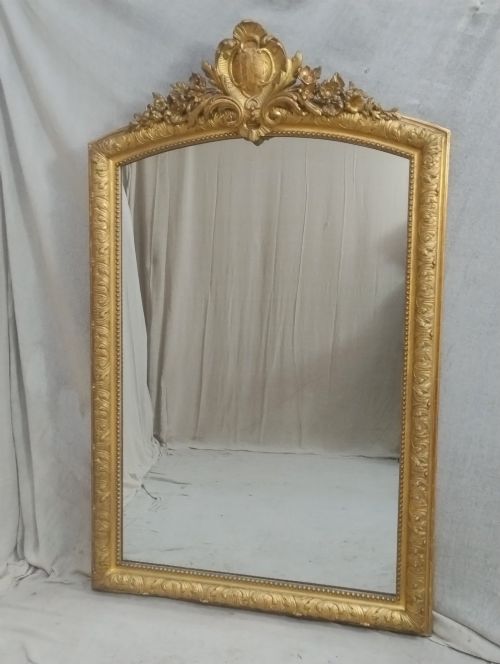
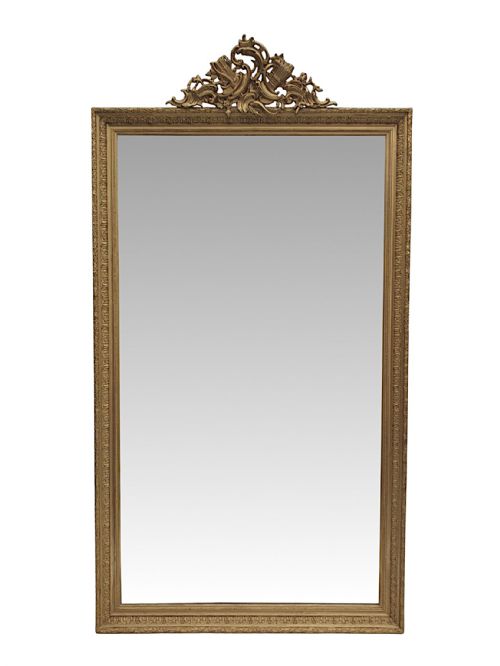
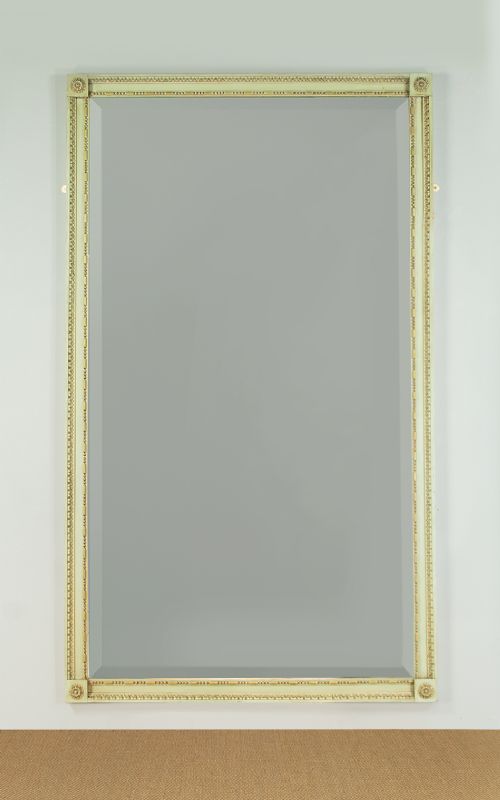
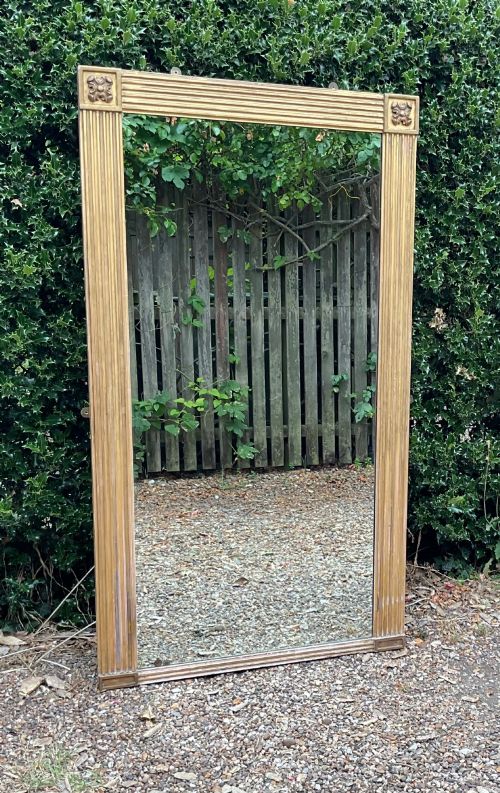
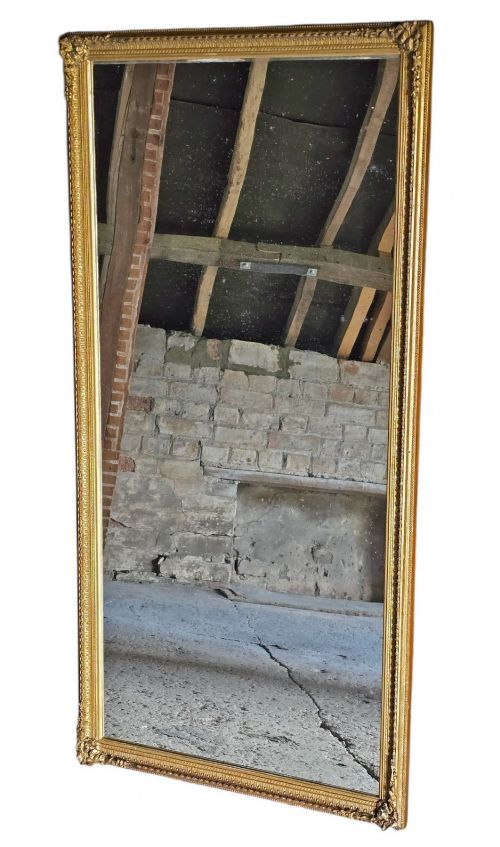
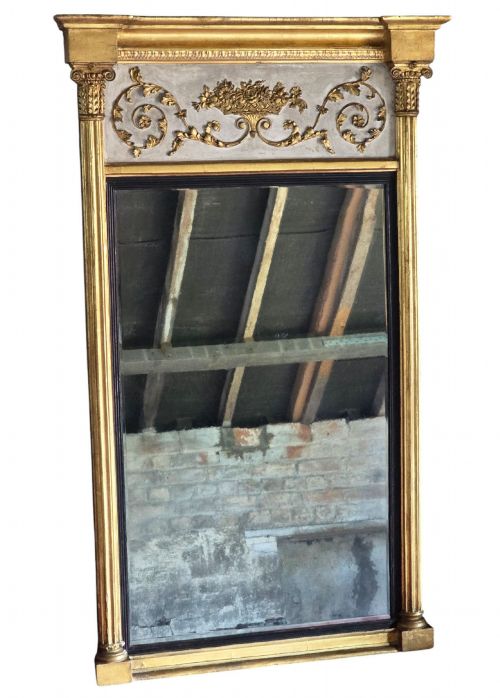
Tall Gilded Mirror
A tall gilded mirror brings light and scale to a room, using gold leaf and glass to anchor a high wall.
What They Are
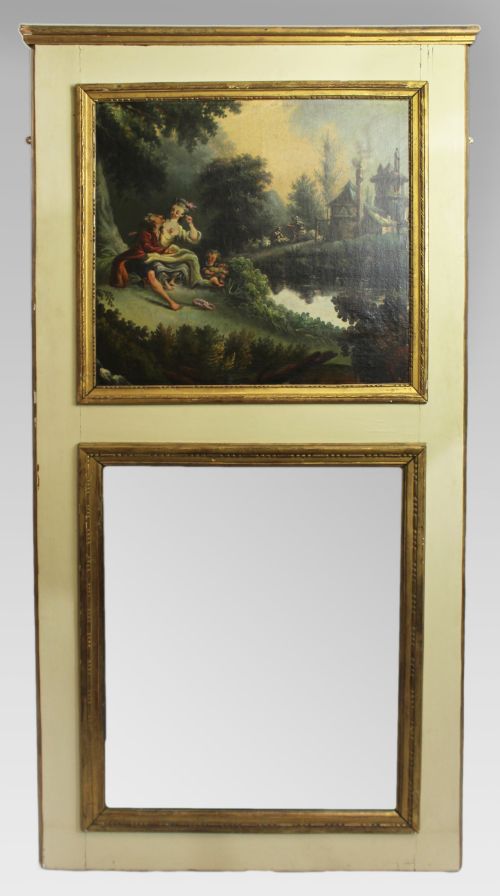
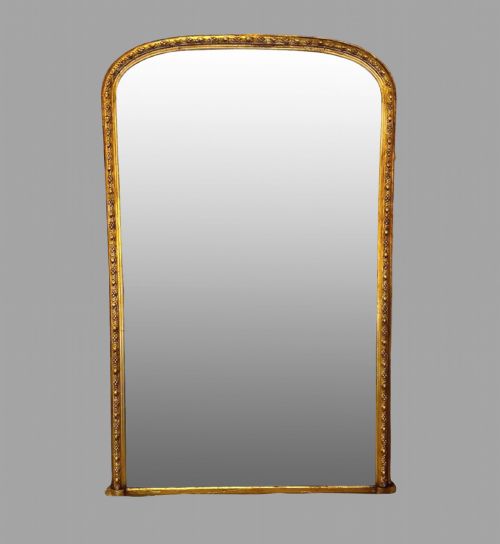
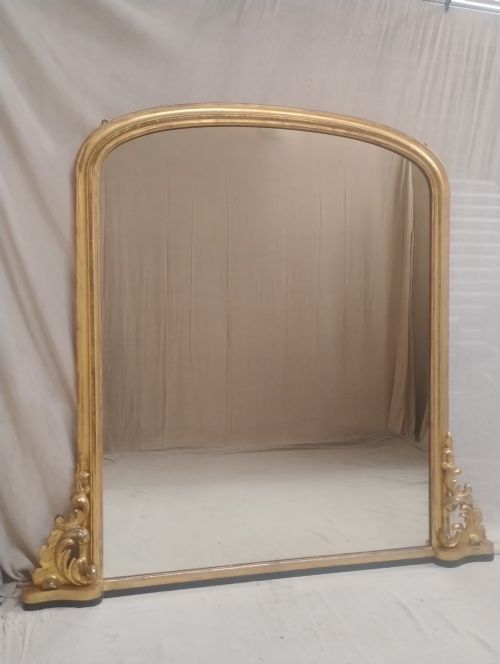
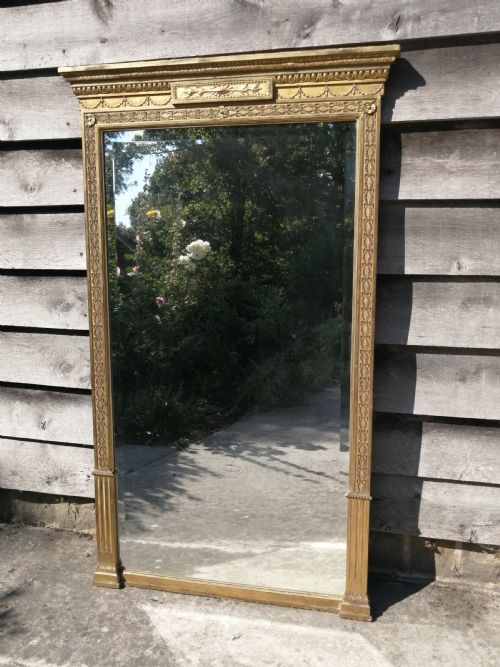
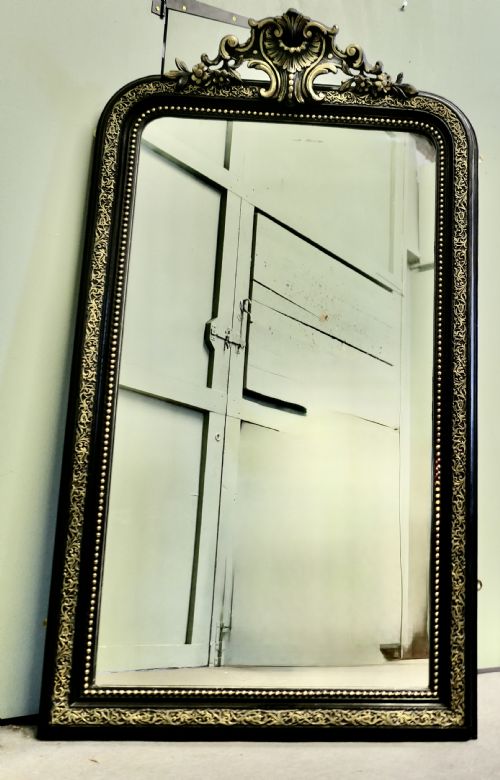
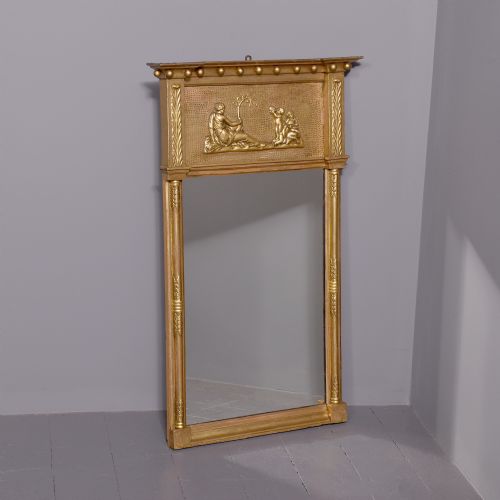
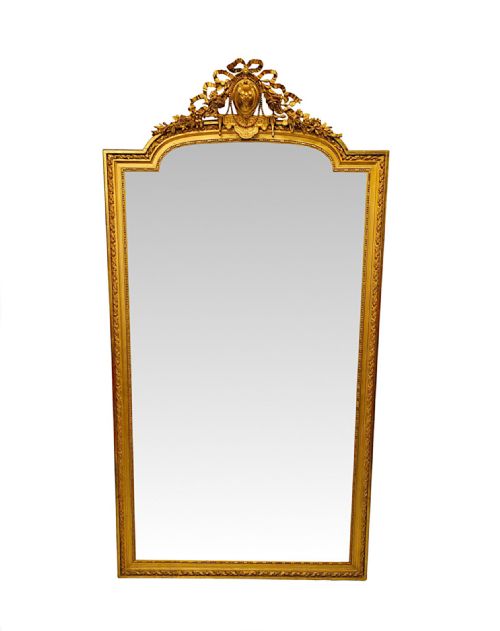
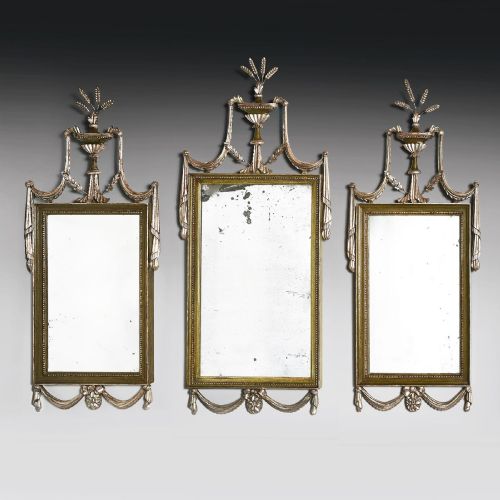
A tall gilded mirror captures vertical space, functioning primarily as a wall mirror or pier mirror in nineteenth-century interiors. These pieces bring height and reflective depth to reception rooms and hallways.
The selections available here span the nineteenth century, including specific pieces dated to eighteen sixty and eighteen seventy-one. Surviving examples reflect French and Swedish design traditions alongside English craftsmanship.
Makers designed these tall formats to sit between windows or above mantelpieces, shaping rooms through gilded surfaces and architectural proportions.
How They Were Made
Craftsmen built these frames using timber such as ebonised wood, applying layers of gesso to prepare the surface for gilding. Artisans laid gold leaf over these prepared grounds to achieve a brilliant metallic finish.
Moulded composition ornament often embellished the wooden structures, creating relief details in styles reminiscent of French Louis XIV and Neoclassical design. Glass plates, sometimes paired with eglomise panels, completed the construction.
Retail Price Guide 2026
Typical UK retail prices for tall gilded mirror, calculated from the Sellingantiques database of over a million retail prices indexed since 2003. This retail price guide relies exclusively on Sellingantiques data; no external sources or auction records are used, so the figures do not describe the wider market.
What Varies in Quality
The sophistication of the gesso work and the crispness of the applied composition ornament distinguish finer frames from simpler ones. Superior pieces display hand-carved elements and well-preserved gold leaf that reflect disciplined workshop practices.
The treatment of the glass plate itself alters the character of the object, with eglomise decoration and original silvering adding distinct visual depth. The integration of ebonised wood details within the gilt framework also signals thoughtful design choices.
The Tall Gilded Mirror Glossary
- Giltwood
- Timber covered with a thin layer of gold leaf. This material forms the primary structure of many nineteenth-century frames.
- Pier Mirror
- A tall mirror designed to hang on the wall space between two windows. These pieces often sat above low console tables.
- Eglomise
- Cold painting and gilding on the reverse of glass. This technique creates decorative panels with a reflective, deep sheen.
- Gesso
- A plaster mix applied to wood frames to create a smooth base. Artisans carved and gilded this substance to form ornaments.
- Composition
- A moulded mixture of whiting, resin, and oil pressed into shape. Makers used this material for repeatable decorative details.
Frequently Asked Questions
Where should I hang a tall gilded mirror?
These mirrors suit high walls in reception rooms, hallways, and drawing rooms where vertical space allows the frame to command the room.
Historically, craftsmen placed pier mirrors between windows to bounce natural light back into the interior.
How do I identify a nineteenth-century mirror?
Examine the construction methods, such as the use of gesso over timber and the composition of the frame ornaments. Nineteenth-century examples often feature specific stylistic markers like French Neoclassical or Grand Regency motifs.
The presence of original glass and traditional gilding techniques further helps date the piece to this era.
What is eglomise?
Eglomise is a decorative technique involving painting and gilding on the reverse side of glass panels. It produces a glossy, dark finish that contrasts with bright gold leaf.
This method appears on selected nineteenth-century mirrors to frame the main reflective surface.
Are these mirrors heavy?
The combination of timber, gesso, composition ornaments, and thick glass plates makes these large frames substantial in weight. Proper wall fixings are essential to support the load safely.
Professional installation ensures the mirror hangs securely against the wall.