




Eglomise Glass Mirror
An eglomise glass mirror brings together gilded frames and reverse-painted panels to create a striking focal point for any room.
Eglomise Glass Mirror
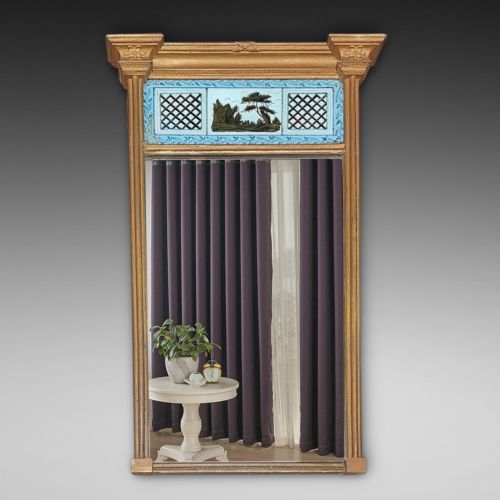
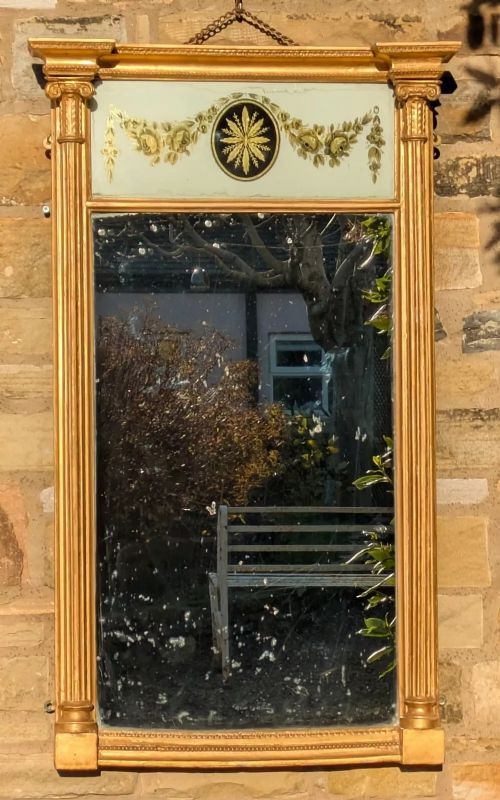
An eglomise glass mirror combines traditional framing with decorative reverse-painted glass panels, typically positioned above the main plate. The selection here spans the Regency, nineteenth century, and Victorian periods, showcasing wall mirrors and pier mirrors in distinct historical styles.
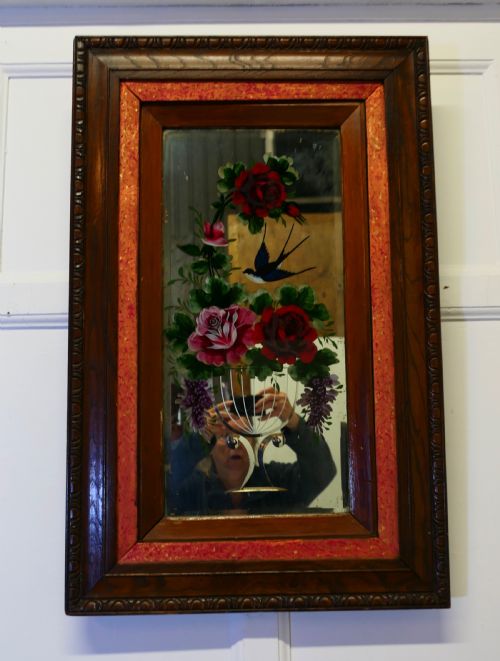
Most examples encountered on this page belong to the Regency period, often featuring rich giltwood frames alongside classical eglomise decoration. Alongside these, nineteenth-century French and Victorian pieces introduce alternative stylistic interpretations like French Rococo Revival.
The form functions primarily as a wall-hanging pier mirror, designed to sit between windows or above mantelpieces. Surviving examples demonstrate how these decorative panels were integrated into domestic interiors across multiple generations.
How they were made
Maker construction relies on timber frames built from wood, finished with layers of gesso and applied gold leaf or paint to achieve a giltwood surface. Artisans shaped these frames in characteristic Regency and Victorian profiles to house both the primary mirror plate and the upper decorative panel.
The eglomise technique involves painting and gilding directly onto the reverse side of glass, creating a reflective, metallic finish when viewed from the front. Surviving pieces incorporate mirror glass, mirror plate, and specialised paint or gold leaf applied directly to the glass substrate.
Listings feature items from the Regency, 19th Century, and Victorian periods, constructed from materials including giltwood, gesso, and painted glass.
What varies in quality
Quality rests upon the execution of the reverse-painted glass panel and the crispness of the giltwood or gesso carving on the frame. Finer examples display meticulous brushwork and precise gilding that retain their lustre across centuries.
The proportion between the mirror plate and the eglomise panel determines the visual balance of the piece. Superior construction maintains structural integrity within the wooden frame while preserving the delicate painted details on the glass.
The Eglomise Glass Mirror Glossary
- Eglomise
- A decorative technique involving painting and gilding on the reverse of glass. This method produces a rich, reflective finish used for panels in mirrors and furniture.
- Pier mirror
- A tall wall mirror designed specifically to hang on the pier of wall space between two windows. These pieces often incorporate decorative panels above the main glass.
- Giltwood
- Timber that has been coated with gold leaf or gold paint. It provides the bright, reflective framing characteristic of Regency and nineteenth-century mirrors.
- Gesso
- A plaster-like mixture applied to wooden frames as a base for gilding. It allows craftsmen to carve intricate details before applying gold leaf.
- Trumeau
- A decorative wall mirror or panel featuring a painted or carved scene above the glass. These items often integrate architectural elements into interior schemes.
Eglomise Glass Mirror: Frequently Asked Questions
Where should I hang an eglomise glass mirror?
These mirrors suit spaces with adequate wall room to display their decorated panels properly. Placing them above a mantelpiece or between windows follows traditional placement.
Ensure the wall fixings support the weight of the timber and glass construction safely.
How do I clean an eglomise glass mirror?
Clean the primary mirror plate with standard glass cleaner applied to a cloth rather than directly to the surface. Exercise extreme caution around the reverse-painted panel to avoid disturbing the historic materials.
Keep moisture away from the edges of the glass and the giltwood frame during maintenance.
What defines a Regency pier mirror?
Regency pier mirrors typically feature classical architectural motifs, giltwood frames, and vertical proportions designed for narrow wall spaces. They frequently incorporate verre eglomise panels above the main glass.
These pieces reflect the neoclassical tastes prevalent during the early nineteenth century.
How do I identify Victorian examples?
Victorian mirrors often showcase different decorative themes, such as floral motifs with roses, alongside alternative etching and painting techniques. Their styling diverges from strict Regency classical revival.
Examine the framing materials and painting style to distinguish them from earlier nineteenth-century production.