

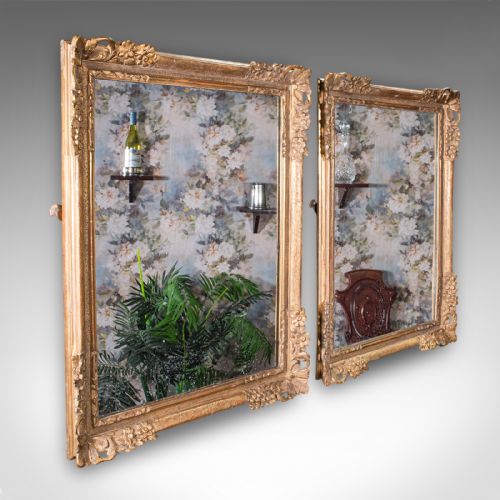
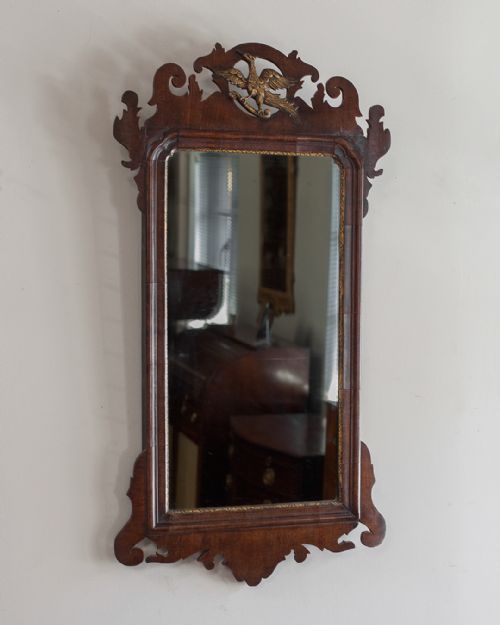
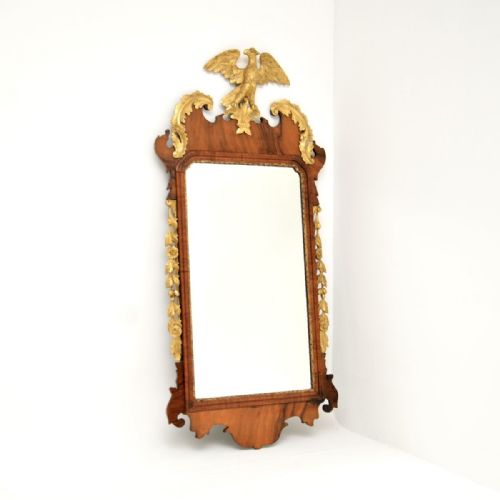
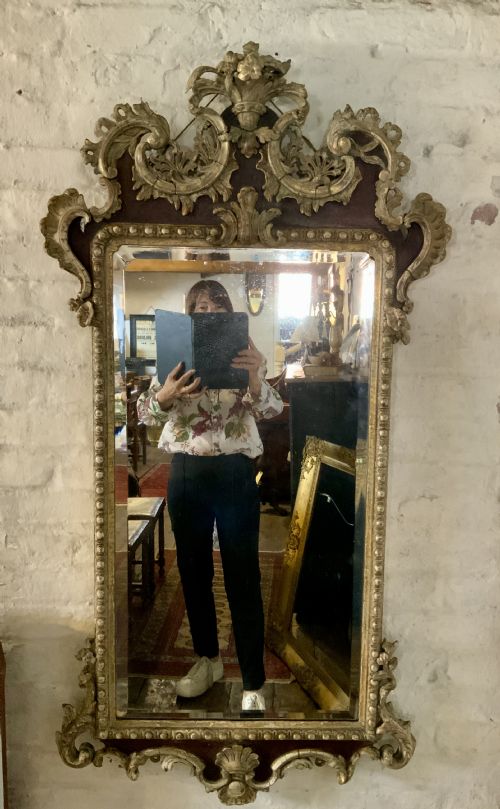
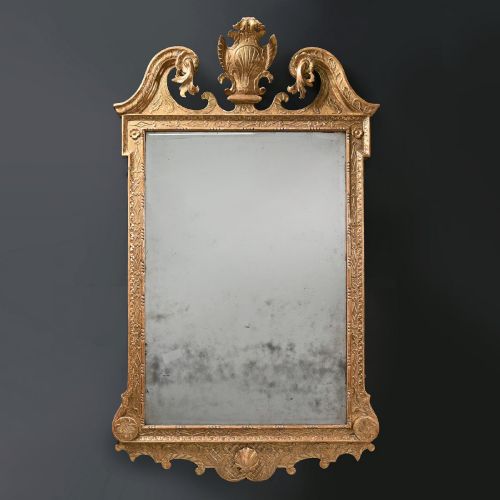
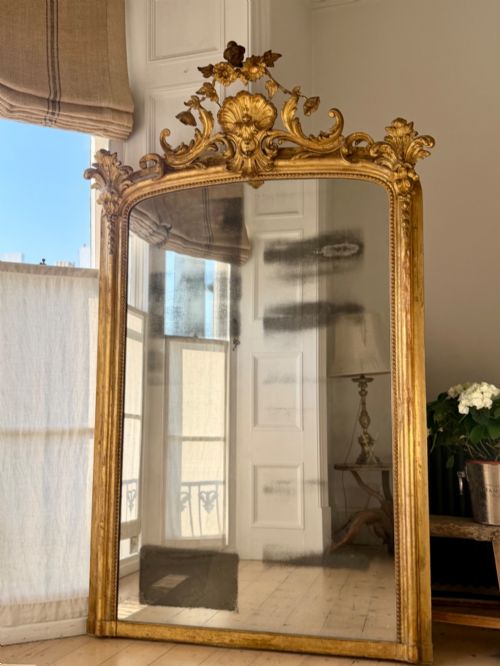
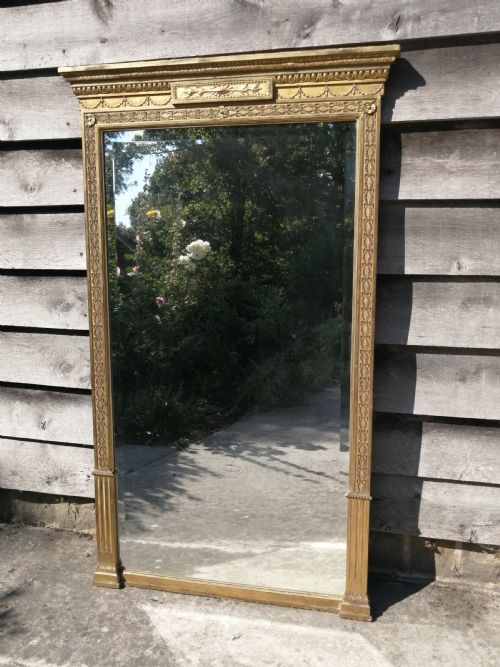
Gilded Pier Glass
A gilded pier glass brings architectural verticality and reflected light into a room, designed historically to sit between tall windows.
Gilded Pier Glass
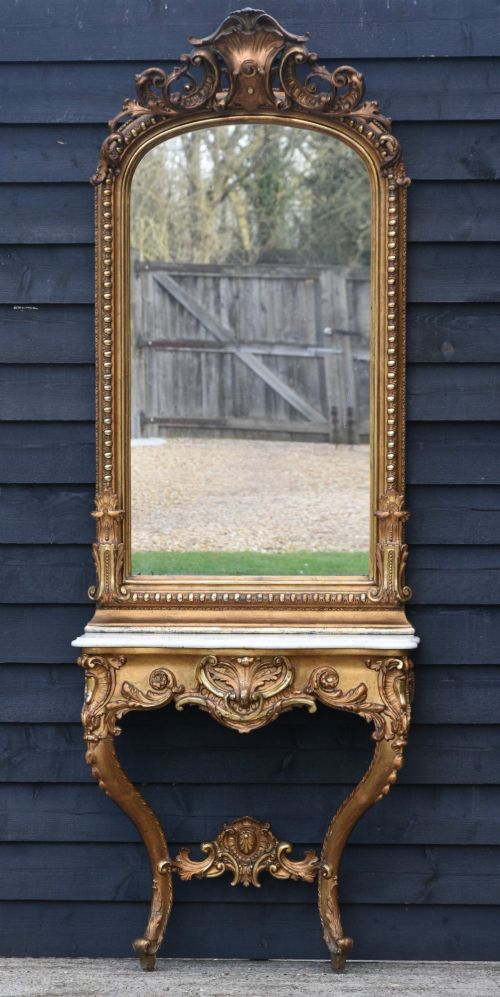
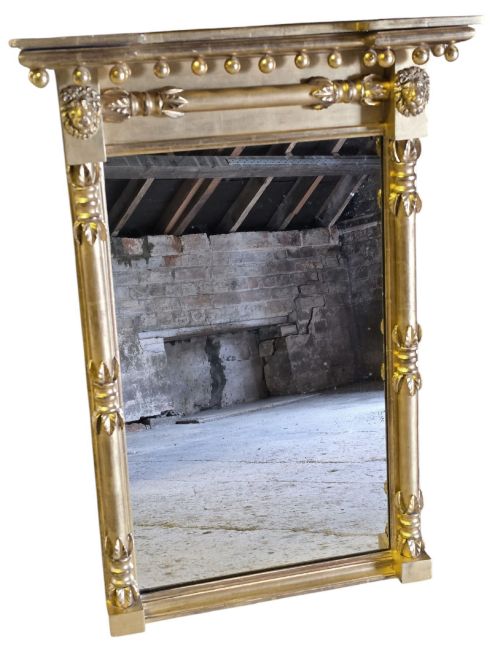
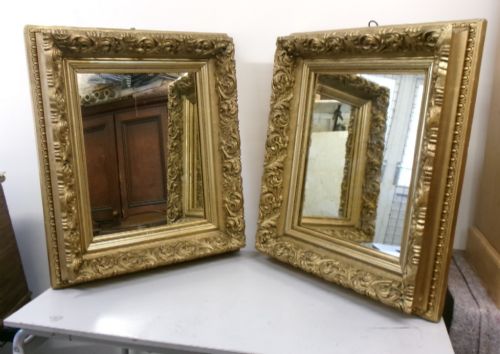
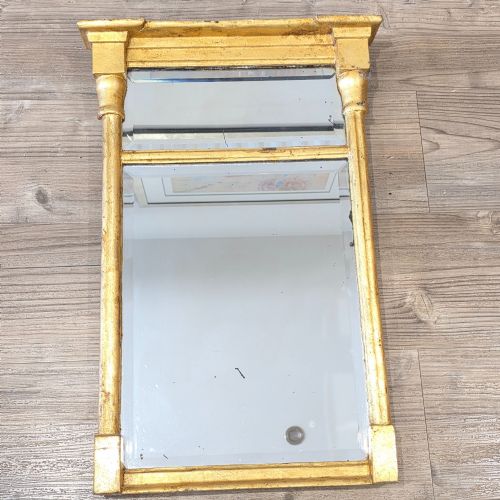
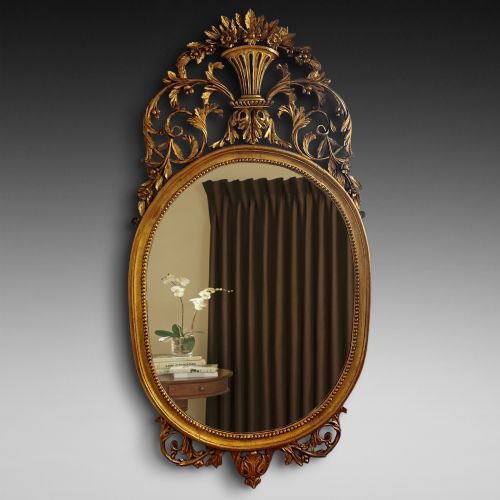
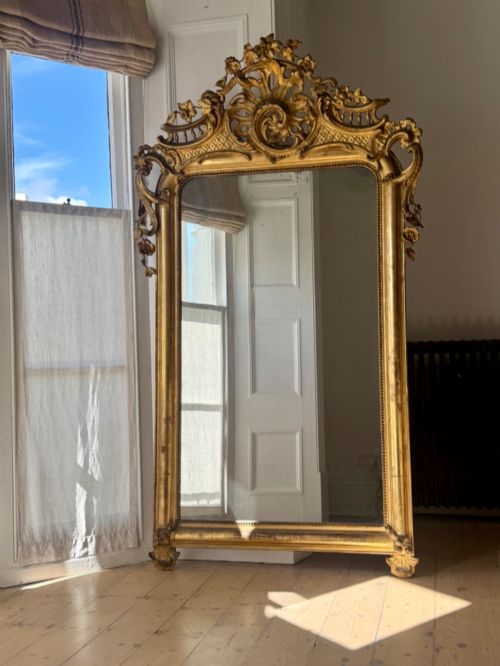
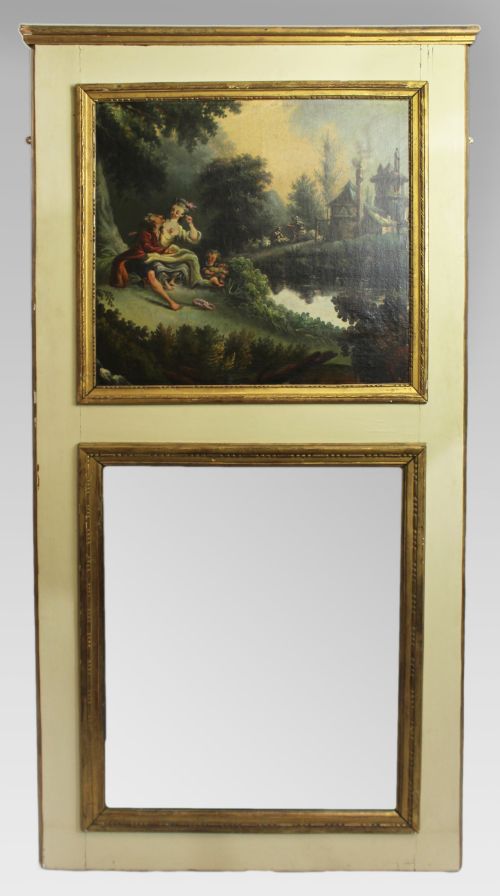
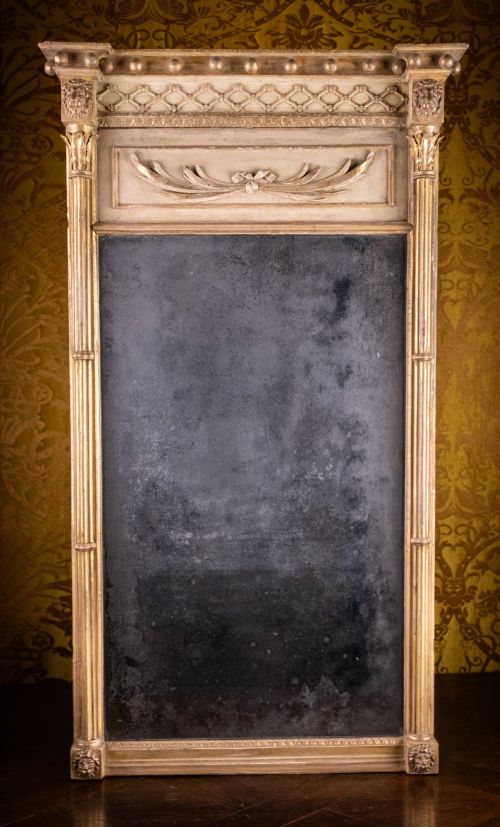
When searching for a gilded pier glass, you encounter tall, vertical wall mirrors designed to occupy the narrow strip of wall between windows or above console tables. The examples available span the 18th, 19th, and early 20th centuries, taking forms such as Regency convex plates, French trumeaus with integrated oil paintings, and neoclassical revival frames.
Many of these pieces incorporate console tables or feature specialised panels above the main plate, including verre eglomise or pastoral oil scenes. The decorative vocabulary ranges from restrained George III mahogany and parcel-gilt outlines to exuberant French Rococo and Grand Regency giltwood carvings incorporating lion masks and gilt composition ornaments.
Materials and Construction Methods
Makers constructed the primary frames using timber substrates such as mahogany, walnut, or pine, onto which they applied layers of gesso to build up intricate relief ornament. Gilding involved laying gold leaf over a prepared ground, or utilising silvered and painted finishes depending on the stylistic period.
Mirror plates in older examples frequently consist of mercury glass or early hand-silvered float glass displaying natural foxing and age spots. Secondary decorative elements often rely on composition, a moulded putty-like material pressed into wooden moulds to replicate hand carving.
Listings feature periods from the 18th century through to the Edwardian era, incorporating giltwood, mahogany, walnut, and mercury glass.
Distinctions in Execution and Age
Quality rests in the depth and crispness of the carved wooden enrichment compared to the repetitive uniformity of moulded composition ornament. Early examples demonstrate hand-carved gesso work over sound timber frames, whilst later revival pieces often rely heavily on applied compa and simpler softwood foundations.
The integrity of the glass plate itself distinguishes pieces, with original mercury plates and verre eglomise panels holding greater historical authenticity than later replacement mirror glass. Furthermore, the precision of the joinery and the original retention of the gilding layers govern the overall calibre of the looking glass.
Gillows Of Lancaster·John Belchier·William Kent
The Gilded Pier Glass Glossary
- Pier glass
- A tall mirror specifically designed to hang on the wall space between two windows. These vertical looking glasses often match the height of adjacent casements to maximise reflected daylight.
- Gesso
- A plaster-like mixture applied to wood frames to create a smooth surface for gilding or deep relief carving. It allows craftsmen to model crisp botanical and architectural motifs.
- Verre eglomise
- A cold decoration technique where artists paint and gild on the reverse side of glass panels. It frequently appears in the upper frieze of Regency pier mirrors.
- Trumeau
- A decorative architectural mirror fitted with an oil painting or panel within the upper section of the frame. Originating in France, these pieces combine wall art and reflection.
- Parcel-gilt
- A finish where portions of a dark wood surface, such as walnut or mahogany, are selectively highlighted with gold leaf. This technique contrasts natural timber grain with gilded accents.
Gilded Pier Glass: Frequently Asked Questions
Where should I hang a pier glass?
Traditionally, these tall mirrors were positioned on the narrow wall between two windows, known as the pier. This placement bounced daylight back into deep, candle-lit rooms.
In modern interiors, they function equally well above low sideboards, console tables, or as focal points on narrow expanses of hallway wall.
What is foxed glass?
Foxing refers to the dark spots, speckles, and cloudy oxidation that develop behind the reflective silver or mercury backing over centuries of exposure to air and moisture.
Collectors prize genuine foxing as a primary indicator of antique authenticity and age, distinguishing original plates from modern glass replacements.
How do I date a gilded mirror?
Dating relies on examining the frame construction, the type of wood used behind the gesso, and the manufacturing characteristics of the glass plate. Georgian and Regency pieces exhibit distinct neoclassical or carved motifs, whereas 19th-century interpretations frequently lean into revival styles.
Backboards, screw types, and the method of holding the mirror plate in place provide additional chronological clues for the expert.
Can these mirrors stand on a floor?
Most pier glasses were engineered to be secured directly to the wall, sometimes resting above a matching console table rather than supporting their own weight on the floor. While some taller dressing or cheval formats exist, wall hanging remains the standard method of display for stability and correct viewing height.