


French Chateau Pier Mirror
A french chateau pier mirror brings tall vertical glass, carved gesso and gilded frames into high-ceilinged rooms.
French Chateau Pier Mirror
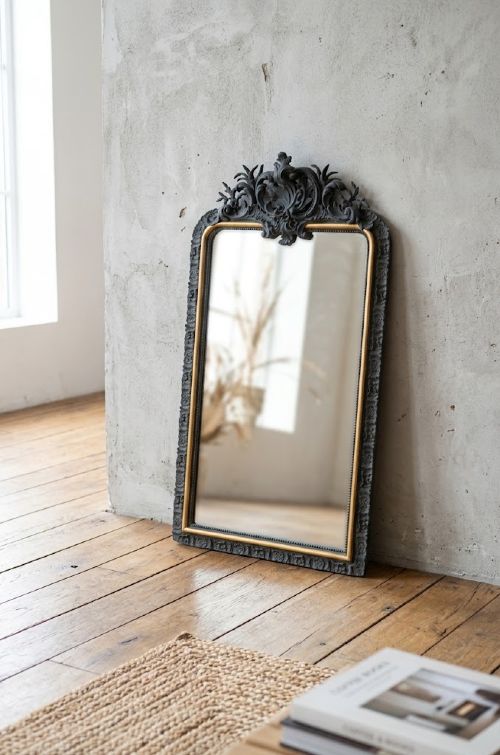
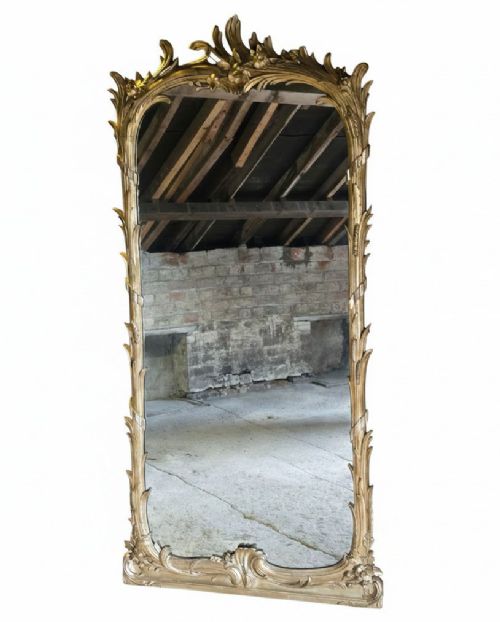
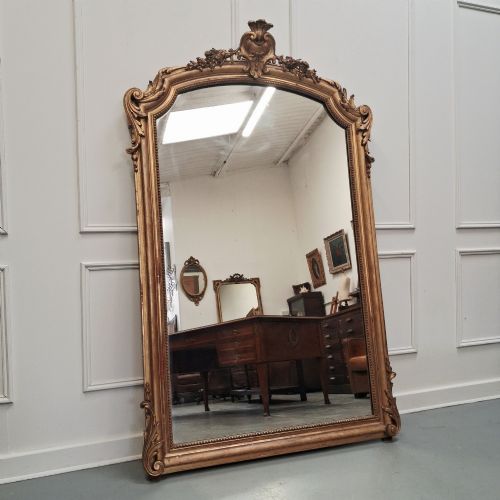
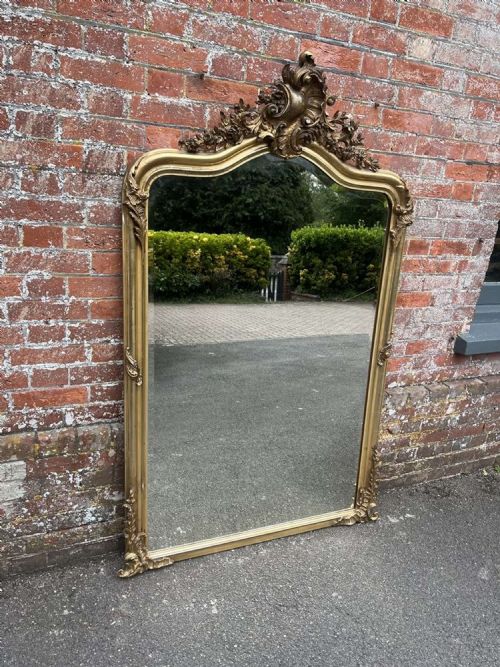
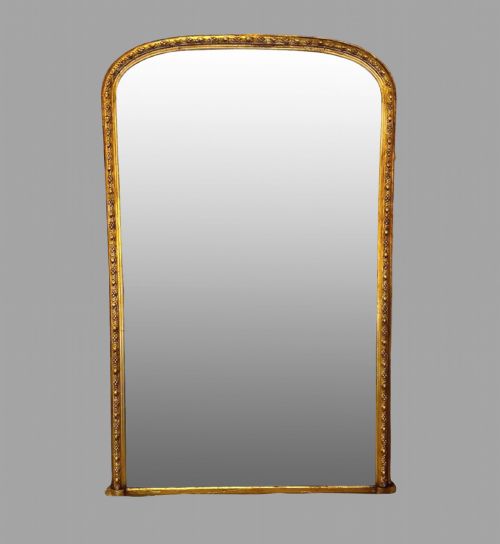
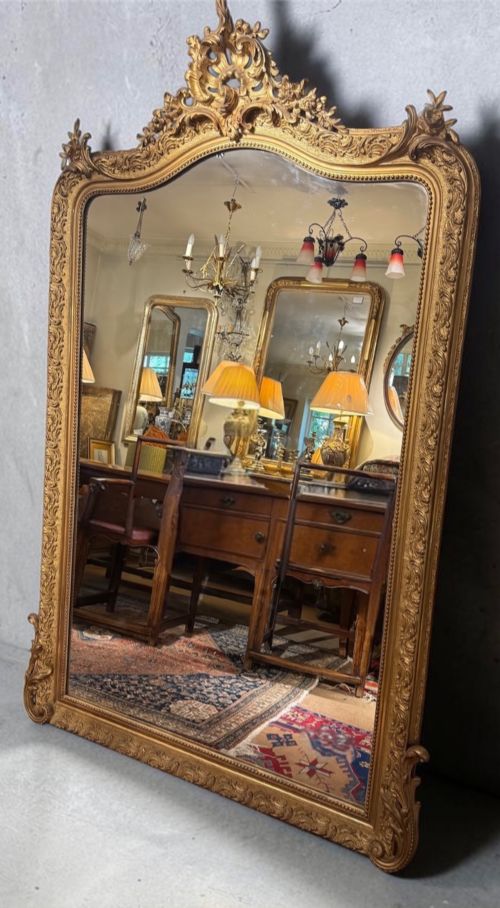
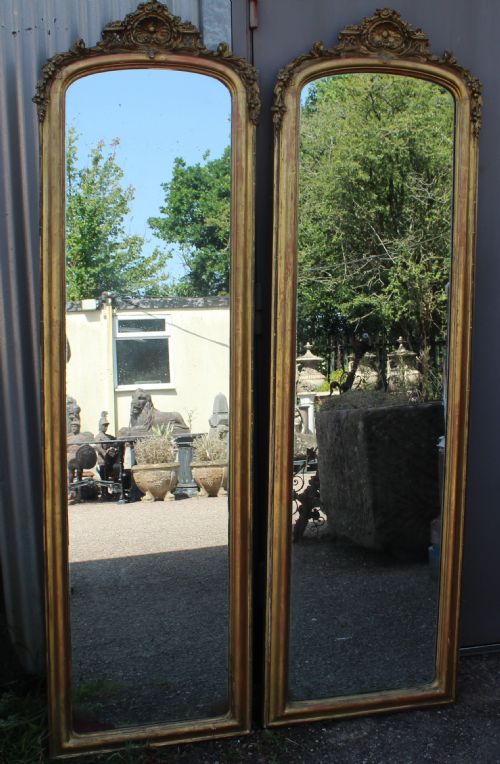
A french chateau pier mirror is a tall vertical wall glass designed to hang on the narrow wall pier between windows or above a console table. The listings here show substantial heights often stretching past one and a half metres, built to bounce daylight around formal drawing rooms.
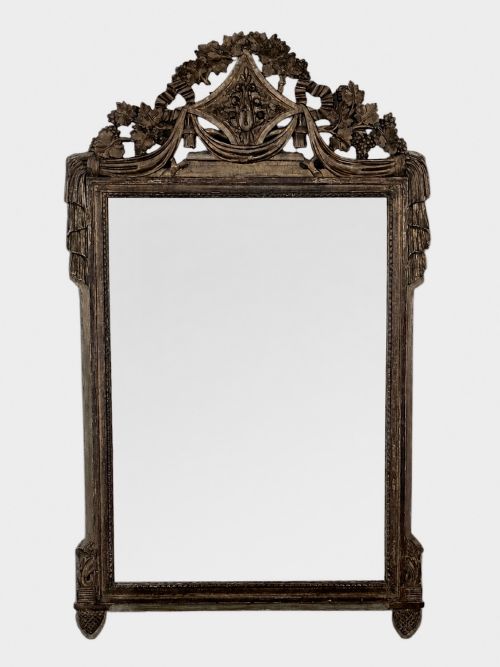
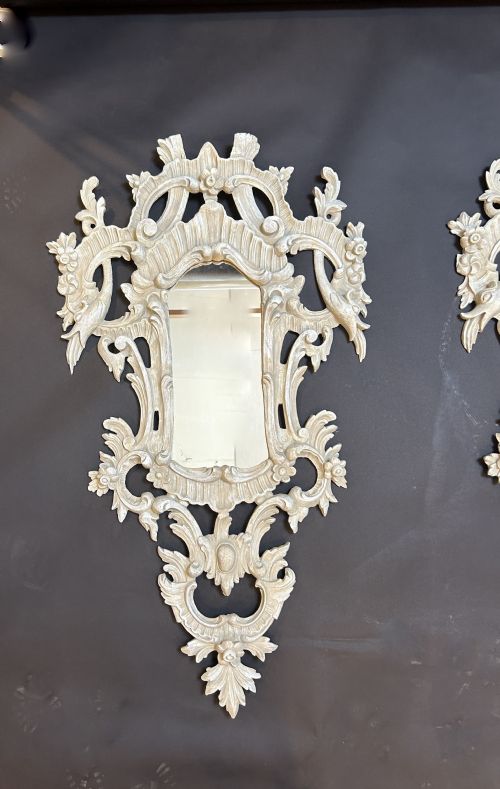
Most examples date from the nineteenth century, appearing alongside eighteenth-century precursors and early twentieth-century revivals. Forms range from simple country trumeaux to ornately carved giltwood showpieces decorated with classical motifs and ribbon crests.
Makers and workshops drew on classical vocabularies, producing pieces styled after Louis XV and Louis XVI reigns. Buyers will encounter tall rectangular plates, arched tops and painted wood surfaces alongside the more common gilded finishes.
Materials and construction
Carved wood provides the structural skeleton for these tall frames, often layered with gesso to build up crisp relief detail before gilding or painting. Artisans applied gold leaf over the prepared ground or used paint in olive green and parcel gilt schemes.
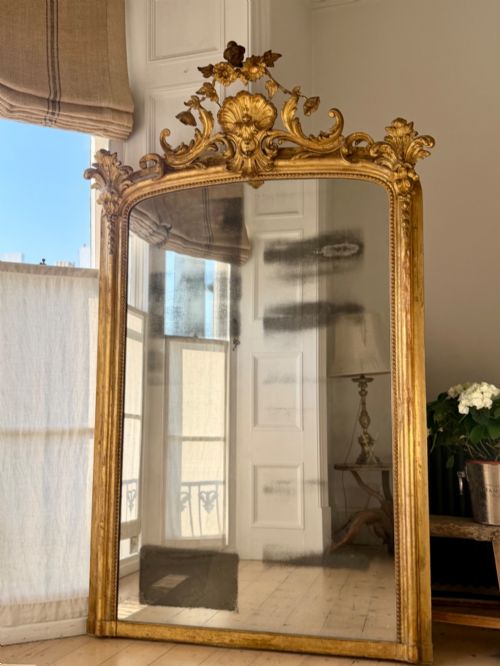
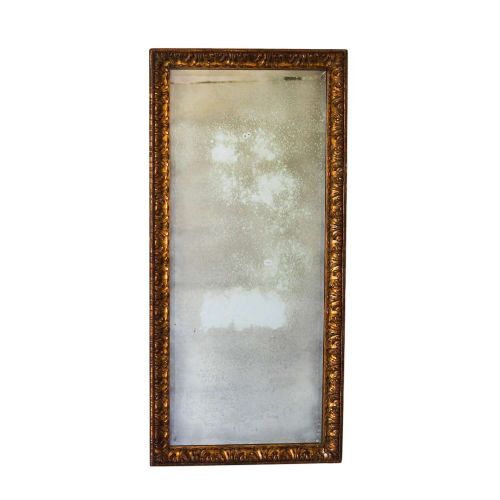
Glass plates vary from early mercury examples showing natural foxing to later clear silvered sheets. Frames incorporate carved wood and gesso mouldings fixed securely to support the considerable weight of tall vertical glass.
French Chateau Pier Mirror Retail Price Guide 2026
Typical asking prices for french chateau pier mirror among the pieces listed under this phrase on Sellingantiques today, from the lower quarter to the upper quarter. They describe what is for sale here now, not the wider market.
The listings here span the eighteenth, nineteenth and early twentieth centuries, utilising giltwood, gesso, painted wood and original mercury glass.
Judging quality in execution
Quality rests in the crispness of the carved wood and gesso ornamentation. Deeply undercut foliage, sharp classical motifs and well-defined ribbons separate superior examples from softer, shallower mouldings.
The integrity of the original surface finishes dictates the character of the piece. Traces of original gilding, paint layers and untouched mercury glass plates carry higher merit than later re-gilding or replaced mirror glass.
The French Chateau Pier Mirror Glossary
- Pier mirror
- A tall mirror designed specifically for the wall space between two windows. These pieces often hang above matching console tables.
- Trumeau
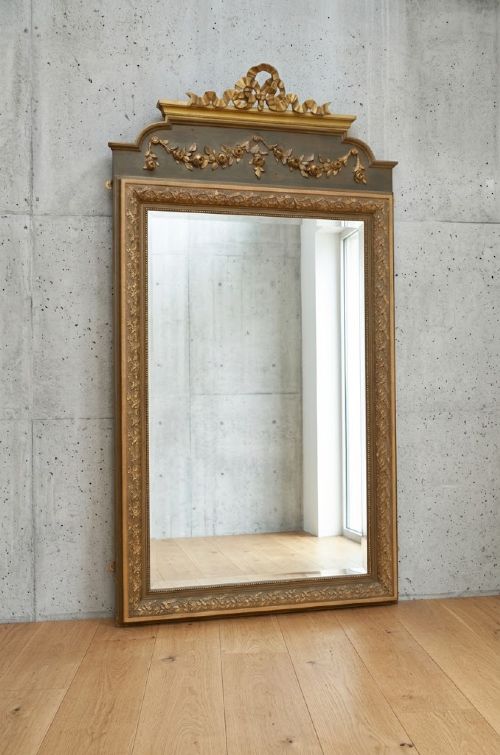
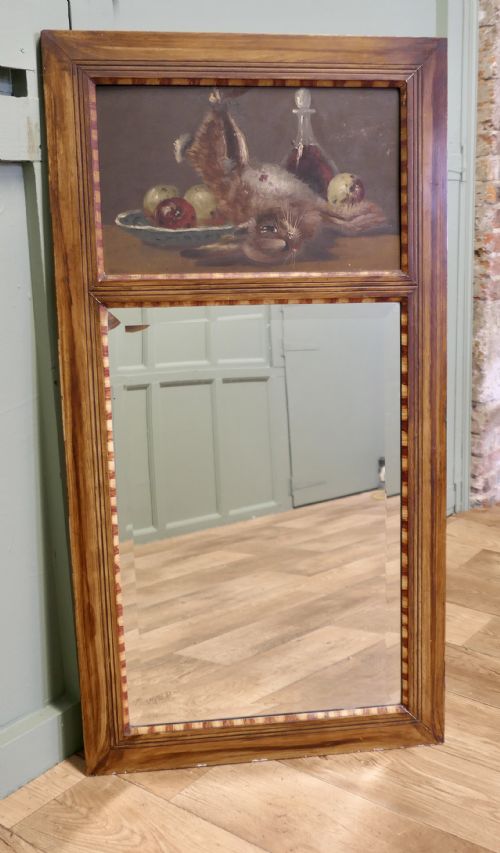
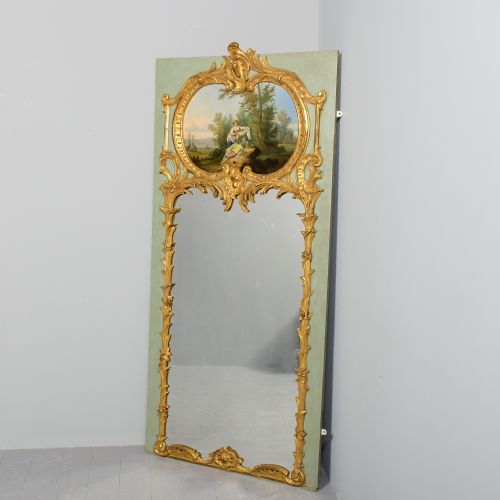
- A decorative wall mirror featuring an upper painted panel or carved relief incorporated into the frame above the glass. They reflect French interior decoration traditions.
- Giltwood
- Timber coated with gold leaf over a prepared gesso ground. This finish catches candlelight and natural daylight in formal rooms.
- Gesso
- A plaster mixture applied to carved wood frames to provide a smooth surface for gilding and fine relief carving. It allows crisp detail work.
- Foxing
- Age spots and dark patches within the silvering of antique glass plates. Collectors value original foxing as proof of age.
- Rococo Revival
- A nineteenth-century design style emulating the asymmetric scrolls, shell motifs and curves of the French eighteenth century. It appears frequently in these mirror frames.
French Chateau Pier Mirror: Frequently Asked Questions
Where should I hang a pier mirror?
These tall glasses suit narrow wall spaces between tall windows or above low console tables. Their vertical proportions draw the eye upward and amplify light in high-ceilinged rooms.
Ensure the wall construction supports the substantial weight of carved wood and heavy glass plates before fixing them securely.
What is a trumeau mirror?
A trumeau combines a mirror plate with a decorative painted panel or carved wooden relief set into the upper frame. Originating in French interior design, they served as permanent architectural fittings.
They offer a combined composition of art and mirror glass suited to chimney breasts and principal reception rooms.
How do I spot original mercury glass?
Original mercury glass displays characteristic dark foxing spots, irregular clouding and a softer, deeper reflection than modern silvered plates. These optical traits develop naturally over centuries.
Many eighteenth and nineteenth-century pieces retain their original glass, contributing to their period authenticity.
Which periods are most common?
Nineteenth-century pieces dominate the selection, spanning classical revivals, Rococo styling and simpler country trumeau forms. Eighteenth-century examples appear alongside early twentieth-century Edwardian and Belle Époque interpretations.
Stylistic markers often reference Louis XV and Louis XVI reigns regardless of the actual manufacturing date.