



Queen Anne Style Mirror
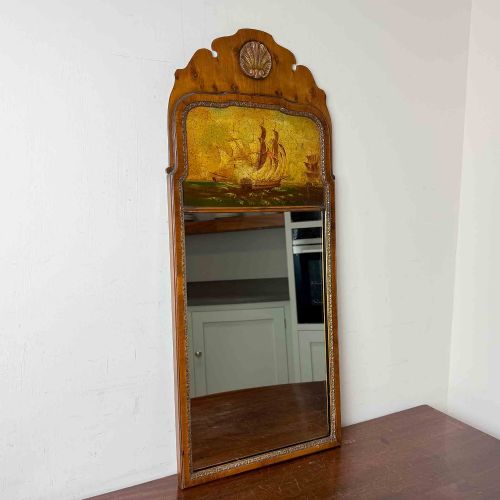
A queen anne style mirror brings elegant walnut, giltwood, and lacquer work into a room, offering the graceful proportions developed in early eighteenth-century design.
What They Are
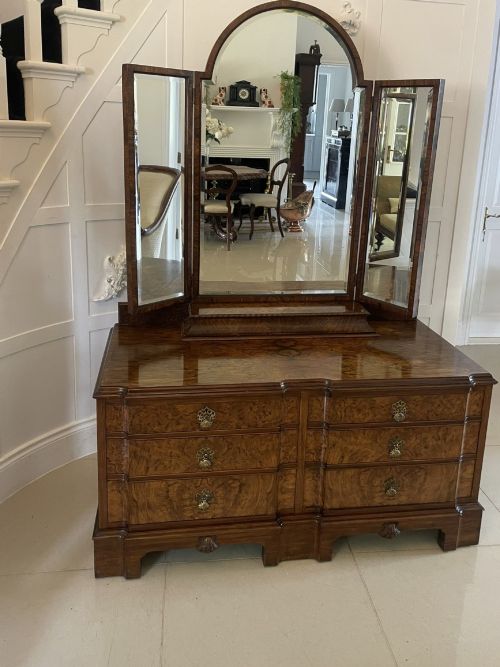
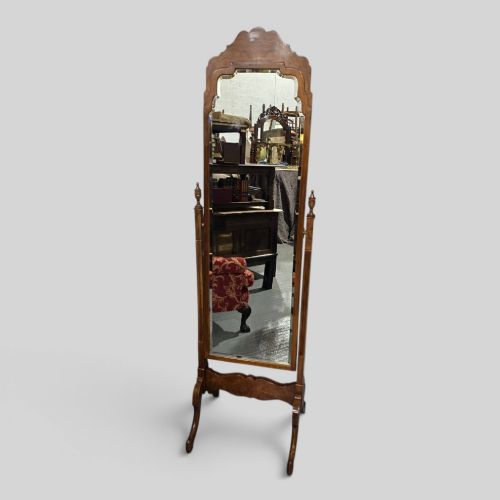
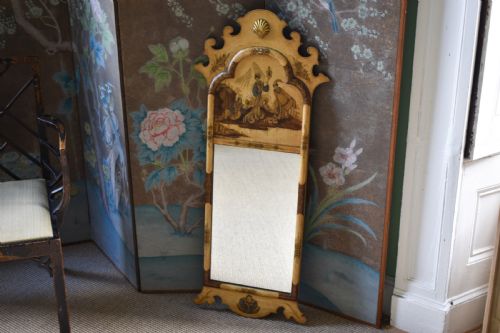
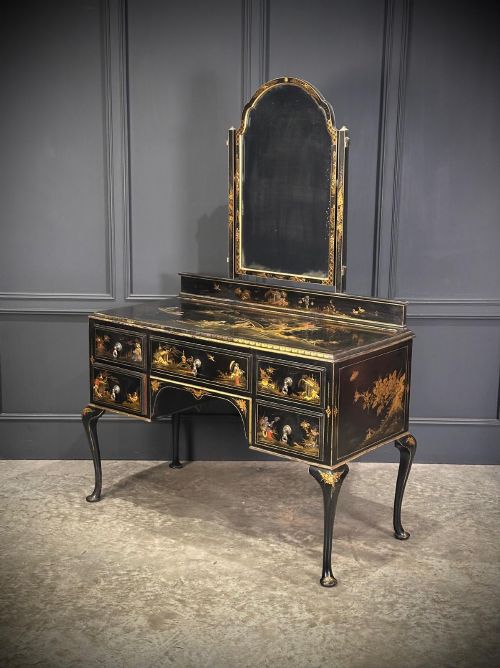
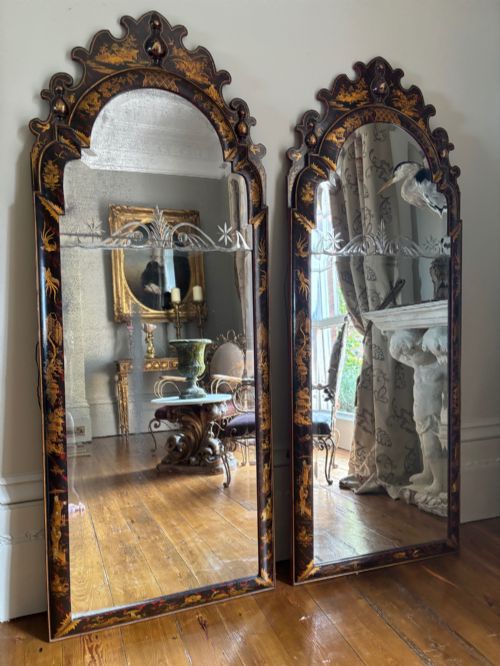
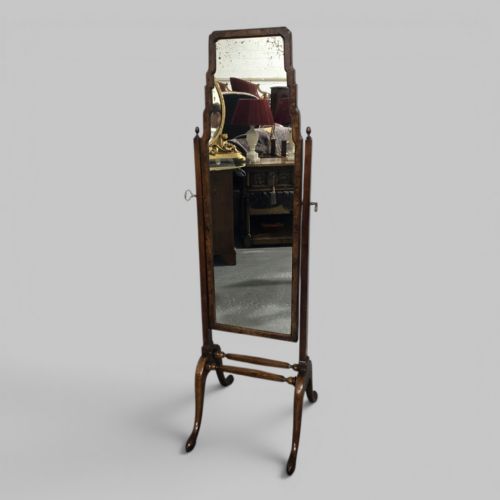
The selection ranges from compact toilet mirrors and bureau dressing glasses to large triple-plate dressing mirrors and chinoiserie wall panels. Walnut remains the dominant wood, accompanied by giltwood, mahogany, and japanned finishes on various wall mirrors and cheval frames.
How They Were Made
Cabinet-makers constructed these frames using solid woods and decorative veneers such as burr walnut, applying hand-painted foliate panels or intricate lacquer work for chinoiserie decoration. Giltwood and parcel gilt elements rely on traditional gilding techniques applied over carved wood.
Mirrors utilise bevelled or flat glass plates, sometimes retaining original mirror plates or incorporating inset hand-painted panels above the glass. Construction methods span nineteenth-century joinery and twentieth-century revival techniques.
Retail Price Guide 2026
Typical UK retail prices for queen anne style mirror, calculated from the Sellingantiques database of over a million retail prices indexed since 2003. This retail price guide relies exclusively on Sellingantiques data; no external sources or auction records are used, so the figures do not describe the wider market.
Some dressing mirrors hide secret compartments behind their swing frames for storing small nineteenth-century trinkets.
What Varies in Quality
The depth and sophistication of the timber figure set pieces apart, with rich burr walnut veneers and finely executed hand-painted chinoiserie details commanding greater visual presence. Finer examples display meticulous control in the scrolling wooden outlines and the crispness of parcel gilt highlights.
The integration of original mirror plates and the preservation of hand-painted foliate panels distinguish the more accomplished interpretations from standard commercial reproductions of the period.
Whytock and Reid
The Queen Anne Style Mirror Glossary
- Cheval mirror
- A freestanding full-length dressing mirror mounted on a vertical frame with pivoting side supports.
- Pier glass
- A tall mirror specifically designed to hang on the wall space between windows.
- Chinoiserie
- European decorative style incorporating imitation Chinese motifs, executed in lacquer and raised gesso.
- Parcel gilt
- Portions of a wooden or painted surface highlighted with applied gold leaf.
- Japanned
- A European imitation of East Asian lacquerwork, built up in layers of varnish and resin.
Frequently Asked Questions
What periods do these mirrors date from?
These mirrors span several eras, appearing across Victorian, Edwardian, and later twentieth-century revivals. Makers of these periods reinterpreted earlier eighteenth-century forms.
While the design vocabulary references the reigns of Queen Anne and George I, the physical objects themselves reflect the manufacturing methods of the nineteenth and twentieth centuries.
Where were they originally placed?
Wall mirrors hung in reception rooms, often positioned above mantelpieces or between windows as pier glasses. Dressing mirrors and cheval stands belonged in bedrooms and dressing rooms.
Their varied sizes allowed them to function both as decorative wall furnishings and as practical accessories for grooming.
How do walnut and lacquer styles differ?
Walnut versions showcase the natural grain of the wood, frequently enhanced by burr veneers and subtle parcel gilt accents. They present a warm, polished aesthetic.
Chinoiserie and japanned pieces introduce painted motifs and dark lacquered surfaces, drawing on Asian decorative arts popularised in European revival periods.
How do you distinguish cheval mirrors from dressing mirrors?
Cheval mirrors stand on the floor as tall, pivoting units designed to reflect the entire figure. They require adequate floor space in a room.
Dressing mirrors and toilet mirrors are smaller, built to sit securely on top of chests of drawers, dressing tables, or bureaus.