



Vintage Free Standing Mirror
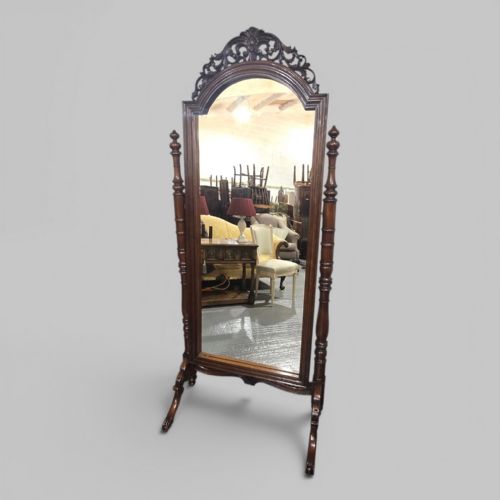
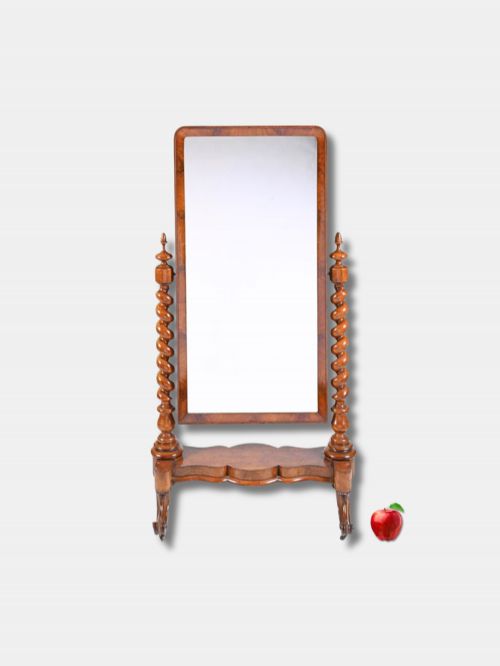
These vintage free standing mirror designs range from grand mahogany floor pieces to slender brass tabletop accessories, offering adjustable reflection for any room.
Vintage Free Standing Mirror
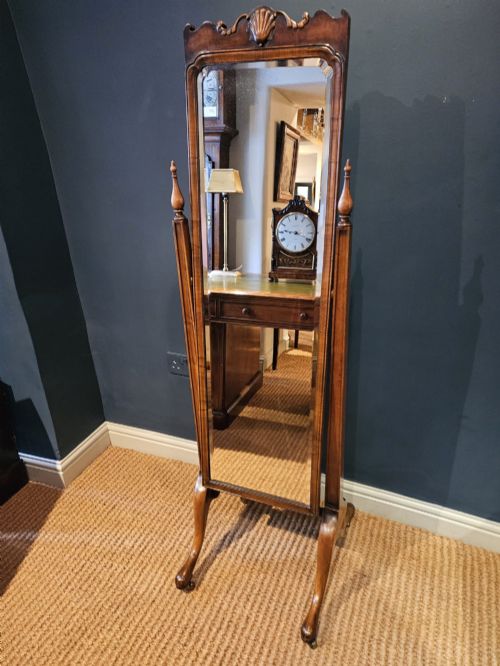
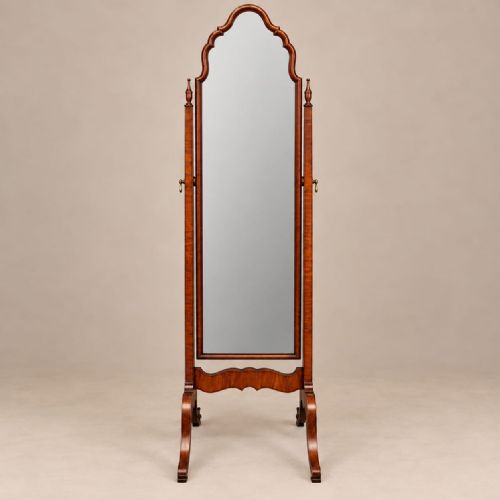
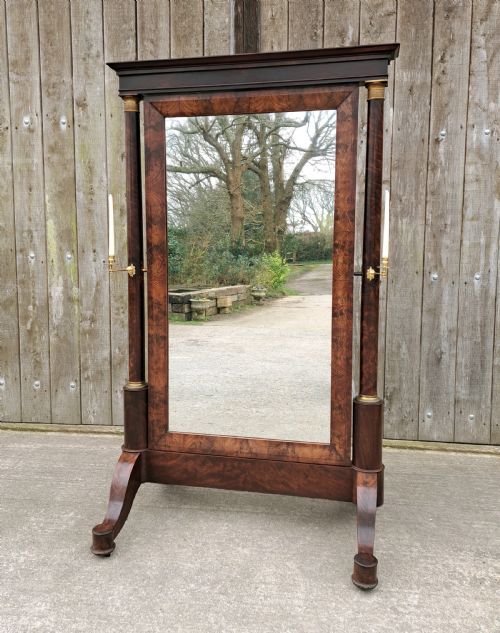
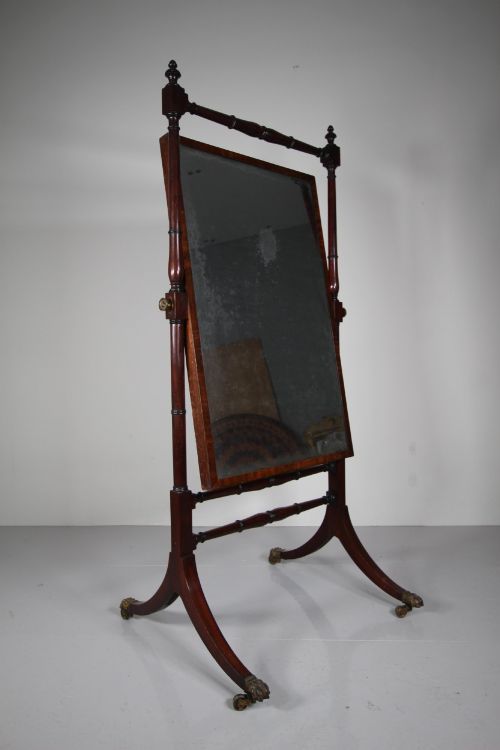
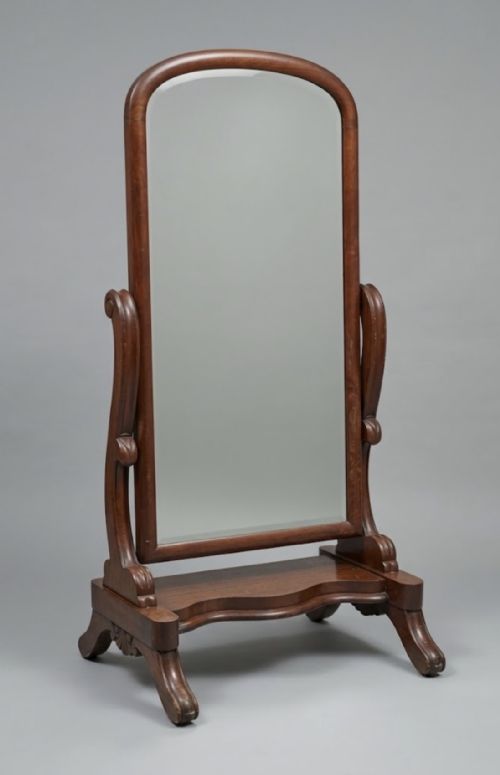
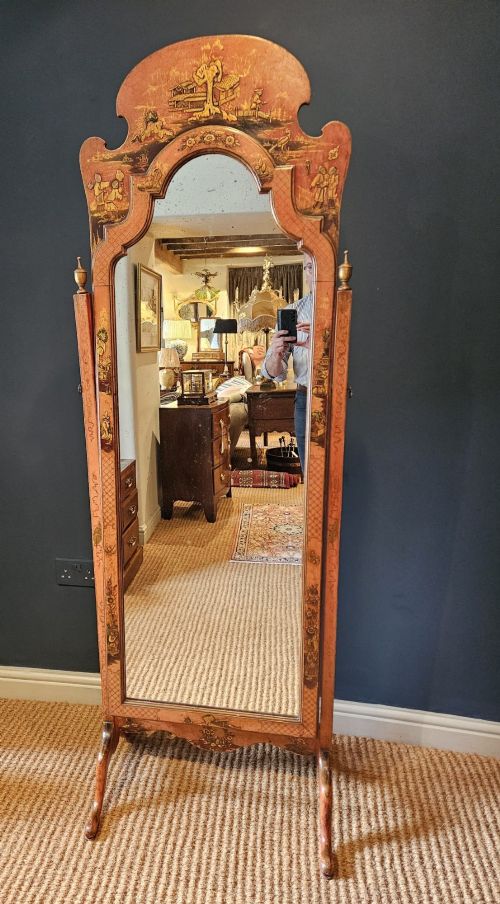
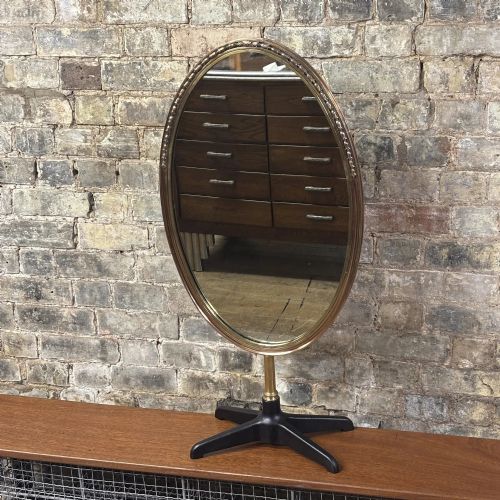
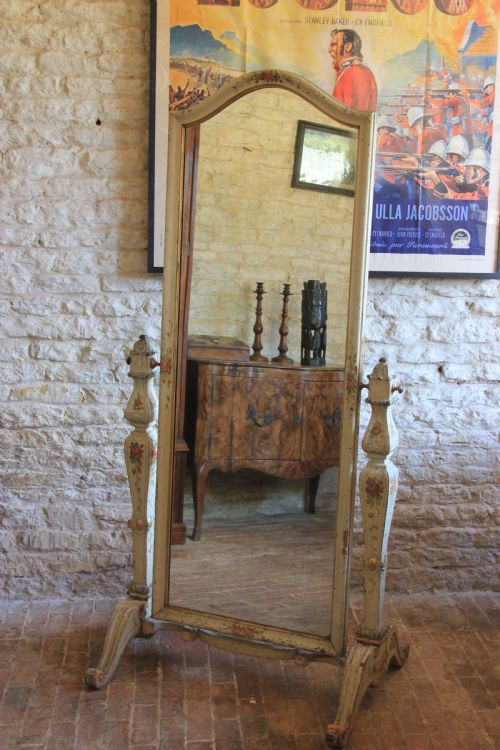
When you search for a vintage free standing mirror, you encounter everything from full-length cheval designs meant for a bedroom to smaller dressing and table pieces designed for a surface. The examples on this page span the nineteenth and twentieth centuries, taking in Victorian, Edwardian, and Art Deco periods alongside Regency and Chinoiserie styles.
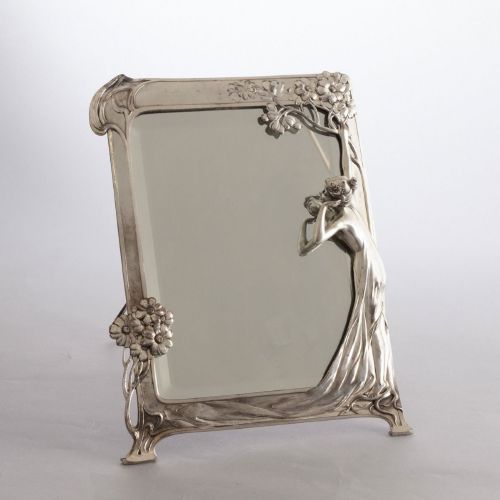
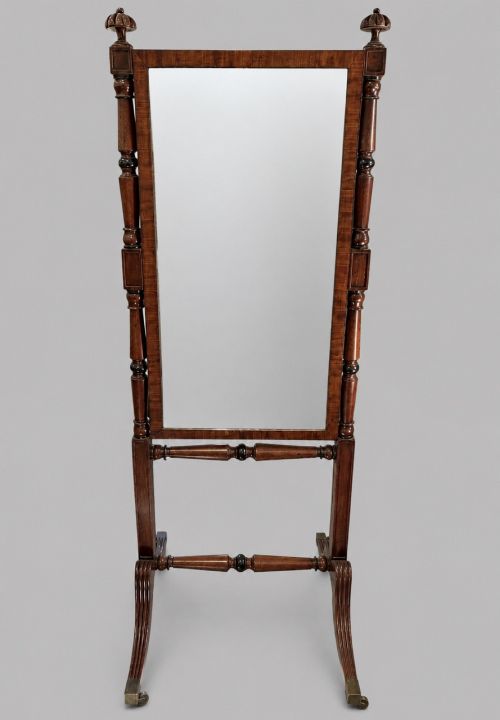
The most common form here is the floor-standing cheval mirror, often mounted on pivots within a frame. Alongside these, smaller table mirrors in brass, pewter, and inlaid wood appear, reflecting the domestic needs of past decades.
Materials and construction
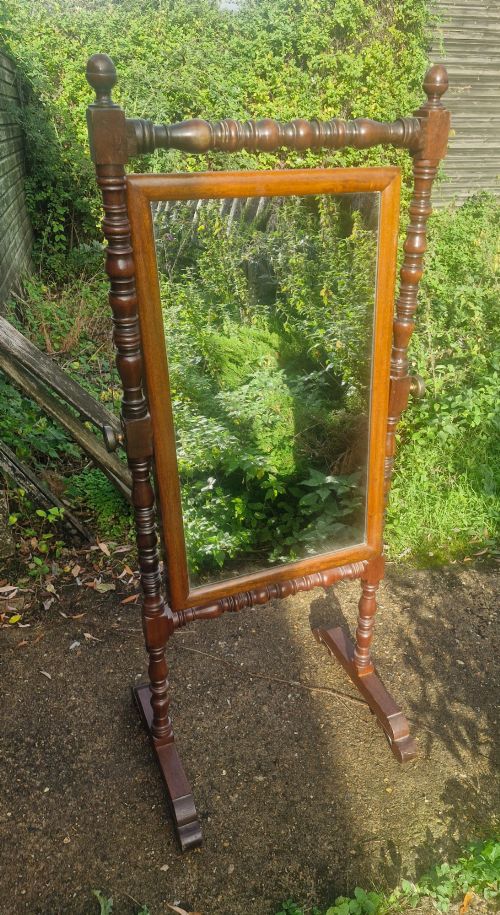
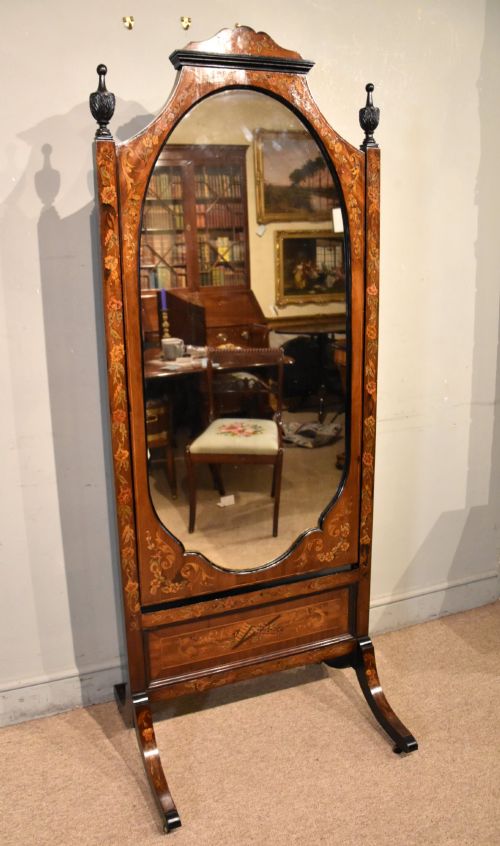
Timbers like mahogany, walnut, satinwood, and lacquered wood form the structural framework of the larger floor mirrors, sometimes enhanced by marquetry inlay or barley twist supports. Brass and pewter provide both structural mounts and the primary metal framing for smaller table and vanity pieces.
Glass is set into pivoting frames, allowing the user to tilt the reflective surface to the desired angle. Joinery techniques of the nineteenth and early twentieth centuries ensure the upright standards securely support the weight of the swinging mirror frame.
Vintage Free Standing Mirror Retail Price Guide 2026
Typical asking prices for vintage free standing mirror among the pieces listed under this phrase on Sellingantiques today, from the lower quarter to the upper quarter. They describe what is for sale here now, not the wider market.
The listings on this page span the nineteenth and twentieth centuries, featuring materials from simple pewter to figured mahogany and satinwood.
What separates the fine examples
The distinction between standard utility items and finer pieces lies in the choice of timber figure, such as burr walnut or figured mahogany, and the crispness of any inlaid decoration. Heavier framing and substantial brass pivot hardware indicate a higher grade of manufacture intended for affluent homes.
Proportion and stability also mark out better examples. A well-balanced frame stands firmly on its base without excessive wobble at the pivots, maintaining its position smoothly at any angle.
WMF
The Vintage Free Standing Mirror Glossary
- Cheval mirror
- A large floor-standing mirror suspended on a frame with vertical pivots that allow it to swing. This form originated in France and gained popularity in British bedrooms during the nineteenth century.
- Overmantel mirror
- A large mirror designed to sit directly above a fireplace mantelpiece. While distinct from floor-standing pieces, the category occasionally overlaps in historical terminology.
- Marquetry
- Decorative woodwork where pieces of veneer are fitted into a backing to form geometric or pictorial designs. It frequently appears on satinwood and walnut frames from the Victorian and Edwardian eras.
- Barley twist
- A carved wooden support shaped in a helical screw pattern resembling a twisted rope. This turned detail is particularly characteristic of mid-nineteenth-century Victorian furniture.
- Pewter
- A malleable metal alloy used historically for decorative domestic objects and table mirrors. It provides a soft, silvery grey finish distinct from polished brass.
Vintage Free Standing Mirror: Frequently Asked Questions
What is a cheval mirror?
A cheval mirror is a full-length looking glass mounted in a frame that allows it to tilt back and forth on vertical pivots. The word derives from the French for horse, alluding to the four-legged frame design.
These pieces were traditionally kept in bedrooms or dressing rooms to provide a complete view of attire.
How do I date a mirror?
Dating relies on combining the timber, the style of the frame supports, and the construction methods used in the woodwork. Details like barley twist turnings or marquetry inlay often point directly to specific nineteenth or early twentieth-century decades.
Examining the backboards and the bevel of the glass provides further clues to the period of manufacture.
Where should I place one?
Floor-standing mirrors work well in bedrooms, dressing areas, or hallways where full-length reflection is practical. Placing them near a window helps bounce natural light deeper into the room.
Ensure the floor beneath the frame is reasonably level so the pivots operate smoothly without binding.
How do I care for the glass?
Clean the mirror surface with a soft cloth and a mild glass cleaner sprayed onto the cloth rather than directly onto the glass. This prevents moisture from seeping behind the silvering at the edges.
Check the pivot screws periodically to ensure they remain secure but not overly tight.