



Swing Floor Mirror
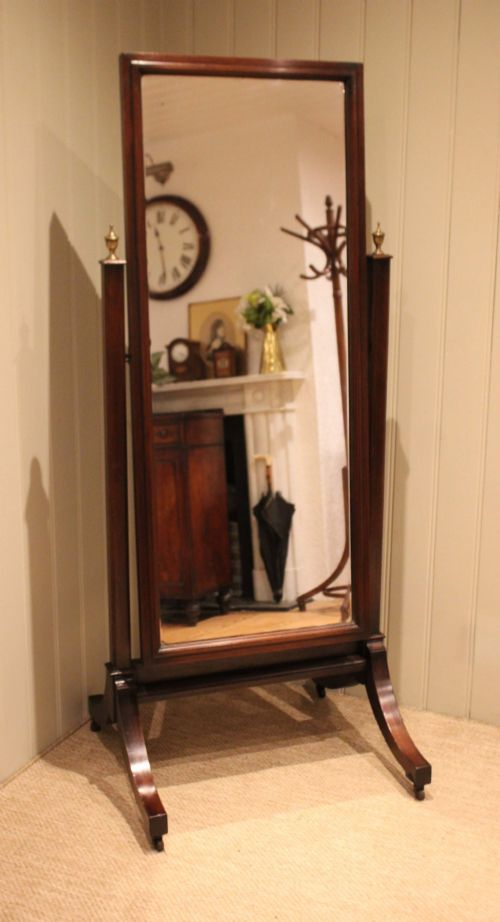
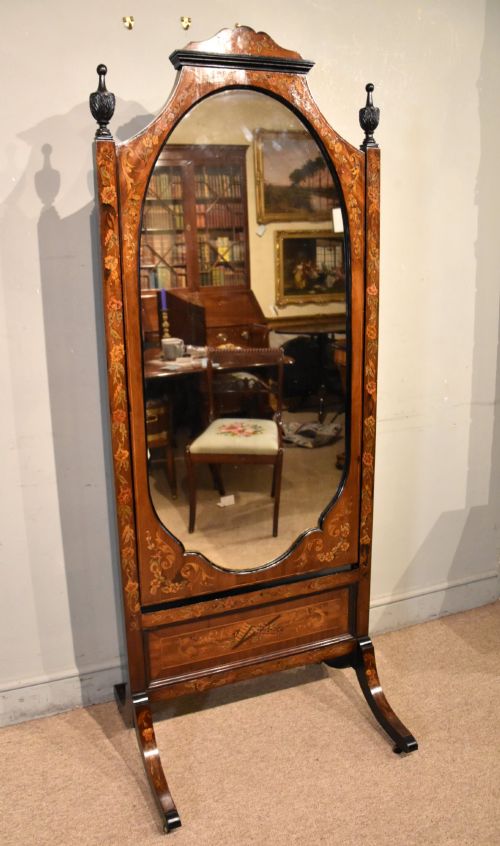
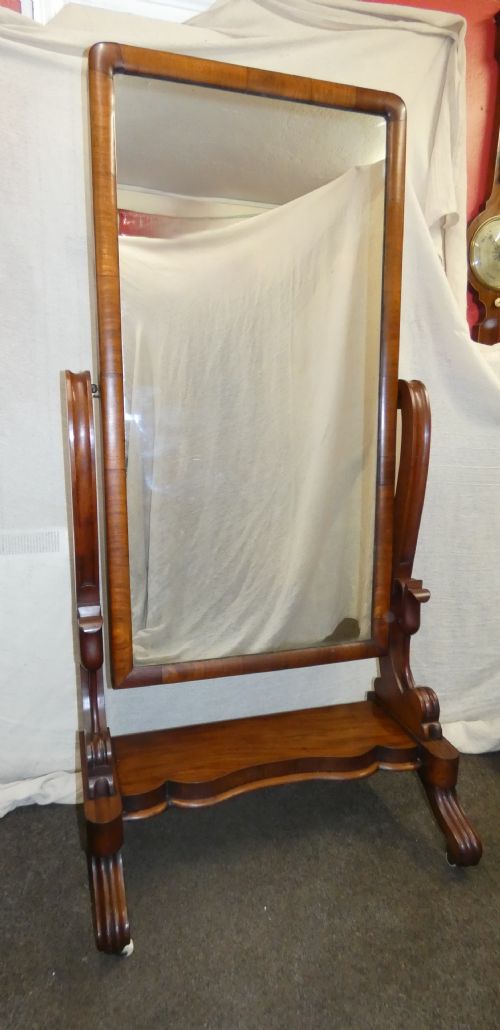
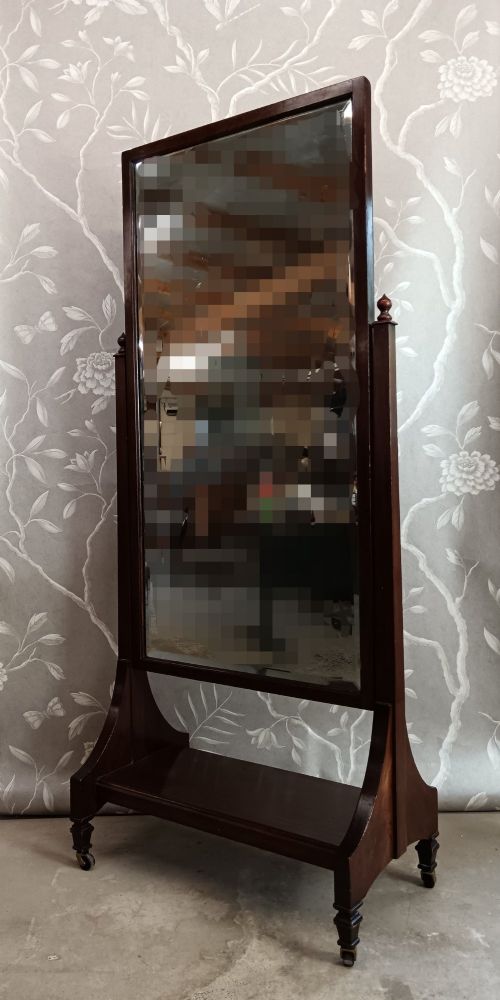
A swing floor mirror, also known as a cheval mirror, provides a full-length reflection framed to pivot on a freestanding frame.
Swing Floor Mirror
A swing floor mirror offers a full-length viewing surface held within an upright frame that pivots on vertical pivots or pins. When buyers search for a swing floor mirror, they encounter freestanding cheval mirrors designed for dressing rooms and bedrooms.
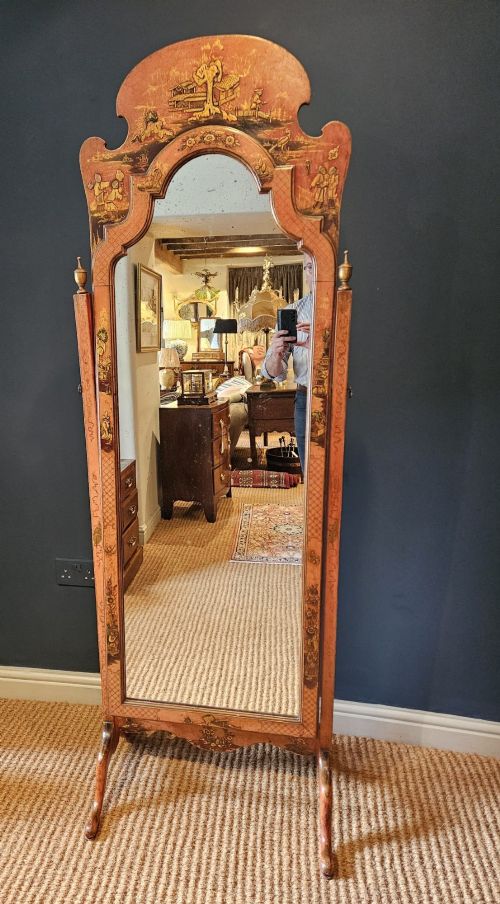
The selections span the Georgian, Regency, and Victorian eras alongside later twentieth-century interpretations. Mahogany forms the backbone of these pieces, accompanied by walnut, satin birch, pitch pine, and lacquered wood.
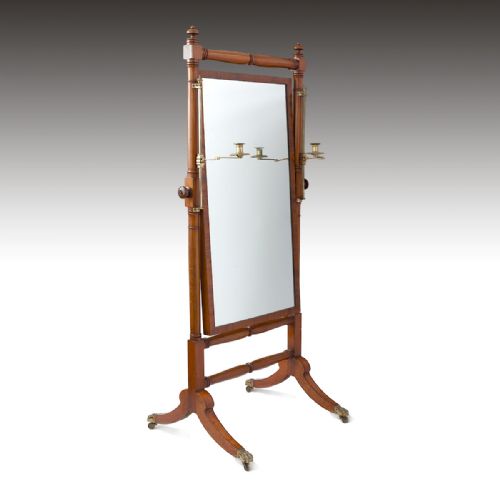
Makers utilised architectural frames, brass candle holders, marquetry inlay, and gilt accents. Forms range from restrained George III country house designs to elaborate Chinoiserie and French Empire styles.
How they were made
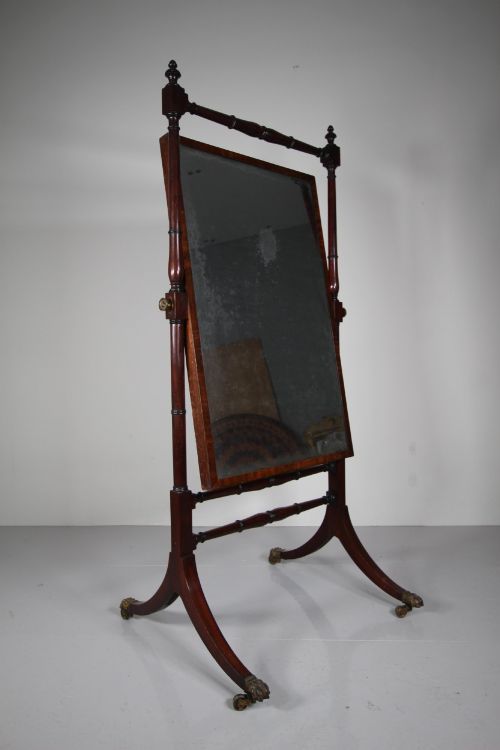
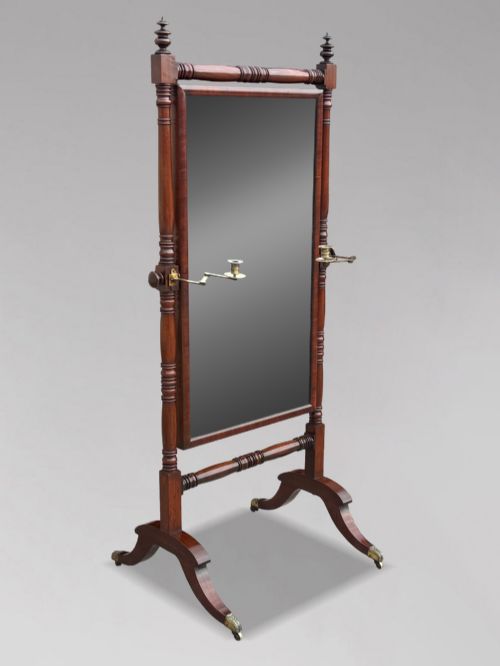
Cabinet makers built these freestanding frames primarily from solid and veneered mahogany, alongside satin birch, walnut, and oak. Frames incorporate substantial upright pillars supported by splayed legs, frequently terminating in brass paw feet or castors.
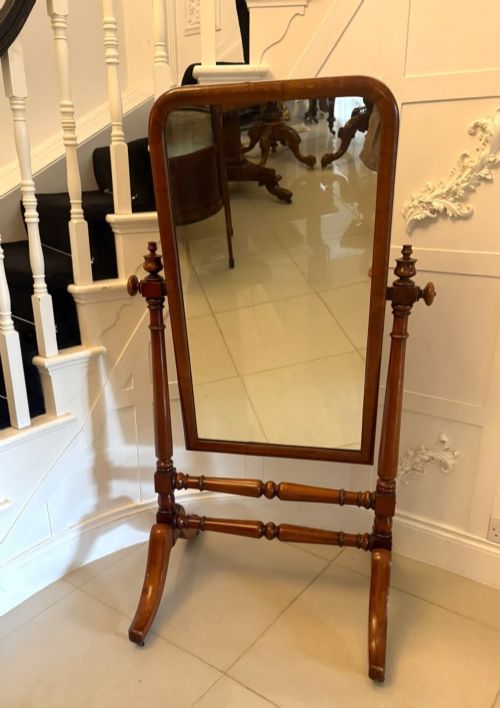
The mirror glass itself hangs within a secondary pivoting frame suspended between the uprights using brass screw pins or articulated mounts. Finer examples integrate brass candle sconces and detailed marquetry inlay into the wooden structure.
Swing Floor Mirror Retail Price Guide 2026
Typical asking prices for swing floor mirror among the pieces listed under this phrase on Sellingantiques today, from the lower quarter to the upper quarter. They describe what is for sale here now, not the wider market.
Listings feature mahogany, satin birch, walnut, pitch pine, and lacquered wood across periods spanning the Georgian era to the 1920s.
What varies in quality
Subtle differences in timber selection and framing architecture divide the standard production from the exceptional country house commissions. The weight and stability of the supporting chassis determine how smoothly the glass swings on its brass pivots.
Refinements such as flame mahogany veneers, hand-cut marquetry inlay, and original brass hardware elevate a piece. The integration of functional elements like articulated candle holders demonstrates the ambition of the original workshop.
Waring and Gillow
The Swing Floor Mirror Glossary
- Cheval mirror
- A freestanding full-length dressing mirror mounted on a pivoting frame. The term derives from the French word for horse, referencing the four-legged support structure.
- Flame mahogany
- A distinct wood veneer exhibiting a flamed or feather-like grain pattern. Cabinet makers selected this decorative timber for prominent surfaces on high-status furniture.
- Marquetry inlay
- Decorative patterns formed by fitting contrasting pieces of veneer into a primary wood surface. This technique ornamented the frames of finer dressing mirrors.
- Brass sconce
- A bracket attached to the mirror frame designed to hold a candle for illumination. These articulated metal fittings appear on select period examples.
Swing Floor Mirror: Frequently Asked Questions
What is a cheval mirror?
A cheval mirror is a freestanding full-length swing mirror designed to pivot within an upright wooden frame. The format allowed users to adjust the angle of the glass for full-length dressing.
Originating in the eighteenth century, these large mirrors became staples of Victorian and Regency bedrooms and dressing rooms. Their substantial wooden chassis permitted placement anywhere in a room without wall fixings.
How do I date a swing mirror?
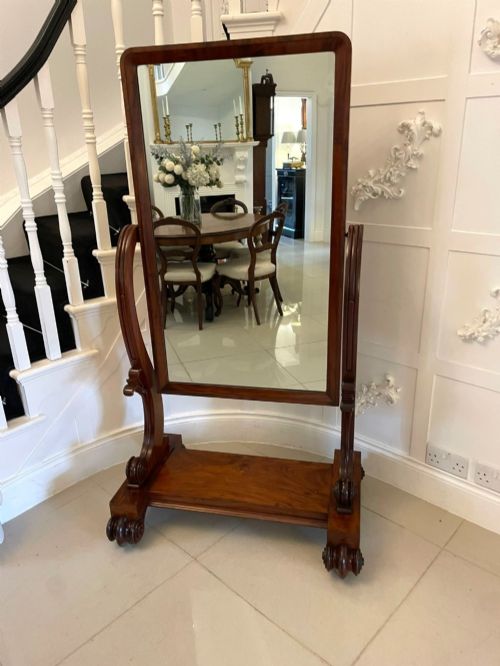
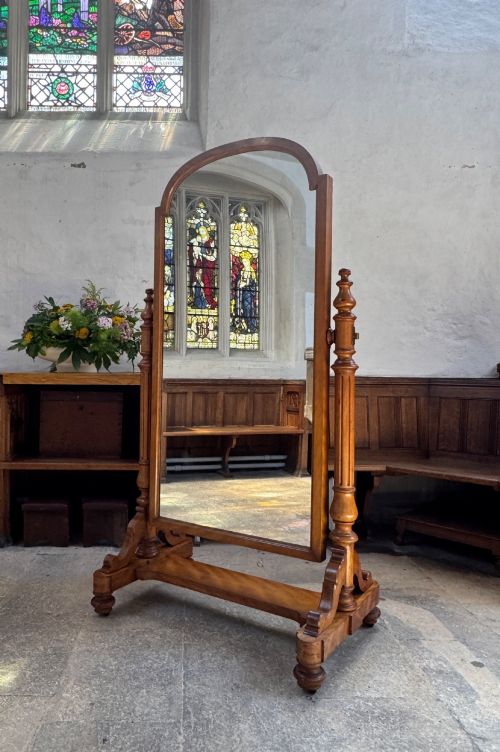
Dating relies on timber choices, leg styles, and the method of the pivoting mechanism. Georgian and Regency examples favour straight mahogany pillars and splayed legs, while Victorian pieces often introduce turned columns or pitch pine.
Secondary woods, brass hardware styles, and inlay techniques further clarify the period of production. Later twentieth-century interpretations often emulate earlier George III or Chinoiserie aesthetics.
Where should I place a floor mirror?
These mirrors suit bedrooms, dressing areas, and hallways where a full-length reflection is useful. Their freestanding nature means they require adequate floor space to allow the frame to tilt safely.
Positioning them near natural light sources helps illuminate the reflection and showcases the timber frame. Ensuring the floor surface is level keeps the pivoting mechanism balanced.
Are swing mirrors stable on carpet?
Freestanding mirrors with wide splayed legs and substantial wooden bases stand securely on most flooring types. Heavier period pieces utilise their own weight to maintain balance on thick pile carpets.
Original castors or sturdy wooden feet distribute the weight evenly across the floor surface. Positioning the piece away from heavy foot traffic prevents accidental tipping.