
French Parquetry Table
A French parquetry table brings geometric wood veneers and gilt mounts together, offering functional writing surfaces and display pieces for period interiors.
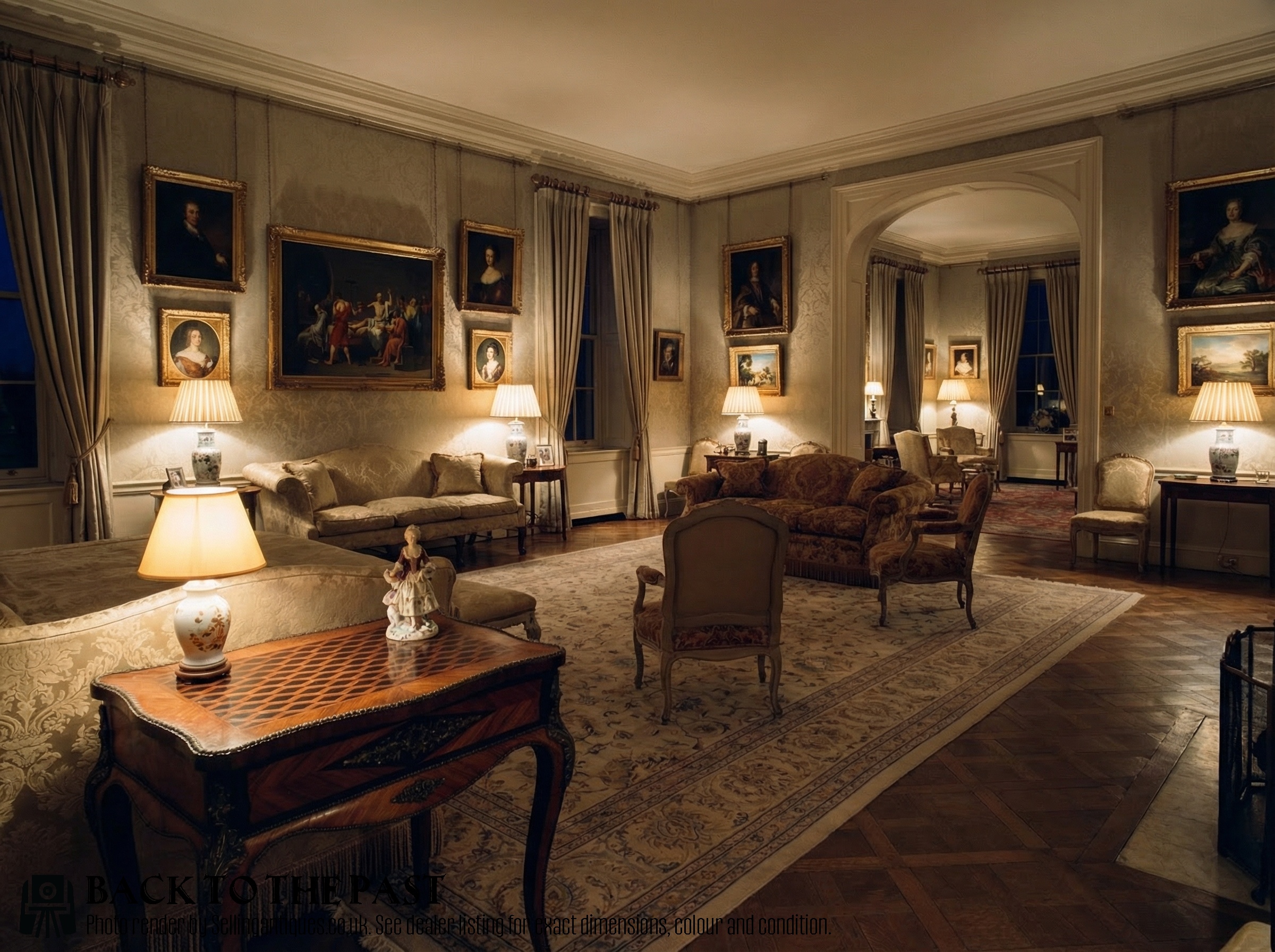
French Parquetry Table
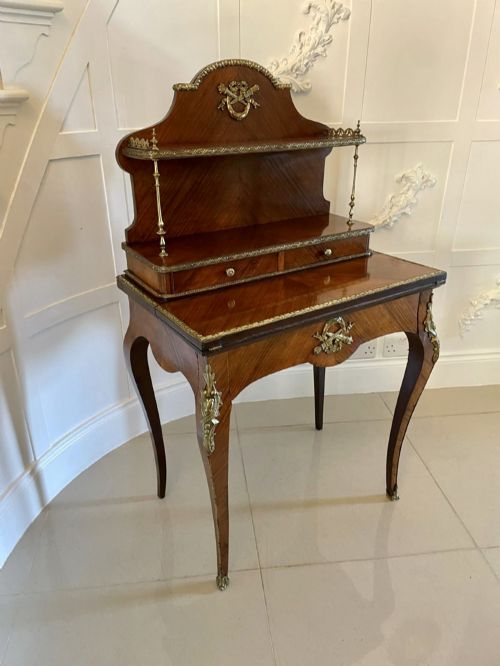
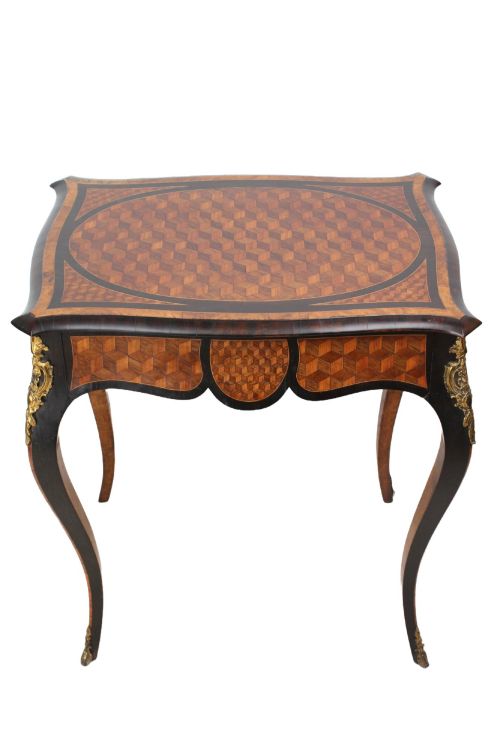
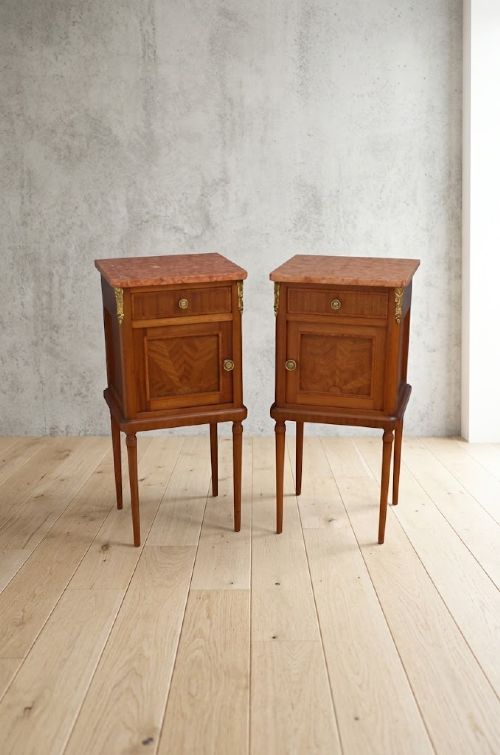
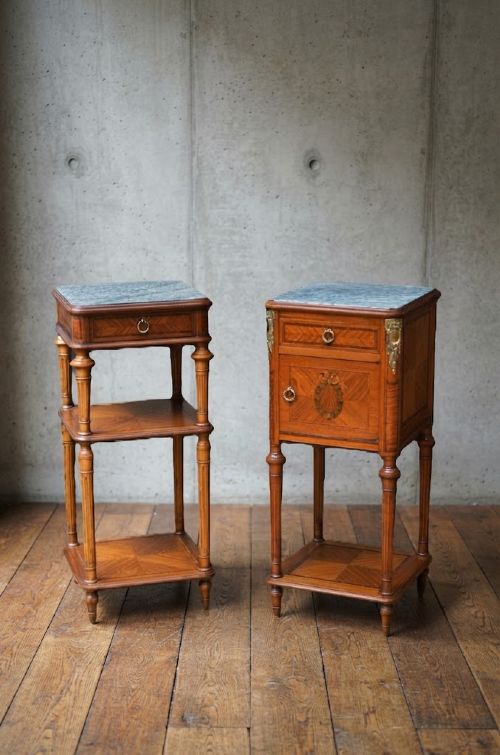
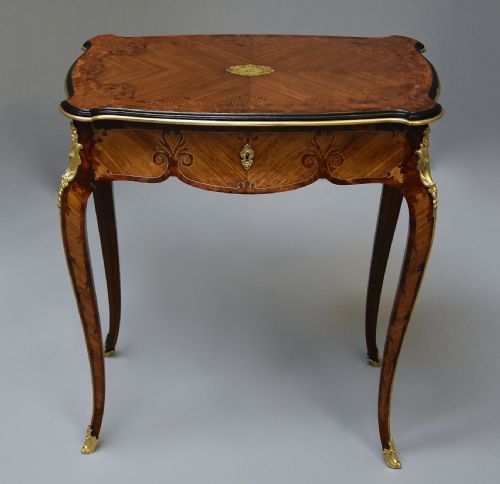
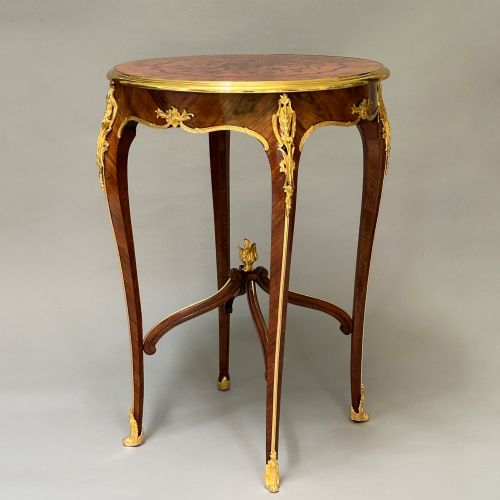
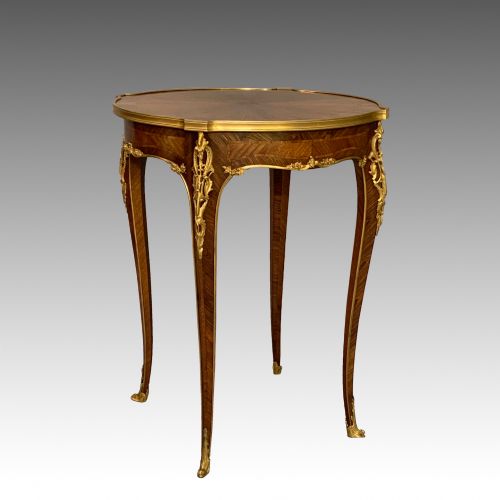
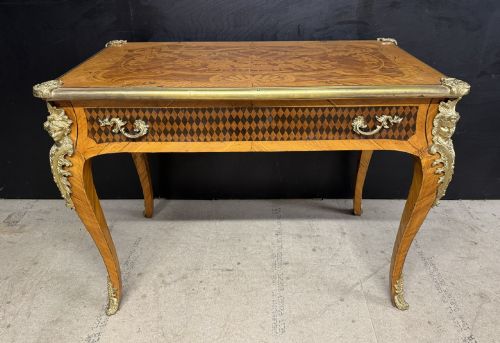
A french parquetry table encompasses writing desks, bureau plats, occasional stands, and bedside cabinets dating primarily from the nineteenth century into the early twentieth century. These pieces emerge predominantly in revival styles including Louis XV and Louis XVI, reflecting historical French design motifs.
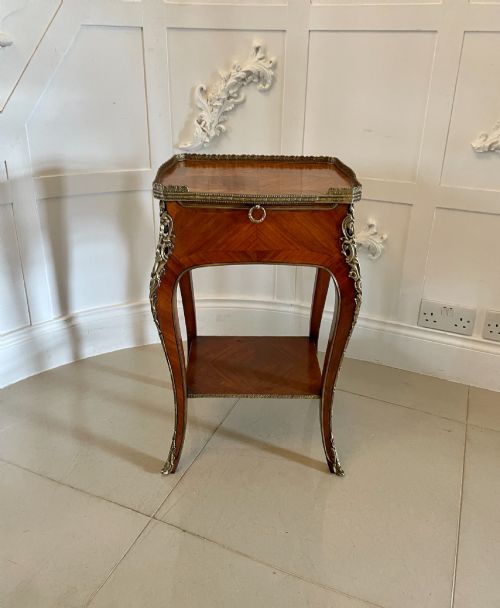
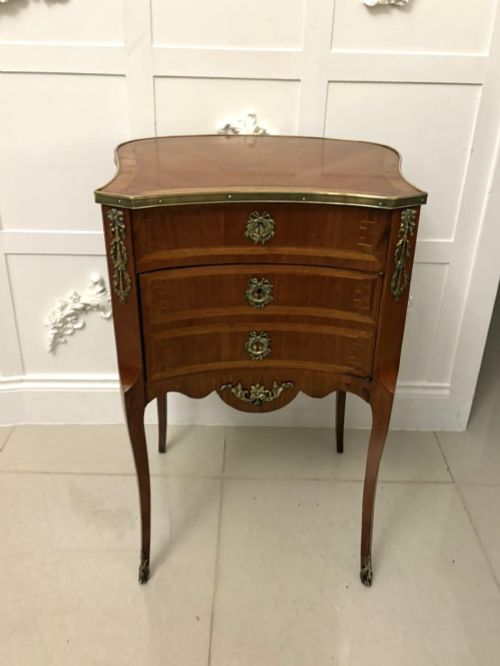
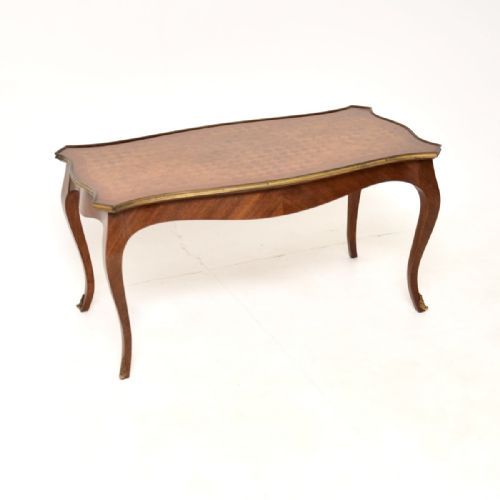
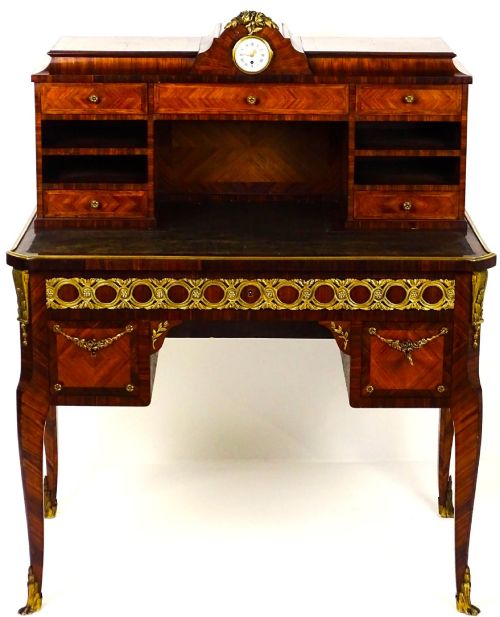
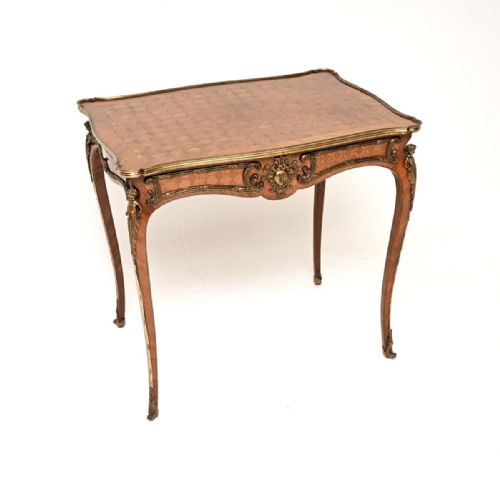
The most common formats on this page are freestanding centre tables, writing desks fitted with drawers, and smaller lamp or bedside tables. Makers constructed these items for salons, bedrooms, and studies, utilising decorative woods to create patterned tabletops.
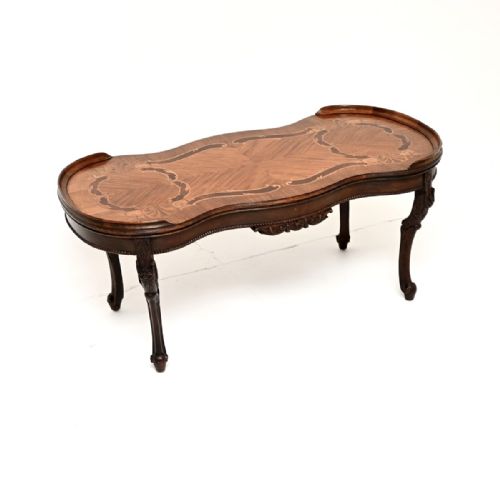
Examples range from compact kidney-shaped writing tables to larger dining and card tables with folding or extending mechanisms. Each type combines structural utility with intricate geometric surface decoration characteristic of French cabinet making.
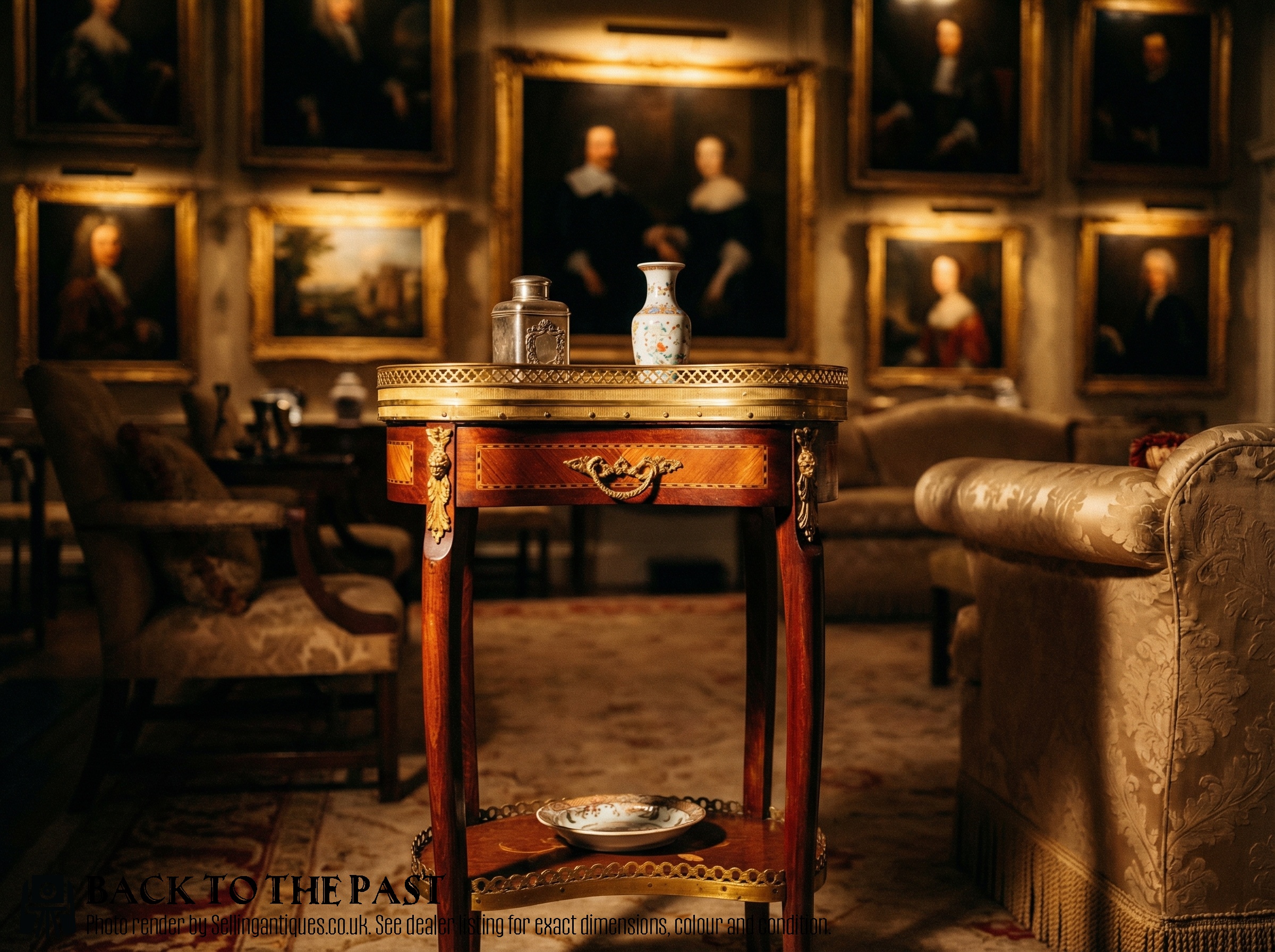
Evaluating Workmanship
Quality rests upon the precision of the veneer work and the crispness of the cast bronze mounts. Superior examples display seamless geometric alignment across edges and corners without visible gaps in the wood.
The refinement of the ormolu channelling and the weight of the hardware distinguish high workshops from standard production. Interior drawer construction, utilising solid secondary woods and hand-cut dovetails, indicates the level of care invested by the maker.
French Parquetry Table Retail Price Guide 2026
Typical asking prices for french parquetry table among the pieces listed under this phrase on Sellingantiques today, from the lower quarter to the upper quarter. They describe what is for sale here now, not the wider market.
Some nineteenth-century tables hide clever mechanical drawers and envelope folds, designed to surprise guests during evening card games.
JAS Shoolbred·Joseph-Emmanuel Zwiener·Paul Sormani·CH Jeanselme and Co·François Linke·G T Morant
The French Parquetry Table Glossary
- Parquetry
- A geometric mosaic of wood veneers arranged in repeating patterns such as cubes, chequers, or lozenges. It differs from marquetry by strictly using geometric forms rather than pictorial designs.
- Ormolu
- Gilded bronze mounts applied to furniture edges, feet, and keyholes for decorative effect. The technique involves coating cast brass or bronze with a gold amalgam.
- Bureau Plat
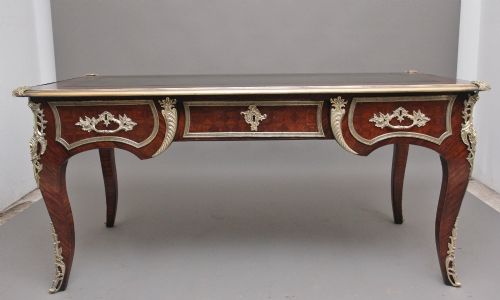
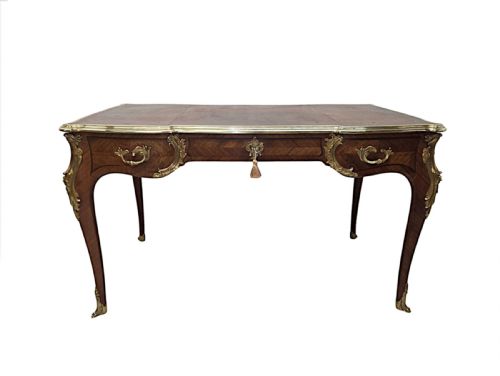
- A freestanding double-sided writing desk featuring a rectangular top inset with leather and drawers situated within the frieze. These desks typically stand on cabriole or tapered legs.
- Kingwood
- A dense, richly grained hardwood native to Brazil, prized for its deep brown colour and distinctive dark striping. Cabinet makers utilised it extensively for high-end French veneer work.
- Bouillotte Table
- A small round occasional table featuring a raised gallery edge around the top, designed originally for card games. They often incorporate small drawers and candle slides.
French Parquetry Table: Frequently Asked Questions
What is a bureau plat?
A bureau plat is a flat-topped writing desk designed to stand freely in the centre of a room rather than against a wall. They usually feature multiple drawers integrated into the frieze beneath the leather-lined writing surface.
These desks often display elaborate parquetry patterns on the top and sides, accompanied by cast ormolu mounts along the legs and edges.
How do I identify Louis XV style?
Louis XV style furniture is characterised by curved lines, asymmetry, and cabriole legs ending in sabots. The overall aesthetic draws heavily on natural forms, rococo scrolls, and floral motifs.
Parquetry on these pieces often follows flowing contours or soft geometric arrangements that complement the curved wooden frames.
Where should I place an occasional table?
Occasional tables work well beside seating areas, in hallways, or as lamp stands in reception rooms. Their compact proportions allow them to fit into spaces where a larger desk or cabinet would prove too cumbersome.
Freestanding versions look best positioned where the parquetry top and ormolu mounts remain visible from multiple angles.
What distinguishes parquetry from marquetry?
Parquetry uses geometric wood pieces to create repeating abstract patterns such as cubes, triangles, or chequers. It relies strictly on the grain and natural tones of various woods to form the design.
Marquetry, by contrast, assembles veneers into pictorial scenes, floral sprays, or scrolls, creating a more illustrative surface image.