
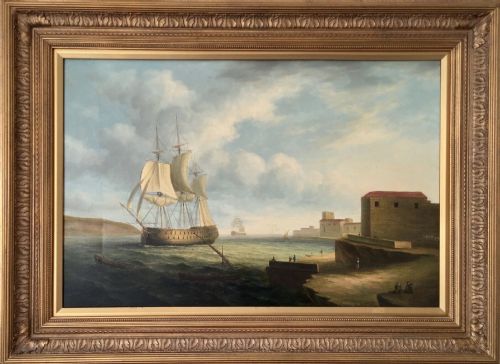


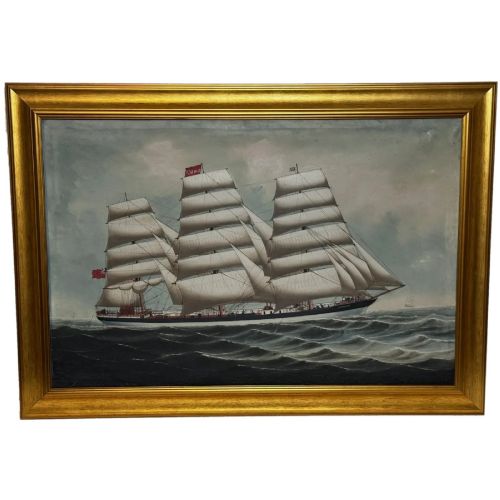
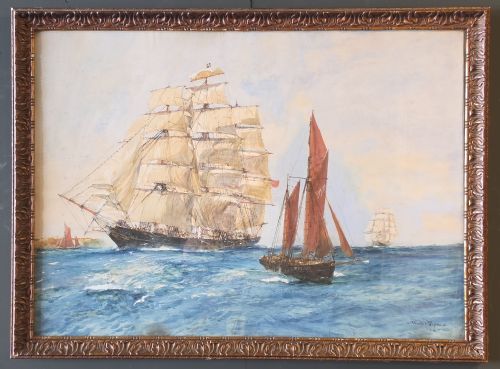
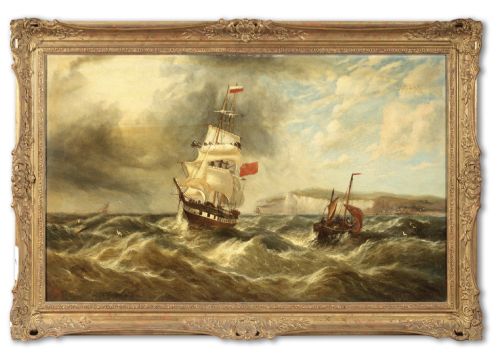
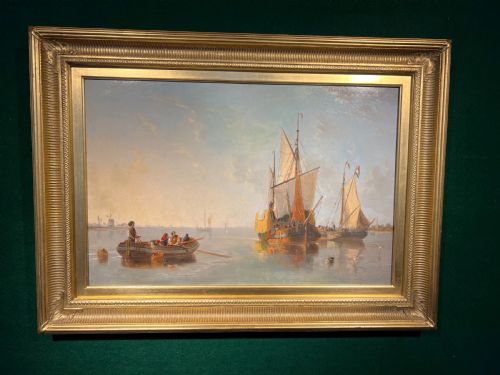
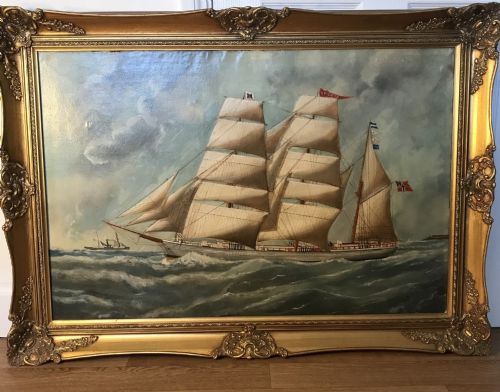
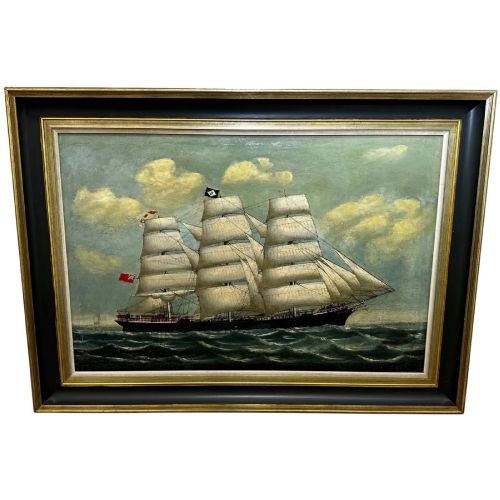
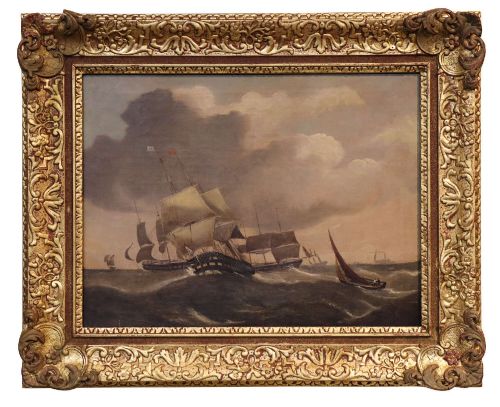
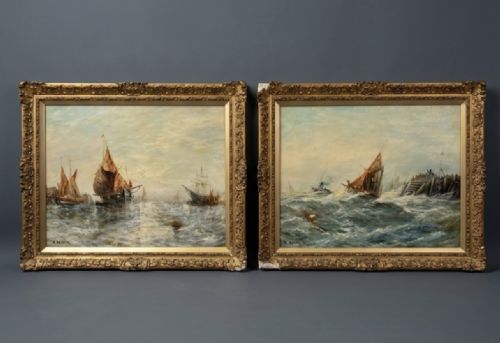
Framed Sailing Ship Painting
A framed sailing ship painting brings the movement and scale of maritime history directly onto the wall.
Framed Sailing Ship Painting
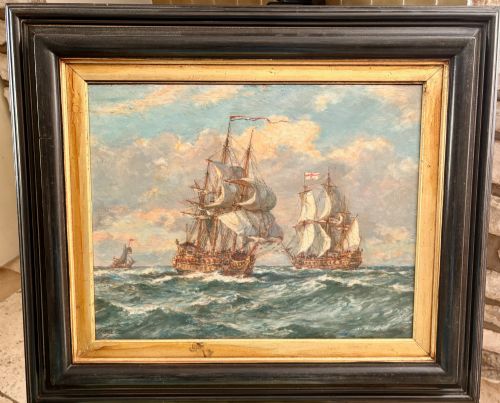
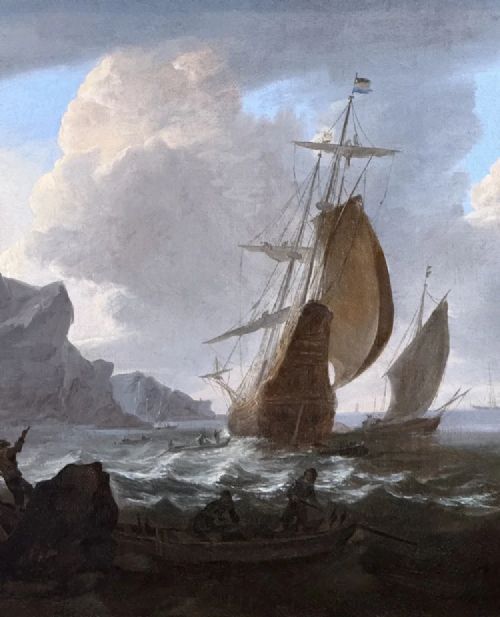
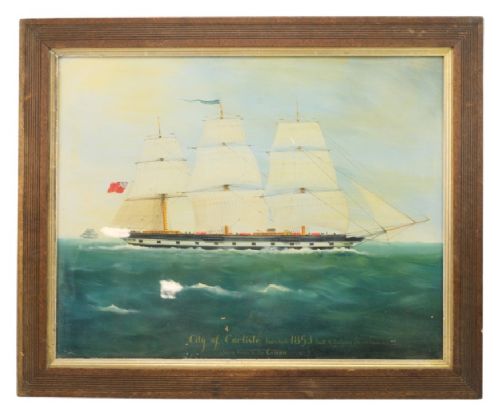
A framed sailing ship painting captures vessels ranging from merchant barks and three-masted schooners to naval warships in coastal waters or open gales. The pieces seen on this page span the nineteenth century, the Edwardian era, and the mid-twentieth century.
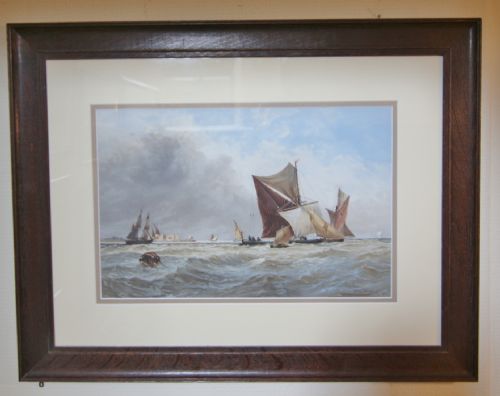
Most examples take the form of oil paintings on canvas, board, or panel, alongside watercolours mounted under glass. Makers set these works within wooden frames, occasionally utilising giltwood or shadow box diorama surrounds.
The subjects cover named vessels, historical events such as troop movements to the Crimea, and local coastal scenes from British, French, and international waters.
Materials and technique
Painters applied oil paint to canvas, wood panels, or card, building up the textures of rolling seas and billowing canvas sails. Watercolour on paper forms another standard medium, often finished with ink or pencil details under glass.
Frames rely on solid wood construction, sometimes with ornate giltwood mouldings or deep box frames to house three-dimensional diorama elements alongside flat canvas works.
Listings feature works across the nineteenth and twentieth centuries, using oil on canvas, watercolour, and wood panel.
Factors of quality
The skill of the brushwork in rendering rigging, hull construction, and the physics of water under wind pressure dictates the visual strength of a maritime work. Direct observation of maritime architecture elevates a piece above generic decorative output.
The integrity of the original framing, whether a period giltwood moulding or a deep shadow box, preserves the context in which the artwork was displayed.
Reginald Arthur Borstel·Charles Edward Dixon·Bernard Gribble·Bonaventura Peeters·John Wilson Carmichael·Lai Fong·Abraham Hulk I·Charles William Adderton·William Frederick Settle·Ernest Dade·Thomas Bush Hardy·Daniel Sherrin·George Shaw
The Framed Sailing Ship Painting Glossary
- Diorama
- A three-dimensional scene enclosed in a box behind glass, combining a half-hull model ship with painted backgrounds and physical sea waves.
- Barque
- A sailing vessel with three or more masts where the aft mast is rigged fore-and-aft and the others are square-rigged.
- Giltwood
- Wood that has been coated with a thin layer of gold leaf or gilt powder, standard for decorative antique frames.
- Seascape
- A work of art depicting the sea, coastal views, or ships operating in marine environments.
- Provenance
- The documented history of a painting's ownership and origin, establishing its authenticity and attribution to a specific artist.
Framed Sailing Ship Painting: Frequently Asked Questions
How do I date a maritime painting?
Examination of the vessel type, rigging style, and clothing of any figures provides a primary chronological anchor. Pigments, canvas types, and the construction of the surrounding frame offer further supporting evidence.
Signatures, inscriptions on the reverse, and artist biographical records help narrow the date of execution to a specific decade or period.
What is the difference between a diorama and a standard painting?
A standard painting applies pigments to a flat surface such as canvas, panel, or paper. A diorama constructs a physical model of a ship within a shallow box behind glass, combining sculptural elements with painted backgrounds.
Both forms document maritime history but utilise entirely different techniques to achieve depth and perspective.
Where should I hang a framed maritime artwork?
These works require placement away from direct sunlight and excessive humidity to protect canvas, paper, and wooden frames. Wall spaces with stable ambient temperatures suit oil paintings and watercolours best.
Allowing sufficient clearance lets the viewer appreciate the detail of the rigging and the depth of the frame.
How do I care for antique oil and watercolour paintings?
Oil paintings on canvas benefit from occasional gentle dusting with a soft, dry brush. Watercolours behind glass must remain sealed to prevent moisture accumulation and mould growth.
Avoid using liquid cleaners on the painted surfaces or the giltwood frames.