



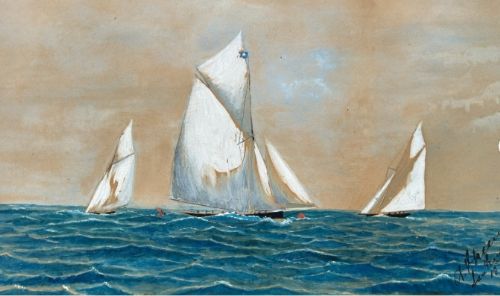


Victorian Seascape Watercolour
A victorian seascape watercolour captures maritime life and coastal views on paper using water-based pigments.
What victorian seascape watercolour pieces are
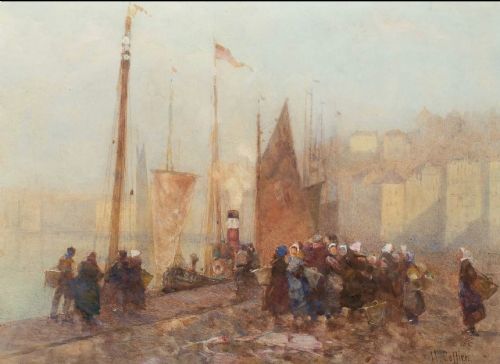
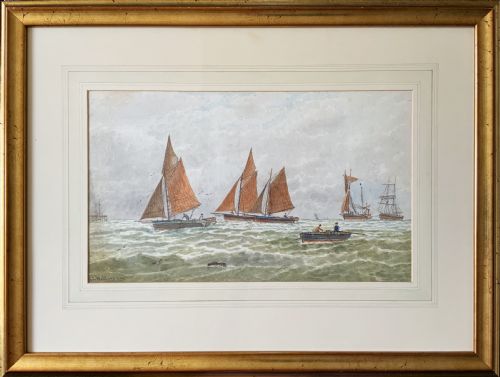
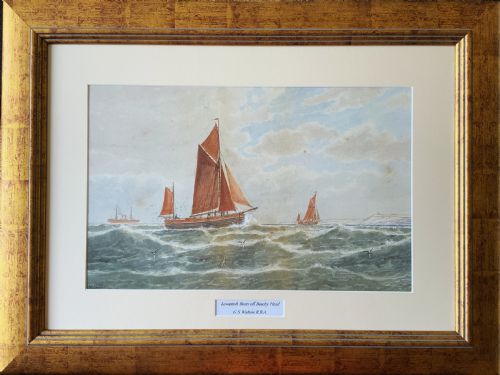
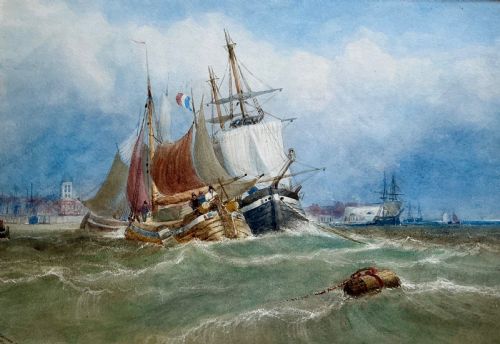
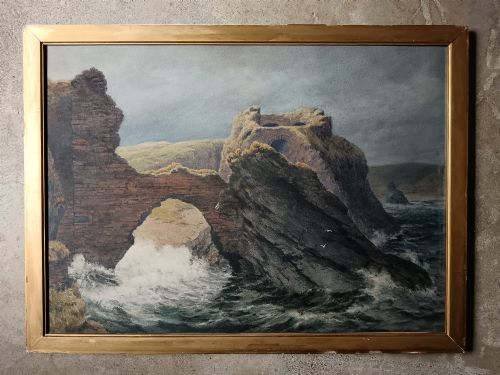
A victorian seascape watercolour represents maritime scenes, harbours, and coastal views created during the nineteenth century. These original works on paper record British and international shores, ranging from Scottish castles to Portuguese lighthouses and Cornish fishing ports.
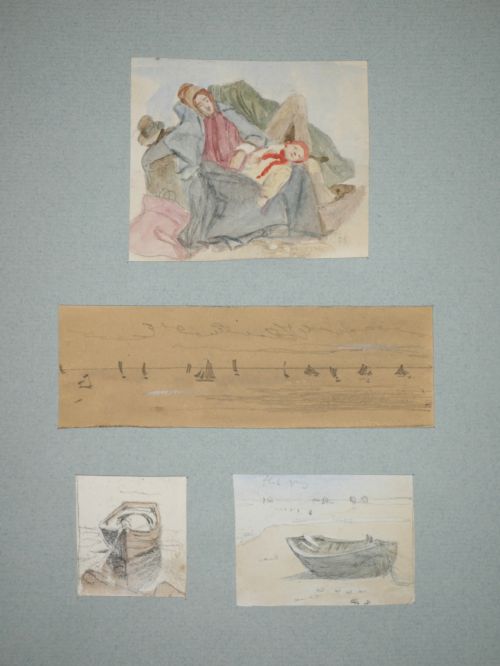
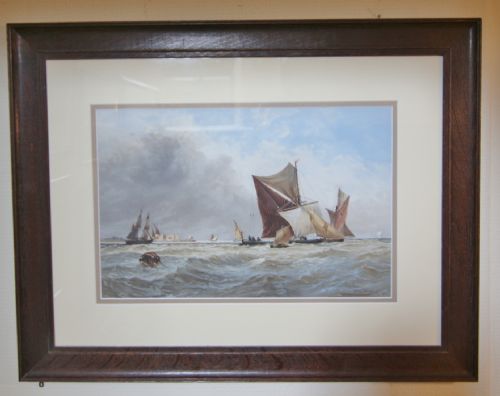
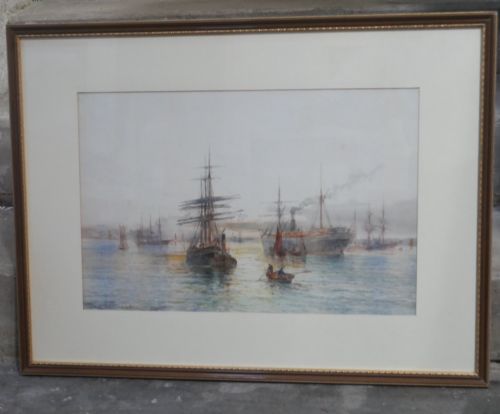
The pieces on this page include framed maritime paintings, beach scenes with boats, and coastal landscapes signed by period artists. Subjects focus on ships at anchor, fishing harbours, and figures by the shore.
Most examples date from the late nineteenth century, reflecting the period interest in marine art and coastal topography. They appear mounted behind glass within gilt wood frames.
How they were made
Artists applied watercolour pigment onto paper sheets, utilising washes and fine brushwork to render water, sky, and coastal architecture. Some works take the form of sketches, while others are finished paintings.
Framing materials recorded in the evidence include wood, glass, and gilt wood, preserving the paper works from environmental damage over time.
Retail Price Guide 2026
Typical UK retail prices for victorian seascape watercolour, calculated from the Sellingantiques database of over a million retail prices indexed since 2003. This retail price guide relies exclusively on Sellingantiques data; no external sources or auction records are used, so the figures do not describe the wider market.
Several artists braved nineteenth-century coastal winds just to paint damp fishing boats and stranded barques.
What varies in quality
Quality rests upon the skill of the hand in capturing light, movement in water, and atmospheric conditions in the sky. Named artists with documented exhibition records command greater interest than anonymous sketches.
The condition of the paper and the preservation of the original pigments distinguish finer works. Original framing materials also contribute to the integrity of the piece.
William Banks Fortescue·John Moxon·Charles William Adderton·James George Bingley·Thomas Bush Hardy·W H Grey·James Webb·Edward Brown
The Victorian Seascape Watercolour Glossary
- Watercolour pigment
- A colour medium ground with a water-soluble binder, applied to paper surfaces in washes.
- Gilt wood
- Timber frames finished with a layer of gold leaf or metallic paint, common in period framing.
- Maritime
- Pertaining to the sea, ships, and coastal environments depicted in the artwork.
- Barque
- A sailing vessel with three or more masts, frequently seen in nineteenth-century shipping subjects.
Frequently Asked Questions
What subjects appear in these watercolours?
The artworks depict coastal landscapes, lighthouses, fishing boats, and harbours. Scenes often feature sailing vessels and figures on the shore.
Locations range from British coastal spots to international ports, captured during the nineteenth century.
How should I display a paper watercolour?
Keep the framed pieces away from direct sunlight to prevent the watercolour pigments from fading on the paper. Maintaining stable indoor humidity protects both the paper and the wooden frame.
Ensure the glass is clean and the backing remains sealed to keep dust and moisture away from the artwork.
Are these watercolours signed by artists?
Many of the works carry signatures or attributions to nineteenth-century painters. Signed examples often link to known maritime artists of the period.
Unsigned sketches also appear, recording coastal views by anonymous hands from the same era.
What framing do these paintings have?
The pieces frequently retain period framing using wood and gilt wood elements. Glass protects the delicate paper surface from atmospheric dirt.
Original frames provide context for the age and origin of the artwork.