
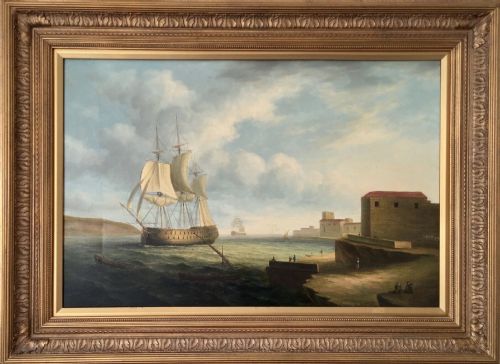

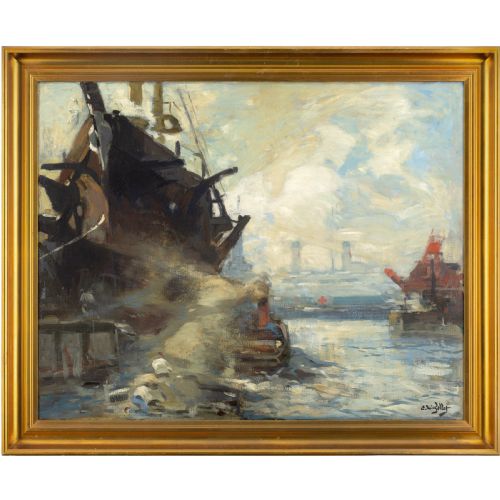
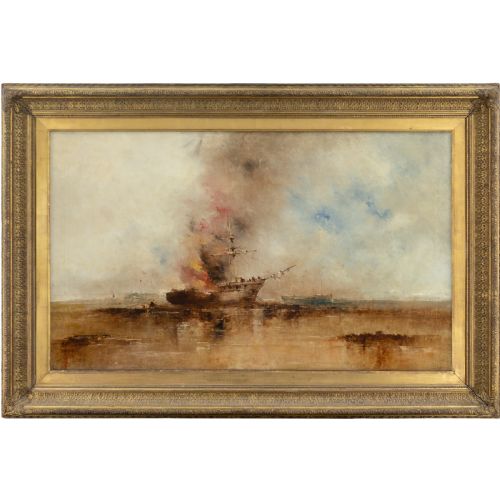
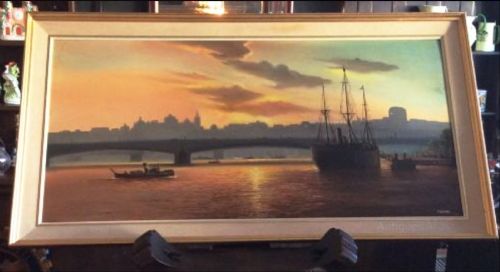

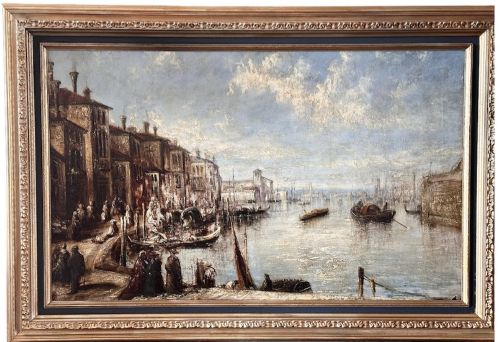

Gold Framed Seascape Painting
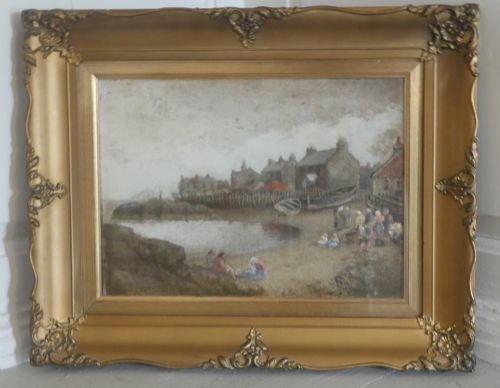
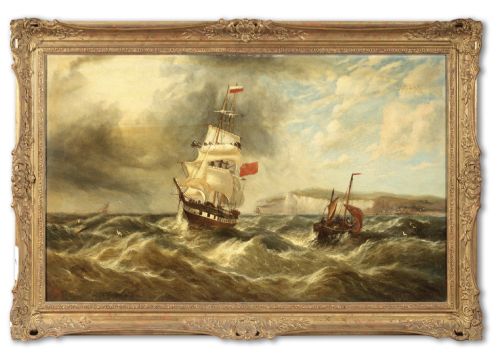
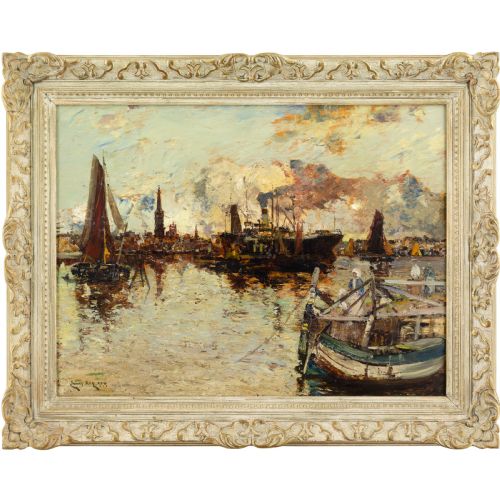
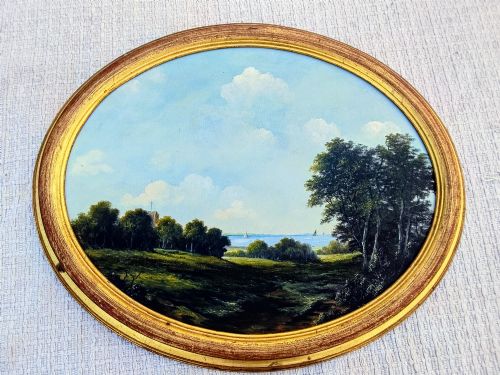
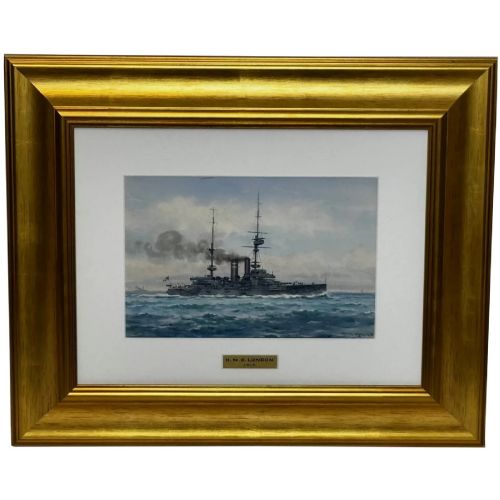
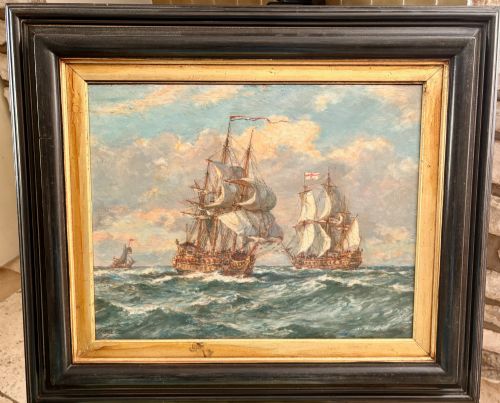
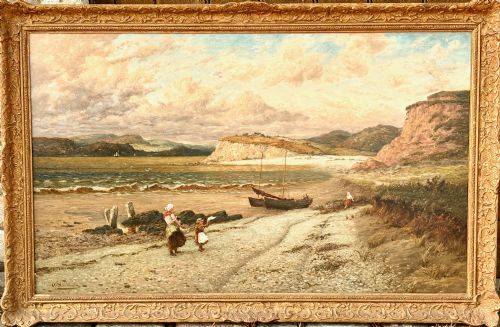
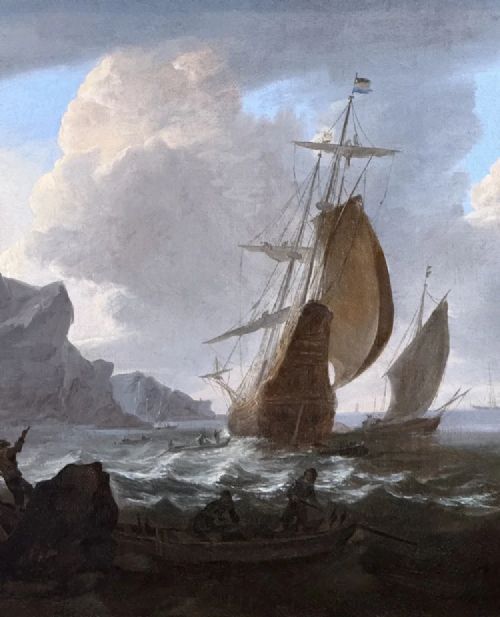
Gold framed seascape painting captures maritime history and coastal views through traditional oil paint and gilt wood.
Gold Framed Seascape Painting
A gold framed seascape painting represents maritime scenes, harbour views, and coastal vessels housed within decorative gilt surrounds. Buyers searching this phrase look for historic representations of ships, shorelines, and coastal waters originating from various periods.
The most common examples on this page date from the nineteenth century and the Edwardian era, rendered primarily in oil on canvas or board. These works range from intimate depictions of local fishing boats to large scale views of naval vessels and Venetian lagoons.
How they were made
Artists traditionally applied oil paint to prepared canvas, wooden panels, or board, building up textures of water and sky through layered brushwork. Pigments capture the shifting light of maritime environments, from calm coastal waters to heavy seas.
Frames utilise wood carved or moulded and finished with gold leaf or giltwood to complement the artwork. Glass sometimes protects watercolours and works on paper within this selection.
Gold Framed Seascape Painting Retail Price Guide 2026
Typical asking prices for gold framed seascape painting among the pieces listed under this phrase on Sellingantiques today, from the lower quarter to the upper quarter. They describe what is for sale here now, not the wider market.
Listings feature works spanning from the seventeenth century to the twentieth century, incorporating media such as oil on canvas, watercolour, and giltwood.
What varies in quality
Quality rests upon the handling of light, atmospheric perspective, and the anatomical accuracy of vessels and rigging. Finer works demonstrate a confident command of medium that conveys movement in water and weather conditions convincingly.
The craftsmanship of the accompanying gilt frame contributes significantly to the overall piece, with original carved wooden mouldings holding greater distinction than later replacements.
Eugène Louis Gillot·William McAlpine·James Kay·Frank Watson Wood·Bernard Gribble·Bonaventura Peeters·Francis Moltino·Bernard Benedict Hemy·Willem Bos·Charles Euphraisie Kuasseg·John Wilson Carmichael·Erich Mercker·Thomas Hodgson Liddell·William Henry Williamson·John Holland
The Gold Framed Seascape Painting Glossary
- Giltwood
- Wood carved and coated with gold leaf or gilt finish to create decorative frames. This material provides the characteristic metallic border around many historic oil paintings.
- Maritime Art
- Depictions of ships, sea views, coastal harbours, and naval engagements. This genre encompasses both calm coastal scenes and dramatic depictions of vessels in gales.
- Oil on Canvas
- Pigment mixed with drying oil applied to a stretched fabric support. This combination allows for rich colour depth and varied texture.
- Panel
- A flat piece of wood used as a rigid support for painting instead of canvas. Artists frequently utilised wooden panels for smaller maritime works.
Gold Framed Seascape Painting: Frequently Asked Questions
How do I identify the period of a seascape painting?
Examination of the canvas preparation, stretcher frames, and painting style provides initial clues regarding the date of creation. Costume details on figures and the rigging style of depicted ships also help narrow down the historical era.
Frame construction and materials offer additional chronological markers, as framing styles evolved alongside artistic movements from the seventeenth century through to the twentieth century.
Where were these maritime paintings typically displayed?
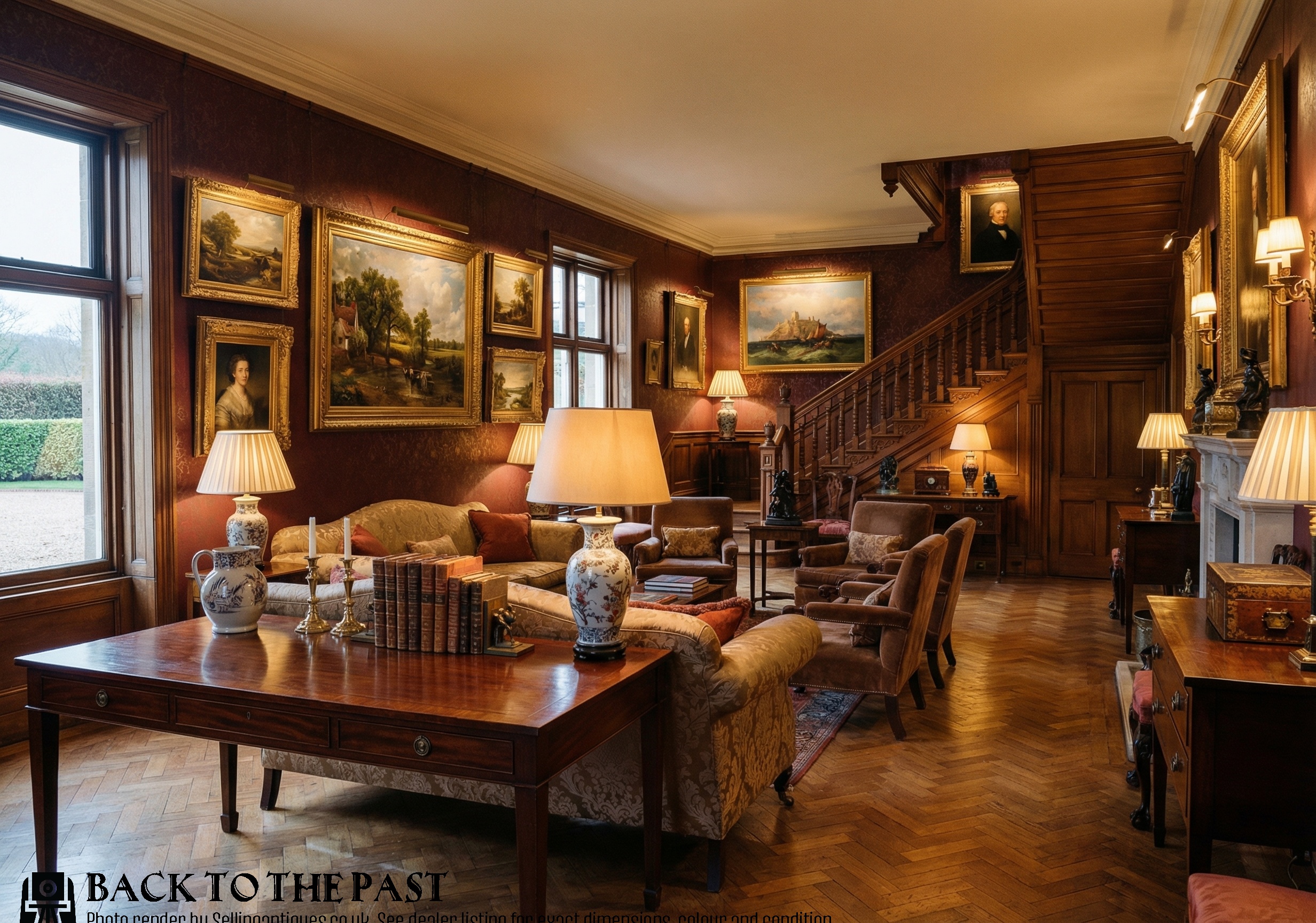
Historic maritime paintings frequently hung in the drawing rooms, studies, and offices of maritime merchants, naval officers, and coastal residents. They served as both decorative focal points and personal connections to seafaring trades.
In modern interiors, these works suit prominent wall spaces above mantelpieces or within living areas where the gilt frame catches natural light.
What is the difference between canvas and panel paintings?
Canvas paintings utilise a woven fabric stretched across a wooden frame, offering a slightly flexible surface that accommodates large scale landscape and seascape compositions. Panel paintings substitute fabric with a rigid wooden support.
Artists often chose panels for smaller, highly detailed works because the solid surface allowed for precise brushwork without the give associated with stretched canvas.
How should I care for an antique oil painting?
Antique oil paintings require stable environmental conditions away from direct sunlight and excessive humidity fluctuations. Keeping the display area at a moderate temperature preserves both the canvas and the delicate layers of oil paint.
Dusting should be undertaken gently with a soft, dry brush, avoiding any liquids or chemical cleaners that might damage the aged varnish or the gilt frame.