


Antique Harbour Painting
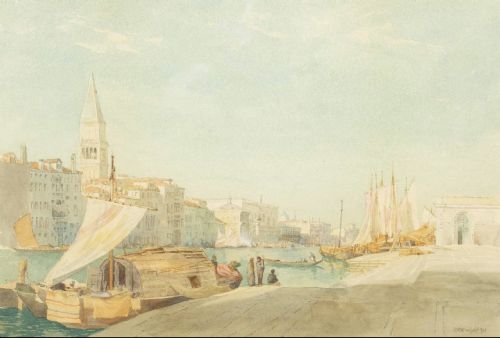
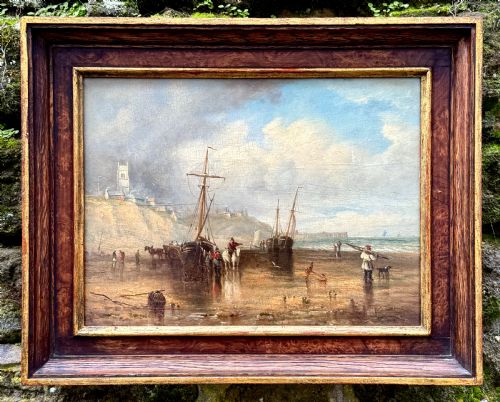
These antique harbour paintings capture maritime life in watercolour, oil on board, and canvas from the nineteenth and early twentieth centuries.
Understanding the antique harbour painting
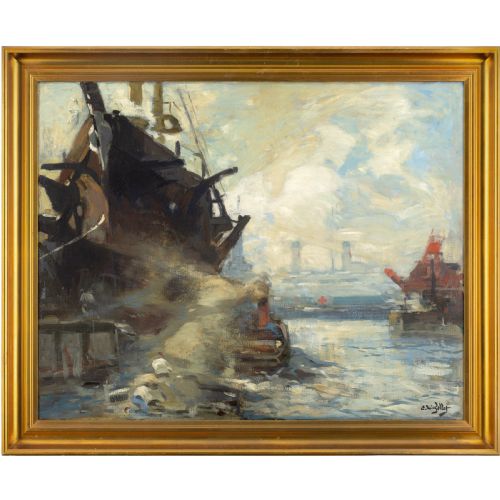
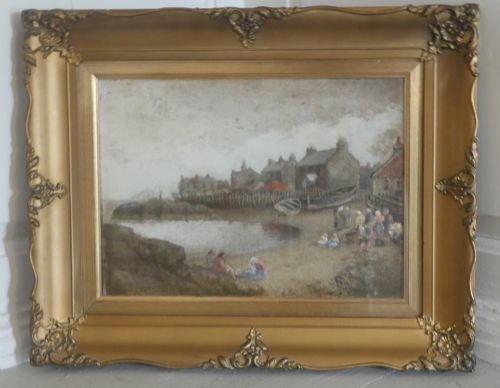
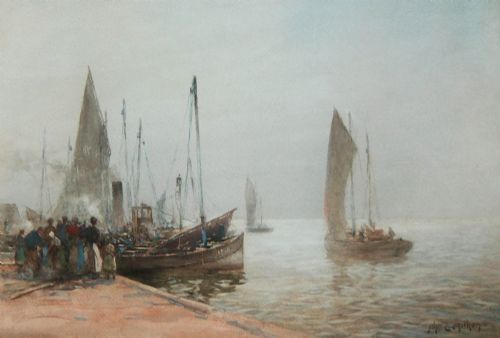
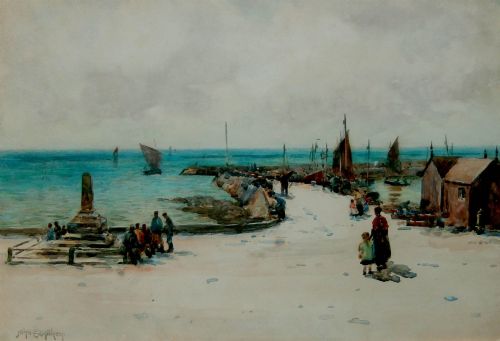
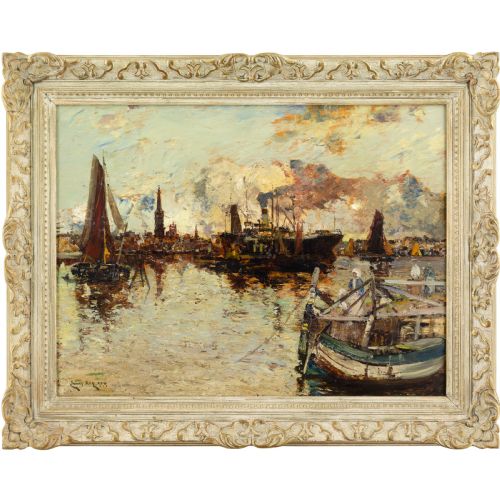
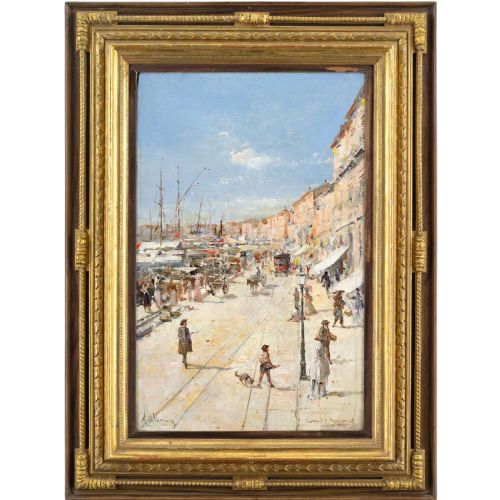
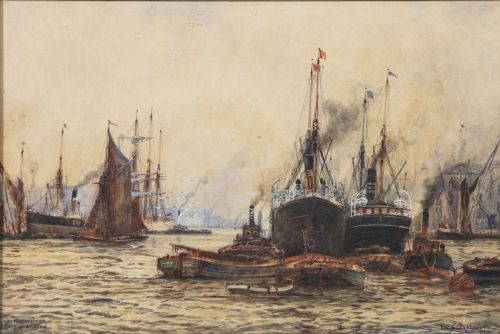
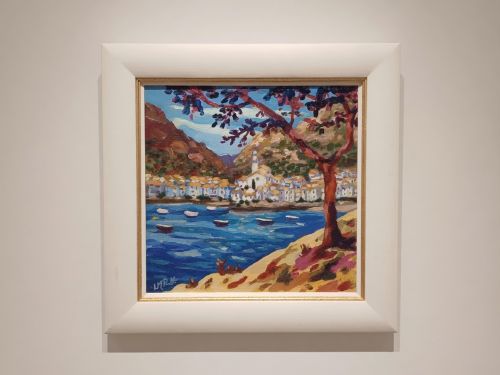
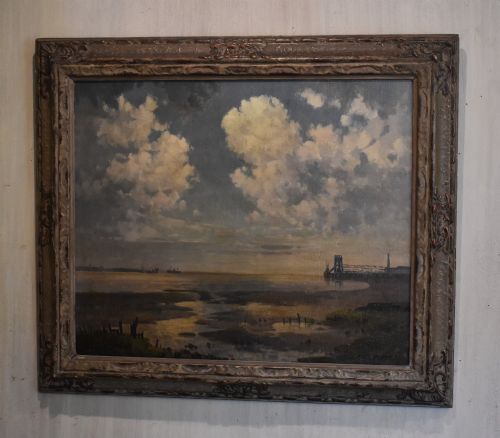
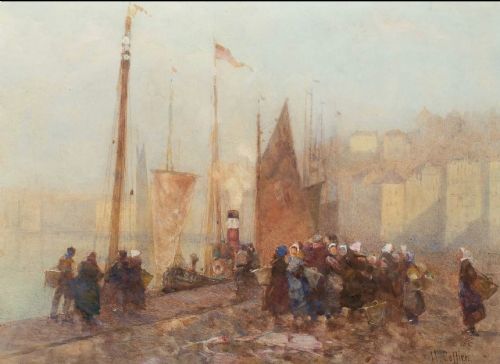
An antique harbour painting portrays coastal scenes, shipping vessels, and maritime towns from the Victorian and early twentieth-century periods. These works record bustling ports, fishing boats, and quiet estuaries across English, Scottish, and continental shores.
Watercolours on paper and oil paintings on canvas or wood panel form the principal works encountered in this selection. Artists of these periods recorded specific locations, from Yorkshire fishing ports to Cornish inlets, with careful observation of light and tide.
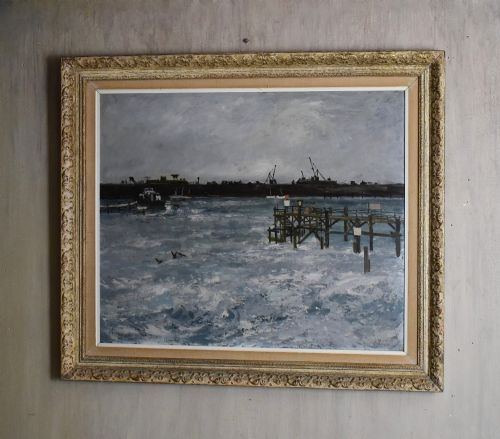
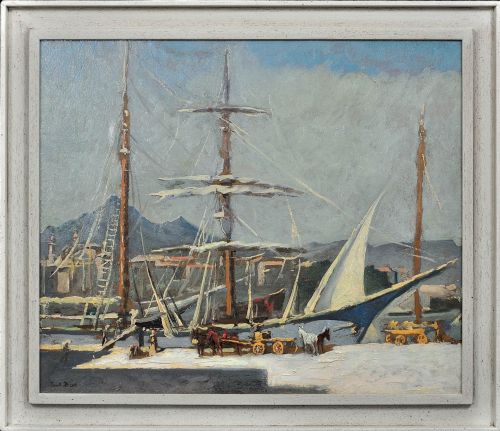
The subjects range from calm coastal anchorages with masted ships to stormy seas outside harbour walls and moonlit maritime views. Each piece serves as a historical record of coastal trade and nineteenth-century seafaring life.
Materials and technique
Artists worked primarily with watercolour pigments on paper or applied oil paint to canvas and wooden panels, often framing the finished works in gilt wood under glass. Watercolour pieces utilise thin washes of pigment to render coastal light, while oil paintings build up textured layers for water and sky.
Support materials include paper, canvas, and wood panels, paired with traditional framing using gilt wood mouldings. Many works retain inscriptions, signatures, or dates executed by the artist in paint or pencil.
Listings feature works executed in watercolour, oil on canvas, and oil on board, framed in wood and gilt wood.
Distinguishing quality in maritime art
Quality rests in the precision of the draughtsmanship, the handling of light on water, and the atmospheric depth of the coastal landscape. Superior works convey a convincing sense of movement in the waves and authenticity in the rigging of the vessels.
The handling of maritime architecture, shipping forms, and local topography separates accomplished professional works from simpler sketches. Stronger compositions balance the architectural weight of harbour walls with the organic movement of boats and tides.
William Banks Fortescue·T.S. Wallis·Rowland Henry Hill·Frank Rousse·William Edward Webb·James Robertson Miller·John Syer·Francis Moltino·Thomas Bush Hardy·David Roberts
The Antique Harbour Painting Glossary
- Watercolour pigment
- Finely ground colour suspended in a water-soluble binder, applied to paper to create transparent washes.
- Oil on board
- A painting technique where oil paint is applied directly to a rigid wooden or composition panel rather than stretched canvas.
- Gilt wood
- Timber framing treated with a thin layer of gold leaf or metallic gilt finish, standard for period picture frames.
- Seascape
- A work of art depicting the sea, coastal views, ships, and maritime activities.
- Post-Impressionism
- An art movement extending beyond Impressionism that explored emotional response and structural form in painting.
Frequently Asked Questions
What periods do these paintings date from?
These works date primarily from the Victorian era and the early twentieth century, spanning the nineteenth century up to the 1930s.
Most pieces reflect the artistic styles and maritime subjects popular during the late Victorian and Edwardian periods.
How were these coastal scenes originally displayed?
Owners typically displayed these framed watercolours and oil paintings in domestic interiors, parlours, and maritime offices.
They were mounted in protective wood and gilt frames, often behind glass in the case of works on paper.
Are these paintings signed by the artists?
Many examples feature original signatures, monograms, or studio inscriptions by the artist, often placed in the lower corners of the composition.
Some works also include period titles or location notes written on the reverse or mount.
What mediums were used in these artworks?
Artists utilised watercolour pigments on paper, oil paint on stretched canvas, and oil on wooden panels.
Pens and washes were occasionally combined with watercolour for preliminary sketches and detailed harbour views.