

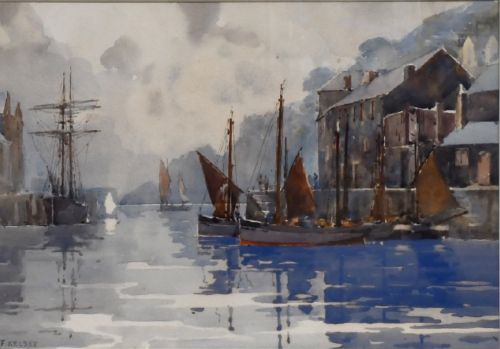


British Impressionist Watercolour
British impressionist watercolour works capture light and atmosphere through fluid pigment on paper, offering collectors a direct glimpse into early twentieth century scenes.
British Impressionist Watercolour
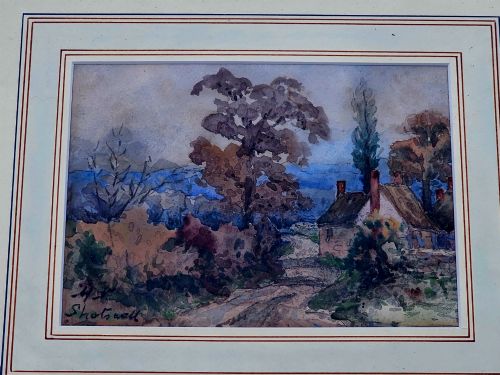
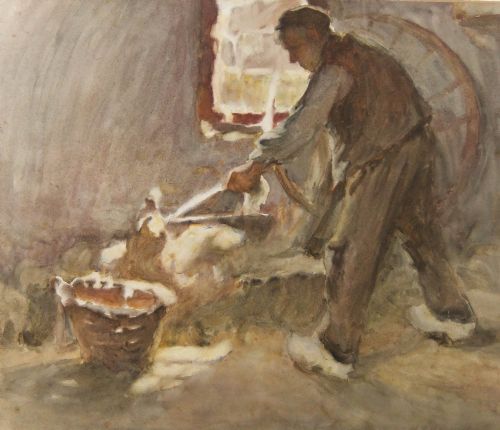
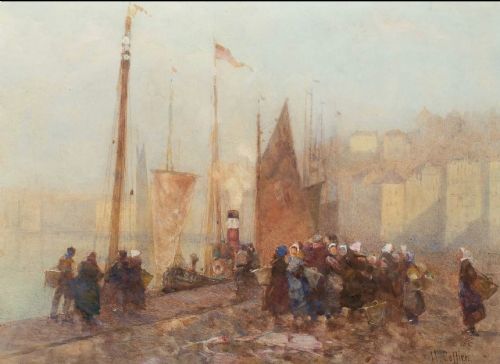
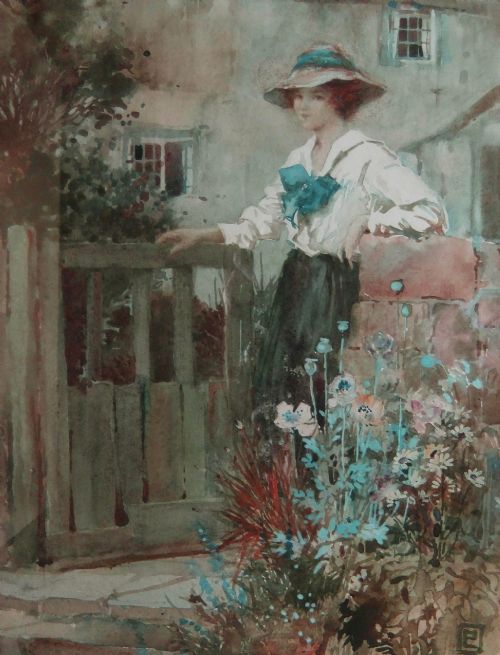
A british impressionist watercolour typically depicts landscapes, coastal harbours, rural farmyards, and domestic gardens created during the nineteenth and twentieth centuries. These paintings record fleeting effects of light and weather using traditional water-based media on paper supports, often framed behind glass within wood or gilt wood mouldings.
Buyers browsing this selection will most frequently encounter works from the Edwardian era and the interwar decades. Painters associated with regional artist colonies, particularly the Newlyn School and the Staithes Group, feature prominently alongside urban street scenes and pastoral views.
How they were made
Artists applied watercolour pigment suspended in water directly onto paper, relying on the white of the unpainted sheet to create luminosity and highlights. Painters frequently worked en plein air to capture immediate atmospheric conditions before the water dried.
Finished works received protection beneath glass mounted in wooden or gilt wood frames to shield the delicate paper surface from atmospheric moisture and handling.
British Impressionist Watercolour Retail Price Guide 2026
Typical asking prices for british impressionist watercolour among the pieces listed under this phrase on Sellingantiques today, from the lower quarter to the upper quarter. They describe what is for sale here now, not the wider market.
Several artists preferred painting windy coastal harbours where salt spray occasionally mingled directly with the wet pigment on their paper.
What varies in quality
The strength of a composition depends on the confidence of the brushwork and the artist's ability to balance areas of dense pigment with untouched paper. Masterful handling creates a sense of light and movement that lesser hands miss through overworked detail.
Condition plays a central role in valuation, particularly the preservation of pigment vibrancy against fading and the absence of heavy acidification or foxing on the paper support.
William Banks Fortescue·Henry Silkstone Hopwood·Hector Caffieri·Percy Lancaster·Frank Kelsey·Edgar Woollatt·William Lee Hankey·Fred Lawson·Arthur Reginald Smith·Edward Seago·George Graham·Arthur Tucker·Charles James Lauder·Ernest Pile Bucknall·Rowland Henry Hill·John Atkinson·Florence Hess·James Watson·Lester Sutcliffe·Owen Bowen·George Soper·Lilian Stannard·Frederick William Hattersley·Nora Cundell·Sir Herbert Hughes Stanton
The British Impressionist Watercolour Glossary
- Watercolour pigment
- Finely ground colour particles mixed with a water-soluble binder, traditionally gum arabic, applied to paper surfaces in washes.
- Newlyn School
- An artist colony based in Cornwall during the late nineteenth and early twentieth centuries, known for naturalistic paintings of local fishermen and rural life.
- Gilt wood
- Timber framing finished with a thin layer of gold leaf or metallic gilt, commonly used to frame fine art paintings from the Victorian period onward.
- Plein air
- The practice of painting outdoors to observe landscape and light directly rather than working entirely from studio sketches.
British Impressionist Watercolour: Frequently Asked Questions
What is a british impressionist watercolour?
It is a painting created on paper using water-soluble pigments, produced by British artists influenced by impressionist techniques between the late nineteenth and mid twentieth centuries.
These works focus on natural light, outdoor settings, and everyday rural or coastal subjects rather than rigid academic realism.
How should I hang these watercolours?
Watercolours require careful placement away from direct sunlight to prevent the pigments from fading over time. Keeping them in rooms with stable humidity protects both the paper support and the gilt or wooden frame.
Using museum glass during framing helps block harmful ultraviolet light while maintaining clear visibility of the brushwork.
How do I identify the period?
The period can often be deduced from the artist's recorded lifespan, the costume and architecture depicted in the scene, and the framing style. Edwardian and interwar pieces frequently display lighter palettes and looser brushwork than stricter Victorian academic works.
Signatures, exhibition labels on the reverse, and stylistic ties to groups like the Staithes Group or Newlyn School also help narrow down the date.