
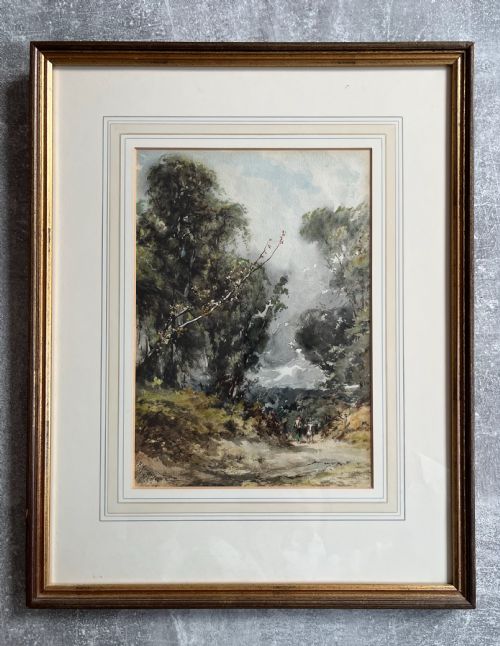
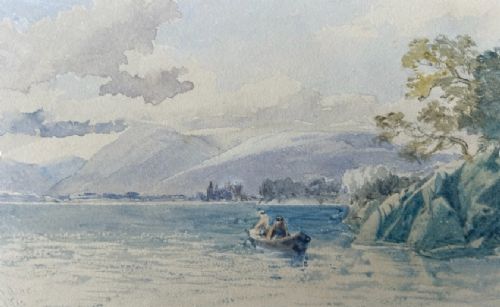

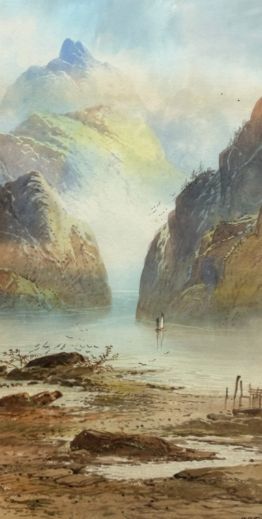
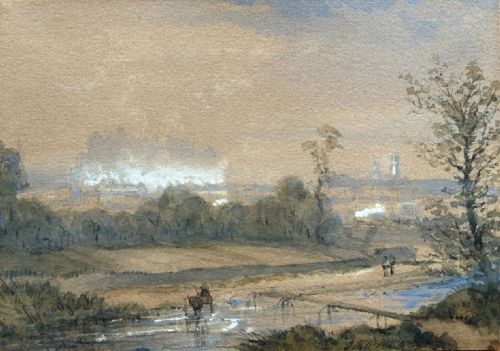

Signed Landscape Watercolour
A signed landscape watercolour brings the quiet observation of British and European countryside directly onto the wall.
What a signed landscape watercolour is
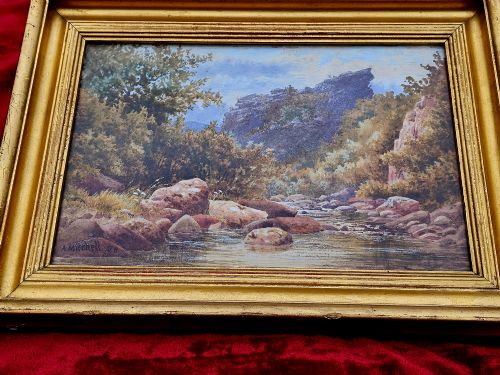
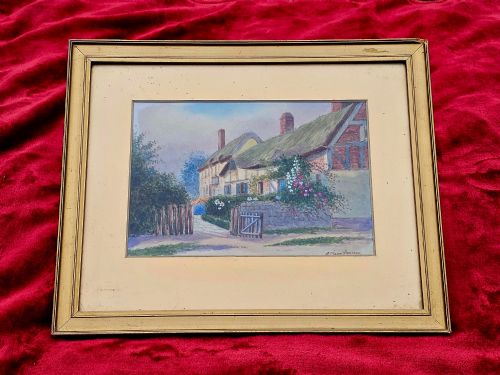
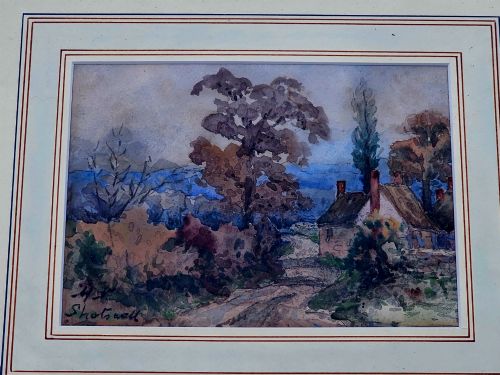
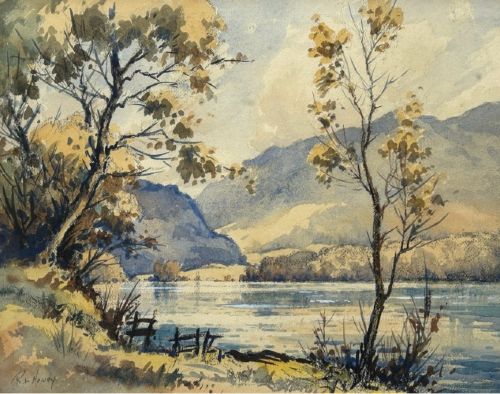
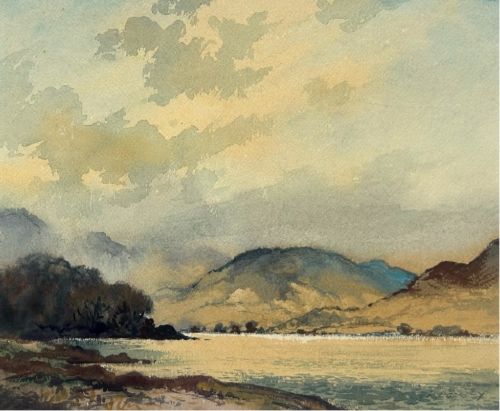
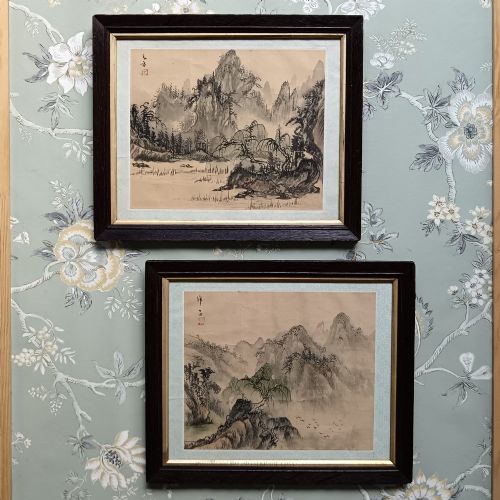
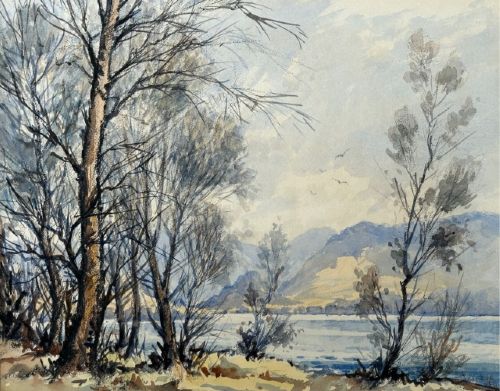
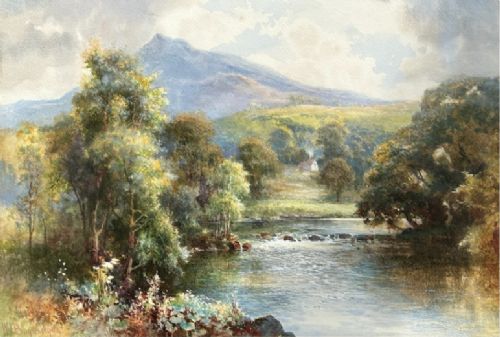
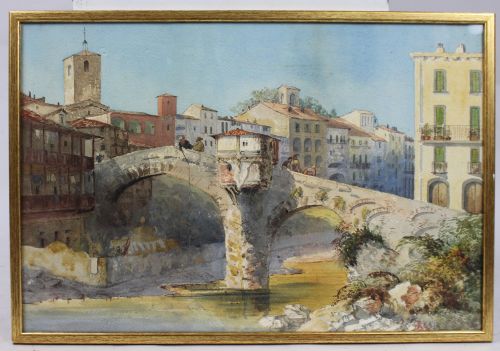
A signed landscape watercolour captures rural views, coastal scenes, and historic architecture across the nineteenth and twentieth centuries. These paintings range from Victorian pastoral watercolours to early twentieth-century impressionist sketches on paper.
The works appearing here span the Victorian era, Edwardian period, and mid-century modernism, reflecting changing approaches to natural light and topography. Artists documented specific locations across England, Scotland, Wales, Ireland, and continental Europe.
Subjects commonly include rivers, woodlands, hillsides, and harbours executed by named artists who signed their compositions. Buyers encounter framed and glazed original watercolours framed in wood and gilt metal.
Materials and technique
Artists applied watercolour paint and ink onto paper supports using traditional brushwork techniques. Gouache occasionally appears alongside watercolour to build opaque highlights and denser areas of colour.
Finished sheets received protection beneath glass within wood and gilt metal frames. The combination of water-soluble pigments on paper demanded precise control from the painter.
Retail Price Guide 2026
Typical UK retail prices for signed landscape watercolour, calculated from the Sellingantiques database of over a million retail prices indexed since 2003. This retail price guide relies exclusively on Sellingantiques data; no external sources or auction records are used, so the figures do not describe the wider market.
Listings feature works created across the nineteenth and twentieth centuries on paper supports using watercolour paint and ink.
Factors determining quality
The strength of the composition and the confidence of the brushwork separate accomplished watercolours from standard topographical sketches. Skilled painters manipulated translucent washes to capture atmospheric effects and changing light.
Provenance and documentation elevate certain pieces, particularly when a signature, date, or titled location situates the work within an artist's known output. The condition of the paper and the preservation of the original pigments also influence the standing of a piece.
Joseph R R McCulloch·Alfred G Morgan·Rowland Henry Hill·Fred Lawson·George Graham·George F Pennington·James Robertson Miller·Alexander Jamieson·Walter Emsley·Florence F Wilmot·Karl S Wood·Tom Anderton·Stephen Enoch Hogley·Allan Freer·James Orrock·C Lawrence·H Stuart·John Sowden·Thomas Henry Victor·Thomas Henry Hunn·Laurence George Bomford·John Syer·David Cox Senior·Harry Turner·George Sykes
The Signed Landscape Watercolour Glossary
- Watercolour paint
- A medium consisting of colour pigments suspended in a water-soluble vehicle, applied to paper to create translucent washes.
- Gouache
- An opaque watercolour medium containing pigment mixed with a binding agent and white filler, used to create solid highlights.
- Impressionism
- A nineteenth-century painting style focusing on accurate depiction of light and fleeting visual moments rather than rigid detail.
- Support
- The physical material, in this case paper, upon which the watercolour pigments are laid down.
- Gilt metal
- A metallic framing material treated with a gold-coloured finish to enclose and complement the artwork.
Frequently Asked Questions
How should I hang a watercolour painting?
Watercolours on paper require protection from direct sunlight to prevent the pigments from fading over time. Hang them on interior walls away from moisture and extreme temperature fluctuations.
Ensure the framing uses acid-free mounts and glass to keep the paper safely separated from the environment.
Are these paintings original works?
Every piece featured is an original hand-painted work on paper rather than a reproduction or print. Artists applied the pigments directly, leaving unique brushstrokes and wash variations.
Signatures inscribed by the painter help confirm the individuality of each composition.
What periods do these watercolours represent?
The selection spans from the nineteenth century through the Edwardian era and into the mid-twentieth century. Victorian, Impressionist, and British Modernist movements all contribute to the range of styles available.
Dates inscribed by artists or recorded in archives help anchor individual pieces within these eras.
How do I identify a location in a painting?
Many artists inscribed the title of the depicted scene directly onto the front or reverse of the paper. Local landmarks, churches, rivers, and coastal towns often provide clear clues to the geographic setting.
Matching the topography to historical records clarifies where the artist set their easel.