




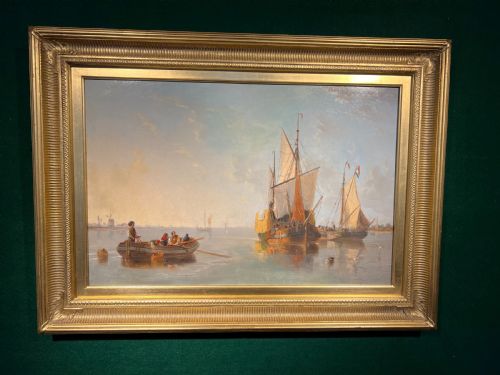
Antique Sailing Ship Art
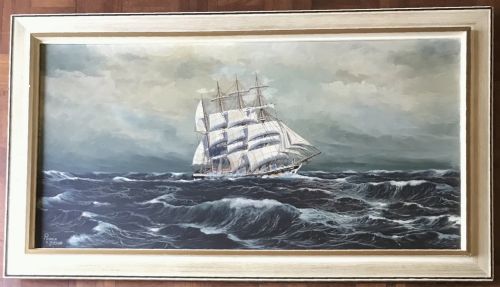
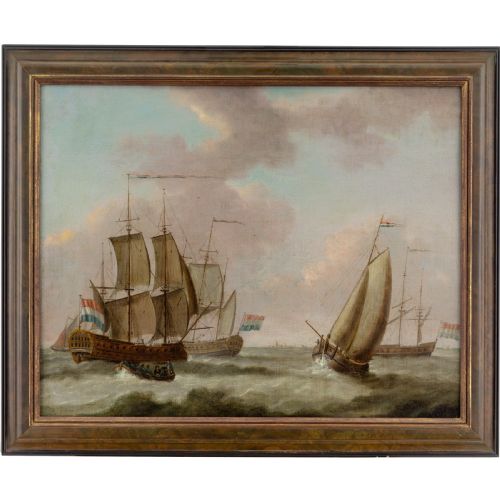
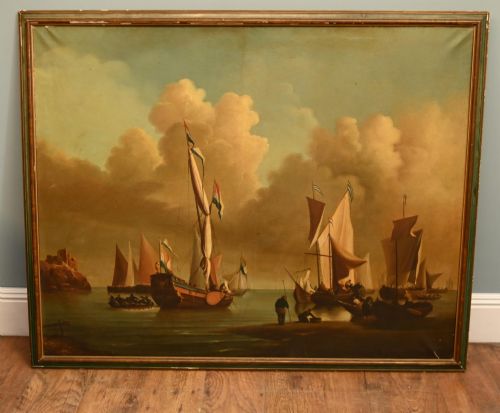
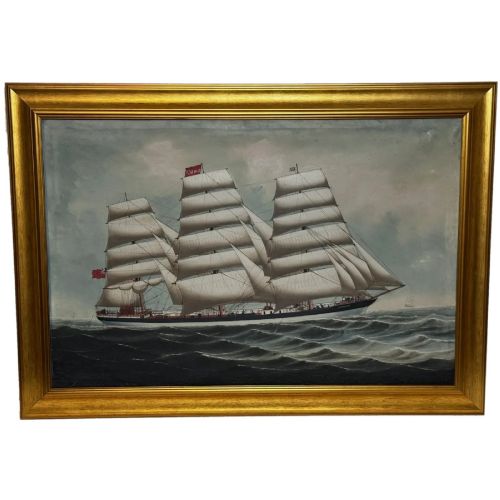
Antique sailing ship art captures the drama of historical vessels under full canvas, spanning detailed oil paintings and tactile dioramas.
Antique Sailing Ship Art
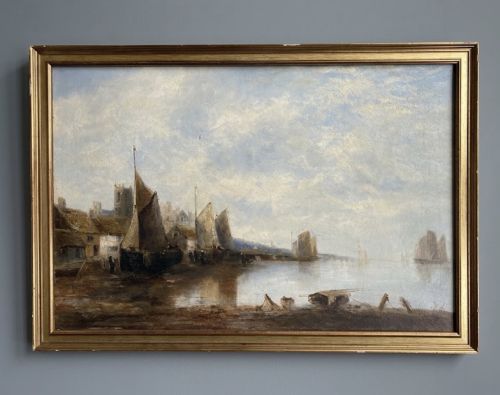
When searching for antique sailing ship art, buyers encounter a diverse range of visual records documenting maritime history, coastal scenes, and dramatic sea voyages. These pieces extend from flat works on canvas and paper to three-dimensional shadow box displays and maritime dioramas.
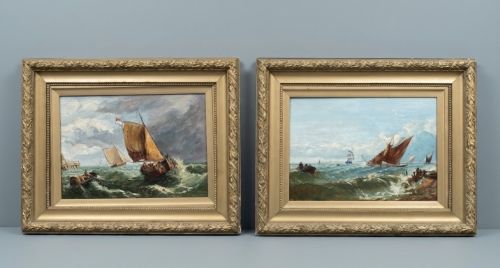
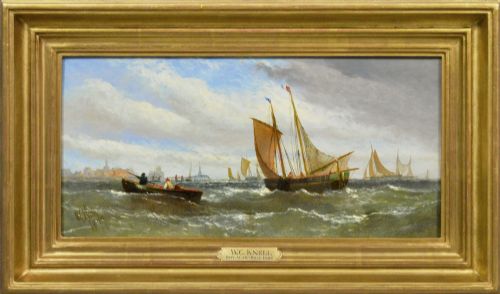
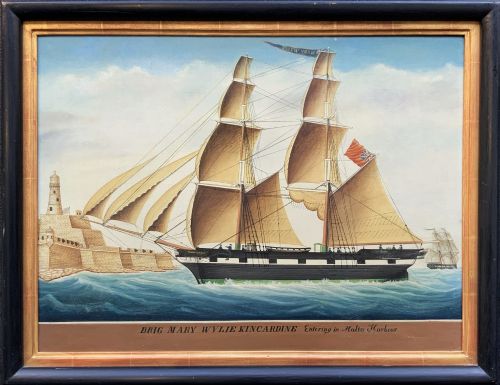
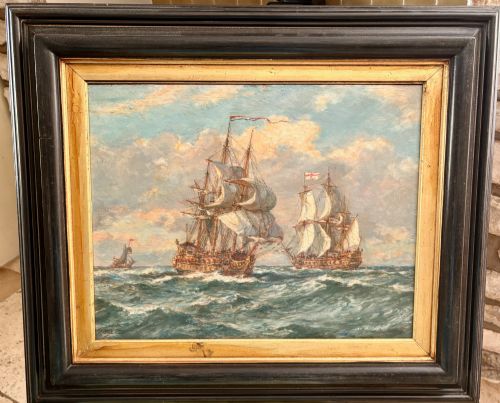
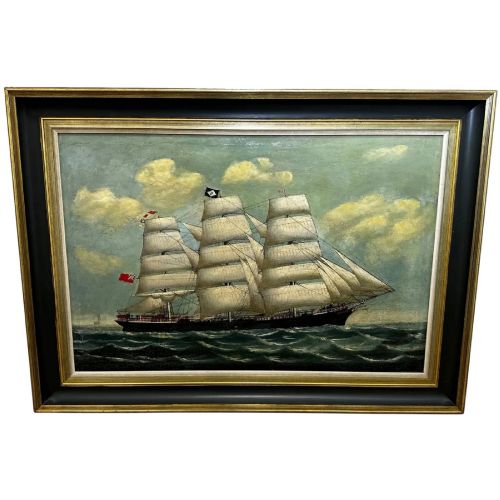
The most common examples on this page date from the Victorian and Edwardian eras, reflecting a period of intense fascination with naval power, commercial shipping, and maritime exploration. Works vary from serene coastal anchorages to violent gales featuring three-masted schooners, clippers, and war ships.
Subject matter often includes specific named vessels, historical events, and recognizable ports ranging from local British estuaries to international waters. Buyers select these artworks to anchor a room with a distinct historical narrative and traditional marine aesthetic.
Materials and Techniques
Artists relied primarily on oil paint applied to canvas, wood panels, or card to build rich textures of churning waves and billowing sails, while others utilised watercolor and pencil on paper for lighter atmospheric effects. These traditional pigments capture the changing light of sea and sky through layered brushwork and delicate washes.
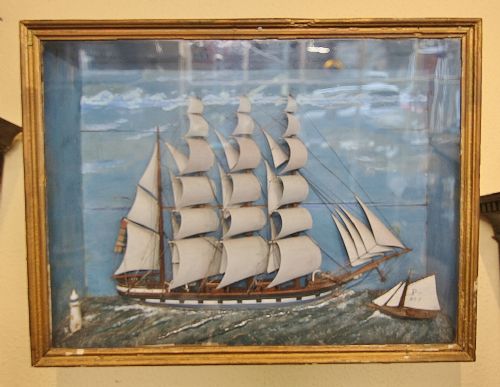
Three-dimensional pieces incorporate carved wood, paper, fabric, and glass to construct elaborate maritime dioramas and ship models housed within shadow boxes or bottles. Makers combined these mixed media elements with painted backdrops to create realistic depth and perspective on a miniature scale.
Antique Sailing Ship Art Retail Price Guide 2026
Typical asking prices for sailing ship art among the pieces listed under this phrase on Sellingantiques today, from the lower quarter to the upper quarter. They describe what is for sale here now, not the wider market.
Listings feature works from the seventeenth century through to the mid-twentieth century, dominated by nineteenth-century examples.
Distinctions in Quality
Quality in these maritime works rests upon the artist's precise understanding of nautical rigging, hull construction, and vessel proportions. Master painters and skilled diorama makers captured the accurate mechanics of a ship under sail, whereas lesser works often display rigid forms and incorrect scale.
The handling of atmospheric conditions, such as the translucent quality of rough seawater and the play of light on canvas, separates accomplished pieces from simple decorative items. Furthermore, the intricacy of detail within the rigging and the preservation of original framing influence the overall stature of the piece.
Reginald Arthur Borstel·Charles Edward Dixon·John Rose Miles·Bernard Gribble·William Lionel Wyllie·Bonaventura Peeters·T B Hardy·John Wilson Carmichael·Lai Fong·Frank Kelsey·Abraham Hulk I·William Frederick Settle·Charles William Adderton·Ernest Dade·Thomas Bush Hardy·Daniel Sherrin
The Antique Sailing Ship Art Glossary
- Diorama
- A three-dimensional scene enclosed in a glass-fronted box, frequently featuring a carved model ship set against a painted canvas background. These displays use layered elements to create realistic depth.
- Barque
- A sailing vessel with three or more masts having the main- and fore-masts square-rigged and the mizzen-mast fore-and-aft rigged. This configuration was common for long-distance cargo transport.
- Clipper
- A very fast nineteenth-century merchant sailing ship with three masts and a large sail area. They are celebrated in maritime art for their sleek hulls and speed.
- Seascape
- A painting, photograph, or other work of art that depicts the sea. These works focus on open water, coastal views, and maritime weather.
- Etching
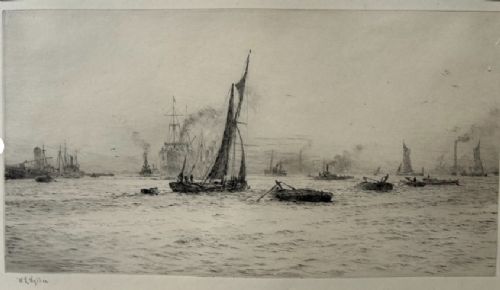
- A printmaking technique where lines are incised into a metal plate with acid before ink is applied for printing. This method allows for fine, precise linework in nautical illustrations.
Antique Sailing Ship Art: Frequently Asked Questions
What is a maritime diorama?
A maritime diorama is a shadow box containing a small-scale model of a ship, constructed from carved wood, paper, and textiles, set against a painted backdrop of the sea and sky.
The enclosed glass case protects the delicate rigging and intricate components while creating a convincing three-dimensional window onto historic shipping.
How do I date a marine painting?
Dating relies on stylistic clues within the artwork, such as the clothing of figures, the specific rigging of the vessels, and the framing materials used.
Signatures, exhibition labels on the reverse, and artist records also help narrow the decade of creation.
Where should I hang maritime art?
These works suit studies, libraries, and living spaces, particularly when paired with traditional wood furniture and neutral wall colours that complement the tones of the sea.
Avoid placing delicate watercolours and paper works in direct, harsh sunlight to prevent fading.
How do watercolor and oil paintings differ?
Watercolours are applied to paper with transparent washes, offering a luminous, lighter quality that traditionally required protective glass framing.
Oil paintings utilise heavier pigments on canvas or board, allowing for rich texture, deep shadows, and robust preservation without glass.