





19th Century Marine Watercolour
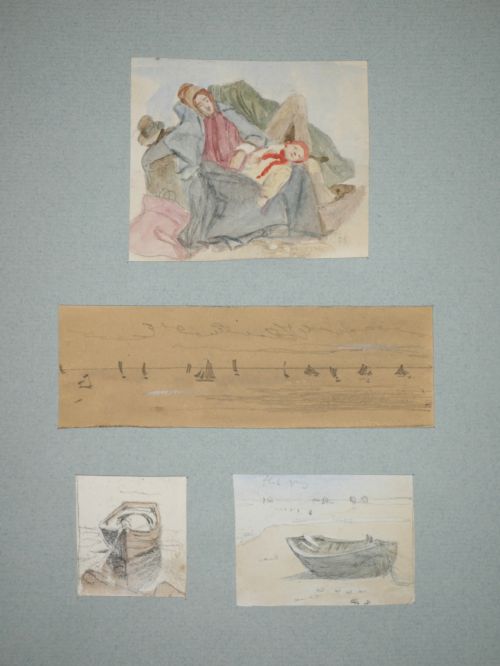
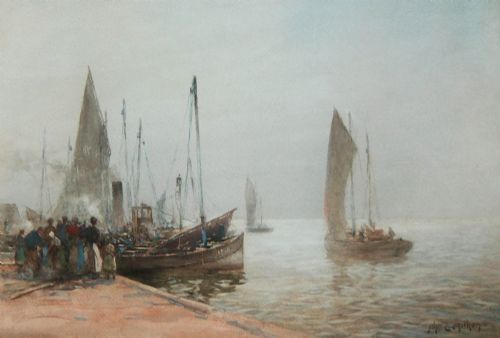
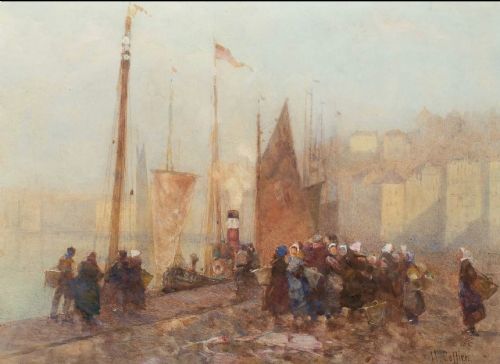
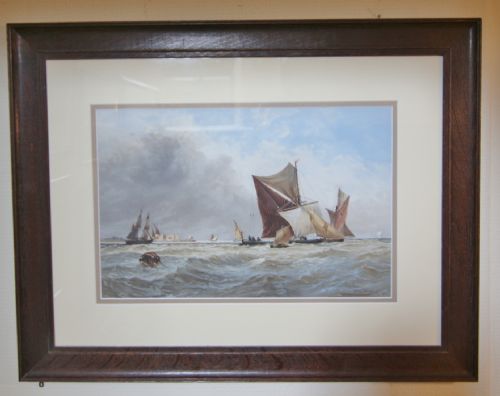
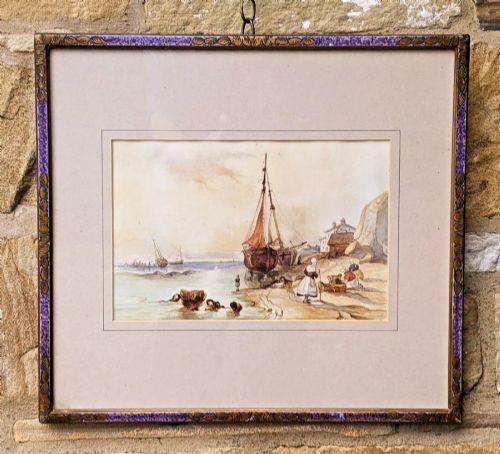
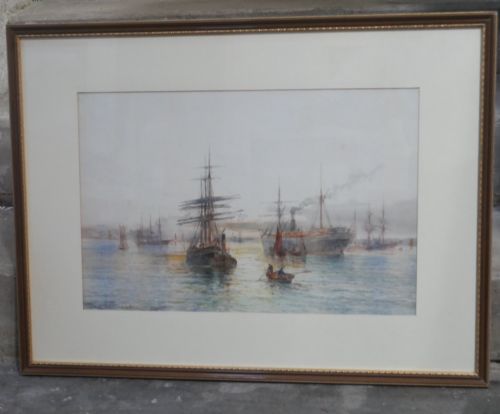
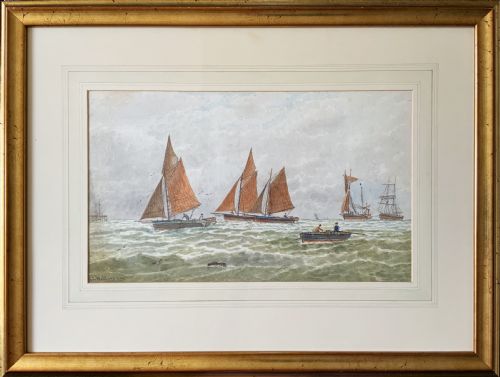
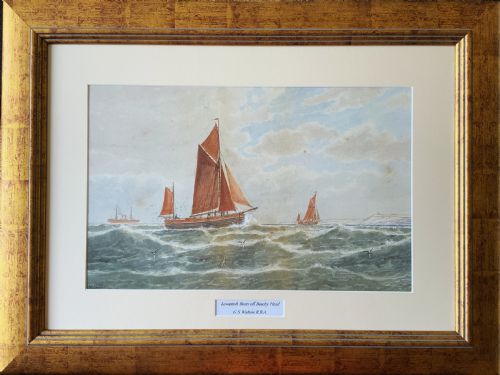
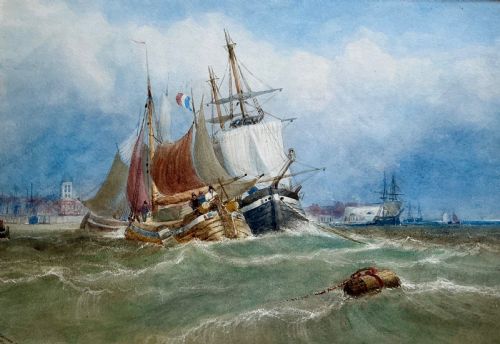
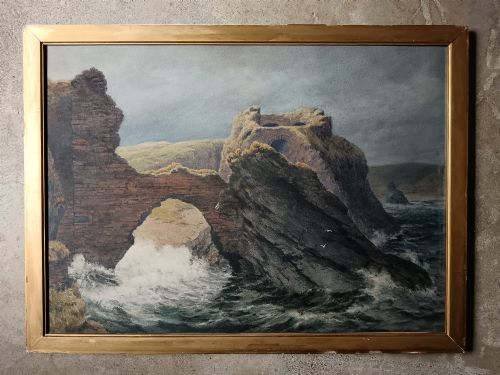
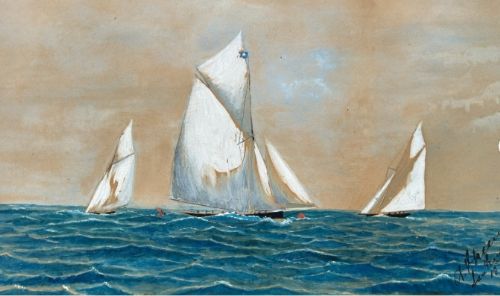
These pieces are a 19th century marine watercolour, capturing coastal harbours, shipping lanes and fishing fleets on paper with pigment.
19th Century Marine Watercolour
A 19th century marine watercolour depicts maritime life, coastal views and shipping vessels across British and European waters. These works typically record bustling harbours, anchored barques, and rough seas under expansive skies.
The most common examples on this page date from the Victorian era, particularly the later decades of the nineteenth century. Artists often captured specific coastal locations, from Yorkshire fishing ports to Venetian lagoons and Dutch waterways.
The formats range from intimate sketchbook drawings to large framed exhibition paintings. They document an era when maritime trade and coastal communities formed the backbone of industry and travel.
How they were made
Artists applied watercolour pigment and ink onto paper sheets, frequently utilising the white of the unpainted paper to create highlights on foaming waves and billowing sails. Watercolour pigment was sometimes combined with bodycolour or gouache to add opacity and depth to skies and water.
Finished works were usually mounted behind glass within wooden frames, occasionally enhanced with gilt wood mouldings to suit Victorian domestic interiors.
19th Century Marine Watercolour Retail Price Guide 2026
Typical asking prices for 19th century marine watercolour among the pieces listed under this phrase on Sellingantiques today, from the lower quarter to the upper quarter. They describe what is for sale here now, not the wider market.
Listings feature works from the Victorian period up to the early twentieth century, executed on paper using watercolour pigment.
What varies in quality
The strength of a composition rests on the artist's command of atmospheric light, accurate rigging detail, and the natural movement of water. Skilled painters balanced precise architectural or nautical elements with looser washes that conveyed wind and weather.
Condition plays a significant role, as prolonged exposure to direct sunlight can fade delicate pigments on paper. Surviving works preserved under glass with minimal fading retain their original tonal contrast and chromatic balance.
James Orrock·James Smetham·James E. Aitken·William Banks Fortescue·Hector Caffieri·Thomas Bush Hardy·George Stanfield Walters·Henry Barlow Carter·John Moxon·William Frederick Settle·Charles William Adderton·Ernest Dade·F J Aldridge·John McDougal·James Thomas Watts·John Mitchell·Samuel Owen·Charles Harmony Harrison·Kate E Booth·R P Noble·Clara Montalba·William Wyld·Walter Duncan·William Tatton Winter·Arthur Wilde Parsons
The 19th Century Marine Watercolour Glossary
- Watercolour
- A paint consisting of pigment suspended in a water-soluble vehicle, applied to paper to create translucent washes of colour. It requires swift precision from the artist because mistakes cannot easily be painted over.
- Seascape
- A painting or drawing that depicts the sea, coastal views, or marine vessels in motion. These works focus heavily on the changing moods of the water and sky.
- Barque
- A sailing vessel with three or more masts, having the foremast and mainmast square-rigged and the mizzenmast fore-and-aft rigged. This rig was common for 19th-century merchant shipping.
- Gilt wood
- Wood coated with a thin layer of gold leaf or gold paint, frequently used for Victorian picture frames. It provides a bright, reflective border that enhances the artwork within.
19th Century Marine Watercolour: Frequently Asked Questions
How do I date a marine watercolour?
Dating relies on signatures, exhibition labels, and stylistic clues within the clothing, architecture, or shipping vessels depicted in the scene. Many works from this era include monograms, dates, or detailed inscriptions on the reverse.
Comparison with documented works by known Victorian artists also helps narrow down the period of execution.
Where should I hang a watercolour?
Watercolours require placement away from direct sunlight to prevent the pigments from fading over time. Hanging them on interior walls with stable temperature and humidity protects the paper support.
Using museum-grade UV-filtering glass provides an extra layer of defence against light damage in domestic settings.
How do I care for framed paper art?
Paper art needs protection from damp conditions to prevent foxing, which appears as brown spots caused by mould or iron impurities in the paper. Keeping the room environment dry ensures the paper remains stable.
Ensure the backing board and mount materials are acid-free to prevent chemical degradation over the decades.
What subjects are common in these paintings?
Common subjects include bustling fishing harbours, merchant sailing ships, coastal cliffs, and tidal rivers. Artists frequently recorded working boats like yawls and barques alongside specific landmarks.
Scenes often capture everyday coastal activities such as launching boats, spreading nets, or landing the daily catch.