




Original Watercolour Seascape
An original watercolour seascape captures maritime life and coastal weather through fluid pigments on paper, offering collectors a direct window into nineteenth and early twentieth century naval history.
What an original watercolour seascape is
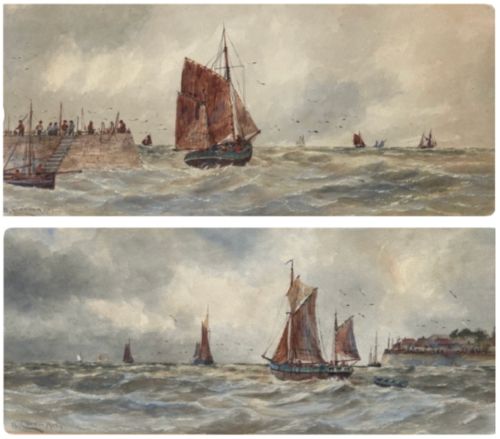
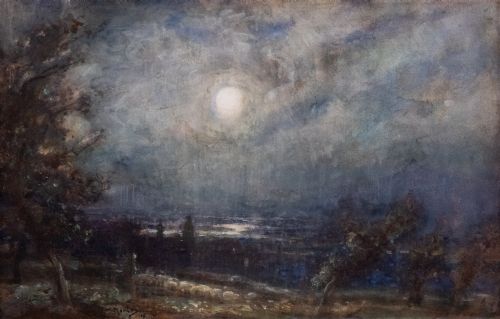
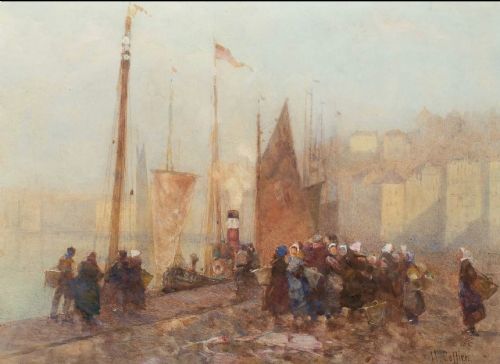
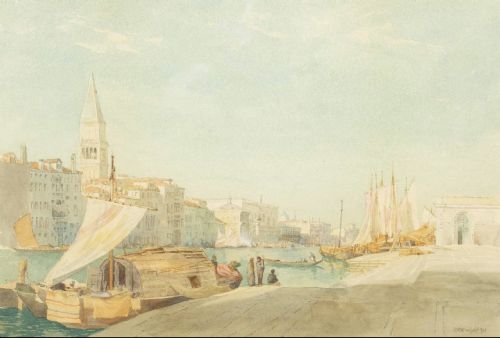
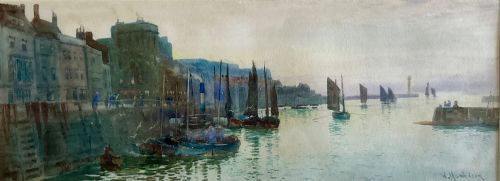
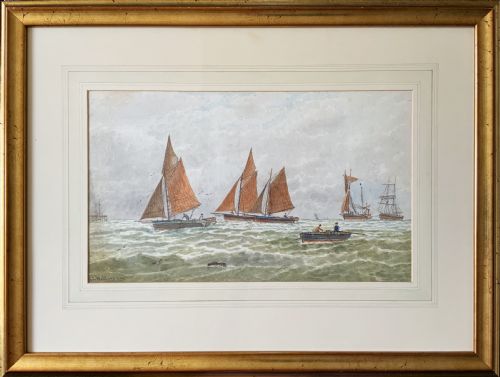
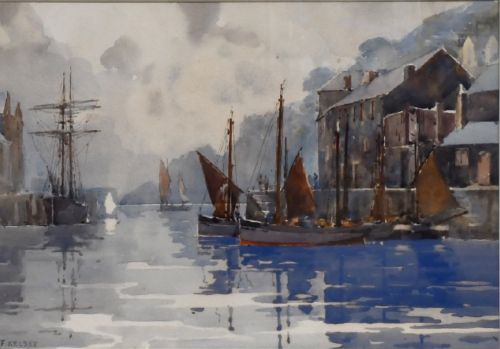
An original watercolour seascape depicts marine subjects, coastal harbours, and shipping vessels rendered by artists working primarily during the Victorian and Edwardian eras. These paintings record specific coastal locations around Britain, from Yorkshire fishing ports to Cornish harbours and the Isle of Wight.
The most common examples encountered on this page date from the nineteenth and early twentieth centuries, spanning styles from Victorian marine art to British impressionism. Artists of these periods observed coastal weather, tidal changes, and working boats with documentary precision combined with artistic atmosphere.
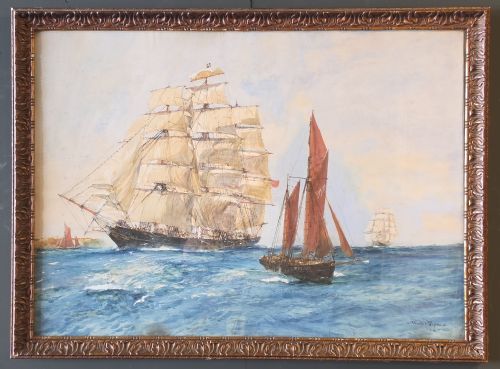
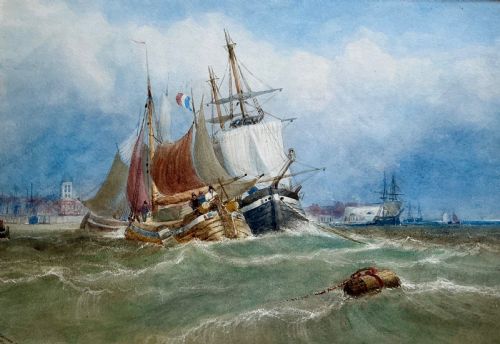
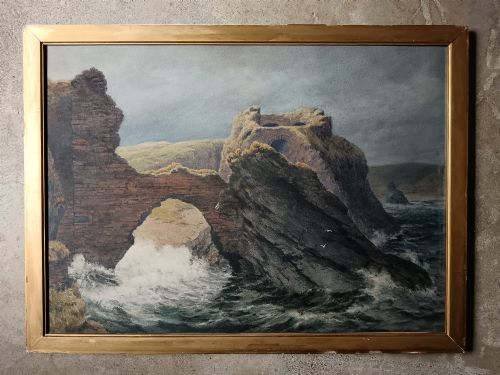
Subjects range from bustling quays with trawling luggers and steam vessels to stormy seas and quiet anchorages. These works function simultaneously as historical records of maritime commerce and as expressions of nineteenth century landscape painting.
How they were made
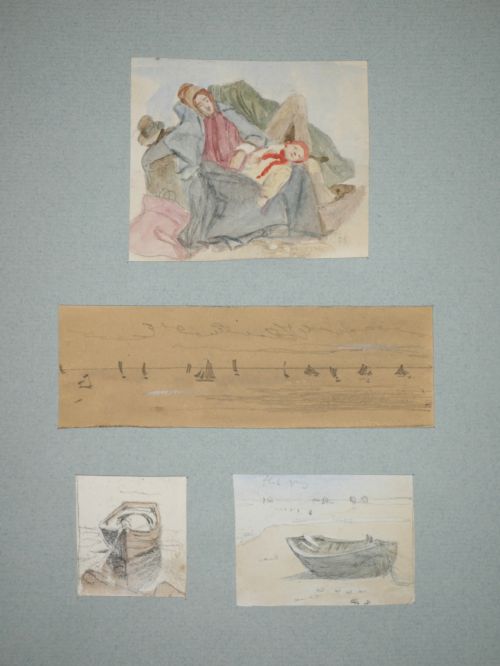
Artists applied watercolour pigment onto paper support, sometimes combining gouache for opaque highlights or pencil for initial compositional lines. Paper surfaces absorbed the water-based media to create translucent washes that rendered the shifting tones of sea and sky.
Completed paintings were traditionally protected behind glass and housed within wooden frames, often finished with gilt details or oak surrounds. The combination of paper, pigment, and period framing preserves the delicate chromatic range of the original work.
Retail Price Guide 2026
Typical UK retail prices for original watercolour seascape, calculated from the Sellingantiques database of over a million retail prices indexed since 2003. This retail price guide relies exclusively on Sellingantiques data; no external sources or auction records are used, so the figures do not describe the wider market.
Artists occasionally added stray specks of studio sand into wet watercolour washes, accidentally embedding North Sea beaches directly into their maritime sketches.
What varies in quality
The distinction between works rests upon the artist's handling of light, atmospheric movement, and water transparency. Superior examples demonstrate confident brushwork that captures the weight of heavy seas and the atmospheric haze of coastal air without overworking the paper.
Compositional complexity and historical detail also separate exceptional pieces from simpler sketches. Works that accurately document named vessels, specific coastal topography, or significant maritime locations command greater interest among collectors.
Hector Caffieri·Thomas Bush Hardy·Richard Harry Carter·Frank Wasley·George F Pennington·William Frederick Settle·Walter Henry Sweet·Frederick James Aldridge·John Wilson Carmichael·John Syer·A.E. Morris·W H Grey·R Thomas·Thomas Sidney·James Webb·Thomas Herbert Victor·John Shapland·Norman Carter·David Roberts·Martin Snape·A E Story·William J Callcott·Sidney Grey·Copley Fielding·Charles Bryant
The Original Watercolour Seascape Glossary
- Gouache
- An opaque watercolour paint containing pigment mixed with water and a binding agent like gum, used to create solid highlights. It provides heavier coverage than transparent watercolour washes.
- Lugger
- A traditional two-masted fishing vessel carrying lug sails, frequently depicted in British coastal art of the nineteenth century. These working boats dominated the waters around Devon, Cornwall, and Yorkshire.
- Triptych
- A single artwork divided into three distinct painted sections displayed together. In maritime painting, this format often presents panoramic views of shipping off the coast.
- Provenance
- The documented history and ownership lineage of an artwork from its creation to the present day. Clear provenance helps verify the attribution and age of nineteenth century watercolours.
- Wash
- A thin, fluid layer of watercolour pigment diluted with water to create translucent areas of colour. Artists used washes to represent the subtle gradients of sea and sky.
Frequently Asked Questions
How do I identify the date of a watercolour seascape?
Dating relies on signatures, artist lifespans, stylistic indicators, and occasionally dated inscriptions left by the artist on the front or verso of the paper.
Period framing materials and historical shipping types depicted within the scene also provide reliable clues to the decade of creation.
Where should I hang a watercolour painting?
Watercolours require placement away from direct sunlight to prevent the fugitive pigments from fading over time. Maintaining stable indoor humidity levels protects both the paper support and the original wooden frame.
Using conservation-grade glass during framing further safeguards the delicate pigments from environmental damage.
What is the difference between watercolour and gouache?
Traditional watercolour utilises transparent washes where the white of the paper shines through to create luminosity. Gouache incorporates a white pigment additive that makes the paint opaque.
Artists frequently combined both mediums within a single coastal scene to render solid highlights on churning waves or ship sails.
How can I tell a genuine antique from a reproduction?
Authentic nineteenth and early twentieth century works exhibit genuine paper ageing, correct iron gall ink or pencil underdrawings, and period mounting techniques. Close inspection under magnification reveals the actual brush strokes and paper fibres rather than modern dot matrix printing.
Original framing components and historical dealer labels verso often corroborate the age of the piece.