




Antique Fishing Boat Painting
An antique fishing boat painting captures the raw atmosphere of coastal harbours and choppy seas through the hands of Victorian and early twentieth-century marine artists.
Antique Fishing Boat Painting
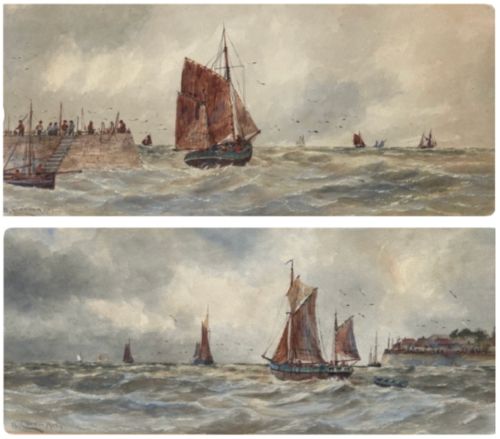
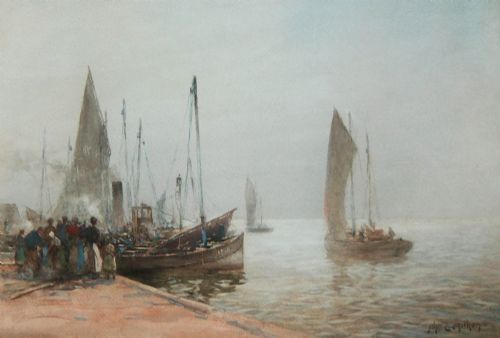
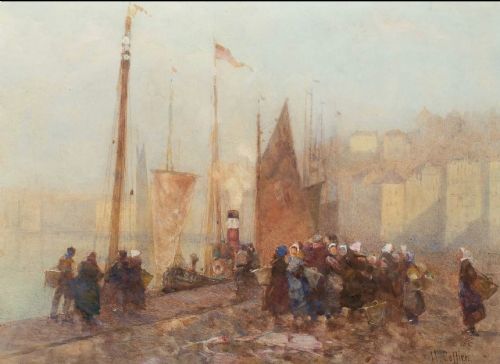
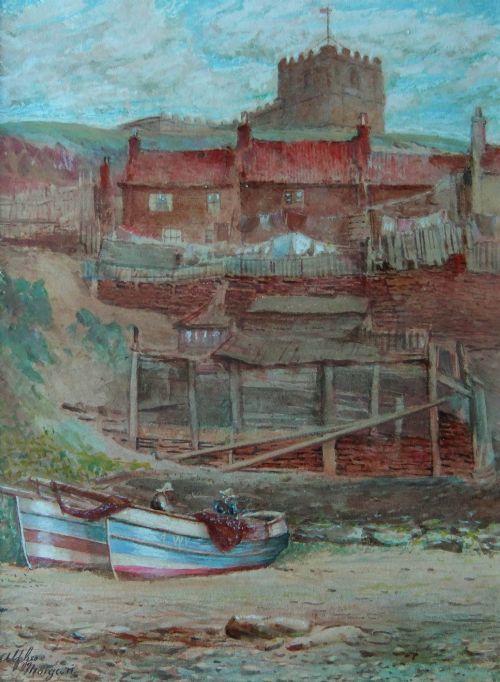
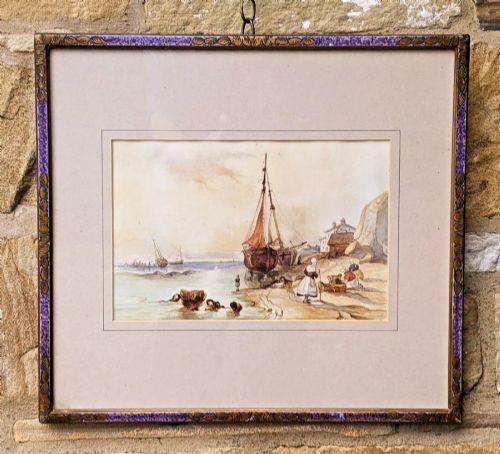
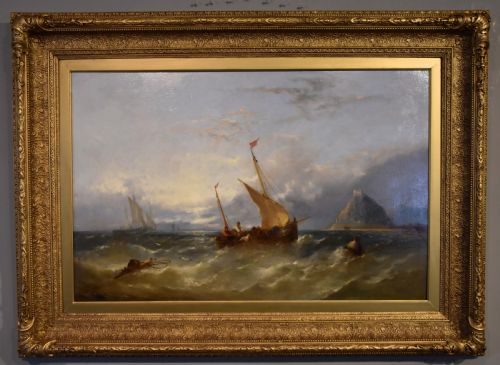
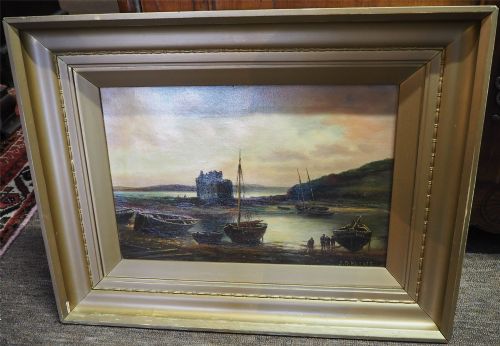
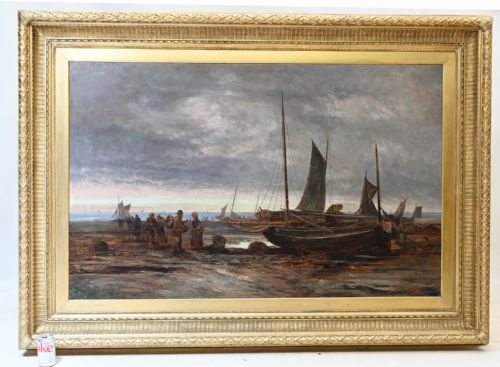
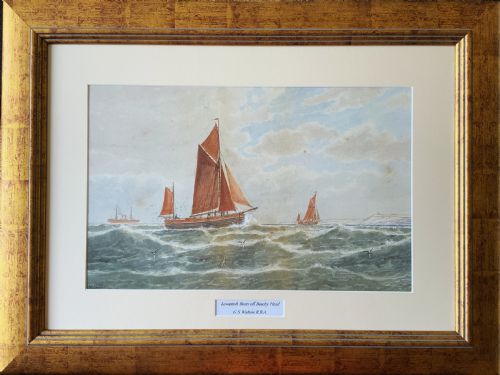
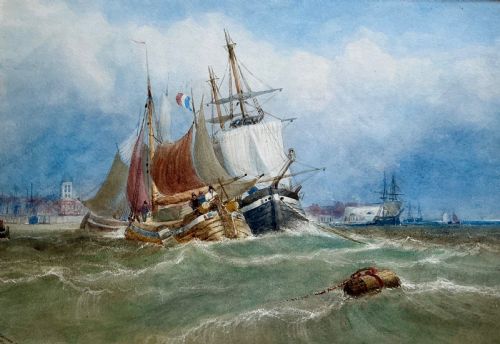
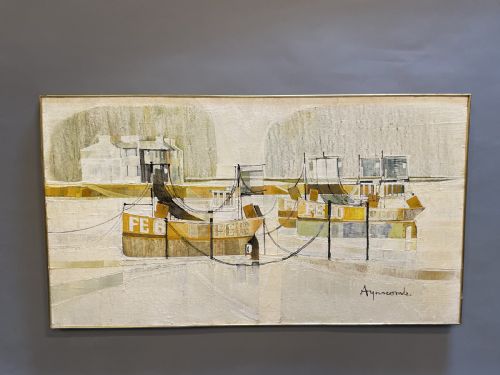
When you search for an antique fishing boat painting, you are exploring maritime scenes that document the working lives of coastal communities across Britain and Europe. The works found here predominantly span the nineteenth century and the early decades of the twentieth century, capturing vessels braving coastal waters or resting in tidal harbours.
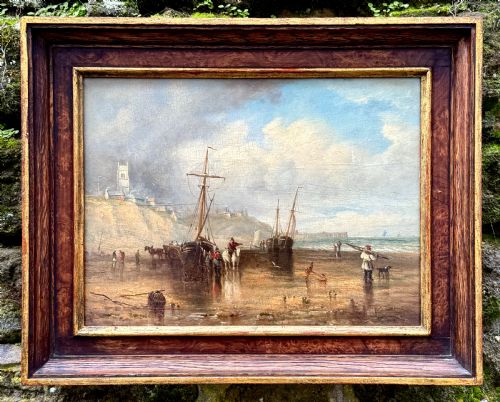
The most common formats on this page are framed oil paintings on canvas and delicate watercolour paintings on paper. These pieces range from intimate topographical watercolours of Yorkshire and Cornish ports to large, dramatic canvases depicting stormy seas off the British coast.
How They Were Made
Artists relied primarily on oil paint applied to canvas, wood panels, or card, as well as watercolour pigment on paper. Oil mediums allowed painters to build rich, textured surfaces for churning waves and billowing sails, while watercolour suited the translucent atmospheric effects of misty coastal air and open estuaries.
Works were frequently housed in period giltwood frames that enhanced the depth of the marine views. Painters often worked plein air or translated preliminary sketches into finished studio compositions, recording specific ports from Whitby and Scarborough to St Ives and foreign shores like Normandy and Boulogne.
Antique Fishing Boat Painting Retail Price Guide 2026
Typical asking prices for fishing boat painting among the pieces listed under this phrase on Sellingantiques today, from the lower quarter to the upper quarter. They describe what is for sale here now, not the wider market.
Several Victorian artists clearly found choppy harbour waves far more inspiring than calm ones.
What Varies in Quality
Quality rests upon the artist's command of atmospheric light, fluid brushwork, and anatomical accuracy regarding the rigging and hulls of the vessels. Superior examples convey a genuine sense of movement in the water and weather conditions without relying on static formulas.
The distinction between standard works and exceptional pieces also lies in the provenance and the artist's ability to balance the landscape elements with the human narrative of the fishing industry.
James Orrock·William Cannon·James E. Aitken·Hector Caffieri·Thomas Creswick·Alfred G. Morgan·George Stanfield Walters·Henry Barlow Carter·Edward Matthew Elliott·Charles Napier Hemy·William Lee Hankey·Gustave De Bréanski·Pieter Cornelis Dommersen·Tom Clough·George Shaw·Thomas Bush Hardy·George Gregory·George Morland·John Bell·Frederick William Hattersley·Ernest F. Hill·George Henry Knight·Sam Bough·William Lambert Bell·Paul H Ellis
The Antique Fishing Boat Painting Glossary
- Seascape
- A work of art depicting the sea, coastal views, or marine scenes. These compositions often focus heavily on weather effects and nautical vessels.
- Coble
- A traditional type of open fishing boat used primarily on the North East coast of England. It is characterised by a flat floor and high bow designed for handling surf.
- Giltwood
- Wood that has been coated with gold leaf or a gold-coloured finish. This traditional framing material is frequently found on nineteenth-century oil paintings.
- Provenance
- The documented history of ownership of an artwork. A clear provenance helps establish authenticity and historical context.
- Wash
- A thin, translucent layer of watercolour pigment applied to paper. Artists use washes to create smooth skies and open expanses of sea.
Antique Fishing Boat Painting: Frequently Asked Questions
How do I date an old marine painting?
Dating often relies on stylistic clues, artist signatures, and framing materials that align with nineteenth or early twentieth-century conventions. Documentation on the reverse of the canvas or paper can also point to a specific decade.
Examining the style of the clothing worn by figures on the shore or the type of vessel rigged in the harbour helps narrow the period of creation.
What is the difference between watercolour and oil marine works?
Watercolours utilise pigment suspended in water applied to paper, creating lighter, translucent effects well suited for intimate harbour scenes. Oils use pigment bound in drying oil on canvas or wood, offering richer textures and deeper tones for stormy seas.
Watercolours require protective glass framing, whereas oil paintings on canvas remain open to the air within their decorative frames.
Where were most of these coastal scenes painted?
Many works depict active fishing ports around the British coastline, including Yorkshire harbours like Whitby and Scarborough, as well as Cornish retreats like St Ives and Polperro. Artists also travelled across the Channel to French and Dutch fishing villages to capture continental fleets.
These locations were chosen for their bustling maritime trade and dramatic cliffs that suited nineteenth-century romanticism.
How should I display an antique painting at home?
Antique marine art should be hung away from direct sunlight and sources of extreme heat to protect the delicate watercolours or drying oil canvases. Maintaining stable room humidity prevents warping in wooden panels and canvas degradation.
Pairing the artwork with period-appropriate lighting enhances the gilt frame and brings out the subtle tones in the painted water.