


Framed Marine Watercolour
A framed marine watercolour brings coastal atmosphere and maritime history directly into a room through delicate pigment on paper.
What framed marine watercolours are
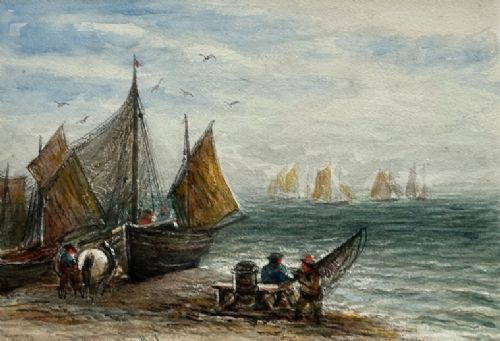
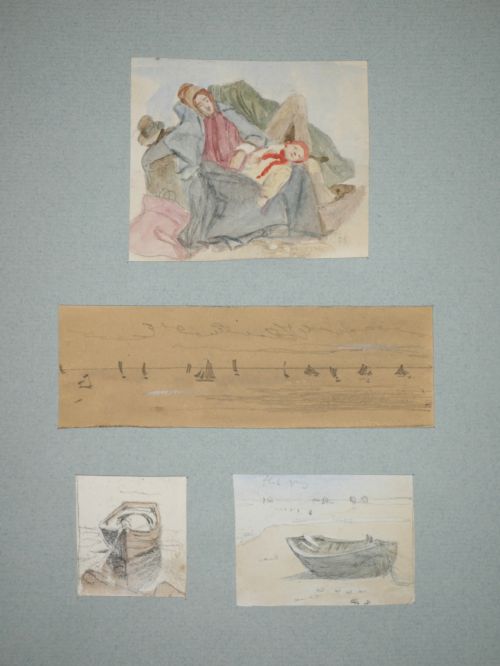
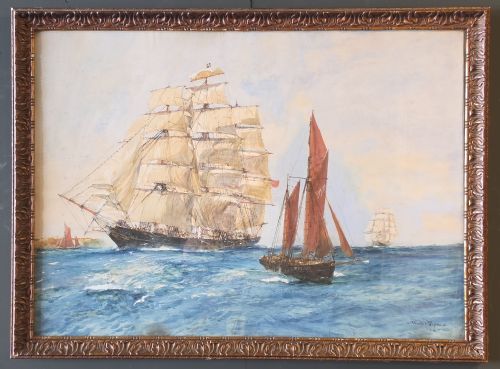
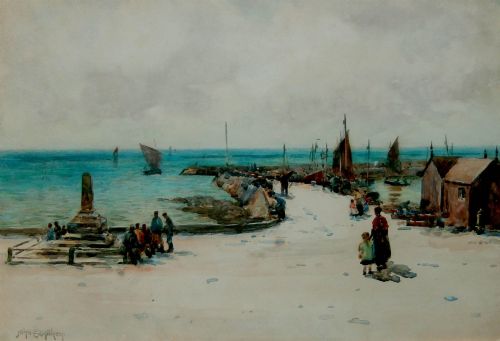
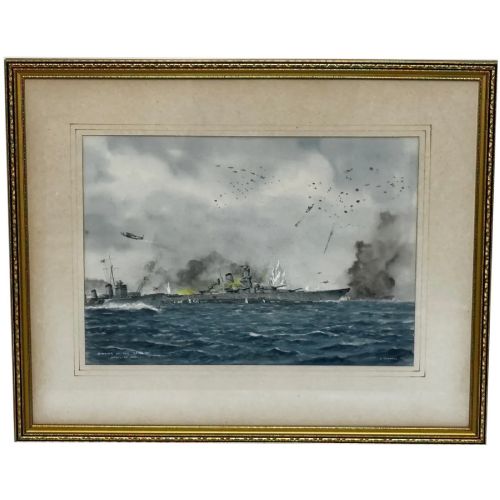
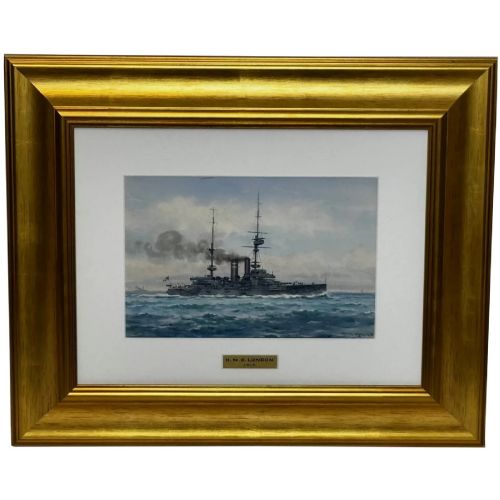
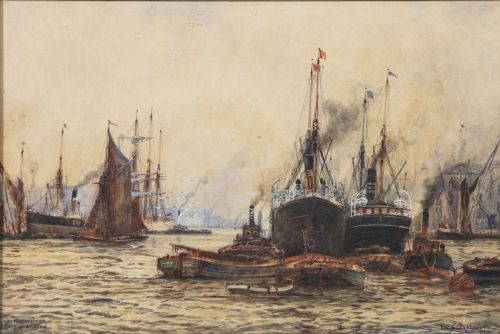
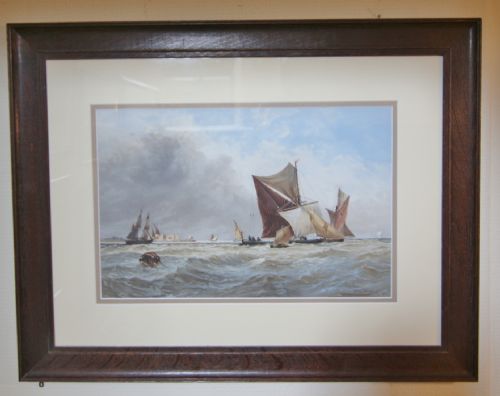
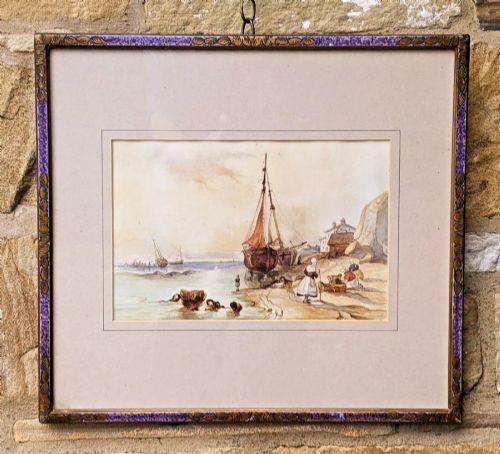
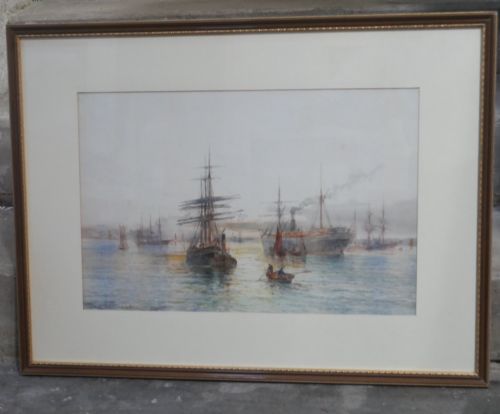
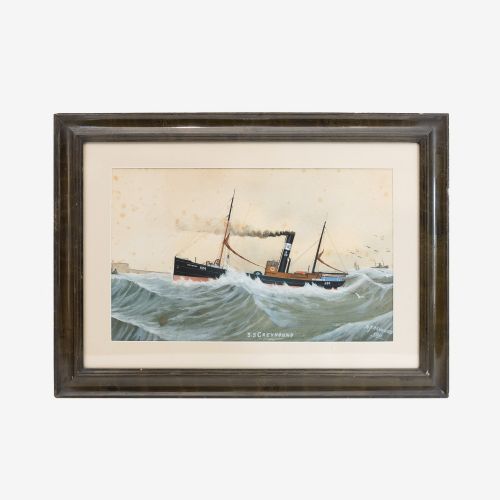
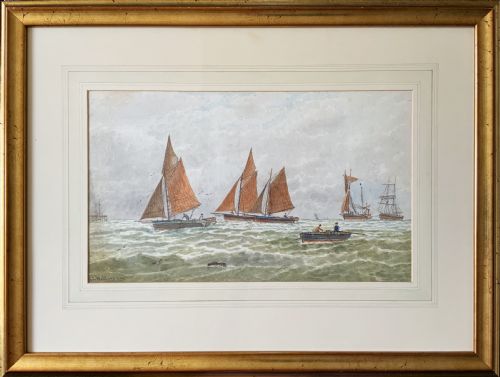
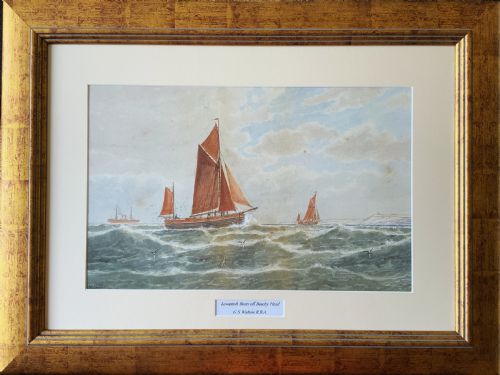
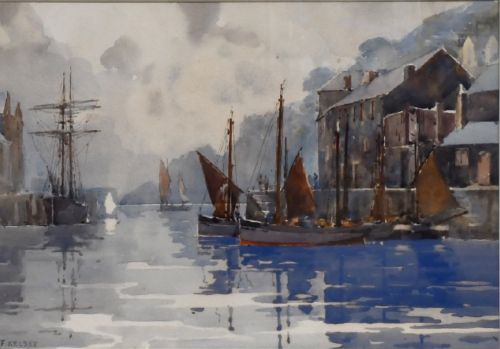
A framed marine watercolour captures coastal and nautical subjects using fluid pigments on paper, preserved behind glass within wooden frames. Buyers seeking a framed marine watercolour encounter maritime scenes ranging from busy coastal harbours to serene Venetian canals.
The available selection spans the nineteenth century up to mid-century British works from nineteen sixty. Pieces often feature signed compositions depicting specific coastal views such as Ringstead Bay or the Grand Canal in Venice.
How they were made
Artists applied watercolour and pigment directly onto paper or card support surfaces to build up transparent washes and detailed maritime subjects. Finished works received protection beneath glass and were secured inside wooden frames, occasionally complemented by gold leaf details.
Makers utilised traditional painting techniques on paper sheets, relying on the luminosity of the underlying white paper to illuminate sea and sky elements. The framing protected the delicate water-soluble pigments from atmospheric degradation over decades.
Retail Price Guide 2026
Typical UK retail prices for framed marine watercolour, calculated from the Sellingantiques database of over a million retail prices indexed since 2003. This retail price guide relies exclusively on Sellingantiques data; no external sources or auction records are used, so the figures do not describe the wider market.
Listings feature paper, wood, glass, and gold leaf materials across nineteenth-century and nineteen sixty periods.
What varies in quality
Quality rests upon the artist's ability to capture movement in water and light across coastal skies using fluid pigment washes. Stronger works demonstrate confident brushwork and precise detailing in vessels and architecture.
The integrity of the original paper support and the preservation of the pigments under glass distinguish finer examples. Contemporary framing choices or the retention of period gold leaf elements also influence the overall character of the piece.
The Framed Marine Watercolour Glossary
- Watercolour
- A paint consisting of a pigment suspended in a water-soluble vehicle. It provides translucent washes ideal for depicting sea and sky.
- Pigment
- The finely ground coloured powder used in the paint mixture. These materials provide the enduring colour found in nineteenth-century maritime scenes.
- Gold leaf
- Gold beaten into extremely thin sheets used for gilding frames. It adds a decorative metallic border to the artwork.
- Card
- A thick, heavy paper stock used as a sturdy support for painting. It offers greater rigidity than standard paper sheets.
Frequently Asked Questions
What is a marine watercolour?
A marine watercolour is an artwork painted with water-based pigments on paper depicting boats, coastal harbours, or seascapes. These paintings focus on maritime subjects and nautical environments.
Artists use transparent washes of colour to capture the movement of water and atmospheric coastal light.
How do I date a watercolour?
Dating relies on stylistic clues, artist signatures, and framing materials associated with specific periods like the nineteenth century. Details such as the type of paper and the style of the wooden frame provide further chronological context.
Written inscriptions on the reverse or signatures by documented artists help confirm the exact period of creation.
Where should I hang these?
These framed works suit studies, living rooms, or hallways where natural light enhances the delicate pigments. They pair well with traditional interiors and maritime collections.
Direct sunlight should be avoided to protect the paper and watercolours from fading over time.
Are these paintings signed?
Many pieces feature artist signatures, initials, or inscriptions identifying the creator or the specific coastal location depicted. Signatures provide direct attribution to nineteenth-century and mid-century painters.
Some works bear initials or names such as J B Donaldson or F J Aldridge on the face of the paper.