






Vintage Seascape Painting
A vintage seascape painting brings the movement and salt air of the coast directly into a room through historic brushwork.
Understanding vintage seascape painting
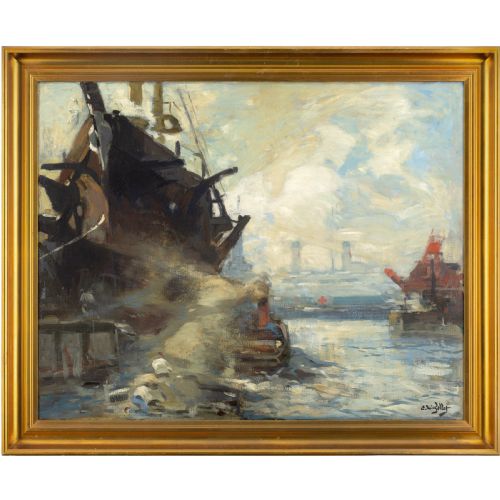
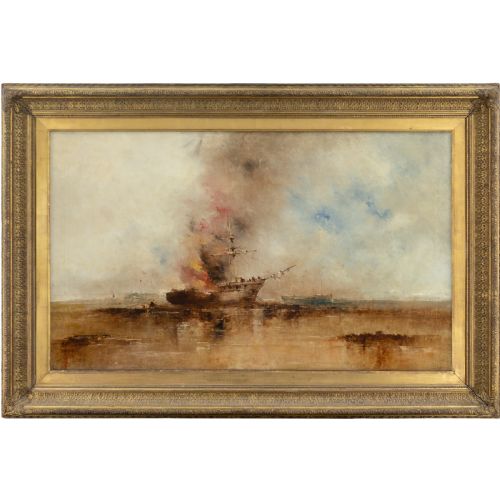
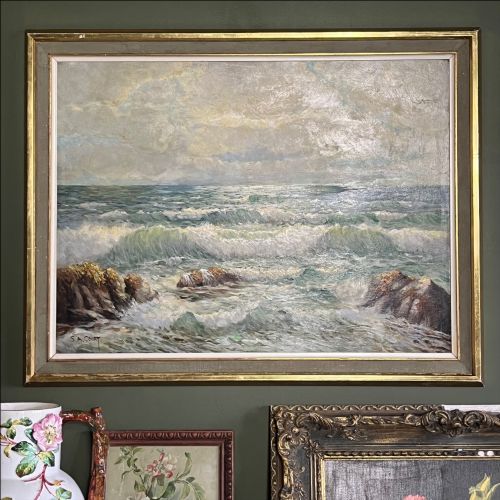
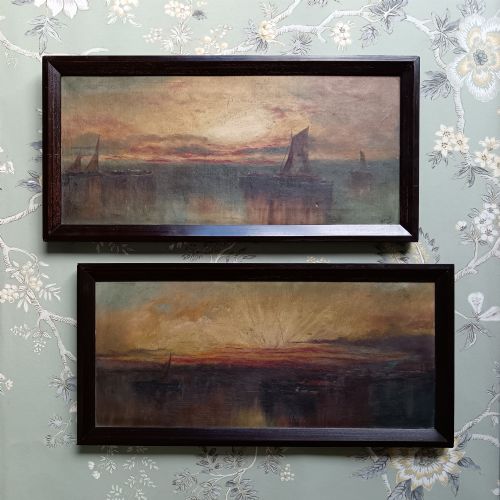
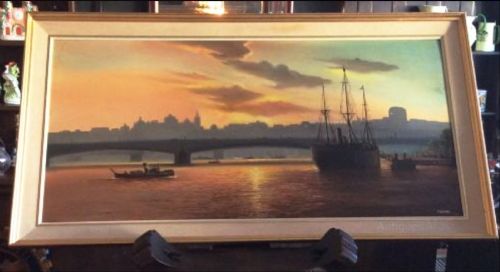
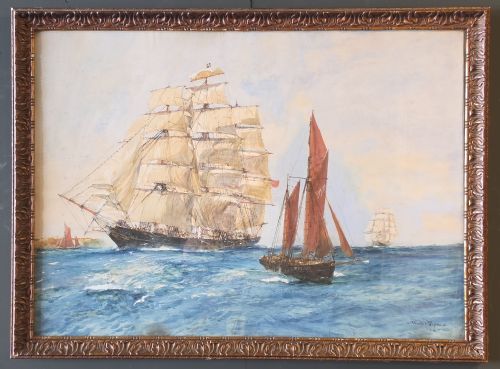
A vintage seascape painting captures coastal life, harbours, and open water across changing artistic movements from the nineteenth century into the mid-twentieth century. These works range from tightly detailed watercolours of Yorkshire fishing boats to bold mid-century oil paintings of crashing waves.
Buyers encounter subjects spanning quiet Cornish coves, bustling Scottish harbours, and grand Venetian canals rendered by regional artists. The selection balances intimate watercolours on paper with substantial oils on canvas and board, often housed in timber frames.
Materials and technique
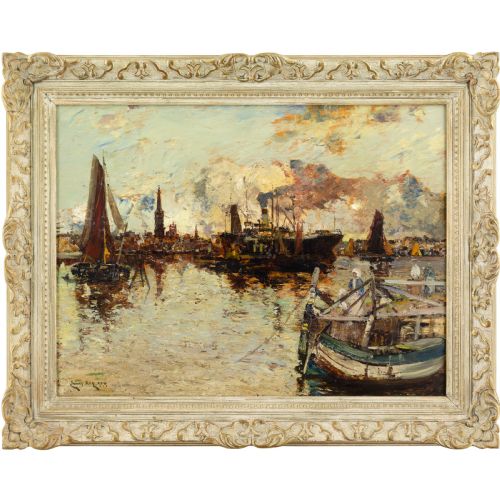
Artists built these coastal scenes using oil paint or watercolour applied to canvas, artist board, or paper supports. Oil paints allowed for thick impasto textures that rendered churning water and heavy skies, whilst watercolours captured translucent light and atmospheric sea mist.
Many surviving works retain their original timber frames and glass protection, reflecting the framing traditions of their respective decades. Pigments were handled with varying degrees of freedom, moving from precise Victorian maritime realism towards looser post-impressionist and mid-century modern interpretations.
Retail Price Guide 2026
Typical UK retail prices for vintage seascape painting, calculated from the Sellingantiques database of over a million retail prices indexed since 2003. This retail price guide relies exclusively on Sellingantiques data; no external sources or auction records are used, so the figures do not describe the wider market.
Coastal subjects frequently document specific locations including Whitby, Mousehole, Polperro, and Venice canals.
Distinctions in quality
Quality rests on the sureness of the draughtsmanship and the artist's ability to render light, water movement, and atmospheric depth convincingly. Stronger pieces demonstrate confident brushwork that defines the weight of a hull or the foam of a wave without relying on laboured detail.
The integration of the composition within its period style also separates ordinary topographical records from accomplished maritime art. A cohesive relationship between the painted surface and its period timber frame further distinguishes the best examples.
Charles Edward Dixon·Walter Goodin·Frank H Mason·Elisabeth Bardon·William Knox·J De Breanski·Thomas Herbert Victor·Edith E Hoyle·Erich Mercker·W Pickles·Gordon Clifford Barlow·Sam Barnes Robson·Angelos Giallina·Alberto Trevisan·A D Bell
The Vintage Seascape Painting Glossary
- Impasto
- Paint applied thickly to a canvas or board, standing out in relief from the surface. This technique gives physical texture to crashing waves and turbulent seas.
- Gouache
- An opaque watercolour paint mixed with a binding agent, creating bright, solid colour fields. It often appears in coastal works for sharp highlights on sails and foam.
- Maritime art
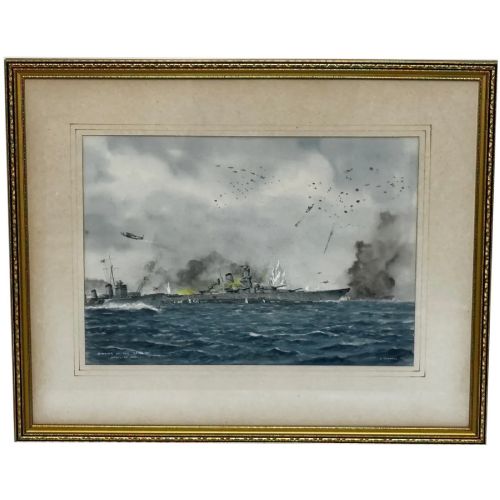
- Artistic works that depict or draw inspiration from the sea, ships, and coastal views. This broad category includes naval battles, harbour scenes, and open ocean studies.
- Post-Impressionism
- An art movement following impressionism that focuses on symbolic content, heavy brushwork, and vivid colours. Works in this style prioritize emotional response over strict optical realism.
- Board
- A rigid flat panel, such as artist board or wood, used as a painting support instead of stretched canvas. Many twentieth-century coastal sketches utilise this durable material.
Frequently Asked Questions
How do I identify the date of a coastal painting?
Dating relies on signatures, framing styles, and the aesthetic markers of periods such as Victorian realism or mid-century modernism. Supporting inscriptions on the reverse often record locations and dates.
Material choices, such as artist boards versus stretched canvases, also help narrow down the decade of creation alongside the clothing of any figures depicted.
Where were most of these coastal scenes painted?
Subjects frequently record specific British fishing ports, Cornish harbours, and Yorkshire coastal towns alongside continental views in Venice and Greece. Artists frequently worked on location to capture local working craft and dramatic headlands.
These topographical details anchor the artworks in genuine maritime history and regional artistic communities.
Should watercolours be kept out of direct sunlight?
Watercolour pigments on paper remain sensitive to ultraviolet light and can fade when exposed to strong, direct sunlight over extended periods. Framing behind protective glass helps shield the delicate paper and pigments from atmospheric moisture.
Placement away from bright windows ensures the subtle tones of the sea and sky survive intact.
Are these paintings usually signed by the artist?
Many examples carry the original signature or monogram of the artist, occasionally accompanied by dated inscriptions pointing to specific harbours or headlands. Unsigned works still appear, often attributed through style, technique, or archival records.
Signatures provide a direct link to known practitioners of British maritime and regional landscape art.