




Vintage Sailboat Artwork
Vintage sailboat artwork captures the enduring pull of maritime life through oil, watercolour and canvas across the nineteenth and twentieth centuries.
Vintage Sailboat Artwork
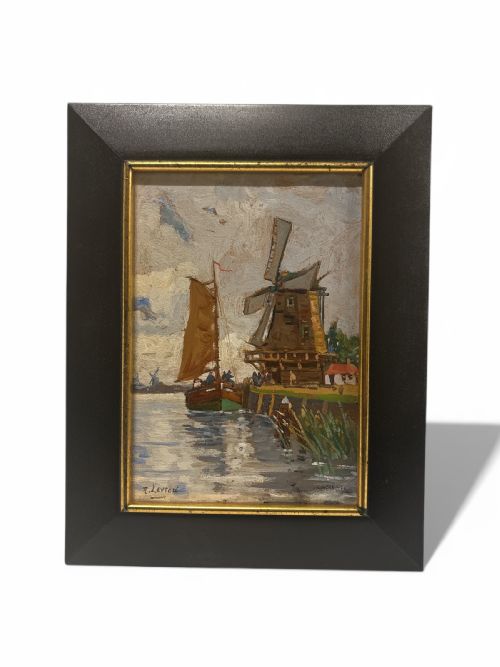
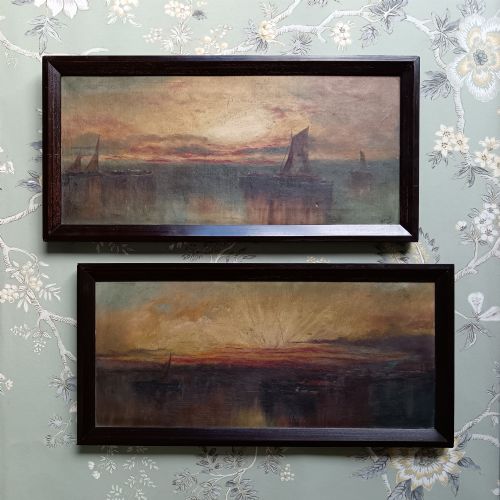
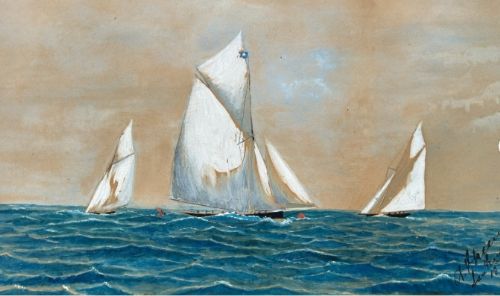
Vintage sailboat artwork encompasses marine paintings, watercolours and framed wall art depicting nautical scenes, coastal harbours and racing yachts. These pieces range from Victorian maritime studies to mid-twentieth-century French and British Impressionism.
Buyers will most frequently encounter framed oil paintings and watercolours dating from the Edwardian era through to the 1950s. Subjects vary from local fishing luggers and coastal lighthouses to expansive open seascapes under moonlight or bright sunlight.
The selection includes works from recognised schools of painting alongside pieces by regional British and continental artists. Many carry specific coastal locations, such as Cornish harbours, Scottish lochs and French ports.
Materials and Techniques
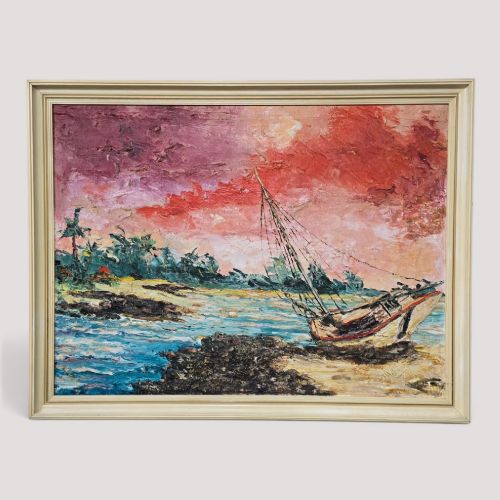
Artists utilised oil paint on canvas, board or panel to build rich textures, often applying thick impasto to render the movement of water and wind. Watercolours on paper offer a more delicate transparency, frequently employed for atmospheric coastal light and harbour views.
Traditional wooden framing, sometimes finished with gilt details or glass protection, encloses the majority of these works. Supports range from sturdy canvas stretched over wooden frames to older paper sheets mounted securely behind glass.
Vintage Sailboat Artwork Retail Price Guide 2026
Typical asking prices for vintage sailboat artwork among the pieces listed under this phrase on Sellingantiques today, from the lower quarter to the upper quarter. They describe what is for sale here now, not the wider market.
The listings span the nineteenth and twentieth centuries, featuring oil paints, watercolours, canvas and paper supports.
Assessing Quality in Marine Art
Quality rests upon the artist's command of light, shadow and spatial depth in capturing the interaction between wind, vessel and water. Superior examples demonstrate confident brushwork and accurate proportion in rigging and hull construction.
The preservation of the pigment and support significantly influences the standing of a piece, with stable paint layers and minimal surface disruption distinguishing finer survivals. Signed works and well-documented attributions to established practitioners command greater recognition.
Richard Harry Carter·Louis Suire·Fred Pailhes·Edward Seago·Gustave De Breanski
The Vintage Sailboat Artwork Glossary
- Impasto
- Paint applied thickly to a canvas or board so that it stands proud of the surface. This technique adds tactile dimension to the churning motion of waves and the billowing form of sails.
- Provenance
- The documented history of ownership surrounding an artwork. A clear record helps confirm the origin, date and attribution of a marine painting.
- Seascape
- A work of art depicting the sea, coastal views or maritime vessels in open water. These compositions focus heavily on atmospheric weather conditions and aquatic movement.
- Lugger
- A traditional small fishing vessel carrying lug sails on one or more masts. They frequently feature in regional nineteenth-century and Edwardian coastal scenes.
- Watercolour
- A painting method where finely ground pigments are suspended in a water-soluble binder. It is applied to paper to achieve translucent washes of coastal light.
Vintage Sailboat Artwork: Frequently Asked Questions
How do I date vintage sailboat artwork?
Dating relies upon stylistic markers, framing methods, artist signatures and any recorded biographical details. Examining the stretcher bars, canvas weave and paper type also provides firm clues to the period of creation.
Comparison with documented works by the same school or artist helps narrow the decade of production. Inscriptions on the reverse of the canvas or frame often record specific locations and dates.
Where should I hang these maritime paintings?
These pieces suit spaces with stable temperature and humidity away from direct sunlight, which can fade watercolours and discolour oil varnishes. Wall placement should consider the weight of the heavier framed canvases and the protective glass requirements of paper works.
Displaying them at eye level in well-lit rooms allows the detail of the rigging and coastal atmosphere to be fully appreciated. Neutral wall backgrounds often complement the traditional tones of marine palettes.
What is the difference between oil and watercolour marine art?
Oil paintings utilise heavy pigment bound in oil on canvas or board, allowing for textured brushwork and deep, saturated tones. Watercolours use a water-based binder on paper, yielding lighter, more luminous effects that capture shifting coastal light.
Oils generally require sturdy wooden frames and protection from dampness, while watercolours need glazing with glass to safeguard the paper surface from atmospheric moisture.
How do I identify regional British coastal scenes?
Regional identification depends on architectural details of lighthouses, harbour walls and local fishing craft depicted in the composition. Titling on the mount, stretcher or reverse of the board frequently names specific locations like Cornish ports or Scottish lochs.
Artists often specialised in particular stretches of coastline, meaning familiar geographical landmarks appear repeatedly within an individual's surviving output.