


Antique Harbour Landscape Painting
An antique harbour landscape painting brings the salt-scented bustle of historic coastal ports and quiet estuaries straight into a room.

What an antique harbour landscape painting is
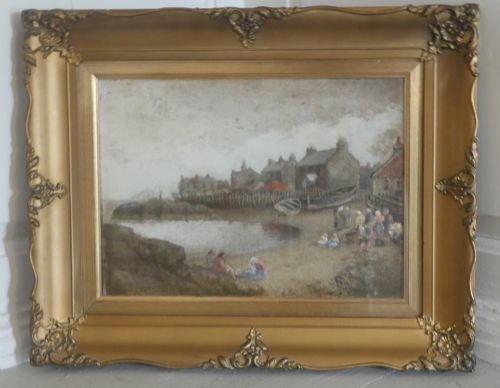
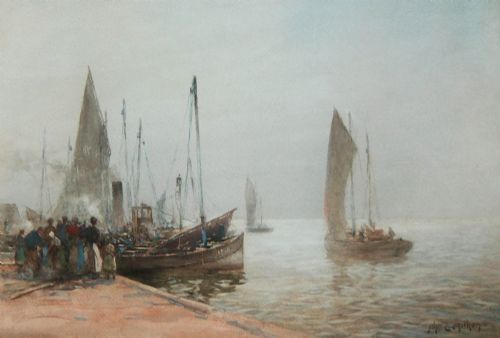
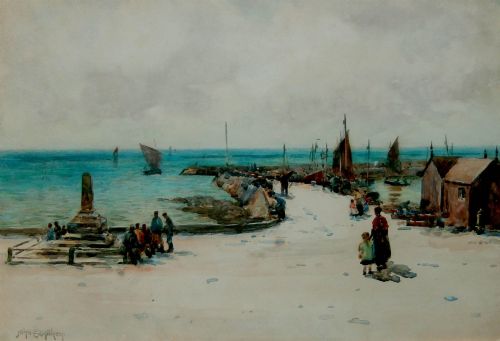
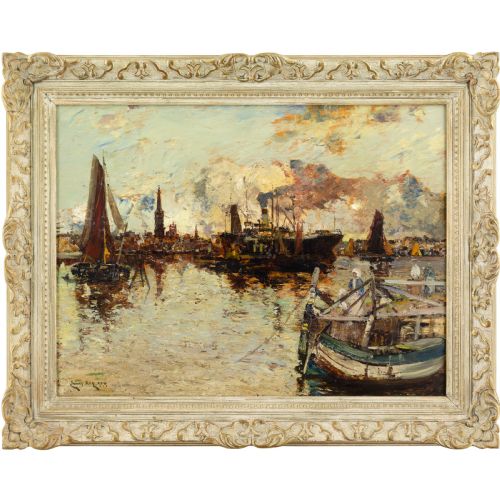
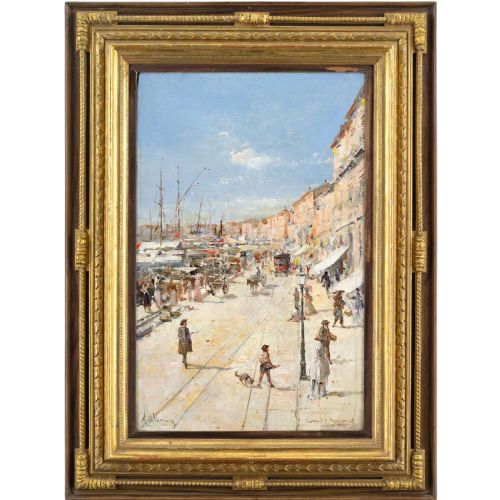
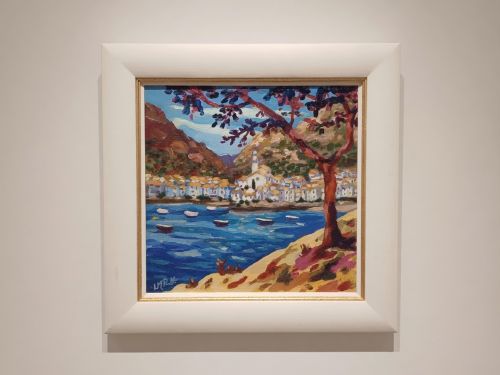
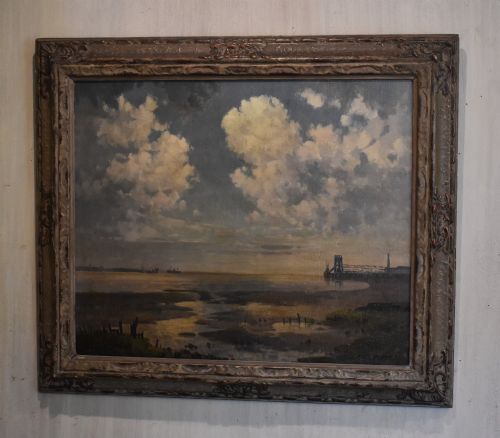
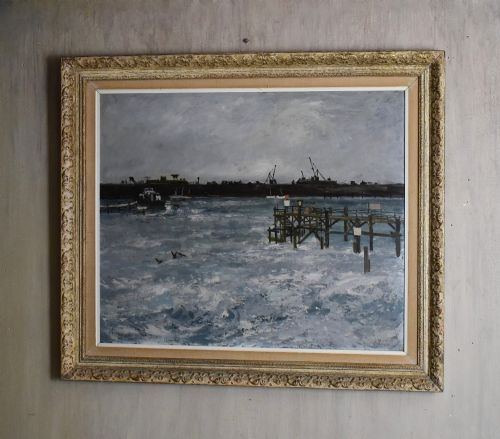
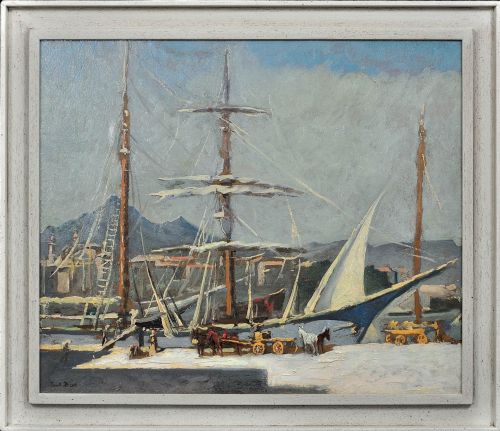
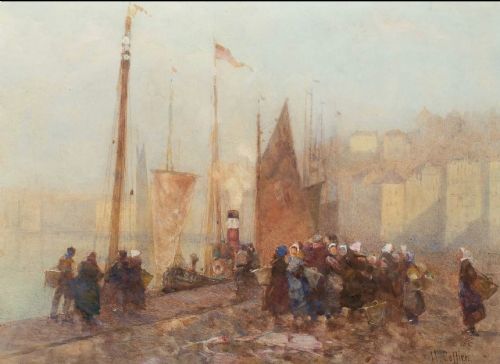
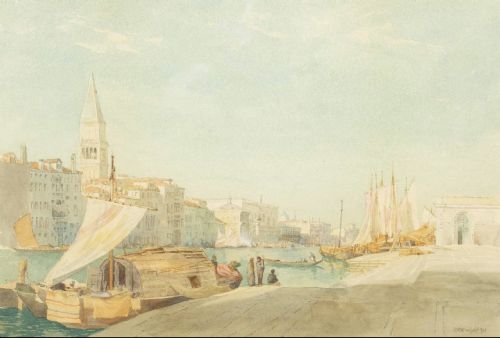
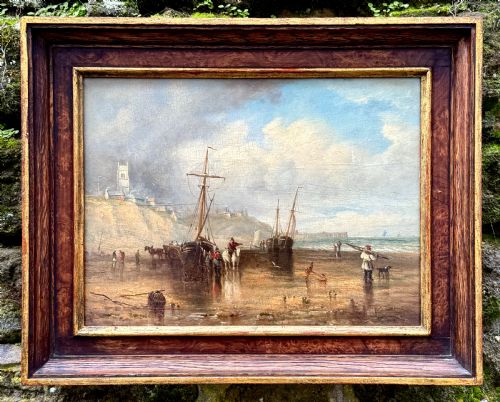
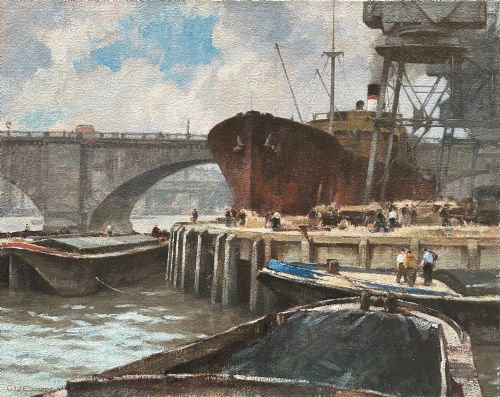
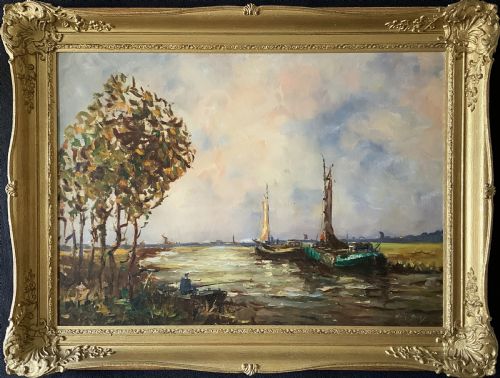
When someone searches for an antique harbour landscape painting, they are looking at framed watercolours, oils on canvas, and pencil studies depicting shipping, boat yards, and coastal towns. These works capture maritime life across Britain and the continent, ranging from busy commercial ports to quiet fishing villages.
The versions most commonly met on this page date from the nineteenth century and the early twentieth century. They show British locations such as Whitby, Polperro, and the Firth of Forth, alongside French and Dutch coastal scenes.
How they were made
Artists painted these coastal views primarily in oil on canvas or applied watercolour to paper. Some works appear on wooden panels or make use of pencil and paper for initial studies.
Framing often involves wood, giltwood, and gold leaf, sometimes protected beneath glass depending on the medium.
Retail Price Guide 2026
Typical UK retail prices for harbour landscape painting, calculated from the Sellingantiques database of over a million retail prices indexed since 2003. This retail price guide relies exclusively on Sellingantiques data; no external sources or auction records are used, so the figures do not describe the wider market.
Several artists captured the exact moment the tide went out in Whitby.
What varies in quality
Quality rests on the sureness of the hand, whether in the crisp rigging of a ship or the atmospheric wash of a stormy sea. Stronger works convey light on water and the specific architectural character of a continental townscape or a Yorkshire port with distinct authority.
The integrity of the materials also matters, from the preservation of the original canvas or paper to the depth and handling of the oil paint or watercolour washes.
Charles Euphraisie Kuasseg·Hendrik Yan Wolter·Ludwig Hermann·Francis Moltino·William Edward Webb·James Robertson Miller·John Syer·Richard Henry Nibbs·Charles Williams·David Roberts
The Antique Harbour Landscape Painting Glossary
- Oil on canvas
- Pigment bound in a drying oil, usually linseed, applied to a stretched woven fabric support. This combination allows for rich texture and deep colour blending.
- Watercolour
- A paint consisting of water-soluble pigments applied to paper. It creates transparent washes that lend luminosity to skies and water.
- Giltwood
- Wood carved and coated with gold leaf or metallic powder. It provides the ornate, reflective framing typical of period art.
- Seascape
- A work of art depicting the sea, ships, or coastal views. It forms the primary subject matter for maritime and harbour compositions.
Frequently Asked Questions
What periods do these paintings date from?
The works span the nineteenth century and the early twentieth century, reflecting Victorian and later maritime art traditions.
Most pieces belong to the mid to late nineteenth century, executed by British and continental painters.
Where do the harbour scenes usually set?
Locations include British fishing ports and coastal towns such as Whitby, Penzance, Lynmouth, Fowey, and the Firth of Forth.
Other works record continental views in France, the Netherlands, and Spain.
What mediums were used for these coastal views?
Artists used oil paint on canvas or wooden panels, as well as watercolour and pencil on paper.
Many retain their period giltwood or wood frames.
How should I hang an oil painting?
Hang paintings away from direct sunlight and damp conditions to protect the canvas, paper, and giltwood frames.
Ensure wall fixings match the weight of the wooden frame and glass where applicable.