



Antique Boat Oil Painting
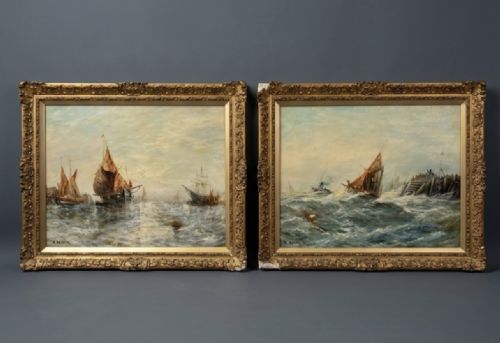
An antique boat oil painting brings maritime history into a room through pigment and canvas, capturing coastal working boats and stormy harbours.
What these paintings depict
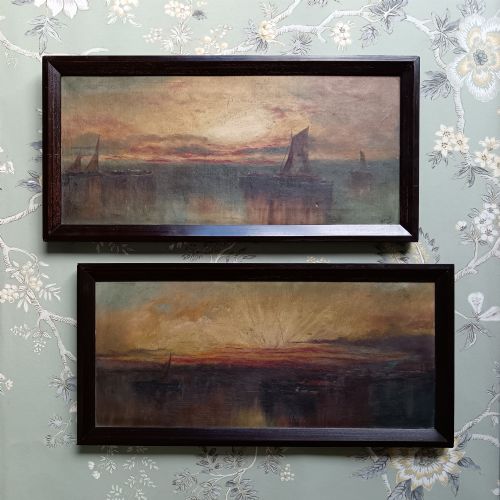
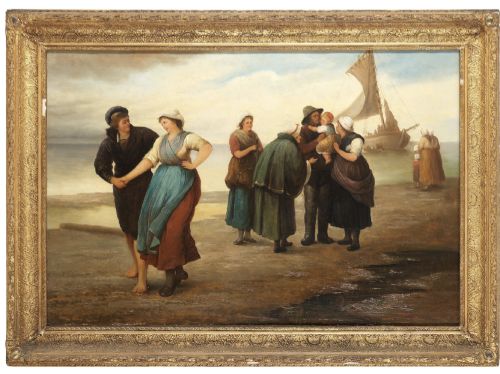
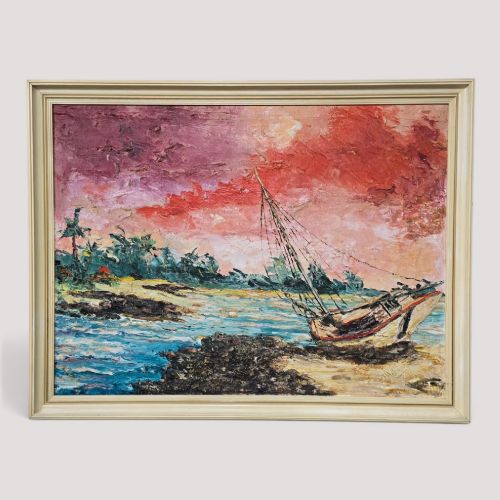
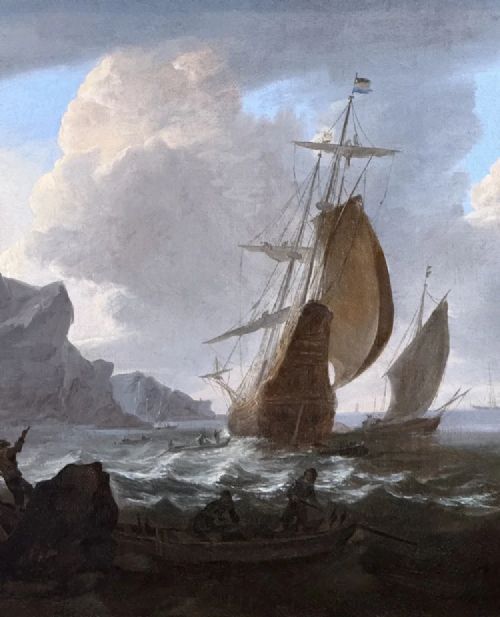
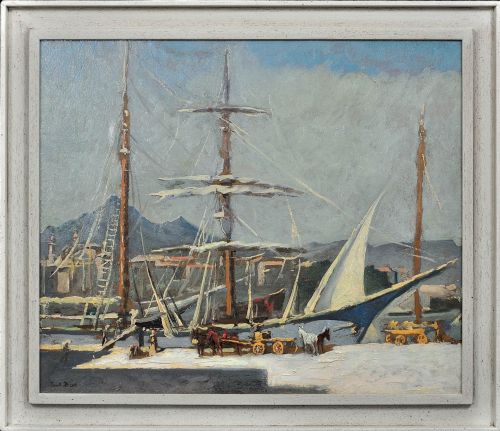
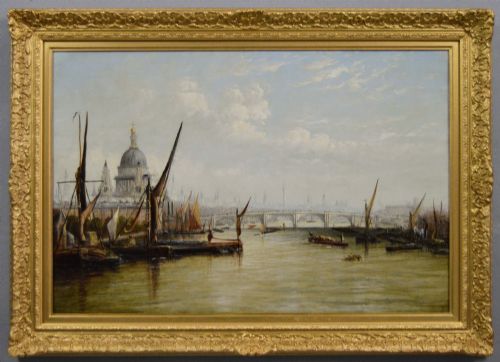
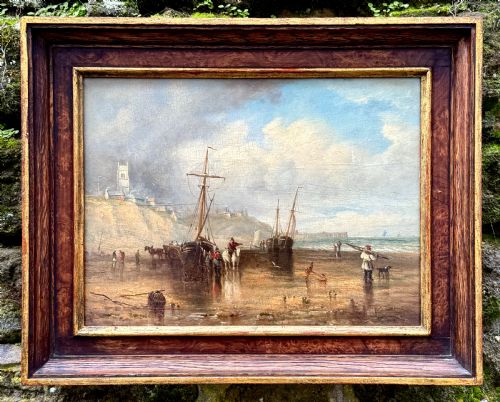
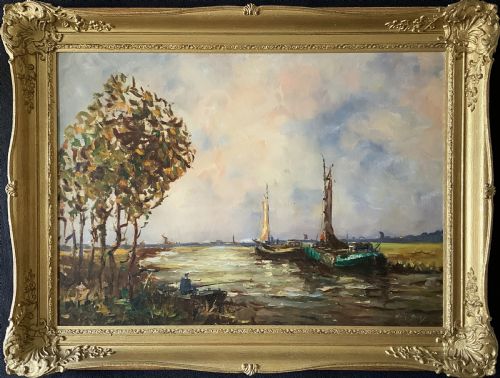
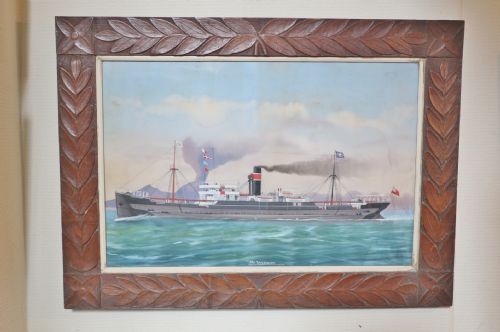
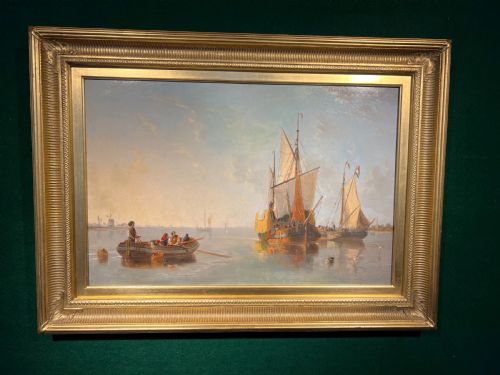
When searching for an antique boat oil painting, buyers encounter canvas and panel works depicting maritime scenes from the Victorian, Edwardian and early twentieth-century periods. The subjects range from local fishing vessels hauled onto a shore to grand steamships on the River Mersey and quiet coastal inlets.
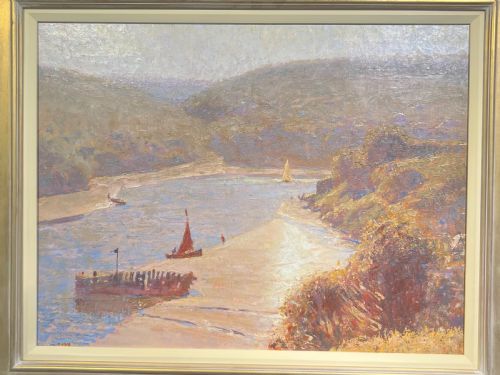
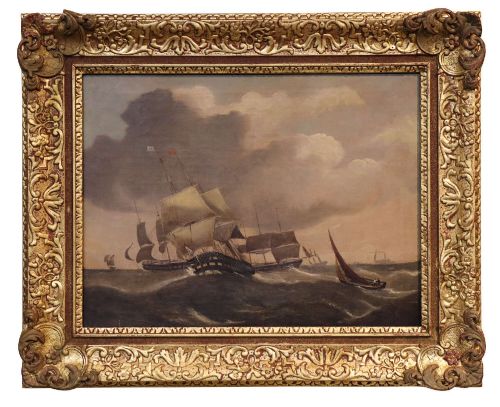
Most pieces on this page originate from British and European hands, spanning traditional maritime compositions and maritime impressionism. Works often show daily harbour life, moonlight nocturnes, or vessels navigating choppy coastal waters under expansive skies.
Materials and construction
Painters applied oil paint to stretched canvas, wooden panels, thick card, or occasionally oval wood panels, building texture with brushwork and palette knives. Ground layers and varnishes protect the pigment, though surfaces naturally accumulate craquelure over decades of exposure to light and air.
Frames are constructed from timber, frequently enhanced with applied composition ornament, gesso, and gold leaf or gilt finishes. These surrounds are secured to the paintings with traditional panel pins and framing nails, often showing age through minor gilt loss and shrinkage cracks.
Retail Price Guide 2026
Typical UK retail prices for boat oil painting, calculated from the Sellingantiques database of over a million retail prices indexed since 2003. This retail price guide relies exclusively on Sellingantiques data; no external sources or auction records are used, so the figures do not describe the wider market.
Several artists painted nocturnal harbour scenes simply because moonlight forgives awkward perspective in rigging.
Indicators of quality
Superior works demonstrate confident brush control and accurate rendering of light upon water, sails and rigging, whereas lesser pieces rely on formulaic repetition and stiff composition. The handling of atmospheric conditions, such as mist over a harbour or the glare of a sunset, separates skilled practitioners from commercial copyists.
Condition and originality dictate the standing of a piece within its category. Works retaining their original gilt wood frames and untouched canvas surfaces hold greater integrity than those with heavy overpainting, relining, or replacement frames.
B. Nash·James Scrimgeour Mann·John William Gilroy·Eugenio Cecchini-Prichard·John Berney Crome·Edward Charles Williams·E K Redmore·William Broome·James Campbell Noble·George G Fryer·Charles Williams·William James S Crampton·H W Beavan·Walter Goodin·Carl Bille·Adolf Kaufmann·F Legge·Emil Ekman·Nicholas Percy Fox
The Antique Boat Oil Painting Glossary
- Canvas
- A heavy woven fabric, usually linen or cotton, stretched tightly across a wooden frame to serve as a painting surface. It provides a slightly textured ground that holds oil paint effectively.
- Gilt
- A thin layer of gold leaf or gold paint applied to wood or gesso surfaces to give a decorative metallic finish. It reflects interior light and was widely used on nineteenth-century picture frames.
- Impressionism
- A style of painting that focuses on capturing the visual impression of a moment, paying attention to shifting light and unblended colour. In marine works, this approach renders water and sky with rapid, expressive brushstrokes.
- Panel
- A flat piece of wood used as a rigid support for oil painting instead of canvas. Wooden boards provide a stable base that resists the sagging common in aged textiles.
- Nocturne
- A painting depicting a night scene, often featuring moonlight, harbours, and silhouetted shipping. Artists use dark, tonal palettes punctuated by pale highlights on water.
Frequently Asked Questions
How do I date an antique boat painting?
Dating relies on stylistic clues, costume details on any figures present, and the physical construction of the canvas support and stretcher frame. Nineteenth-century works often employ denser linen weaves and hand-carved stretchers, while Edwardian pieces lean toward brighter palettes.
Signatures, framing materials, and old gallery labels affixed to the reverse offer further chronological anchors. Comparing brushwork to known dated examples by the same school helps narrow the decade of creation.
Where should I hang a marine oil painting?
Select a wall away from direct sunlight, open fires, and damp exterior walls to protect the oil paint and underlying canvas from thermal shock. Adequate wall space allows the composition and its original gilt frame to breathe without crowding.
Positioning the painting at eye level ensures the horizon line sits naturally in the viewer's field of vision. Good ambient room lighting enhances the tonal contrasts in darker nocturnes and coastal scenes.
Are these paintings on canvas or wood?
The works utilise both mediums, with stretched canvas being the most common support for larger nineteenth and twentieth-century compositions. Wood panels and heavy card also appear frequently, particularly in smaller harbour studies and sketches.
Panel paintings offer a rigid support that prevents the flexing and cracking sometimes seen in aged canvas. Each material responds differently to humidity, making stable indoor environments essential.