


British Marine Watercolour
British marine watercolour works capture coastal scenes and harbour views on paper, prized by collectors for their atmospheric washes and maritime detail.
What They Are
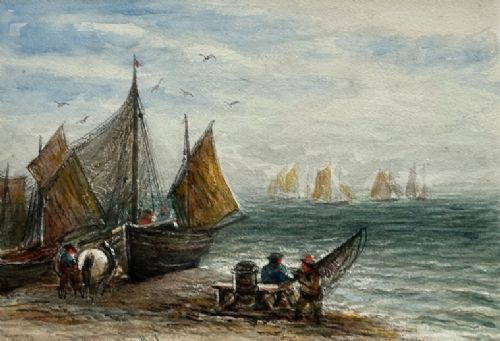
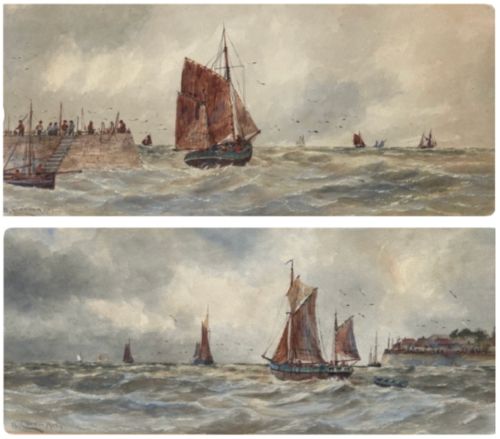
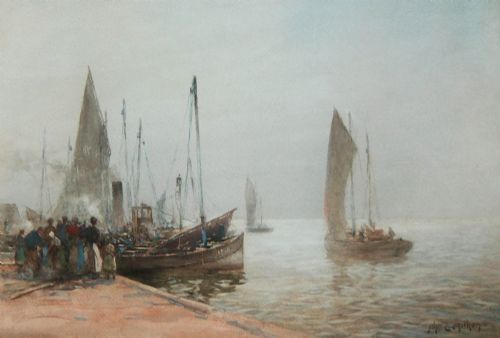
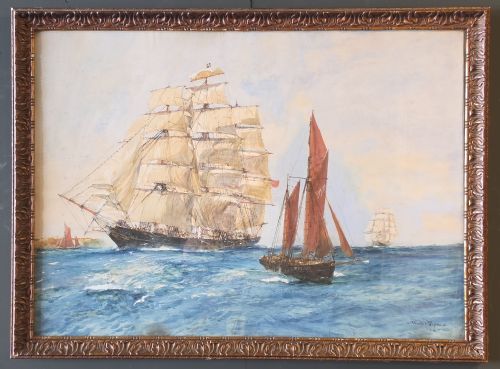
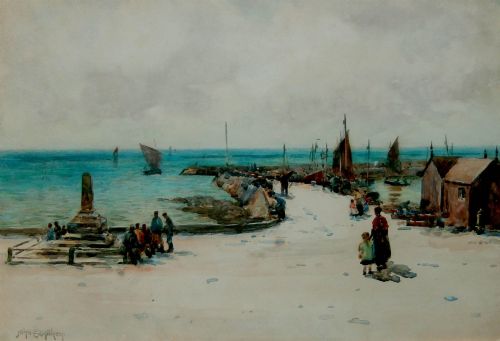
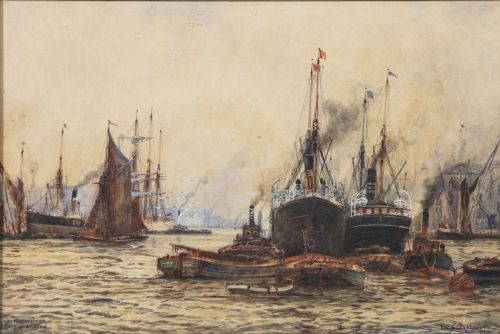
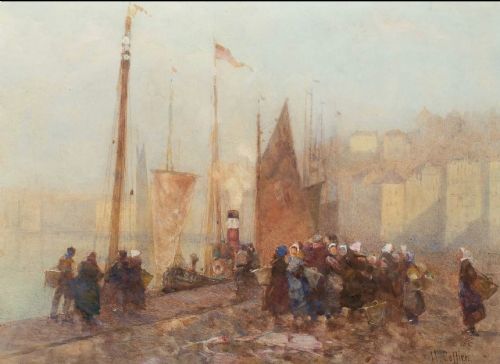
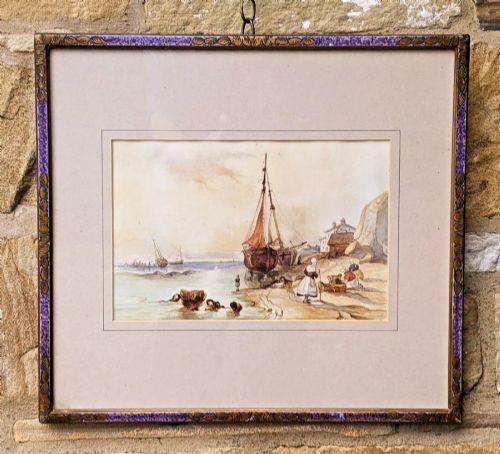
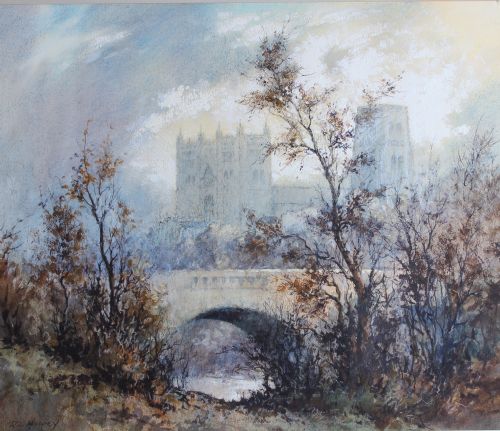
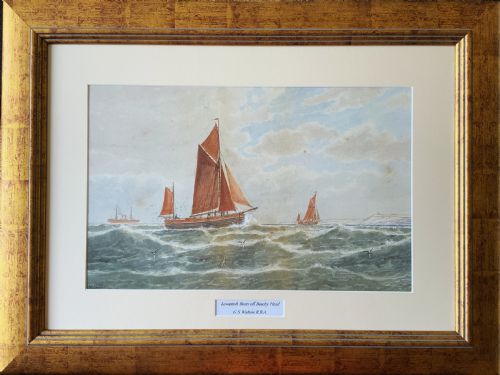
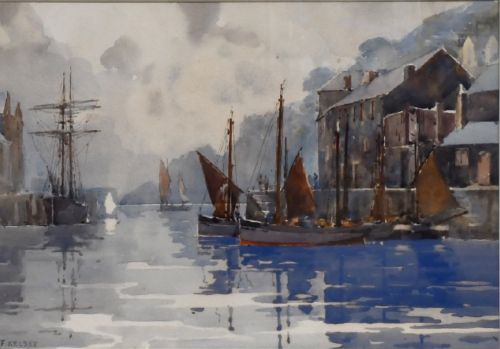
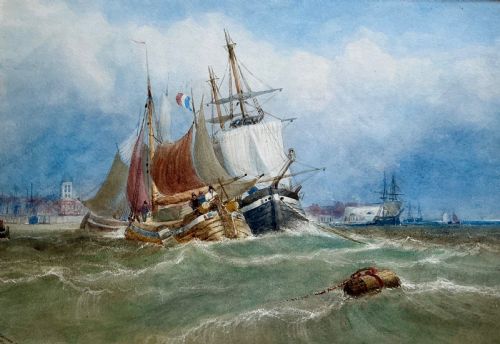
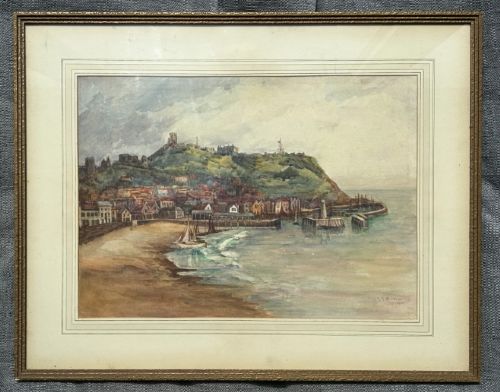
When searching for British marine watercolour, collectors encounter works depicting coastal life, harbours, and seascapes rendered on paper. The selection includes Victorian, Edwardian, and early twentieth-century examples ranging from specific named locations such as Scarborough Harbour and Whitby Scars to broader coastal scenes.
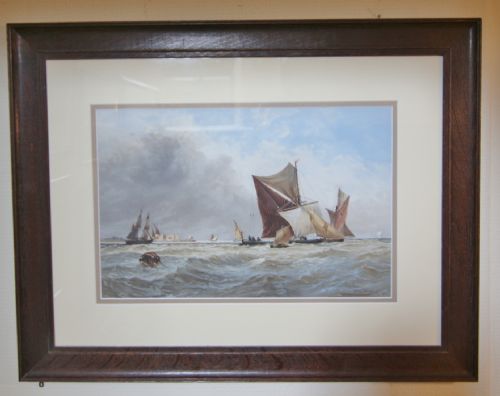
The objects take the form of watercolour paintings and fine art paintings framed behind glass, often in wood or gilded wood frames. Styles span late nineteenth-century British, Victorian landscape, British Impressionism, and British School Maritime traditions.
How They Were Made
These works utilise watercolour pigment applied to paper supports, capturing light and movement through fluid washes and fine brushwork. The application relies on the transparency of the pigment over white paper to create luminous skies and rolling sea surfaces.
Framing materials include wood and gilded wood, often paired with glass to protect the delicate watercolour surface from environmental moisture and airborne dust.
Retail Price Guide 2026
Typical UK retail prices for british marine watercolour, calculated from the Sellingantiques database of over a million retail prices indexed since 2003. This retail price guide relies exclusively on Sellingantiques data; no external sources or auction records are used, so the figures do not describe the wider market.
Listings feature periods spanning the Victorian era, Edwardian period, and the early twentieth century up to nineteen-twenty.
What Varies in Quality
Quality rests upon the artist's command of atmospheric perspective, tonal balance, and the lively handling of water and light. Stronger works convey a palpable sense of maritime weather and movement rather than relying on stiff topographical record.
The preservation of the paper and the vibrancy of the watercolour pigment distinguish superior examples. Subtlety in the layering of washes separates masterful handling from flat or heavy-handed execution.
John McDougal·Charles Harmony Harrison·Ernest F. Hill·Julian Drummond·Harry Wanless·Frank William Scarbrough·Frederick J. Aldridge
The British Marine Watercolour Glossary
- Watercolour pigment
- The finely ground colour substance mixed with a water-soluble binder, used to create transparent washes on paper.
- Gilded wood
- Wood framing finished with a thin layer of gold leaf or metallic gilt, frequently found protecting nineteenth-century paintings.
- British School Maritime
- A classification for paintings produced by British artists focusing on sea views, shipping, and coastal topography.
- Pseudonym
- A fictitious name used by an artist, such as the pen name utilised by Frederick J. Aldridge when signing work as J Hill.
Frequently Asked Questions
What is a British marine watercolour?
These works are paintings executed in watercolour on paper that depict ships, coastal villages, and stormy or calm seas.
Created primarily during the Victorian and Edwardian eras, they document Britain's deep historical connection to the maritime environment.
How should I hang these paintings?
Watercolours are sensitive to light and should be positioned away from direct, strong sunlight to prevent the pigments from fading over time.
Ensure they are displayed behind glass in rooms with stable humidity levels to protect both the paper and the wooden frame.
How do I identify the period?
Stylistic clues, framing materials, and artist signatures help determine whether a piece belongs to the Victorian or Edwardian era.
Subject matter and the specific handling of maritime vessels also provide context regarding the decade of creation.
Are these works signed?
Many examples bear the signature or initials of the artist either within the image area or on the mount.
Some artists occasionally utilised pseudonyms, adding an extra layer of research interest for collectors.